Temple of Ein Gedi: A Ghassulian Religious Complex in Israel
Site at a Glance
- Popularity
- Medium
- Country
- Israel
- Primary era
- Stone Age
- Eras represented
- Stone Age
- Civilizations
- Unclassified
- Site type
- Religious
- Remains
- Temple
On this page12 sections
History
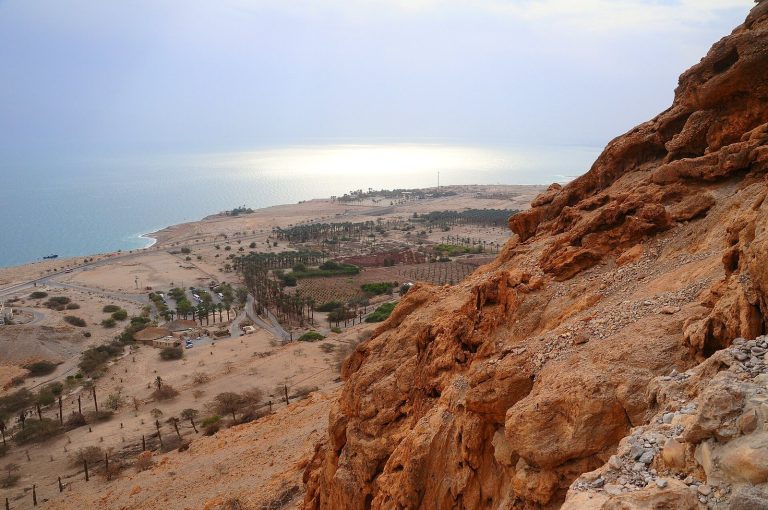
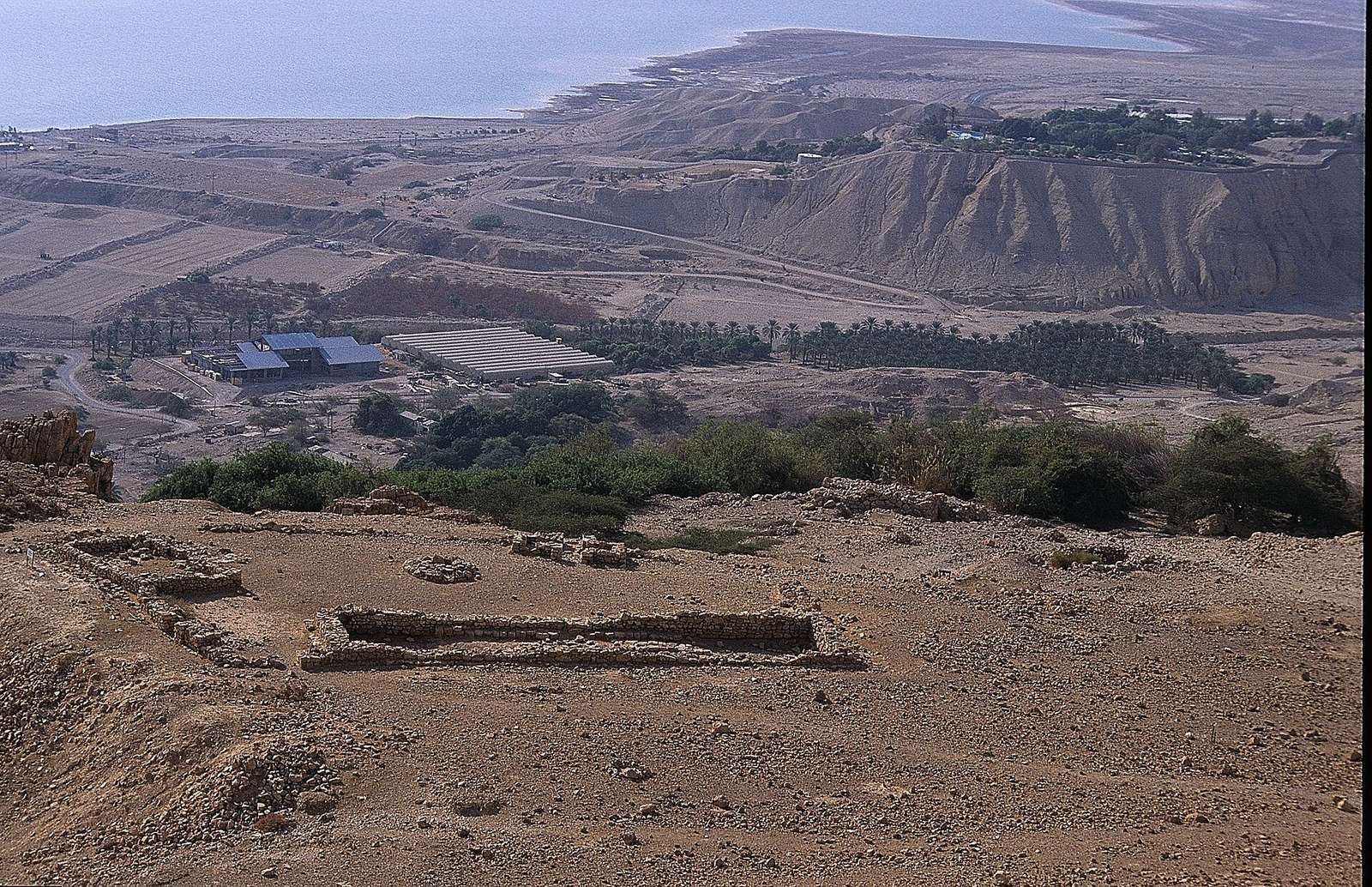
The Temple of Ein Gedi was a public religious complex of the Ghassulian culture, on a rocky rise above the Ein Gedi oasis in Israel, beside the western shore of the Dead Sea. It belongs to the late phase of the Levantine Chalcolithic, or Copper Age, when copper was used alongside stone tools, though its precise date is uncertain. Its plan supports its identification as a temple, perhaps a regional pilgrimage place for semi-nomadic groups.
Ghassulian use and abandonment
The temple’s arrangement has been compared with a sanctuary in layer 19 at Megiddo. The comparison helped support its interpretation as a public place of worship. The nearby Morinaga Cave contained domestic Chalcolithic pottery, including bowls, storage jars, small horn- or cone-shaped vessels, and chalices. Archaeologist Hanan Eshel proposed that the cave may have served as a residence for the temple’s priests.
A hoard discovered by Pessah Bar-Adon in 1961 in Nahal Mishmar Cave, about 12 kilometres south of Ein Gedi, contained 442 objects, 429 of them made of copper. Among them were weighted heads from striking weapons, staffs symbolizing authority, small crowns, and pieces of stone and ivory. David Ussishkin proposed that the objects might have been temple furnishings hidden during a time of danger and never recovered. Bar-Adon instead suggested that fragmentary ruins near the cave could mark a comparable sanctuary and a possible source of the hoard. The proposed link between the objects and the Ein Gedi temple remains uncertain.
The complex appears to have been abandoned without deliberate destruction, and its priests may have removed its ritual furnishings. It may represent a late phase of Ghassulian settlement.
Discovery and excavation
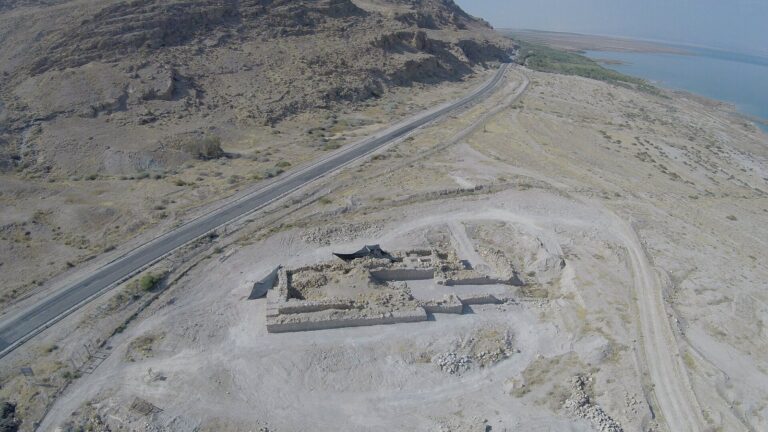
Yohanan Aharoni found the site during an archaeological survey in 1956. A trial excavation by Yosef Naveh the following year recovered pottery that led him to identify the complex as a public building, possibly a shrine. Systematic excavations began in 1962 under Benjamin Mazar’s supervision, with David Ussishkin directing work at the temple. Excavations also took place in 1964, and a scientific report appeared in 1980. During the work, the walls were strengthened and M. Yaffe reconstructed the central circular installation. The site is partially restored.
Remains
Enclosure and layout
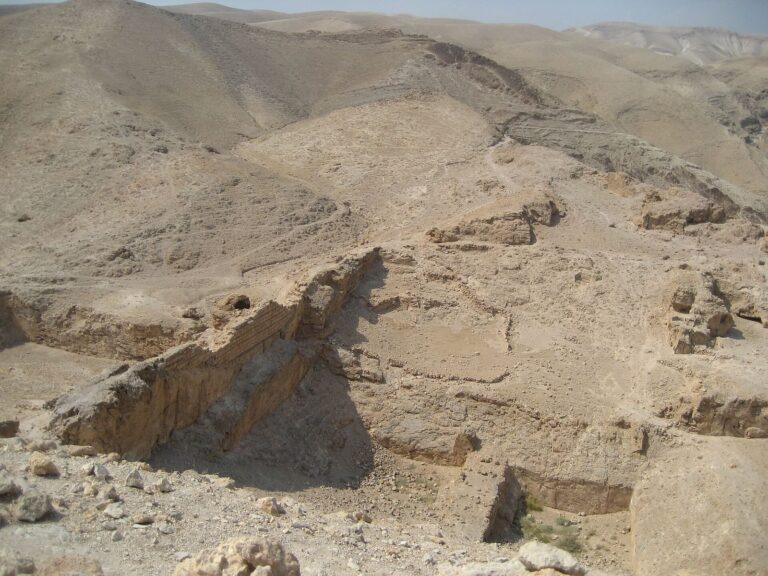
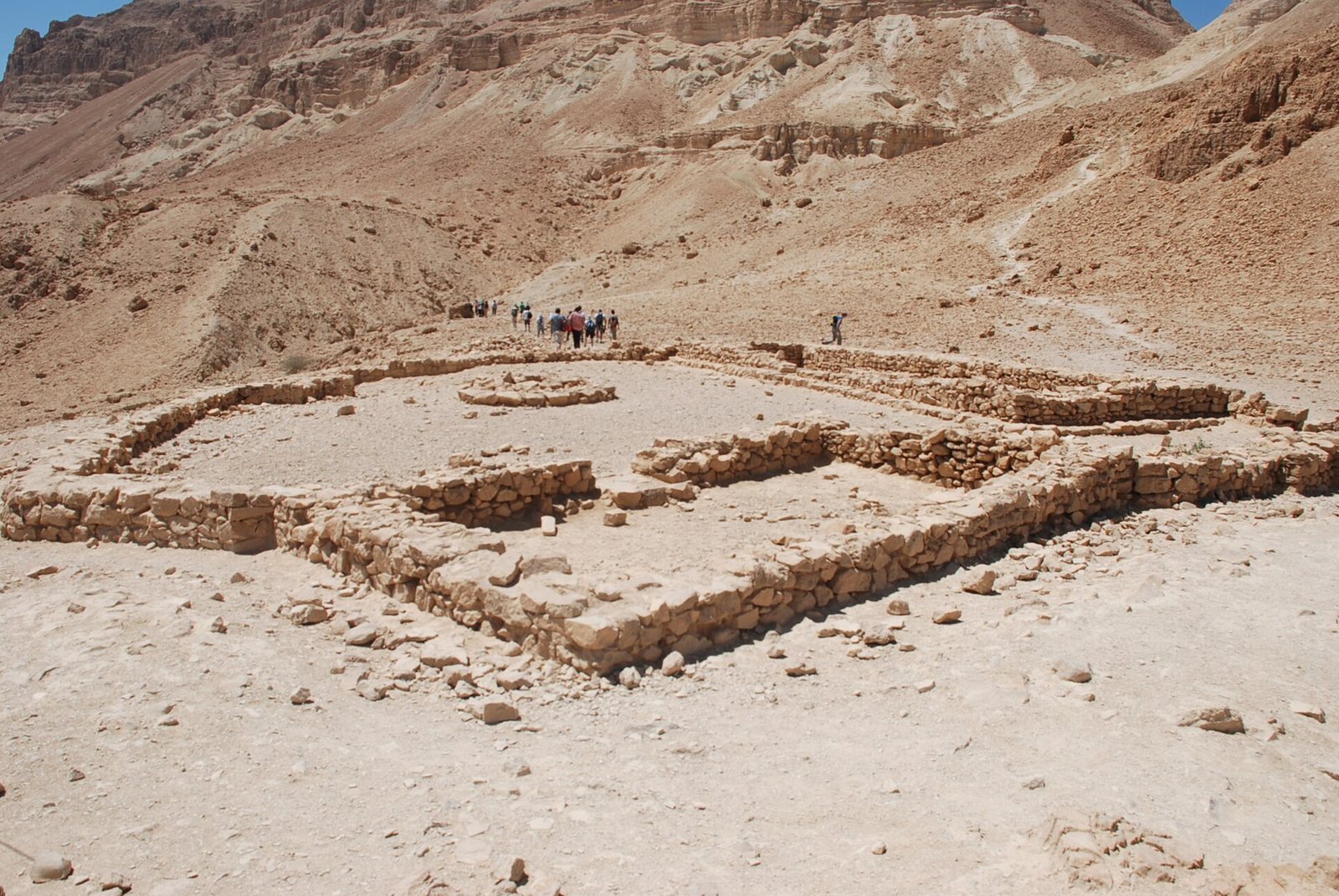
The complex occupies a scarp about 150 metres from the main Ein Gedi spring, between that spring and the Nahal David valley. Its main building stood to the north, a smaller building occupied the eastern end, and a circular stone installation stood in the open courtyard. A roughly rectangular stone enclosure followed the rocky ground and reached the cliff edge or crest on three sides. The walls survive to considerable height.
Buildings and entrances
Main building and altar
The northern building was a rectangular broadhouse, entered through the middle of one of its long sides. It measured about 20 by 5.5 metres, and its entrance opened in the southern wall. Opposite the entrance, a horseshoe-shaped niche served as an altar. A stone fence enclosed the niche, with another stone set above it. Finds there included bones, pottery fragments, ash, and a clay figure of a bull or ram carrying two churns, vessels used to agitate milk.
A rounded piece of white crystalline limestone, identified as calcite, lay at the rear of the altar and may have supported a statue of a deity. Stone benches ran along both long walls. Small pits in the floor beside the short walls held burnt bones, horns, pottery, and large quantities of ash. Other finds associated with the altar included thin branches, shells, lumps of clay, figurine fragments, and beads. A fragment of painted plaster suggests the walls may have been decorated; similar painted plaster is known from Teleilat el-Ghassul in Jordan.
Eastern building
The smaller building at the eastern end was also a broadhouse, measuring about 7.5 by 4.5 metres. Its floor was coated with light-coloured plaster, and a stone bench ran along the front. It may have provided temple personnel with space for ritual clothing and utensils.
Entrances
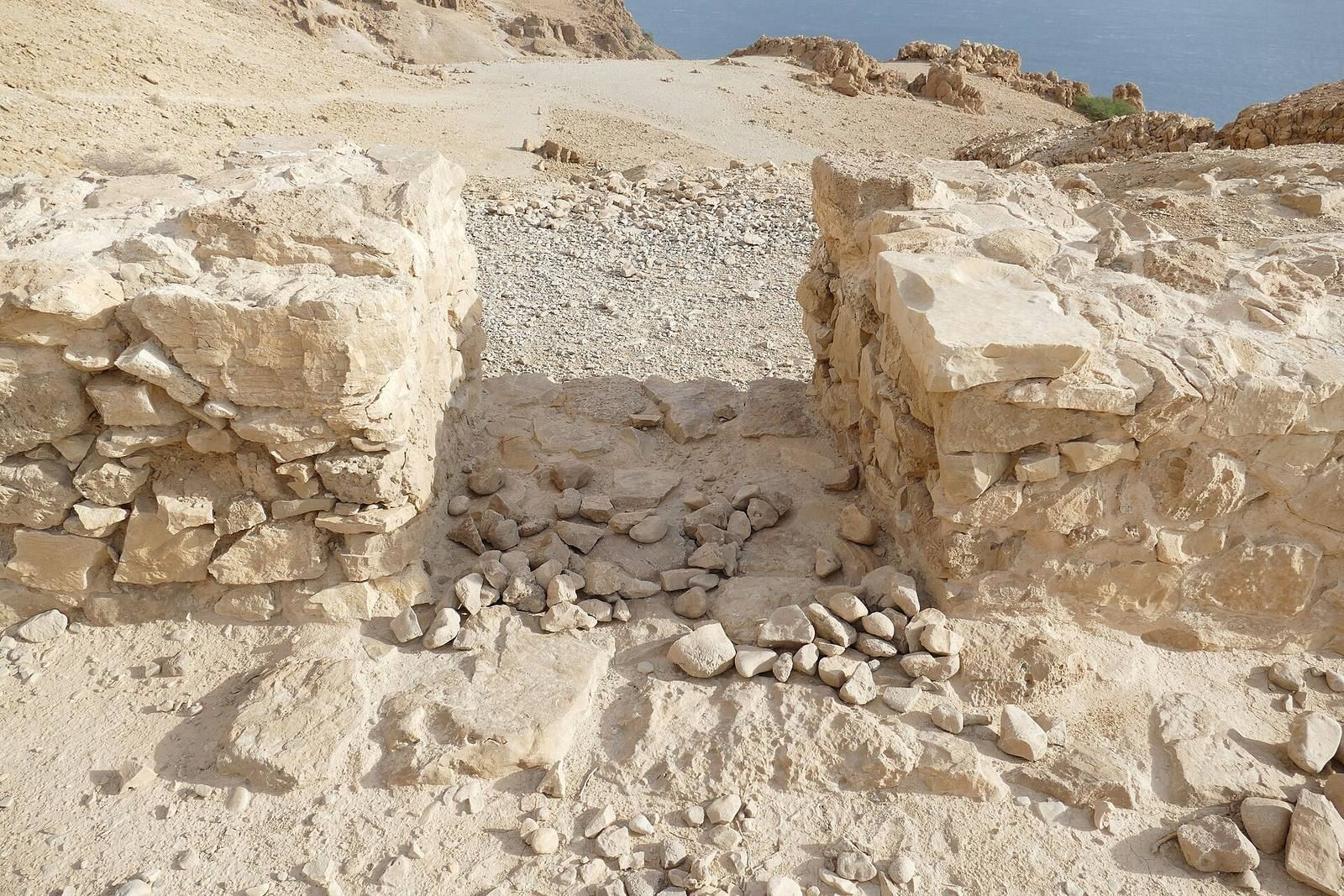
A gatehouse in the southern enclosure wall led toward the main Ein Gedi spring. Its chamber had inner and outer entrances and a stone bench about 23 to 30 centimetres high. A smaller gate beside the eastern building led toward another spring in the Nahal David valley.
Courtyard installation and finds
Circular installation
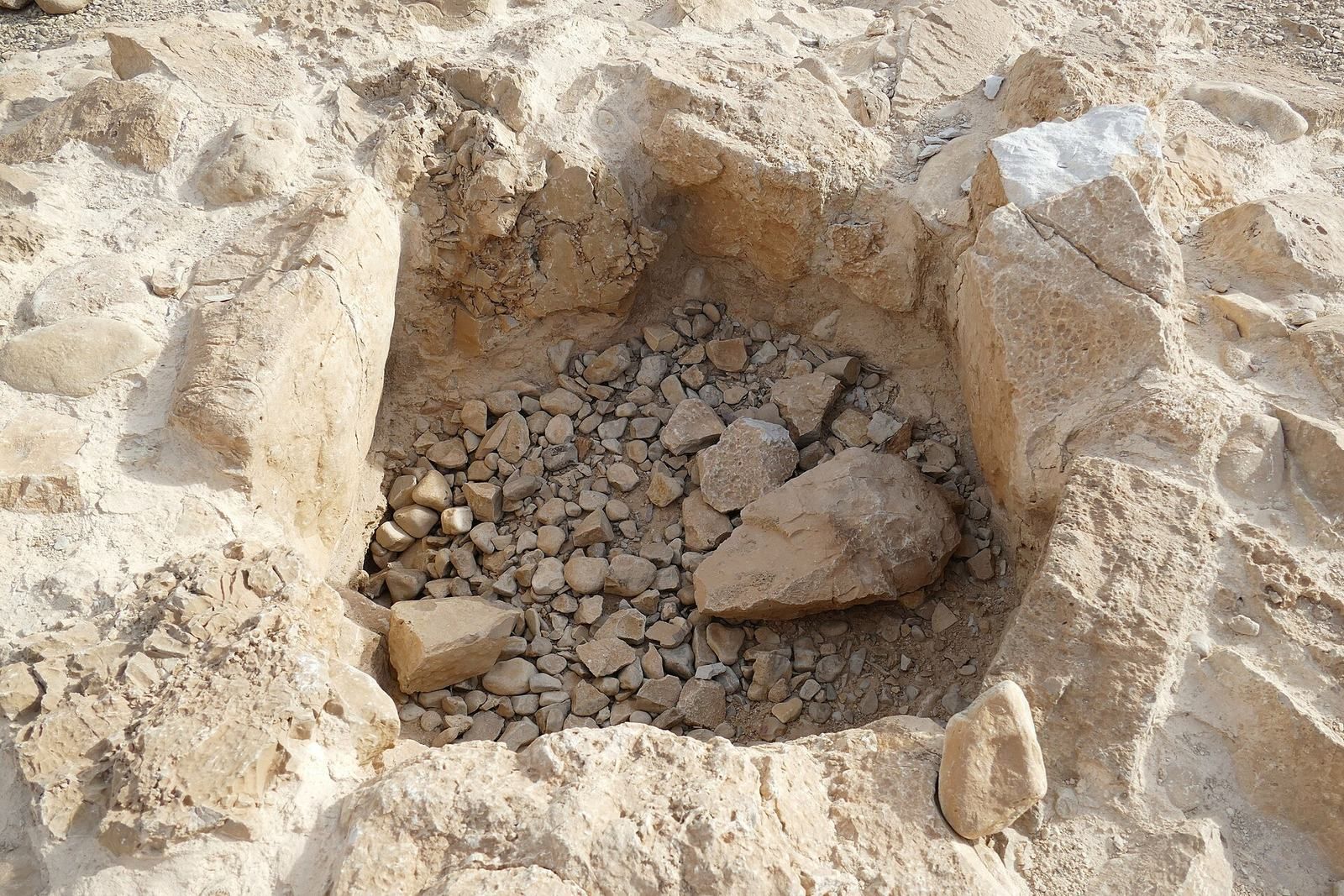
The circular stone installation stood at the courtyard’s highest point and measured about 3 metres across. A basin at its centre was about 90 centimetres wide and 40 centimetres deep. It may have received water offerings or served another ritual purpose. An outlet channel in the wall between the eastern building and the smaller gate appears to have carried liquids, probably water, away from the installation. A fragment of a cylindrical alabaster vessel, a soft stone used for carved objects, was found in the installation. Imported from Egypt, it belongs to the Predynastic period, before Egypt’s first dynasties, and has been described as the oldest alabaster vessel found in Israel or Palestine.
Other finds
Finds from the site include animal bones, flint flakes, shells, and pottery fragments. The pottery is chiefly composed of bowls on stands pierced with openings, small bowls, horn- or cone-shaped vessels, and animal figurines. This limited range may reflect the complex’s ritual use. Bowls on pierced stands also occur at the Chalcolithic temple at Megiddo.