Yōraku Kanjo Kofun: A Late Kofun-Period Burial Mound in Japan
Site at a Glance
- Rating
- 4
- Popularity
- Medium
- Country
- Japan
- Primary era
- Medieval
- Eras represented
- Medieval
- Civilizations
- Yamato
- Site type
- Burial
- Remains
- Burial Mound
On this page6 sections
History
Construction and local burial traditions
Yōraku Kanjo Kofun is an ancient burial mound in Japan, built around the late sixth to first half of the seventh century during the final stages of the Kofun period, an era characterized by the construction of large burial mounds. Along with Yoraku Kankozuka and Terasaki Shirakabezuka, it is regarded as the tomb of a local chief. The three tombs have also been linked by interpretation to an immigrant clan, possibly the Yamato no Aya, an ancient Japanese clan associated with people who came from overseas.
Later burial and modern investigations
Burial activity continued into the early eighth century. During a 2015 survey, pottery fragments dating from the late seventh to early eighth century were found beneath the stone sealing the chamber entrance. They indicate a second burial roughly a century after the mound was built.
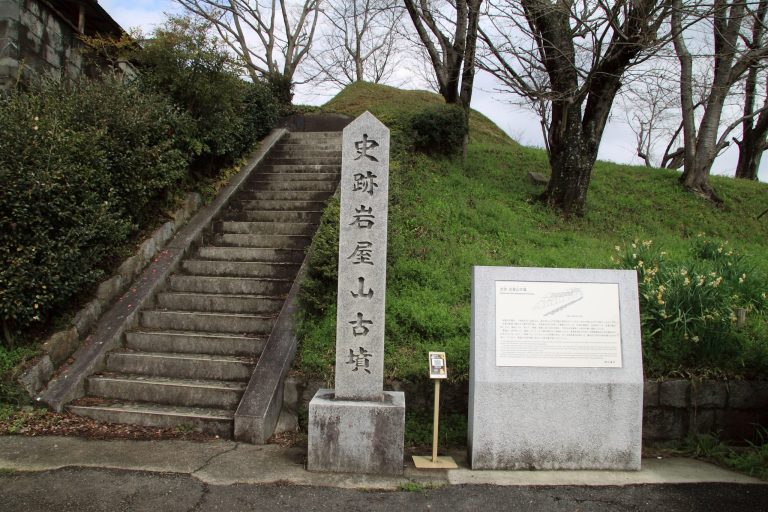
Investigations took place in three stages between 2002 and 2008, followed by further excavation during site-improvement work in 2014 and 2015. Nara Prefecture designated the tomb a historic site in 1976. In 2013 it became part of the nationally designated Yōraku Kofun Cluster with Yoraku Kankozuka and Terasaki Shirakabezuka, and the designated area was enlarged in 2017.
Remains
Mound and ridge setting
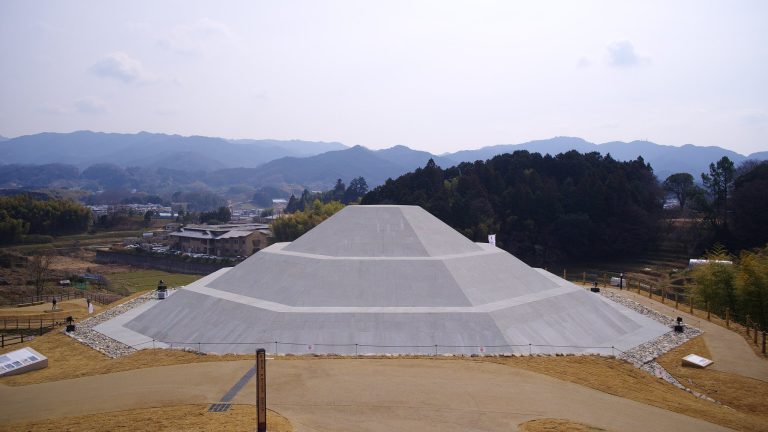
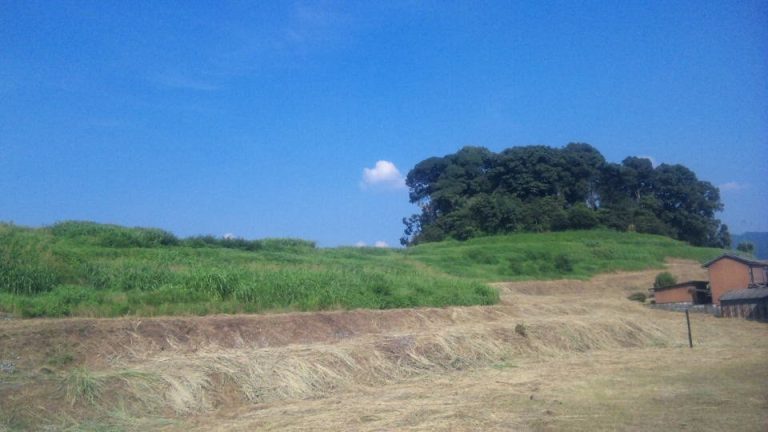
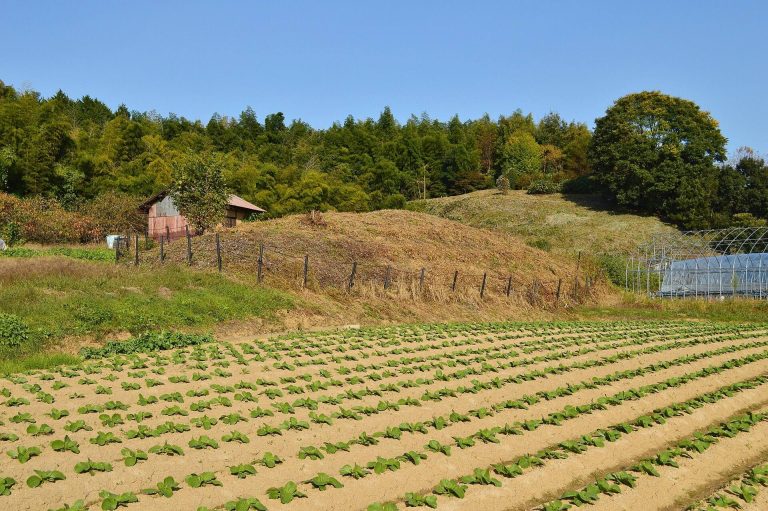
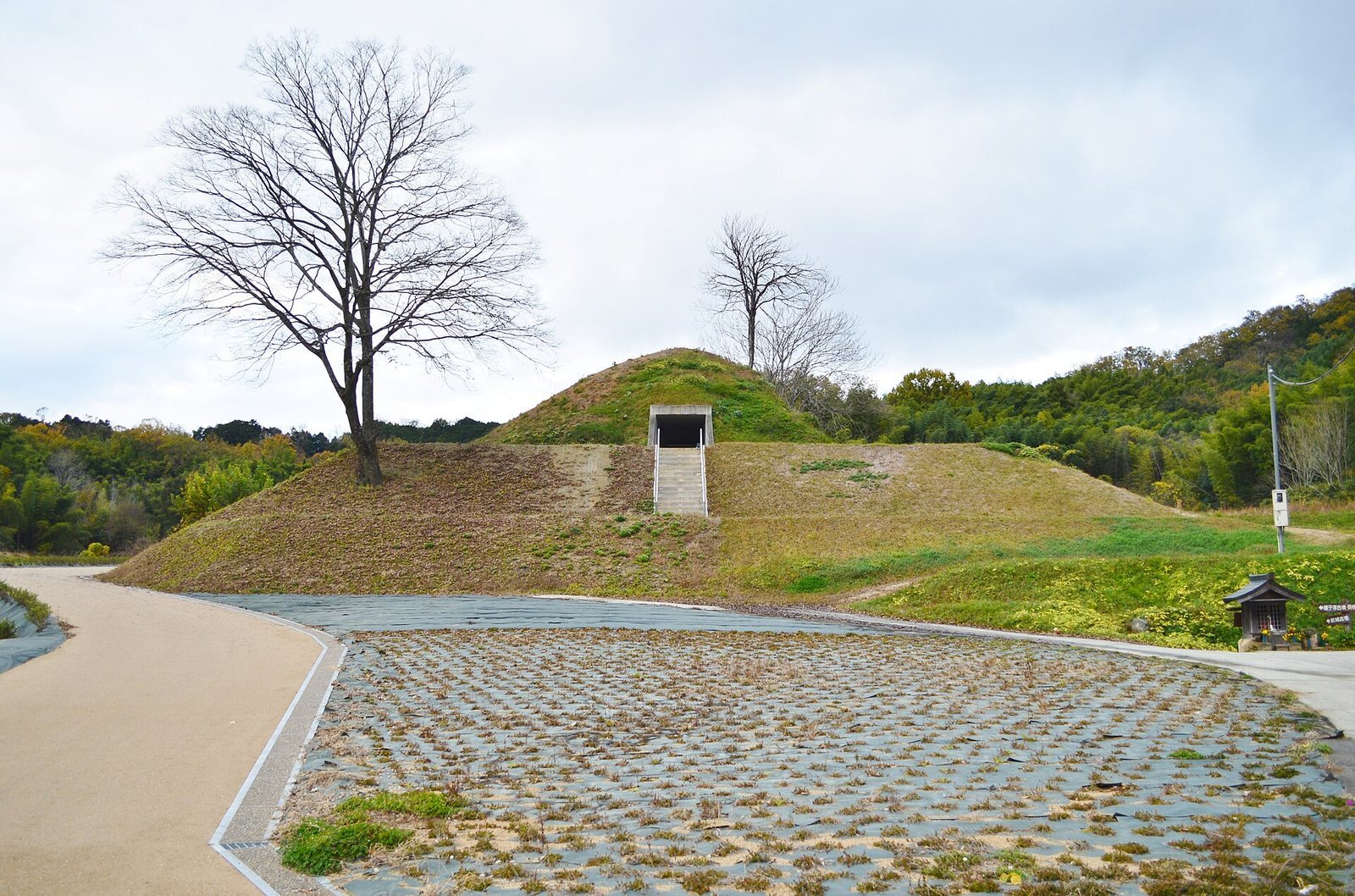
The square, two-tier mound stands at the end of a ridge extending south from the Kaibukiyama Hills, on the southern edge of the Nara Basin. It measures 36 m on each side and rises 10 m. Terasaki Shirakabezuka lies farther north along the ridge, with Yoraku Kankozuka between it and Yōraku Kanjo Kofun. Roughly 100 burial mounds are spread across the surrounding hills. The mound was formerly classified as circular.
Stone burial chamber
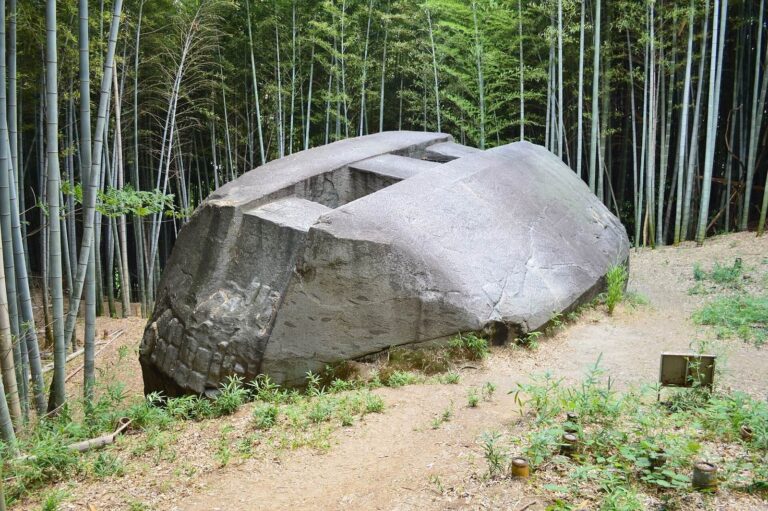
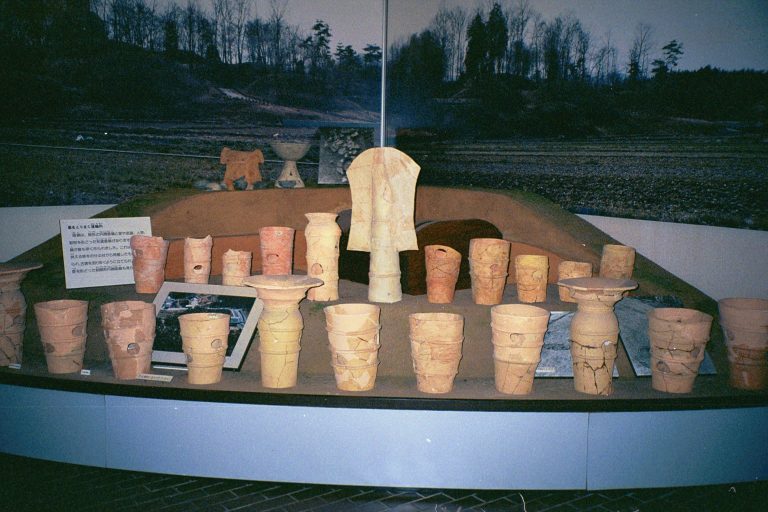
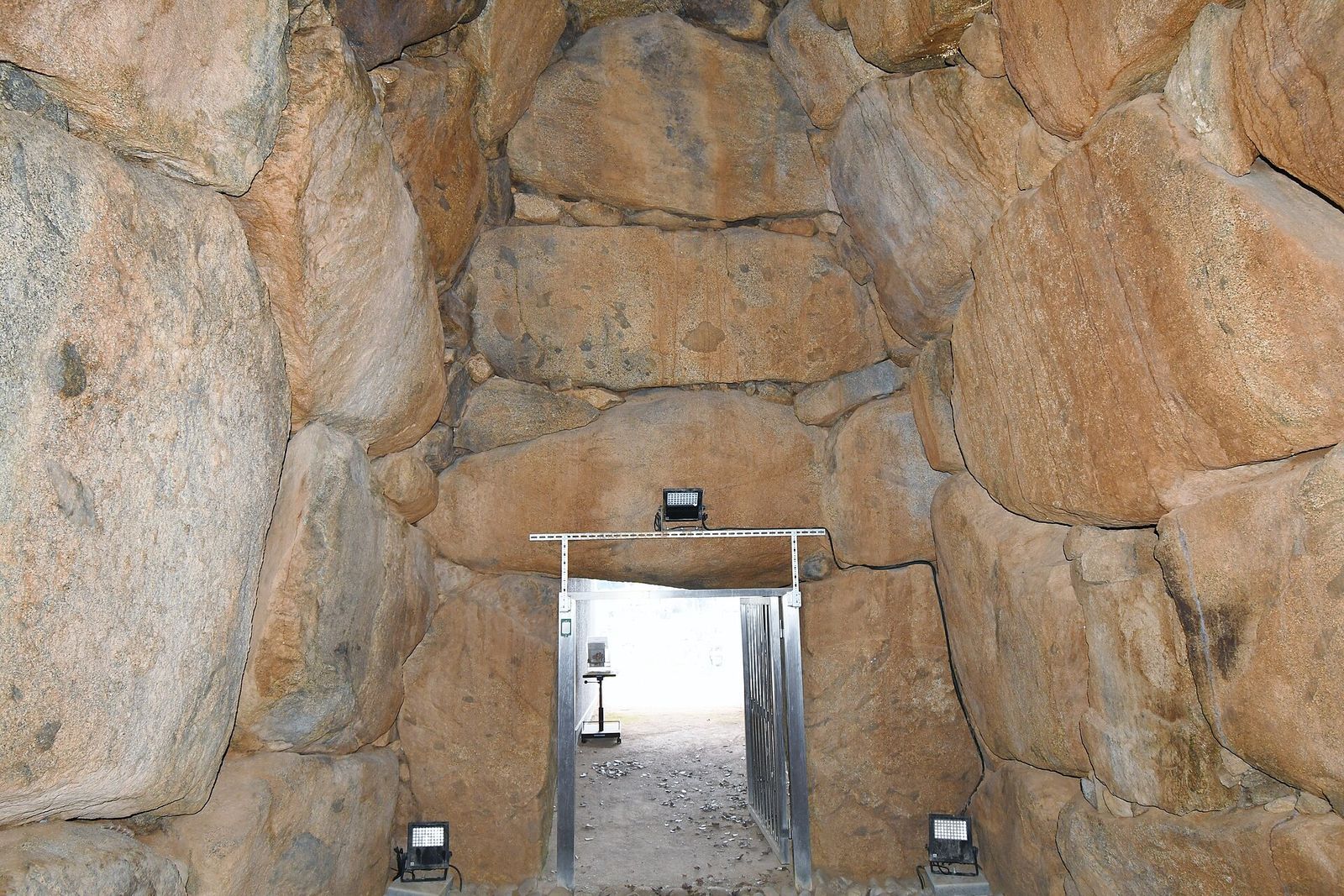
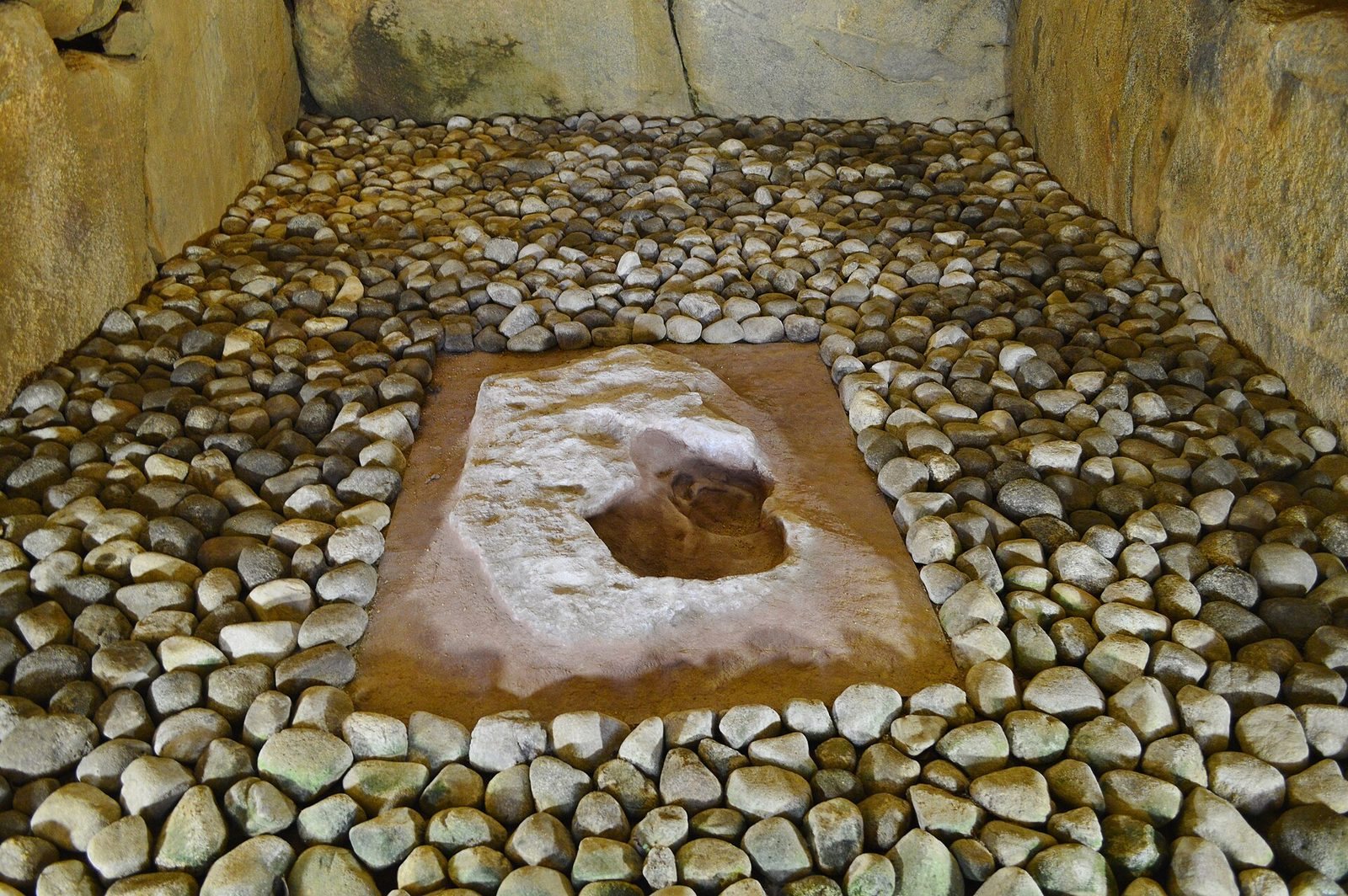
The burial chamber is entered from the south through a passage, with stone walls projecting beside the entrance. The chamber and passage together measure 11.8 m in length. The main chamber is 6.0 m long, 3.8 m wide, and 5.3 m high; the passage is 5.8 m long, 1.8 m wide, and 1.8 m high. Its height places it among the largest stone chambers in Nara Prefecture. Large blocks of diorite, a coarse-grained igneous rock, form the walls, with their flatter faces turned inward. The left wall has five courses of stone and the right has four. All four walls slope inward to form a dome-shaped ceiling capped by one massive stone. Gravel covers the main chamber floor, where a plaster-coated coffin platform stands at the center. Finds from inside include gilt-bronze earrings, silver rings, iron objects, whetstones, Sue ware, a high-fired stoneware, and Haji ware, an earthenware. Some pottery pieces have miniature handles.