Denkō-ji Temple: A Risshu Buddhist Memorial Temple in Nara


Site at a Glance
- Rating
- 4
- Popularity
- Very Low
- Country
- Japan
- Primary era
- Early Modern
- External website
- Open
- Eras represented
- Early Modern
- Civilizations
- Toyotomi regime
- Site type
- Religious
- Remains
- Sanctuary
On this page9 sections
History
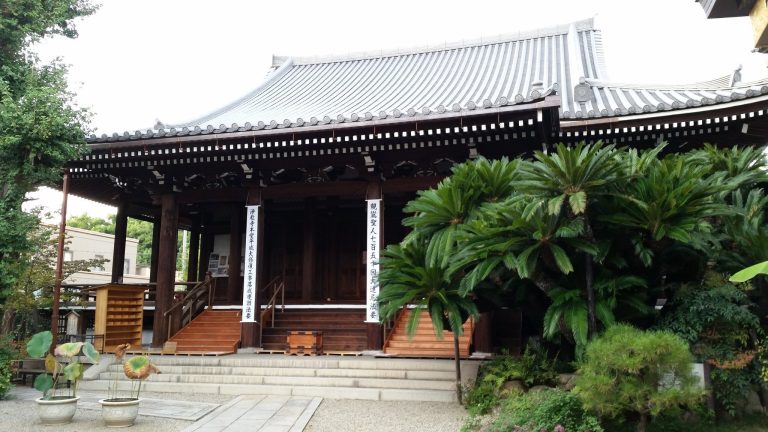
Denkō-ji Temple is a Risshu Buddhist temple in Nara, Japan, traditionally founded in 771 by Shitaku, a disciple of the Chinese monk Jianzhen. Risshu is a Japanese Buddhist school centered on the Vinaya, the tradition of monastic rules and discipline. The temple’s principal deity is Shakyamuni Buddha, and its surviving main hall dates from the temple’s revival in 1585.
Foundation and revival
According to tradition, Shitaku established the temple in 771, when it bore another name. Its decisive transformation came in 1585, when the Buddhist nun Hōshū Sōei, mother of the warlord Tsutsui Junkei, received imperial permission from Emperor Ōgimachi to restore it. She invited an elder from Tōshōdai-ji to lead the revival and renamed the temple Denkō-ji, praying for Junkei’s posthumous welfare. It then became the Tsutsui family’s bodai-ji, a memorial temple that performs Buddhist rites for the dead and preserves a family’s memory.
Pilgrimage and historic status
Denkō-ji is the tenth temple on the Northern Yamato Eighty-eight Sacred Sites pilgrimage and the first temple on the Yamato Ten Jizo Blessings pilgrimage. Its main hall and wooden standing Jizo image, including the objects placed inside the statue, are Important Cultural Properties. The front gate and wooden standing image of Prince Shōtoku are tangible cultural properties designated by Nara Prefecture. Nara City has given the same designation to the wooden seated Shakyamuni image and a silk painting of Tsutsui Junkei.
A former temple-owned wooden standing Sacred Kannon image received Important Cultural Property status in 1929. After the Second World War, it entered private ownership and was later held by the Agency for Cultural Affairs, which purchased it in fiscal 2010. The Important Cultural Property map titled Map of Jambudvipa, the Legitimate Realm of Great Japan was once kept at Denkō-ji. It left the temple during the upheaval surrounding the Meiji Restoration and was later purchased by Tōshōdai-ji.
Remains
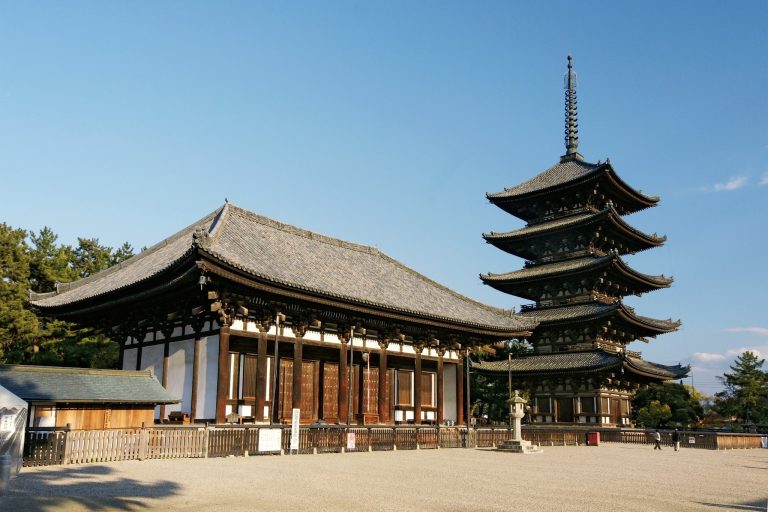
The surviving precinct consists of a front gate and the main hall, rebuilt under Hōshū Sōei’s patronage during the 1585 revival. The hall houses the temple’s principal Shakyamuni image and forms the central surviving building of the restored temple complex. A famous scattering camellia grows at Denkō-ji, shedding its petals one at a time. It is counted among the Three Famous Camellias of Nara, together with the Glue Spill camellia at Tōdai-ji’s Kaizandō and the Five-Colored Camellia at Byakugō-ji.
Buddhist images
Standing Jizo
The wooden standing Jizo was made in 1228, a date preserved by dedicatory documents inside the statue. The sculptor is thought to have been Zen’en. Jizo is a Buddhist bodhisattva associated especially with protecting beings in difficult circumstances. This image is a naked Jizo, a wooden statue carved in nude form so that textile robes can be placed over the body. It is understood as the original Buddha manifestation of the Four Kasuga Shrine Deities, meaning the Buddhist figure believed to reveal their underlying identity in a syncretic shrine tradition.
The statue contains a remarkable group of deposited objects. In the head are a wooden seated Medicine Buddha, a sheet bearing the seed syllable “A,” a blue-glass reliquary, and a woven silk bag. The abdomen holds a handwritten Heart Sutra, part of a Song-edition fine-print Lotus Sutra in seven fascicles, a handwritten Samdhinirmocana Sutra, three handwritten dedicatory documents, and a handwritten list of people who formed a karmic connection. A wooden standing Eleven-Headed Kannon is placed inside the left thigh. The reliquary and small Buddhist images are included with the statue in its Important Cultural Property designation.
Seated Shakyamuni
The wooden seated Shakyamuni was made in 1585 and serves as Denkō-ji’s principal image. It is regarded as a trial model for the Great Buddha of Hōkō-ji, the Kyoto Buddhist temple known for its monumental Great Buddha.
Prince Shōtoku
The wooden standing image of Prince Shōtoku dates from 1304. Shōtoku was a Japanese regent traditionally associated with the early promotion of Buddhism and centralized government. Shima Sakon presented the image to the Tsutsui family.
Sacred Kannon
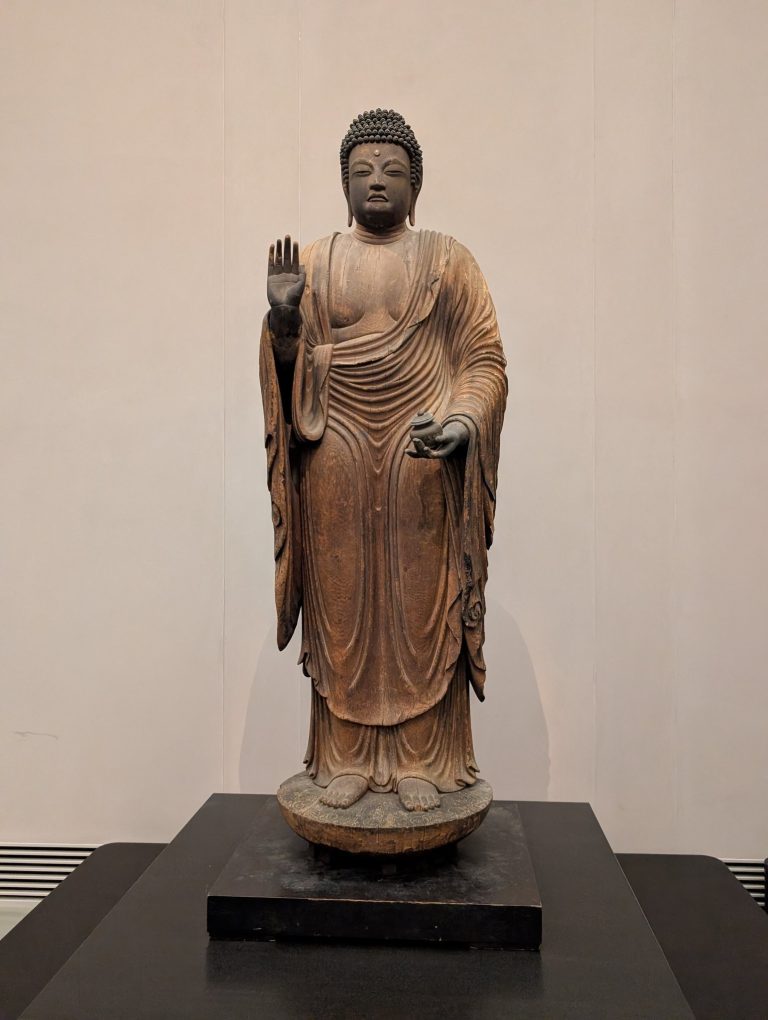
The former wooden standing Sacred Kannon image is 113 centimeters high and dates from around the tenth century, during the middle Heian period. Kannon is a Buddhist bodhisattva associated with compassion.