Yester Castle: A Medieval Fortified Castle in Scotland

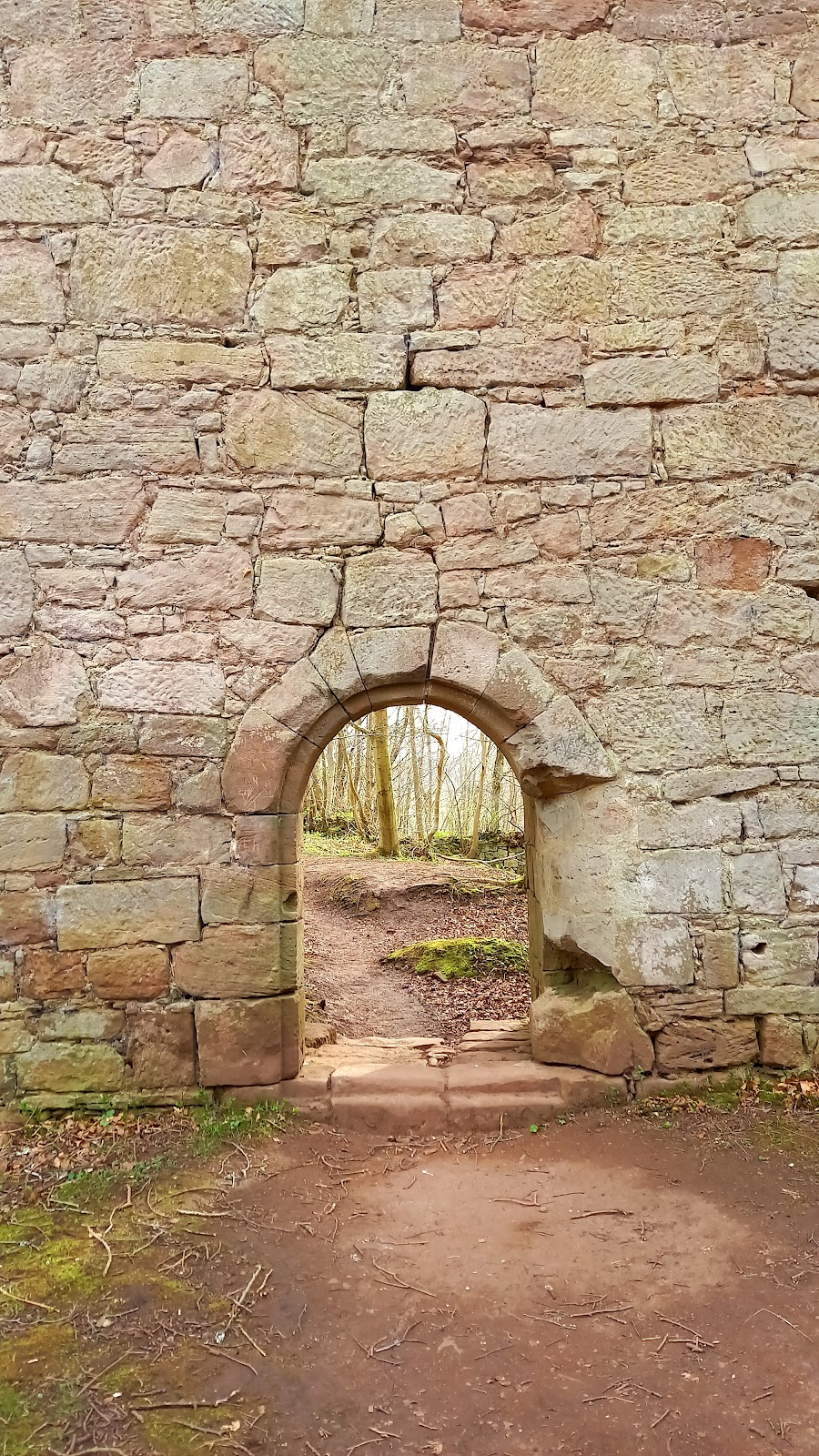
Site at a Glance
- Rating
- 4.7
- Popularity
- Low
- Country
- United Kingdom
- Primary era
- Medieval
- Eras represented
- Medieval
- Civilizations
- Kingdom of Scotland
- Site type
- Military
- Remains
- Castle
On this page9 sections
History
Yester Castle is a medieval castle ruin in Scotland, located near Gifford in East Lothian. Its original stone keep was built before 1267, generally under Sir Hugo de Giffard, a thirteenth-century lord whose family held the barony of Yester. The site later became an enclosed fortified castle and remained associated with prominent Scottish noble families until its abandonment and gradual dismantling.
The Giffard barony
The barony was first known as Yestred, a name derived from the Brythonic word Ystrad, meaning a strath or dale. Latin records also refer to the place as Zester. King William the Lion granted the barony to Hugo de Giffard, a Norman immigrant who received land in East Lothian during the reign of King David I.
Sir Hugo de Giffard became the subject of a later reputation as a magician and necromancer. This gave rise to traditions that he practised sorcery beneath the castle and that an army of hobgoblins built it. Alexander III was at Yester on or around 24 May 1278, when he corresponded with Edward I of England.
Wars and reconstruction
After the Scots Wars of Independence, the late-thirteenth- and early-fourteenth-century conflicts in which Scottish forces resisted English claims of overlordship, Yester was rebuilt as a castle of enceinte. This form used a fortified enclosure as the principal defensive structure.
During the English occupation of Scotland, Edward I granted properties confiscated from Lothian nobles and landowners to Adam de Welles of Lincolnshire, who was associated with Yester Castle. Alexander de Welles, Master of Torphichen Preceptory, was killed at the Battle of Falkirk in 1298. Heraldic evidence connects him with the Lincolnshire Welles family.
From the Giffards to the Hays
The male line of the Giffards ended in 1357. Joanna, daughter and co-heiress of the last Sir Hugo de Giffard, married Sir William or Sir Thomas de la Haye of Peebles and Locherworth, Sheriff of Peebles. Through her, the barony and lands of Yester passed to him, and they thereafter remained with the Hay family.
John Hay of Yester became the first Lord Hay of Yester in 1487. His successor, John, second Lord Hay, was killed at the Battle of Flodden in 1513.
Conflict and abandonment
In May 1544, during the Rough Wooing, the Anglo-Scottish conflict of the 1540s in which England sought to force a marriage alliance between Mary, Queen of Scots, and Edward VI, an English army burned the castle, the village, and the harvest while returning from the burning of Edinburgh.
John, fourth Lord Hay, defended Yester against an English force in 1547. He was captured later that year at the Battle of Pinkie and held in the Tower of London for three years. In February 1548, the English commander Grey of Wilton captured Yester and placed George Douglas of Pittendreich in charge of Yester and Dalkeith. French soldiers captured at the castle were held hostage by the English, while the garrison was reportedly composed mainly of Scots or Spaniards.
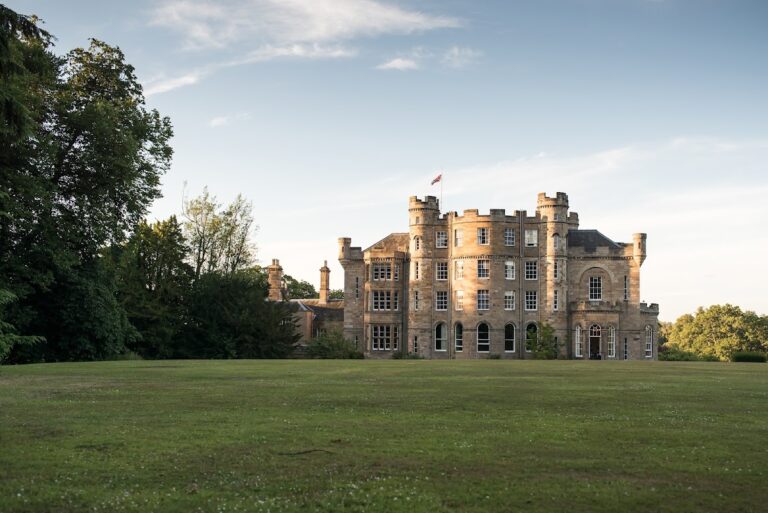
The fourth Lord Hay died in 1557. His son William abandoned the castle and moved to a new tower house on the site of the present Yester House. In 1646, the eighth Lord John Hay became Marquess of Tweeddale. Yester Castle then fell into disrepair, and much of its stone was quarried or dismantled during the seventeenth century for building material, including material used in the new tower house. The underground Goblin Ha’ remained occupied by the Marquess of Tweeddale’s falconer until 1737.
Later ownership and protection
Yester House was sold in 1972 to the Italian-American operatic composer Gian-Carlo Menotti. His son Chip sold it in 2013. Yester Castle is a scheduled monument, a legally protected archaeological or historic site of national importance in Scotland, under the Ancient Monuments and Archaeological Areas Act 1979. It is also designated by Historic Environment Scotland as SM780 and recorded by the Royal Commission on the Ancient and Historical Monuments of Scotland.
In 2021, stone was reported stolen from the supporting walls of the castle vaults. Because these load-bearing walls threatened the stability of the surviving remains, the castle was closed to the public while the theft was investigated.
Remains
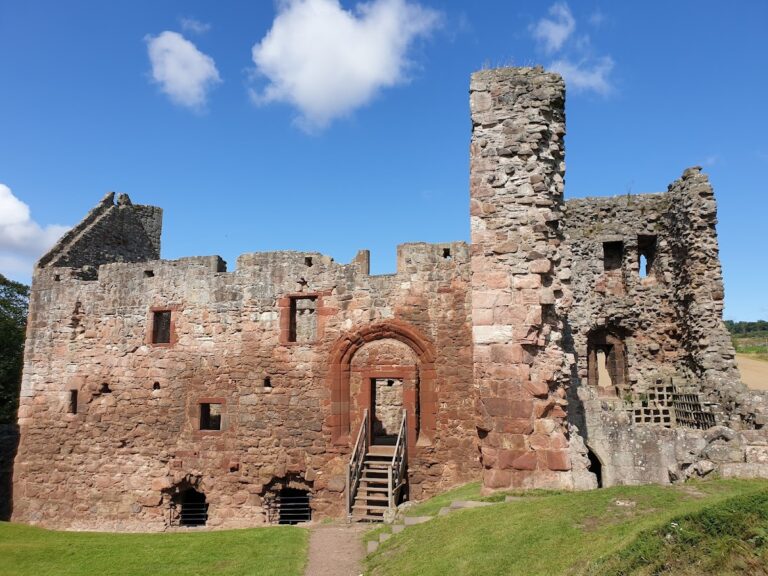
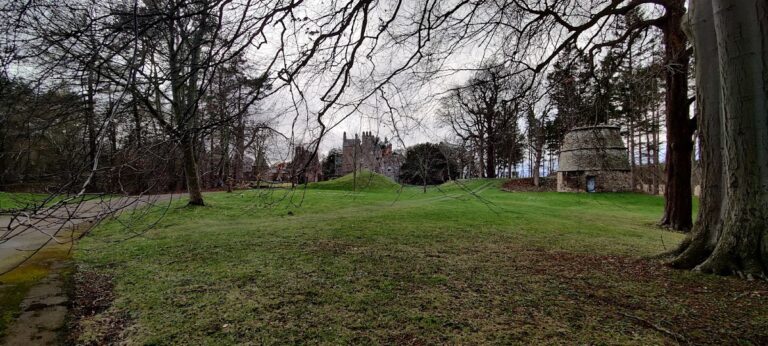
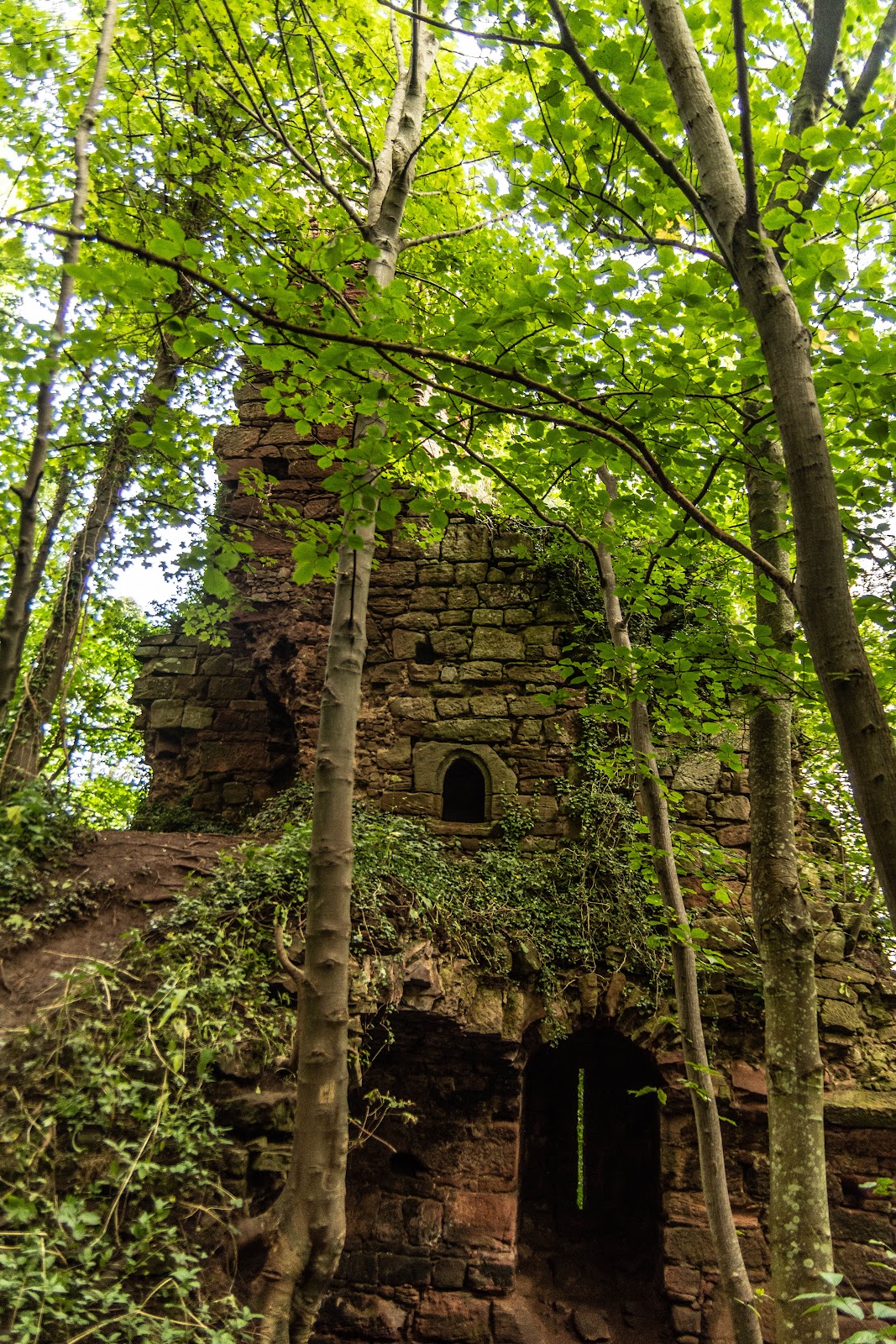
Yester Castle stands beside Hopes Water as a ruined fortified site largely covered by vegetation. The surviving fabric combines portions of the above-ground defensive enclosure with the underground hall that formed the most complete surviving structure. Quarrying and dismantling reduced the castle substantially, while the vaults and their supporting walls remain important to the condition of the ruin.
Fortified enclosure
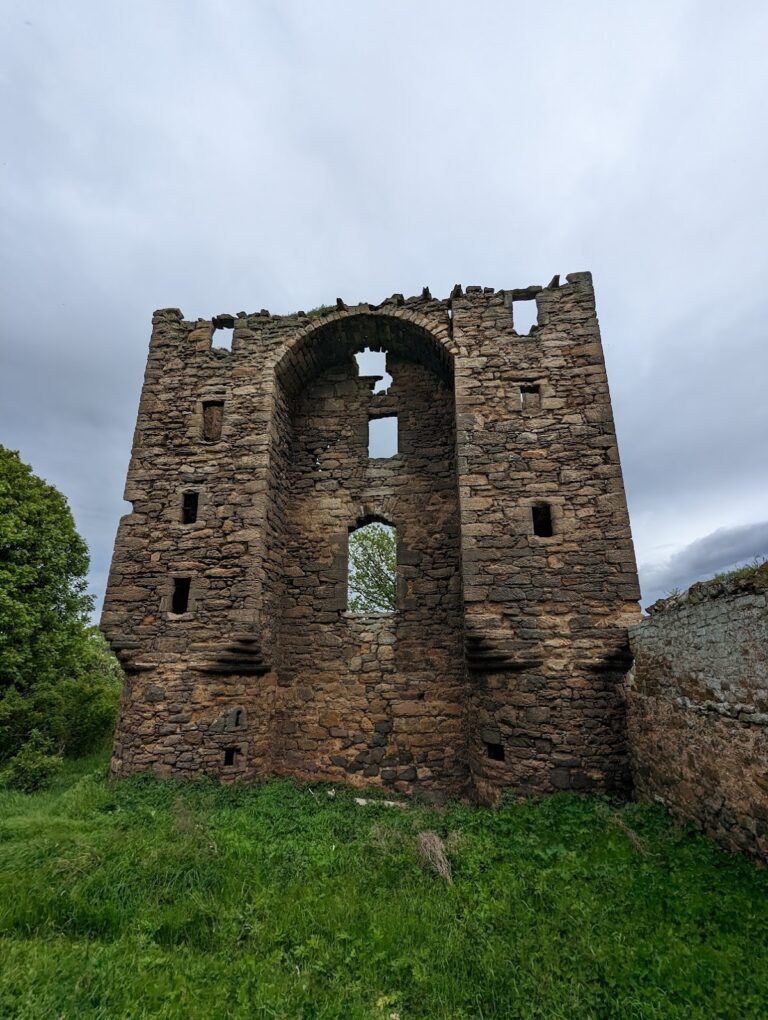
The original principal building was a stone keep erected before 1267. Following the Scots Wars of Independence, the site was reconstructed as a castle of enceinte, with its defensive walls forming the main castle structure. Part of the curtain wall, the fortified boundary wall of a castle, survives on the northern side. The above-ground remains are fragmentary after the removal of stone for later construction.
Goblin Ha’
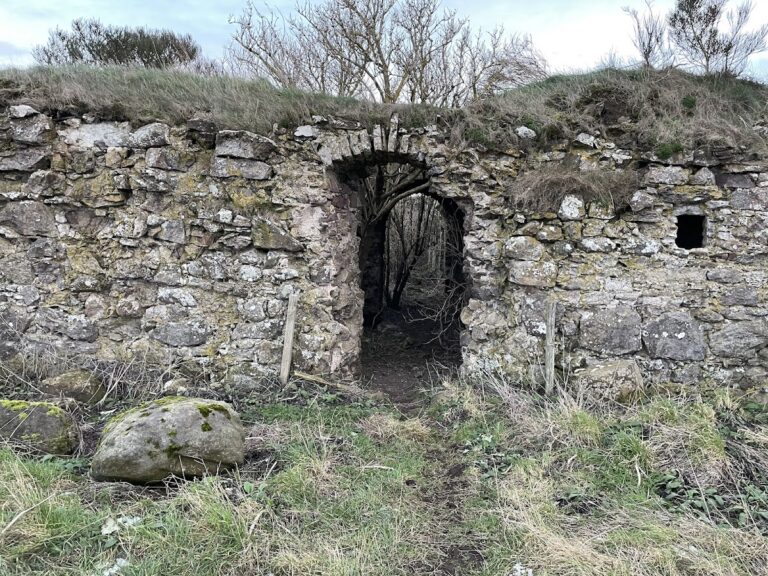
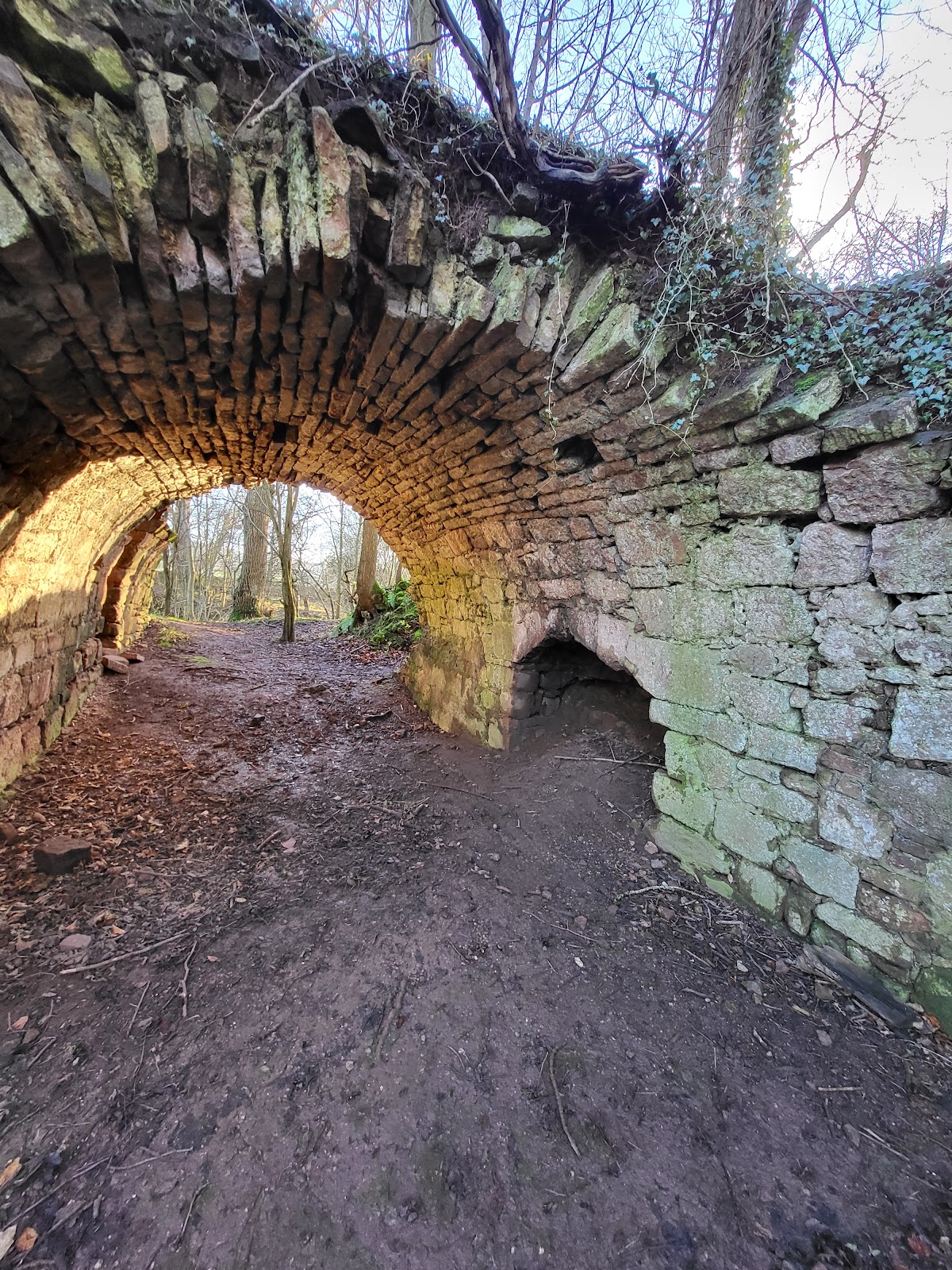
The only complete surviving structure is the subterranean Goblin Ha’, also called Hobgoblin Ha’ or Goblin Hall. A staircase from the west leads down to its underground chamber. The hall is an extensive cavern or undercroft, meaning a vaulted lower chamber, with stone vaulting. Its form lies beneath the castle and preserves the most substantial continuous element of the medieval complex.
A fifteenth-century tradition claimed that Goblin Ha’ extended beneath a large area of ground and had been created through magical artifice. The chamber was also popularly known as Bo’ Hall. Its vaults have load-bearing supporting walls, and the theft of stone from those walls in 2021 posed a structural threat to the surviving underground remains.