Yburg Castle: A Medieval Frontier Fortress near Baden-Baden
Site at a Glance
- Rating
- 4.6
- Popularity
- Medium
- Country
- Germany
- Primary era
- Medieval
- External website
- Open
- Eras represented
- Medieval, Early Modern, Modern
- Civilizations
- Holy Roman Empire
- Site type
- Military
- Remains
- Castle
On this page12 sections
History
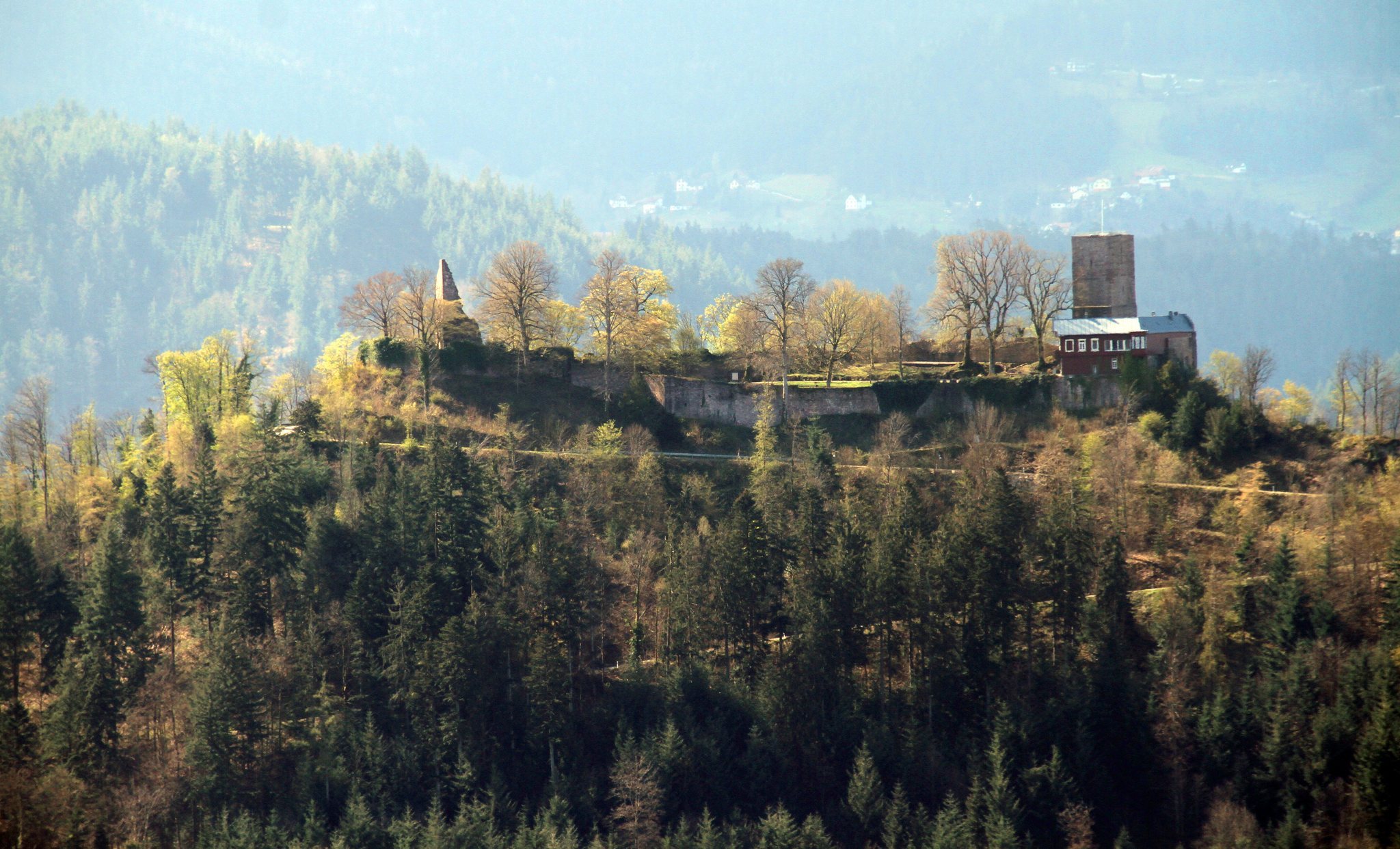
Yburg Castle is a ruined medieval hilltop castle in Germany, standing on the Yberg near Baden-Baden and probably built around 1200 under the Margraves of Baden. It occupied the western edge of the Black Forest, where the rising Baden territory met the Upper Rhine Plain, and was associated with Steinbach, Neuweier, and Varnhalt. Its position helped secure Baden’s southwestern frontier as the surrounding lands increasingly came under the influence of the House of Baden.
Foundation and Baden expansion
Margrave Hermann V of Baden inherited rights to Steinbach and Sinzheim in 1190. Yburg was probably established soon afterwards, although the precise sequence of its construction remains uncertain. Its earliest phase belonged to a period of territorial consolidation. Nearby Eberstein Castle was built, Hohenbaden Castle was enlarged, and Steinbach was fortified and granted township status as Baden influence expanded during the mid-thirteenth century.
The Margraves of Baden held Yburg as an imperial fief, meaning property granted by the Holy Roman Emperor or the Empire in return for feudal obligations. Hermann V’s widow founded Lichtenthal Abbey, a Cistercian convent, in 1245. A donation deed for the abbey contains the first known written mention of Yburg and names Burkhard and Heinrich Röder as its feudal wardens under Margraves Hermann VI and Rudolf I.
Feudal administration and conflict
In 1309, an inheritance division transferred the castle to Margrave Frederick II. In 1328, Frederick conveyed Yburg, together with Sinzheim and Steinbach, to his cousin Margrave Rudolf III for 3,140 pounds of Heller, a medieval German monetary unit. Frederick retained the right to buy the castle back. The Röder family, also known as Röder von Rodeck, administered Yburg for the House of Baden until 1369.
Yburg became involved in a regional conflict in 1333, when Steinbach was held as a pledge by the Count of Oettingen during a dispute with the Bishop of Strasbourg. The knights of Bach and Stein, Yburg’s Röder wardens, and three owners of manor houses in Steinbach are believed to have attacked a commercial caravan belonging to the bishop. They seized its goods and held the merchants for ransom. The war that followed brought the destruction of Yburg, the manor houses, and the noble estates.
The castle continued to appear in records as control changed. In the fifteenth century, under Margrave Bernard I, a bailiff lived at Yburg, probably in the eastern extension. Konrad, identified as the last knight of Yburg, was recorded in 1442. The older spelling “Iburg” disappeared after 1510, when “Yburg” became the standard form.
Revolt, rebuilding, and rival Baden branches
Between 1450 and 1525, the lords of Yburg and other princes repeatedly attacked peasants and workers. Several attacks by the castle’s garrison, which numbered more than 80 men, targeted workers at the quarry in Varnhalt. During the German Peasants’ War, a widespread revolt of peasants and lower-status groups in the German lands in 1524 and 1525, the peasants retaliated by burning Yburg in 1525.
An inheritance division placed Yburg in the Margraviate of Baden-Baden in 1535. From 1598 to 1622, it was administered by the rival Baden-Durlach branch of the House of Baden during the Upper Baden occupation. In 1622, the castle returned to Baden-Baden. These two branches were competing lines of the Baden dynasty, and their rivalry shaped the castle’s administration during this period.
Margrave Edward Fortunatus sought to increase his wealth at Yburg in 1594 through counterfeiting and an alchemical workshop in the basement vaults. He employed the alchemist Francesco Muskatelli and Muskatelli’s assistant, Paul Pestalozzi. A separate tradition associates Edward Fortunatus and two alchemists with black magic at the castle.
Between 1617 and 1622, the Baden-Durlach administration strengthened the eastern tower and the entrance enclosure, adding artillery to the defensive works. Georg Frederick, Margrave of Baden-Durlach, is also associated with rebuilding Yburg in 1620. The castle belonged to Baden-Baden again from 1622.
Destruction and later preservation
French troops destroyed Yburg in 1689 during the Nine Years’ War, a major European conflict fought from 1688 to 1697 that included French campaigns in the German southwest. The destruction formed part of a wider devastation affecting Steinbach, Baden-Baden, and the two Baden palaces. Roofs were destroyed, supplies were plundered, and buildings were burned. Inhabitants who resisted were shot.
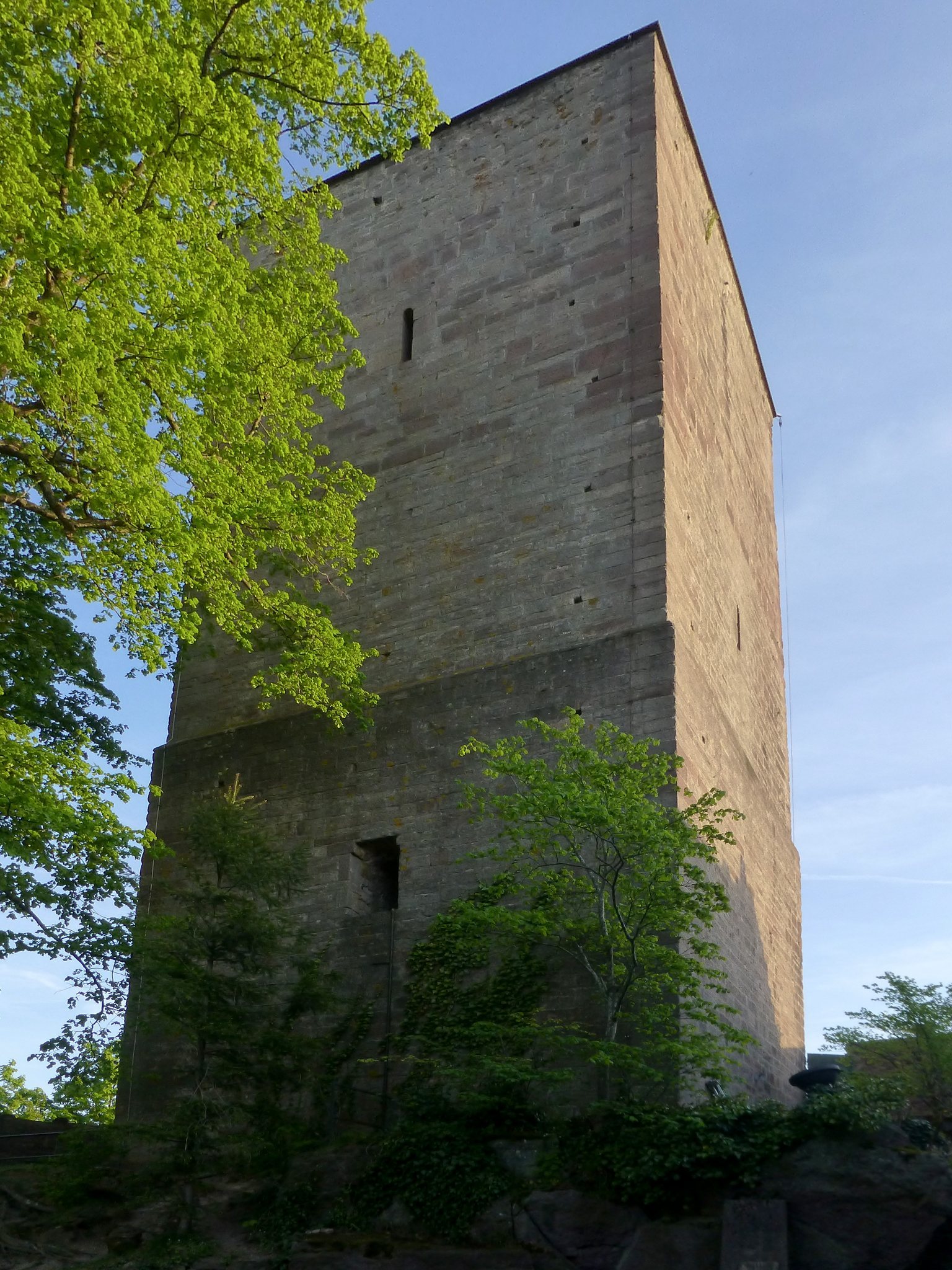
A lightning strike split the eastern tower in 1781. From 1792, the inhabitants of Steinbach were allowed to quarry stone from the castle for the construction of the Neuweier Bridge. Further lightning strikes damaged the tower in 1840 and 1987. Restoration of the masonry took place in several phases between 1888 and 1913, with carved dates in the walls recording some interventions. The breach in the northern curtain wall was closed in 1977.
Yburg is state-owned and is managed by the State Palaces and Gardens of Baden-Württemberg. Conservation work led to its closure in June 2021.
Remains
Castle layout and early fortifications
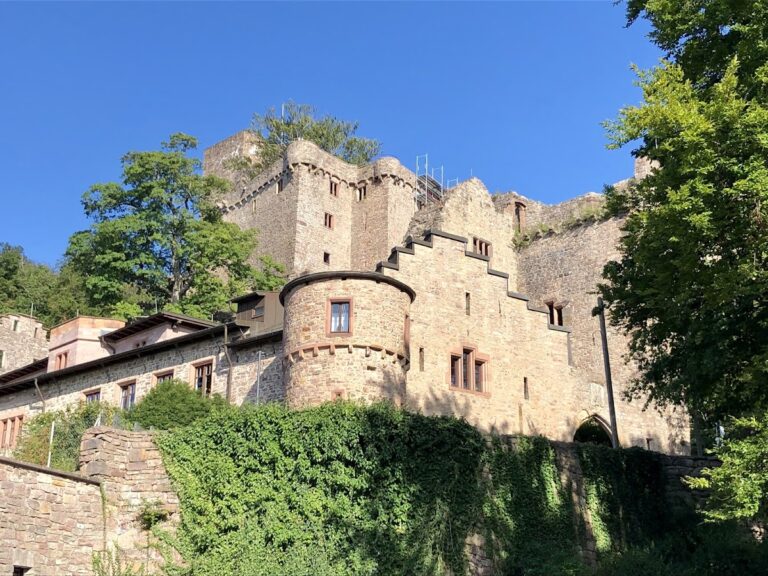
Yburg occupies a narrow summit approximately 150 metres long and 32 metres wide at an elevation of 520.1 metres on the Yberg, at the transition between the Upper Rhine Plain and the Black Forest. An elliptically shaped curtain wall, an enclosing defensive wall linking fortified structures, surrounds the castle’s western and eastern sections. The surviving layout reflects the growth of an early fortified core into a larger residence and defensive compound.
Western bergfried
The earliest construction phase probably dates to around 1200 and included the western bergfried, the principal tower of a medieval German castle, together with the surrounding curtain wall. The tower rises approximately 20 metres and has an entryway about 9 metres above ground level. Its present ground-level entrance was cut through the eastern wall by miners in 1883. A stairway installed along the interior walls has 112 steps, allowing the tower to serve as a lookout tower since 1985.
Entrance defenses
The castle entrance was protected by a tower zwinger, an outer defensive enclosure or passage between fortification lines. The eastern defenses also included a bastion, a projecting work designed to support weapons fire. Between 1617 and 1622, these defenses were refortified and equipped with artillery, linking the surviving structures to the castle’s final period as an active stronghold.
Eastern fortified enclosure
The eastern section was built during the thirteenth or fourteenth century. It contained residential buildings and a keep or tower, and it was probably enlarged to provide accommodation for the bailiff who lived at Yburg in the fifteenth century. The eastern tower later suffered repeated lightning damage, including the major split caused in 1781 and further damage in 1840 and 1987.
Residential buildings
The principal residential building was the palas, the main living and representational building of a medieval German castle. Its foundations now support the Schweizerhaus, a rustic country-house-style restaurant built in 1892. The later building preserves the position of the former residential structure within the eastern part of the castle.
Surviving fabric and setting
The surviving fabric consists of wall remains and the tower within the enclosed summit. Masonry restoration took place in phases from 1888 to 1913, and the northern breach in the curtain wall was closed in 1977. From the castle, the elevated setting provides a panoramic outlook across the Rhine Plain and the Black Forest, reflecting the position that made the Yberg suitable for a frontier stronghold.