Roman Bath Ruins, Baden-Baden: Ancient Roman Bath Complexes


Site at a Glance
- Rating
- 4.1
- Popularity
- Low
- Country
- Germany
- Primary era
- Classical
- External website
- Open
- Eras represented
- Classical
- Civilizations
- Roman
- Site type
- Sanitation
- Remains
- Baths
On this page7 sections
History
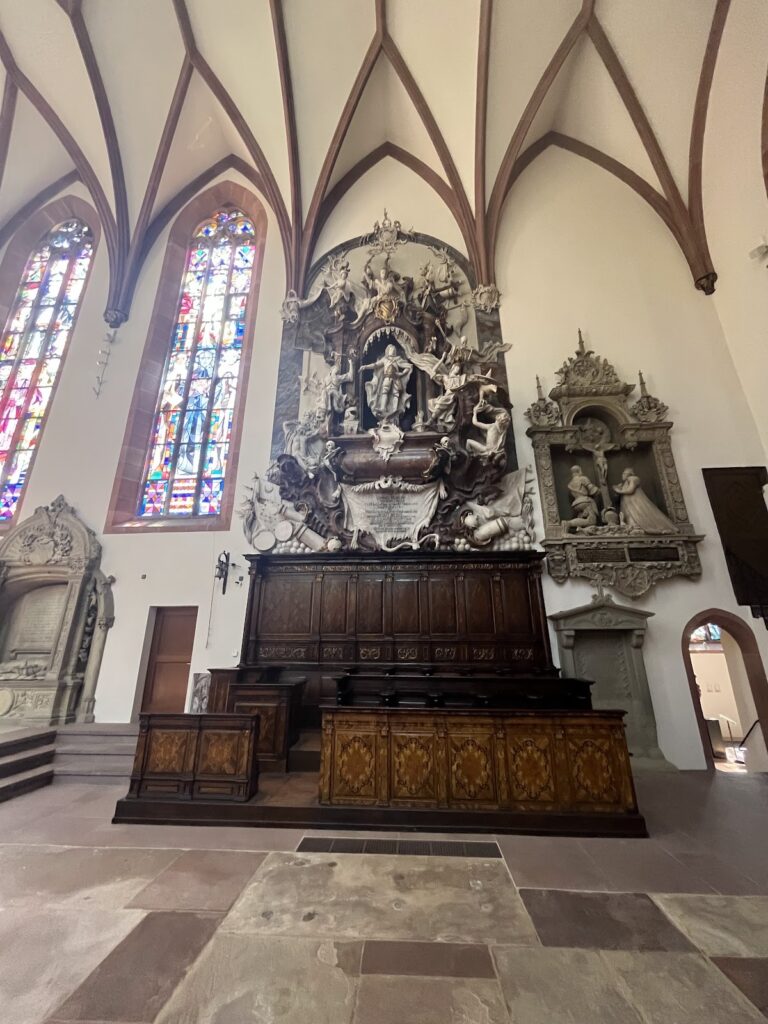
Roman Bath Ruins, Baden-Baden, Germany, preserve two ancient bathing complexes built by the Romans for the settlement of Aquae. The simpler public and soldiers’ bath, known as a balineum, was probably completed during the 70s AD, while the Imperial Baths were luxuriously expanded between AD 213 and 217 under the emperor Caracalla, who ruled from AD 211 to 217. Together, the remains reflect the development of Roman bathing facilities at Aquae.
The Roman bathing complexes
The balineum served the local population and was constructed before the Imperial Baths. The larger Imperial Baths were expanded on Caracalla’s orders between AD 213 and 217. Their remains now lie beneath the marketplace, where the former outline of the complex is marked by black cobblestones.
Excavation and conservation
The hygienic bath was discovered and exposed during nineteenth-century construction of the Friedrichsbad. Excavation and conservation continued between 1846 and 1900. The Imperial Baths were found in 1847 during building work at the collegiate church.
Later construction repeatedly affected the Imperial Baths. A branched tunnel system was built in the late nineteenth century, and canals and pipes installed in recent decades further damaged and reduced the surviving structure. Since 2021, the Roman bath site has formed part of a UNESCO World Heritage listing, reflecting its cultural and archaeological importance.
Renewed archaeological investigation
Replacement of water pipes in the marketplace allowed a large-scale archaeological investigation of the Imperial Baths in 2024, the first of its kind there in more than 180 years. ArchaeoConnect and Baden-Württemberg’s State Office for Monument Preservation examined a 50-square-meter area, including parts not documented in earlier research. Modern archaeological documentation methods clarified the structure of the Imperial Baths and established the previously unknown condition of their surviving ruins.
Remains
The Roman Bath Ruins occupy two related areas at the foot and on the lower southern slope of the Schlossberg. The Imperial Baths extend beneath the present marketplace between the collegiate church and the Old Steam Bath, while the hygienic bath survives beneath the Friedrichsbad terrace. The two complexes preserve different bathing arrangements and evidence of Roman heating technology.
Imperial Baths
The Imperial Baths were built on the terraced southern slope of the Schlossberg. Their former shape and extent are traced across the marketplace by black cobblestones. The complex included two pools that may have cooled thermal water, two bathing pools, and a hot-air room. In the area of its largest known room, several layers of screed survived beneath former marble wall and floor cladding. Roman walls remain about one metre below the current ground level, and the 2024 investigation revealed additional walls not recorded in earlier research.
One bathing pool retains three well-preserved steps leading into it and has a rounded corner. These elements survive alongside the deeper wall remains, helping define the form of the Imperial Baths beneath the modern marketplace.
Hygienic bath
The hygienic bath stood at the foot of the Schlossberg and contained a hot bath, a warm-air bath, an air-sweat bath, and several swimming pools. Its heating system is unusually well preserved. A hypocaustum, a system that circulated hot air beneath floors, worked with tubuli, hollow bricks that carried heated air through walls. Fires burned in furnace areas called praefurnia, sending hot air into the cavity between the lower and upper floors.
A heating room on the northern side of the complex is almost completely preserved. The remains also include Roman walls rising more than human height and bricks from the underfloor-heating system. The bath is conserved in a museum beneath the Friedrichsbad terrace, between the Friedrichsbad and the Klosterschule vom Heiligen Grab, and can be viewed from outside through a glass frontage.