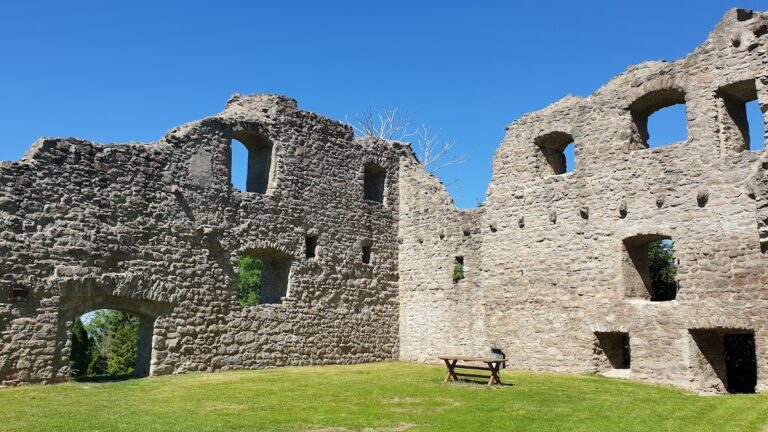
Schloss Neuweier: A Preserved Water Castle in Baden-Baden


Site at a Glance
- Rating
- 4.4
- Popularity
- Low
- Country
- Germany
- Primary era
- Medieval
- External website
- Open
- Eras represented
- Medieval, Early Modern
- Civilizations
- Holy Roman Empire
- Site type
- Military
- Remains
- Castle
On this page7 sections
History
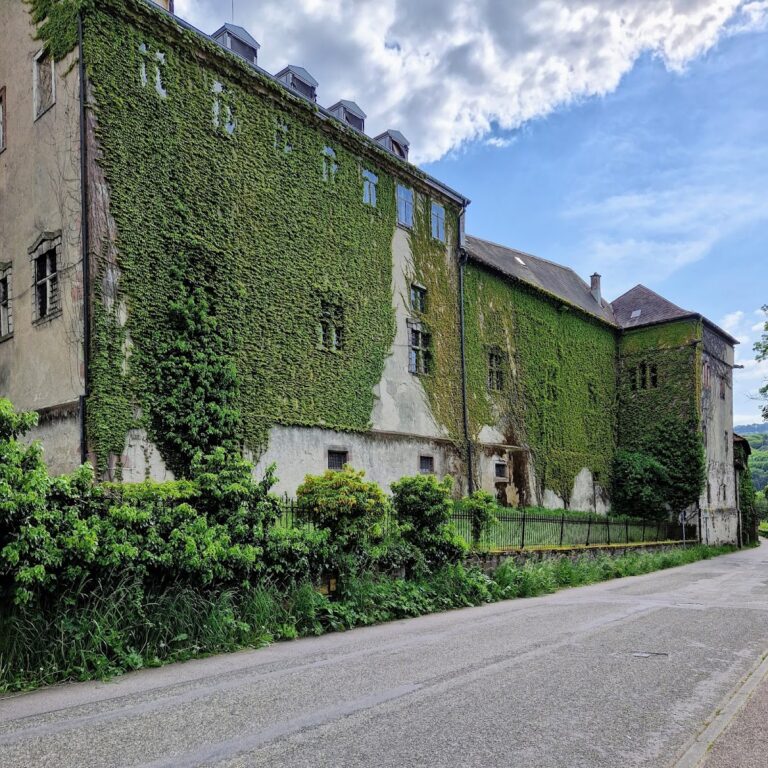
Schloss Neuweier is a preserved water castle in Baden-Baden, Germany, at the entrance to the Neuweier district beneath the Mauerberg. It originated in the twelfth century as a Gothic fortified lowland castle, a castle built on relatively level ground rather than on a hilltop, and is one of the few surviving lowland castles in Baden. Roman installations may have occupied the site before the castle was built.
The medieval castle and the von Bach family
For approximately 330 years, the knightly von Bach family controlled Schloss Neuweier. The family developed it as a defensible residence surrounded by water, a form also known as a moated castle. This medieval phase established the castle’s original Gothic character and its role as a protected noble seat.
Damage and Renaissance expansion
The castle suffered severe damage during the German Peasants’ War of 1525, a large uprising in the German-speaking lands during 1524 and 1525. After the last von Bach knight bequeathed the property to the Cronberg–Dalberg family, Philipp IV von Dalberg enlarged it in 1548 in the Renaissance style, which drew on classical architectural forms and became prominent from the fifteenth century onward.
The Dalberg family died out in 1615. The husbands of the last daughters, Baron Eltz and Baron Knebel von Katzenelnbogen, then inherited the castle, which later passed entirely to the Knebel family. The new residents brought the Riesling grape from Franconia to Neuweier and cultivated it on the terraces of the Mauerberg. Neuweier consequently acquired the right to bottle wine in Bocksbeutel flasks, distinctive flattened and rounded bottles traditionally associated with Franconia.
War damage and changing ownership
Schloss Neuweier was repeatedly and severely damaged during the War of the Palatine Succession in 1689, a European conflict fought from 1688 to 1697, as well as during further wars in the seventeenth and eighteenth centuries. After Franz Philipp Knebel von Katzenelnbogen, the castle’s last aristocratic lord, died in 1816, the property changed hands several times.
The August Rössler family acquired Schloss Neuweier in 1869 and retained it for 115 years. In 1984, the Rössler heirs had no interest in using the castle, and the property remained without a new owner for nine years. Gisela and Helmut Joos renovated and modernized it in 1993. Since 2012, Schloss Neuweier has belonged to vintner Robert Schätzle, owner of the Robert Schätzle winery, who acquired it from a former bankruptcy estate.
Remains
Schloss Neuweier survives as a preserved water-castle complex at the foot of the Mauerberg. Its original form was a Gothic fortified residence surrounded by water, while the complex was enlarged in Renaissance style in 1548. Presumed Roman installations lie beneath or at the site of the manor house, linking the present property with an earlier phase of occupation.
Castle complex
The surviving castle represents the combination of a medieval defensive residence and a later Renaissance expansion. Its setting at the entrance to Neuweier and beneath the Mauerberg reflects the character of a lowland castle rather than a hilltop fortress. The water surrounding the original complex formed part of its defensive design, while the later alterations changed the building without erasing its medieval origins.
Vineyard estate
The associated winery cultivates 14 hectares in the Schloss and Mauerberg vineyard locations. Riesling accounts for 84 percent of the plantings and Pinot Noir for 12 percent. The stated annual production is 80,000 bottles, based on a yield of 50 hectoliters per hectare. These vineyards continue the wine-growing tradition associated with the Knebel family’s introduction of Riesling to Neuweier.