Wonnenstein Monastery and Convent: A Capuchin Women’s Monastery in Switzerland


Site at a Glance
- Rating
- 4.6
- Popularity
- Very Low
- Country
- Switzerland
- Primary era
- Early Modern
- External website
- Open
- Eras represented
- Early Modern, Modern
- Civilizations
- Swiss
- Site type
- Religious
- Remains
- Monastery
On this page7 sections
History
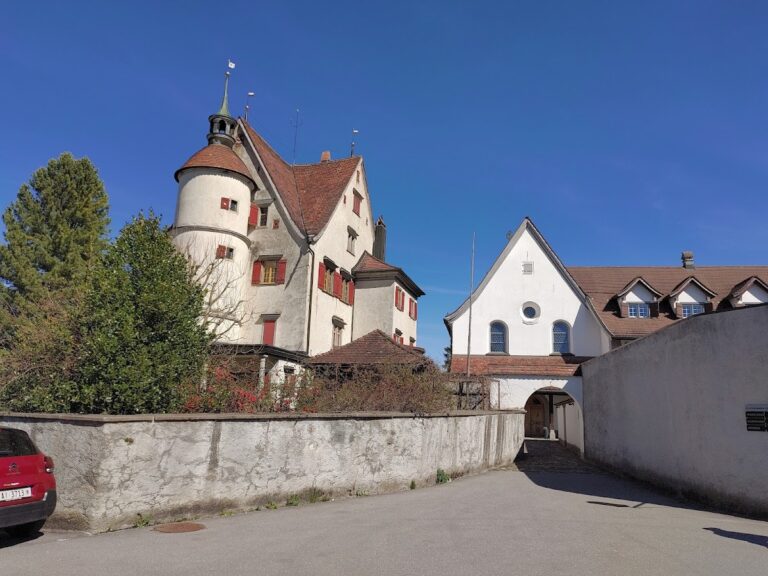
Wonnenstein Monastery with convent is a Catholic religious complex in Switzerland, founded as a beguinage in 1379 and rebuilt with its church in 1687. The women’s community later followed Franciscan traditions and became a Capuchin monastery.
From beguinage to Franciscan community
Wonnenstein, also called Mariä Rosengarten, began as a beguinage, a devotional community for women who did not initially belong to a formal monastic order. A land grant by Kuno von Stoffeln, Abbot of Saint Gallen, was recorded in 1381. By the fifteenth century, the women followed the Rule of Saint Francis, the foundational rule of the Franciscan religious tradition.
The Protestant Reformation caused the residents to leave the monastery. In 1596, Anna Wäspi von Jonschwil came from the Pfanneregg monastery near Wattwil to re-establish Wonnenstein. The renewed community followed the Pfanneregger Reform and adopted Capuchin observance, a Franciscan reform tradition emphasizing austerity, prayer, and communal discipline.
Territorial status and religious life
The division of Appenzell in 1597 made Wonnenstein’s political affiliation contentious. The monastery stood in Teufen, which became part of Protestant Appenzell Ausserrhoden, while the community remained Catholic. A federal decision in 1870 assigned the territory within the monastery walls to Catholic Appenzell Innerrhoden. The surrounding land remained in Appenzell Ausserrhoden, leaving Wonnenstein as an Innerrhoden exclave. Administratively, the monastery belongs to the district of Schlatt-Haslen.
From 1634, Wonnenstein had a permanent resident confessor, a priest responsible for hearing the sisters’ confessions and providing pastoral guidance. The first confessors came from Reichenau Abbey, followed later by priests from Fischingen Abbey. From 1890, the community’s confessor came from Engelberg Abbey. The sisters lived a contemplative life of prayer and manual work, supporting themselves by making ointments, tinctures, and schnapps.
Wonnenstein had 22 residents in 1616 and 47 in 1938. Its population later fell to 11 in 2000. After Gabriela Hug died in January 2020, two residents remained, and by that year Sister Scolastica was the monastery’s sole resident. The community also maintained a branch at Jakobsbad from 1851 until 1916.
Ownership dispute and later changes
The monastery’s future became disputed between the Association of Wonnenstein Monastery, identified as its owner, and a group that maintained that ownership belonged to the women’s community. Sister Scolastica left Wonnenstein at the end of September 2025 after a prolonged dispute and later found a new home at Kurhaus Marienburg in St. Pelagiberg.
A community of the Sisters of Maria Stella Matutina was expected to take over the monastery from Advent 2026. After concerns were raised by affected persons and Swiss religious superiors, the Diocese of Saint Gallen re-evaluated the arrangement and ultimately did not authorize the community’s arrival.
Remains
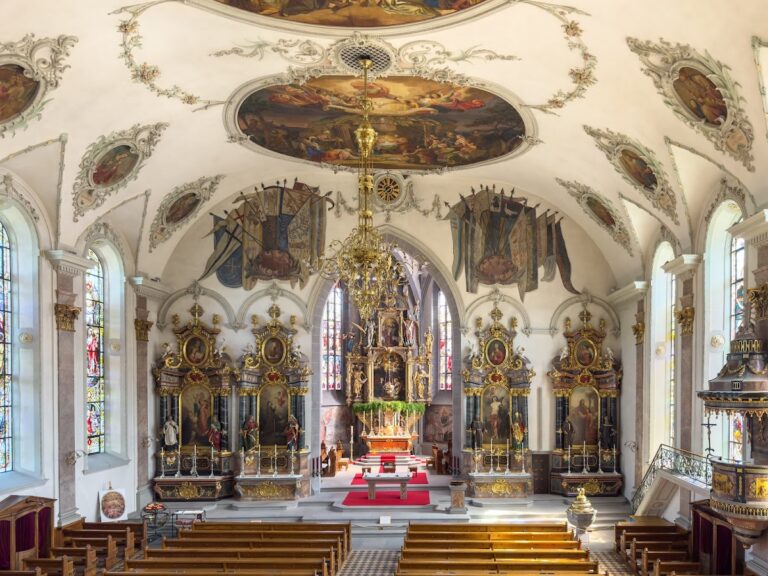
The surviving complex consists of the monastery buildings and church enclosed within the boundaries of the Wonnenstein exclave. The monastery and church were rebuilt in 1687, while the church underwent extensive alteration during renovation work at the beginning of the twentieth century. The site’s physical boundaries are also territorial boundaries, since the 1870 settlement defined the monastery walls as the limit of Appenzell Innerrhoden.
Church sculpture
A late fifteenth-century Pietà stands on the main nave wall to the right of the entrance. A Pietà represents the Virgin Mary mourning the dead body of Christ after the Crucifixion. Rainald Fischer described this work as the most important late Gothic sculpture in Innerrhoden.
Library manuscript
Wonnenstein’s library included a compilation manuscript written at the monastery shortly before 1500. Its opening pages contain a catalogue of 110 books, including Gospel books, psalters, prayer books, lives of saints, and theological works associated with Meister Eckhart and Heinrich Seuse. The manuscript also lists the “Forest Rule,” a medical book, and a calendar of the death dates of sisters. Other sections contain a rule for novices and revelations associated with Gertrude of Helfta and Christine Ebner.