Wildenstein – Hexenturm: A High-Medieval Double Castle Ruin in Germany


Site at a Glance
- Rating
- 5
- Popularity
- Very Low
- Country
- Germany
- Primary era
- Medieval
- Eras represented
- Medieval
- Civilizations
- Holy Roman Empire
- Site type
- Military
- Remains
- Castle
On this page8 sections
History
Wildenstein – Hexenturm is the ruin of a high-medieval double castle in Germany, near Leibertingen, associated with the free nobility. Its surviving masonry reflects several building periods, and a shared foundation between 1100 and 1150 cannot be ruled out. The High Middle Ages, generally the eleventh through thirteenth centuries, provide the main historical setting for the complex.
The Lords of Wildenstein
The Lords of Wildenstein first appear in documents from Salem Abbey dating from 1168 to 1174. Salem Abbey was a Cistercian monastery in the historic region of Swabia, and its medieval records provide the earliest known reference to the family. The castle was one of four earlier castles that existed before the construction of Wildenstein Castle.
The Hexenturm and the Later Castle
The Upper Castle, called the Hexenturm, or Witch Tower, was built around 1200 and probably replaced an earlier structure. A new Wildenstein Castle was erected in the thirteenth century, but the older double castle continued to serve as a residence until about 1400. This later change helps explain the distinction between the earlier complex and the castle that succeeded it.
Local tradition attributes the castle’s construction to the Wilden family of Wildenstein and connects it with the witch persecutions. According to the legend, women from the surrounding area who were accused of witchcraft were imprisoned there. It further claims that a decayed bridge collapsed before their execution, leaving the women to die of starvation, and that lightning soon afterward shattered the castle. These events belong to local legend rather than the documented medieval sequence.
Remains
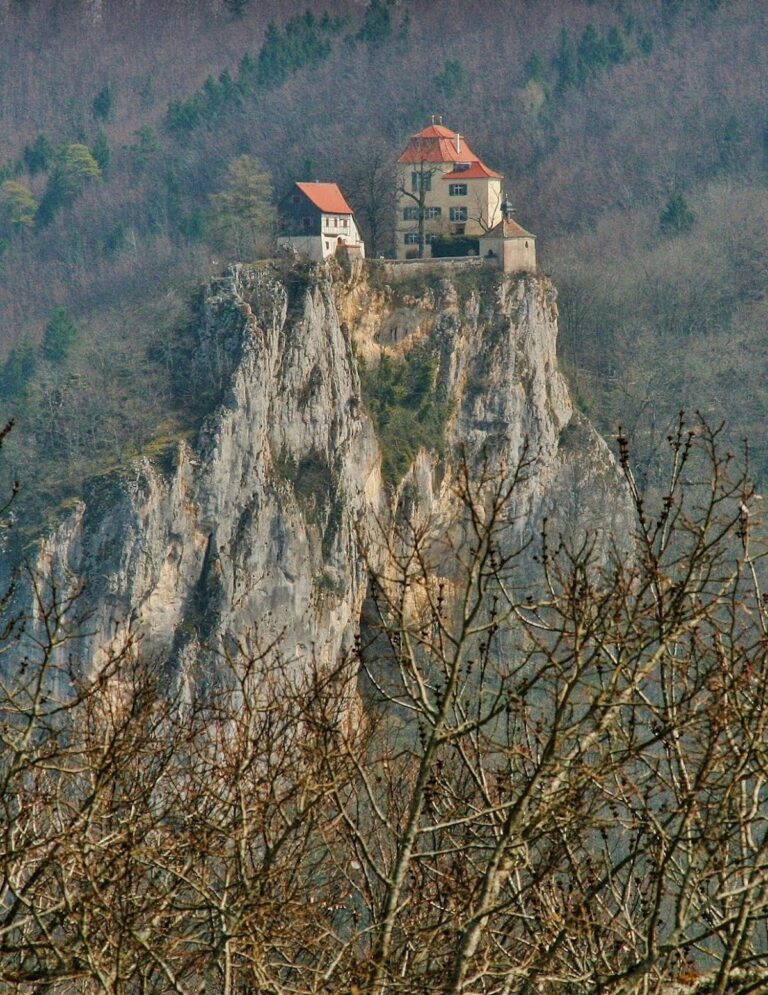
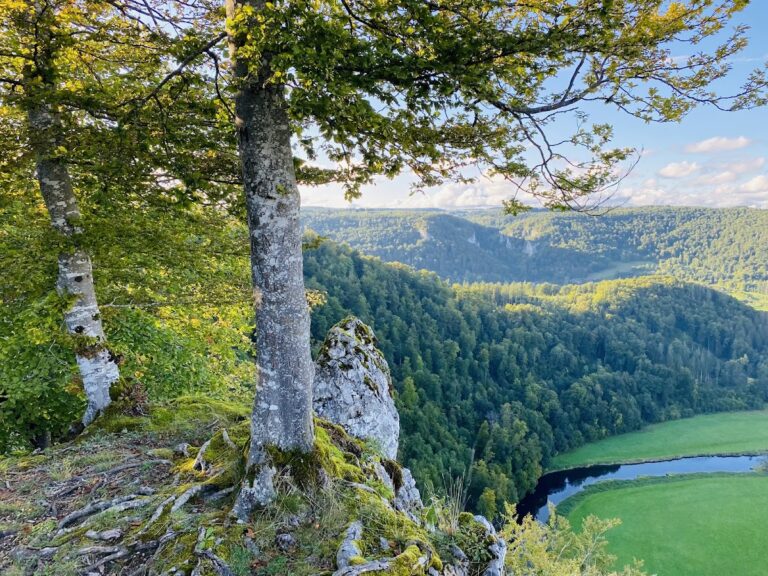
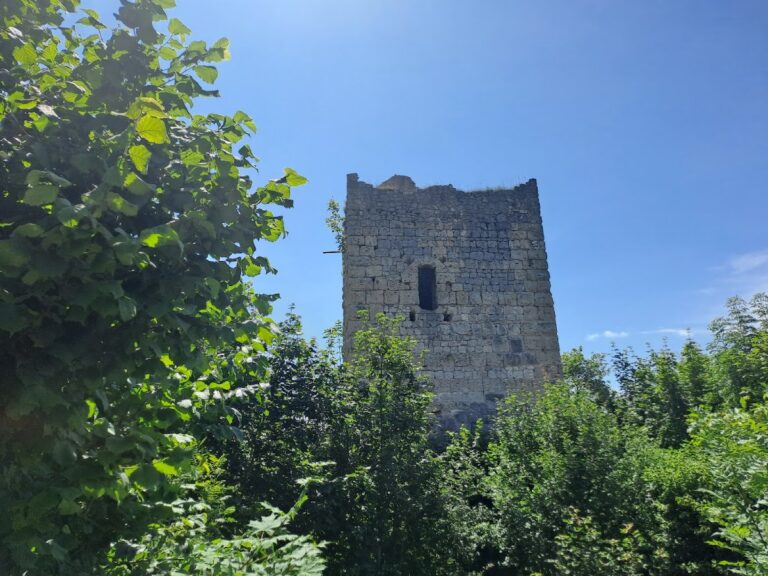
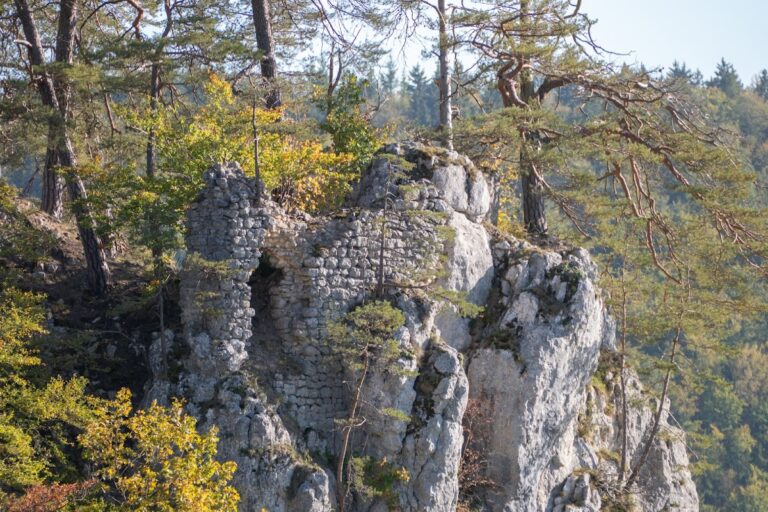
The complex is divided between an Upper Castle on a steep rocky spur at approximately 770 metres and a Lower Castle at about 730 metres. Both lie southwest of Wildenstein Castle, which stands at approximately 810 metres. The surviving construction uses small ashlar and rubble stone, while the core masonry of the Upper Castle includes bossage blocks, whose outer faces project or remain roughly finished to create a rugged surface.
Castle Structures and Cave
Upper Castle
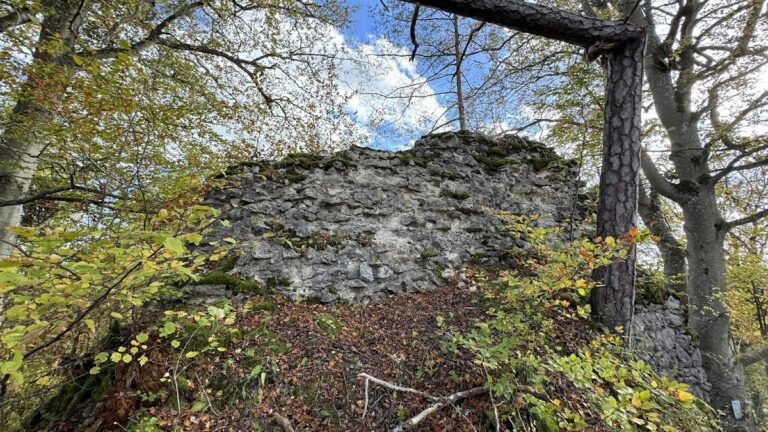
The Upper Castle, or Hexenturm, survives only in slight remains of its central masonry. Its bossage blocks preserve a construction detail associated with medieval fortification, while the surviving fabric also reflects the complex’s different building periods. The position on the rocky spur forms the upper part of the two-level castle arrangement.
Lower Castle
Only parts of the Lower Castle remain. On its steeply descending north side, remnants of a defensive wall survive, together with a large shaft cut into or formed by the rock. These features represent the principal surviving elements of the lower part of the complex.
Castle Cave
An opening on the eastern side of the Lower Castle courtyard leads into a castle cave. The cave was the central point of the complex, making it an important part of the site’s physical organization as well as one of its surviving archaeological features.
Nearby sites