Whitby Abbey: A Northumbrian Monastery and Benedictine Abbey
Site at a Glance
- Rating
- 4.6
- Popularity
- High
- Country
- United Kingdom
- Primary era
- Medieval
- External website
- Open
- Eras represented
- Medieval
- Civilizations
- English
- Site type
- Religious
- Remains
- Monastery
On this page13 sections
History
Whitby Abbey is a former Christian monastery and Benedictine abbey in the United Kingdom, founded by the Northumbrian king Oswiu at Streoneshalh in AD 657. Its first leader was Hilda, abbess of Hartlepool and a grand-niece of Edwin, the first Christian king of Northumbria. The foundation became a double monastery, a religious community of monks and nuns under one superior, and was initially associated with Celtic Christian practice. It later followed the Benedictine rule, the monastic code governing communal religious life, discipline, and worship.
The monastery of Streoneshalh
Whitby became an important centre of the Northumbrian church. The Synod of Whitby met at the monastery in 664. A synod was a formal gathering of church authorities, and this meeting addressed differences in religious practice. With Oswiu’s support, the Northumbrian church adopted the Roman method of calculating Easter and the Roman form of clerical tonsure, a prescribed religious haircut, rather than practices associated with Iona and the Celtic church.
The monastery was also associated with Cædmon, an early Northumbrian religious poet whose life is placed between 614 and 680. Hilda’s community included both women and men, and several important figures were connected with its burial tradition. These included Oswiu, Edwin, king of Deira and Bernicia, Eahlfrith, Oswiu’s widow and an abbess of Whitby, and Ælflæd, their daughter, who also became an abbess.
Danish attacks and Norman restoration
Streoneshalh was devastated in successive Danish attacks between 867 and 870, traditionally associated with Ingwar and Ubba. The site then remained desolate for more than two centuries. References in the Domesday Book to Prestebi, meaning “dwelling of priests” in Old Norse, and to Witebi may indicate that religious life began to return in part after the attacks.
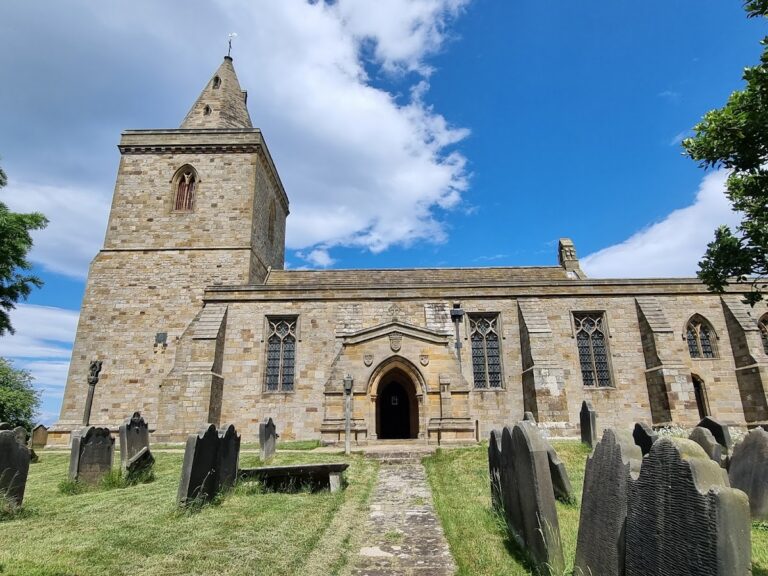
After the Norman Conquest of England in 1066, Reinfrid, a former soldier of William the Conqueror who became a monk, sought to restore the monastery. William de Percy granted him the ruined monastery of St Peter and land for its rebuilding, while William’s brother, Serlo de Percy, joined the foundation. The new community followed the Benedictine rule and depended on Fountains Abbey. It was dedicated to Saint Peter and Saint Hilda, with Reinfrid as its first prior. After Reinfrid died in an accident and was buried at St Peter’s Church in Hackness, Serlo de Percy succeeded him.
The larger de Percy building was mostly demolished during a major rebuilding in the 1220s. The reconstructed Benedictine abbey then flourished for centuries as a centre of learning. Its original endowment included the monastery of St Peter at Streoneshalch, the town and port of Whitby, St Mary’s parish church, six dependent chapels, five mills including Ruswarp, and the village of Hackness with its two mills and parish church. The monks also served at St Peter’s Church in Hackness, where members of the community died and were buried. William de Percy and Richard de Percy were among the other notable burials associated with the abbey.
Dissolution and later history
The second monastery was dissolved and destroyed in 1540 under Henry VIII, whose wider Dissolution of the Monasteries between 1536 and 1545 ended England’s monastic institutions and confiscated their property. Sir Richard Cholmley bought the abbey after the Dissolution. It remained with the Cholmley family and later the Strickland family until the Stricklands transferred it to the United Kingdom government in 1920.
In December 1914, the German battlecruisers Von der Tann and Derfflinger shelled Whitby in a ten-minute attack aimed at the Coastguard Station at the end of the headland. The abbey buildings suffered considerable damage. The ruins continued to serve sailors as a landmark on the headland, while the surviving church ruins acquired Grade I listed status and came into the care of English Heritage.
Whitby Abbey is also associated with Bram Stoker’s 1897 novel Dracula. In the novel, a creature resembling a large dog comes ashore at the headland and runs up the 199 steps towards St Mary’s Church cemetery beneath the abbey ruins. Mina Harker’s diary describes the abbey, while the novel also refers to its Danish destruction and romantic ruins.
Remains
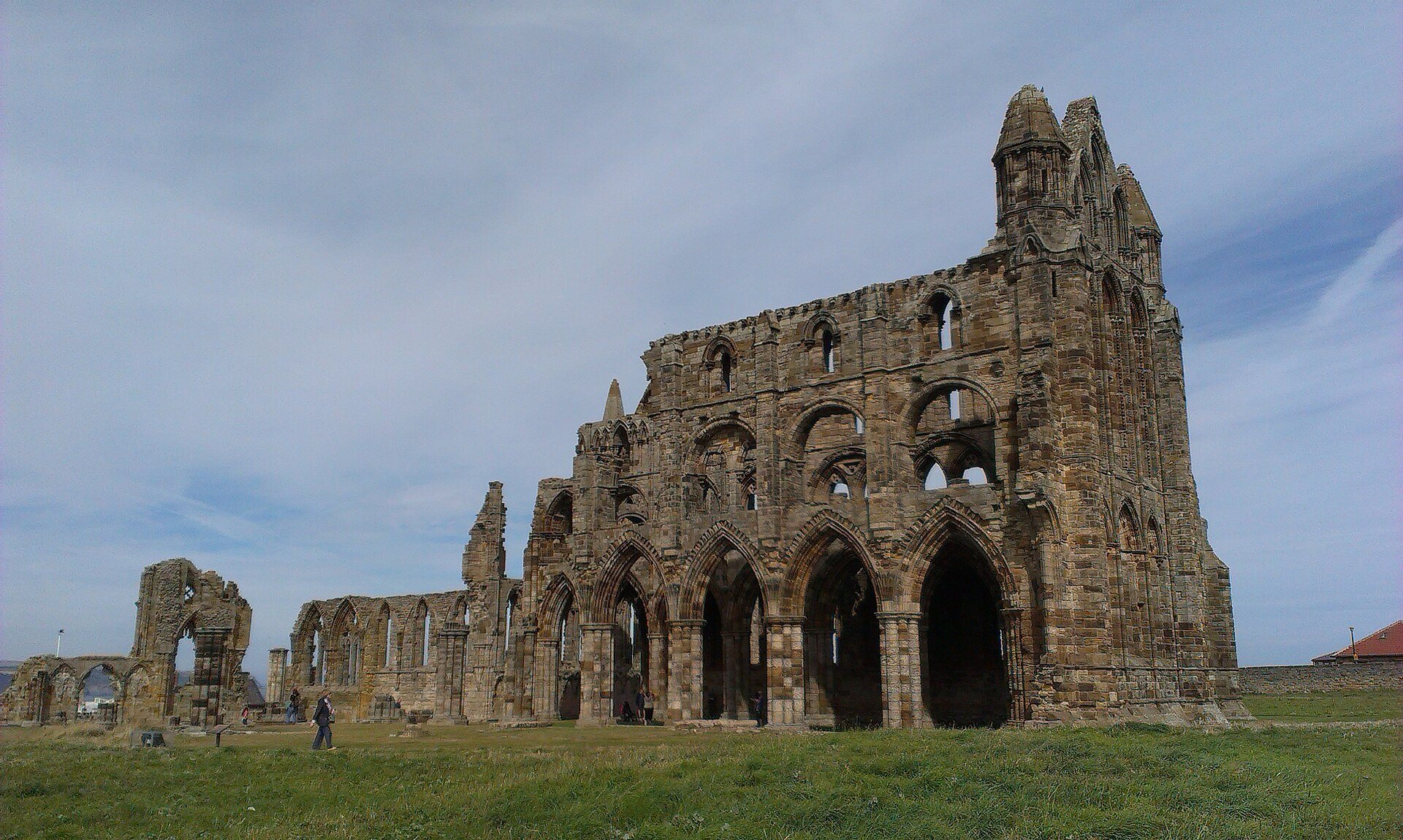
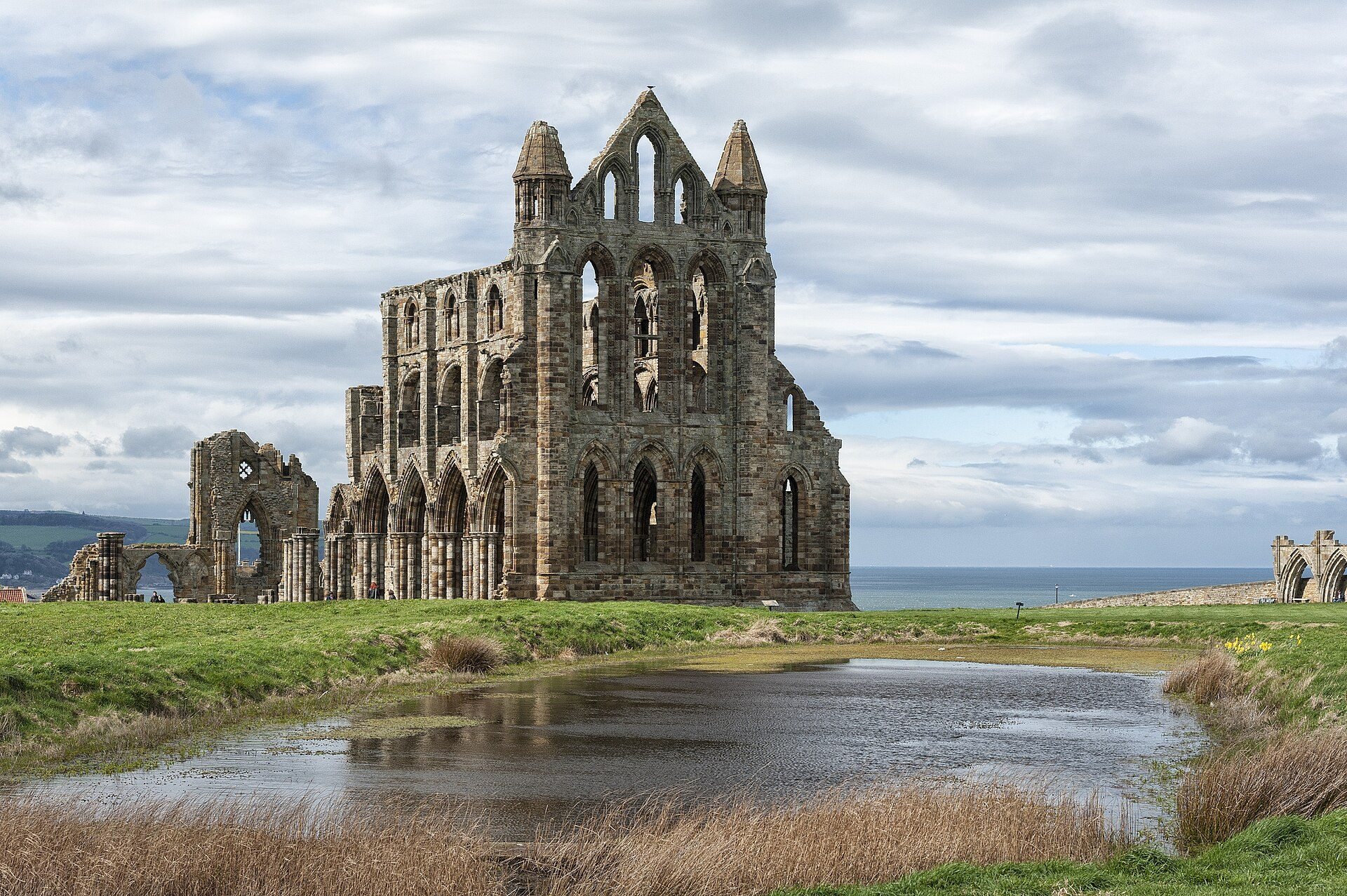
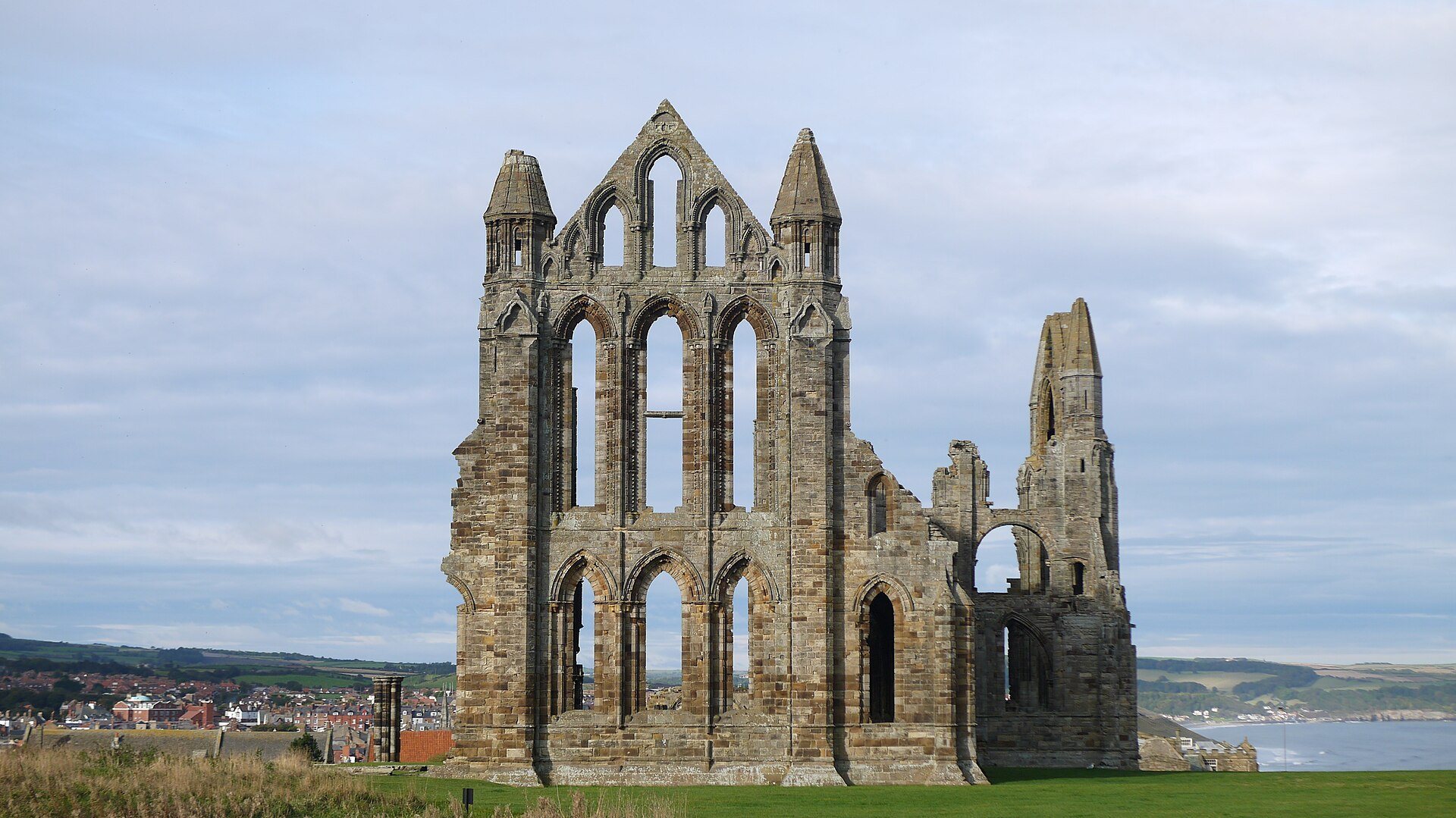
The abbey church and monastery occupied the East Cliff above Whitby, overlooking the North Sea. Substantial ruins survive above the town and remain visible from the surrounding area. The site’s physical history reflects several stages of construction, beginning with the early monastery, continuing through Reinfrid’s Benedictine foundation, and culminating in the larger rebuilding of the 1220s. Naval shelling in 1914 further damaged the buildings, which survive as substantial ruins rather than as an intact monastery.
Monastic remains and church
Early monastery
The early monastery was described as containing approximately 40 ruined monasteria vel oratoria, meaning monastic buildings or places of prayer. The complex was compared with Irish monastic ruins and included numerous chapels and cells. Reinfrid’s monastery was established around the ruined monastery of St Peter before the larger reconstruction undertaken in the 1220s.
Abbey church
The surviving abbey church forms the principal group of ruins. Its west front is associated with the fourteenth century and contains lancet windows, narrow openings with pointed arches. The church remains part of the substantial ruin above Whitby and preserves the scale of the later medieval abbey.
Associated buildings and symbols
Cholmley House
Cholmley House, a seventeenth-century banqueting hall associated with the abbey site, houses the site museum. The building was repurposed in 2002 by the design studio Stanton Williams.
Abbey arms
The abbey’s coat of arms displayed three coiled snakes, known as “snake-stones,” representing ammonite fossils with serpent heads. They were shown in red on a blue field. The crest consisted of a gold mitre and the head of a gold crosier.
Former monastic estate
Churches, chapels, and mills
The abbey’s former estate extended through Whitby, Hackness, Fyling, Hawsker, Sneaton, Ugglebarnby, Dunsley, Aislaby, and Ruswarp. Its properties included churches, six dependent chapels, and mills, including those at Ruswarp and Hackness. These holdings formed part of the institutional and economic structure of the Benedictine community before the Dissolution.