Egton Manor: A Country House on the Egton Estate
Site at a Glance
- Popularity
- Medium
- Country
- United Kingdom
- Primary era
- Modern
- Eras represented
- Modern
- Civilizations
- British
- Site type
- Domestic
- Remains
- Manor House
On this page6 sections
History
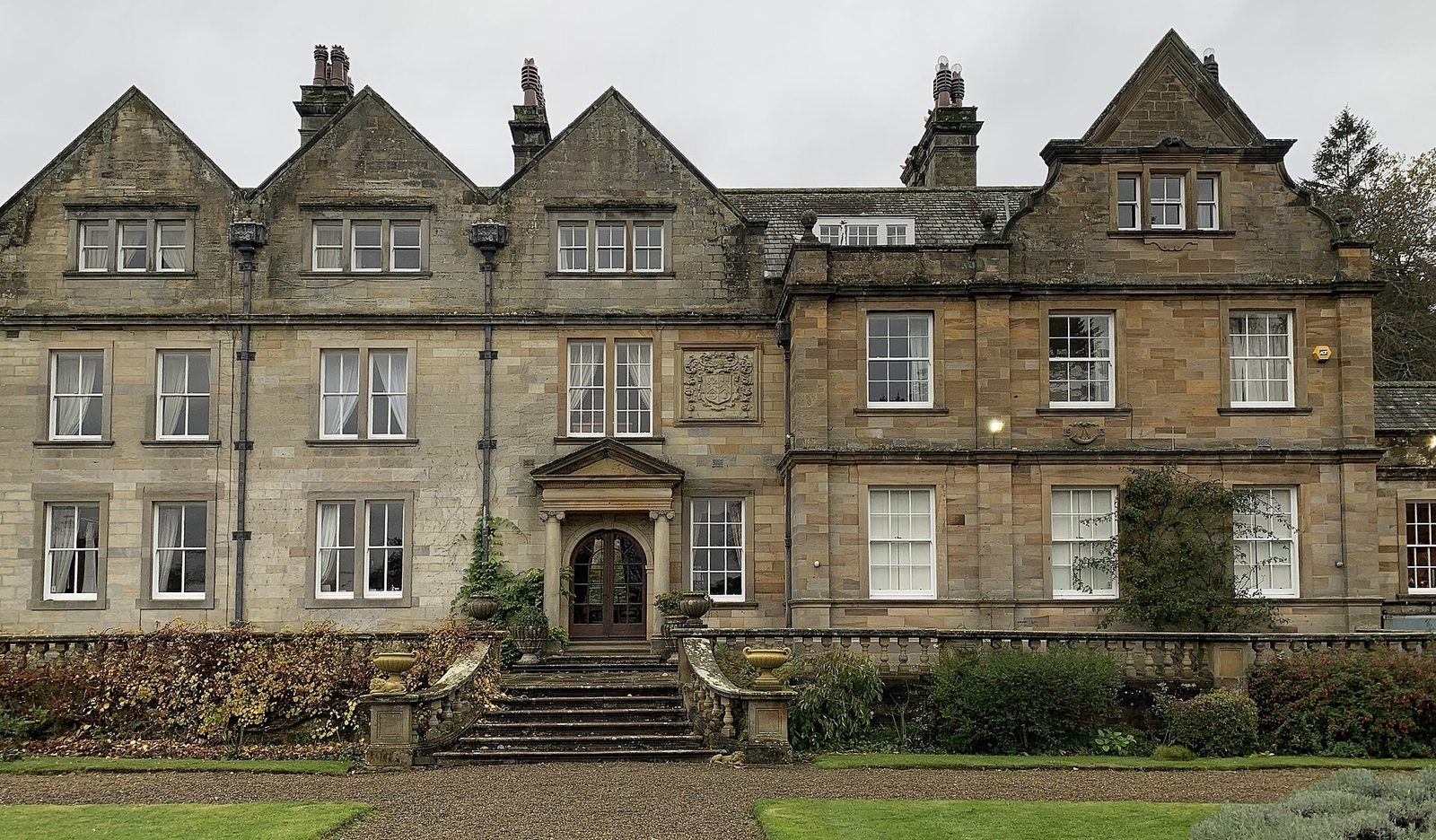
Egton Manor is a stone country house near Egton Bridge in the United Kingdom, within the Egton Estate. Construction began in 1869, and the house is also dated to 1893. Its history is tied to the manor and estate, which passed through several families before the Fosters acquired the land.
The medieval manor
The Domesday Book, William I’s survey of English landholding and resources, records the manor of Egton rather than the present house. In 1086 the manor was measured as four leagues by two, with woodland suitable for grazing measuring three leagues by two. A league was a traditional distance measure of variable length, so these figures do not correspond to a fixed modern distance. Swen held the manor before the Norman Conquest of 1066; in 1086 its lord was Robert, Count of Mortain, William the Conqueror’s half-brother. The manor later passed through the Fossard, de Turnham, and de Mauley families before reaching the Salvins.
Yelverton and Elwes ownership
By 1686 the manor belonged to Henry Yelverton, Baron Grey of Ruthin, who became the first Viscount Longueville, a British peerage rank, in 1690. His son and heir, Talbot Yelverton, later became the first Earl of Sussex, a rank above viscount. Talbot served as Lord of the Bedchamber, an officer of the royal household, from 1722 to 1727. He became a Knight of the Order of the Bath, a British order of chivalry, in 1725, served as Deputy Earl Marshal, a senior ceremonial and heraldic office, from 1725 to 1731, and became a Privy Counsellor, a member of the monarch’s advisory council, in 1727. The Yelvertons lived elsewhere and visited Egton only rarely.
In 1730 Talbot sold Egton Manor for £38,000 to Robert Elwes of Twickenham, who had built his wealth through goldsmithing and the gold trade. Robert died in February 1752 and left the estate to his son, Cary Charles Elwes, who died in 1782. Cary Charles’s son Robert Cary was the father of another Cary Charles Elwes. The latter died in 1866 and was succeeded by his son, Valentine Dudley Henry Cary Elwes. The estate remained in the Elwes family until Valentine sold it in 1869.
The Foster estate and house
Valentine sold the estate to John Foster, a mill owner from Queensbury, Bradford, and his brothers Johnston Jonas Foster, Abraham Briggs Foster, and John Foster the Younger. They bought it at auction for £155,100, intending to use it as a sporting estate, meaning land for field sports such as shooting. The estate then covered 12,480 acres. The brothers were Anglicans and self-made industrialists whose wealth came from the textile trade. They initially lodged at Bridgeholme Green while the house was being built. Three brothers later sold their interests, leaving the youngest, John Foster, as sole owner.
The Foster landowners also rebuilt many agricultural buildings on the estate and provided St Hilda’s Church in Egton and a new school for the community.
Later ownership
After John Foster’s death, the estate passed to his son Martin and later to Martin’s son Simon. Martin John Clavel Foster (1912-1976) held the title of Lord of the Manor of Egton. The estate has been operated commercially since around 1980, and Foster descendants continue to live at the manor.
Remains
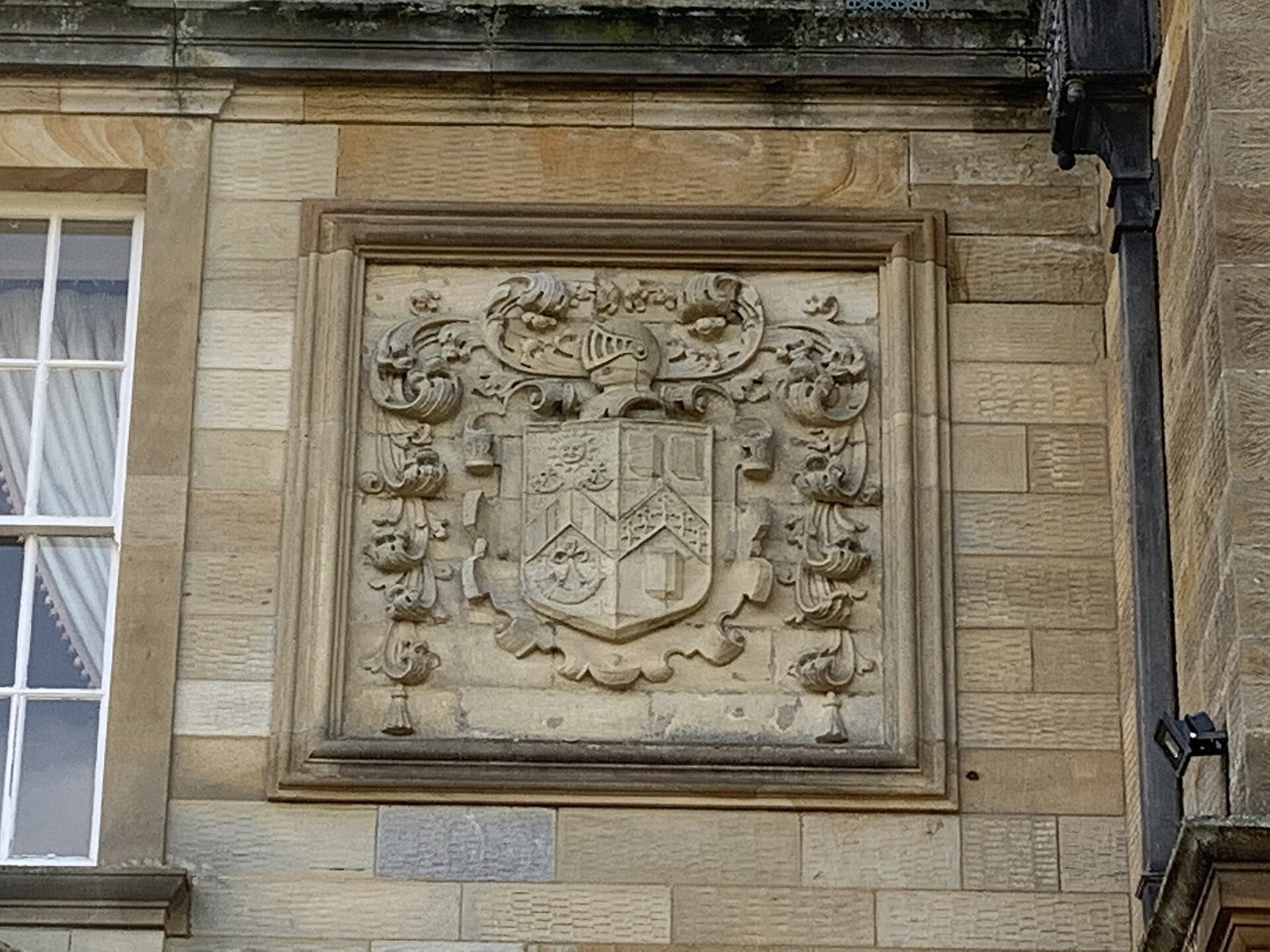
The house stands on the banks of the River Esk at the center of a 6,000-acre estate. Its walls are built of hammered sandstone, with sandstone ashlar dressings, meaning finely dressed, squared stone, and slate roofs.
Extensions and rebuilding in 1913 enlarged the house, using sandstone finished with herringbone tooling, a surface pattern of repeated diagonal marks. Major remodelling in 1979 included partial demolition of the house.