Wessobrunn Abbey: A Former Benedictine Monastery in Germany


Site at a Glance
- Rating
- 4.6
- Popularity
- Low
- Country
- Germany
- Primary era
- Early Modern
- External website
- Open
- Eras represented
- Early Modern
- Civilizations
- Holy Roman Empire
- Site type
- Religious
- Remains
- Monastery
On this page16 sections
History
Wessobrunn Abbey is a former Benedictine monastery in Germany that formed the historical nucleus of the present settlement of Wessobrunn in Upper Bavaria, near Weilheim. Its foundation date and founder remain uncertain. A traditional legend places its origin in 753, when Duke Tassilo III of Bavaria dreamed while hunting in the Rotwald of springs and a ladder reaching heaven. His companion Wezzo later found springs arranged in a cross-like pattern, giving rise to the association with Tassilo and with “Wezzo’s spring.” The date is considered unlikely, since Tassilo would then have been only about eleven or twelve years old.
Early foundation and imperial abbey
Another medieval tradition attributes the foundation, probably around 740 or during the second half of the eighth century, to the noble family of Rott. Earlier interpretations placed it around 740–741, while other historians proposed that Tassilo’s mother, acting as regent, or Tassilo himself later restored and enlarged an earlier monastery. Traditions also connect the first monks either with Benediktbeuern or with Niederaltaich under an abbot named Ilsung.
Wessobrunn entered the Carolingian imperial monastery register in 817. It had become a Carolingian imperial abbey in 788, after Charlemagne deposed Tassilo III, the last ruling duke of the Bavarian Agilolfing dynasty. As an imperial abbey, Wessobrunn answered directly to the monarchy rather than to a territorial lord. Its poverty was noted in 817, when it was considered able to owe the emperor prayers instead of financial or military contributions.
The monastery helped secure the Lech frontier and clear and cultivate the surrounding forest. The name Wessobrunn was probably originally a field-name adopted by the monastery. Another interpretation derives “Wesso” from Celtic and understands the name as “hunting-dog spring.” Under Abbot Adelmar, who governed from 799 to 831, Wessobrunn passed from the Diocese of Brixen to the Diocese of Augsburg. Around 900 it became the property of the Bishop of Augsburg.
Destruction and Benedictine restoration
The first Benedictine monastery ended in 955. Tradition holds that the Hungarians burned the monastery and killed Abbot Thiento and six monks, while three other monks escaped to Andechs with the sacred relics. After the Hungarians were defeated on the Lechfeld, religious life continued in the form of a collegiate foundation of secular canons. These were clerics who lived together without following a monastic rule. Little is known about this period beyond a list of provosts, and Wessobrunn is thought to have lost much of its property.
A second Benedictine monastery was established in 1064. Its last provost, Adelbero, became the first abbot and restored the Benedictine rule, which emphasized communal prayer, discipline, and work. During his first year as abbot, the monastic church was rebuilt and dedicated by Embrico, Bishop of Augsburg.
From about 1100 to 1220, a women’s convent also occupied the monastery. It was governed under the authority of the abbot of the men’s community and stood on the site of the present parish church. Its nuns included Blessed Wulfhild, daughter of Henry the Black and widow of Count Rudolf of Bregenz, and Diemoth. Wulfhild was beatified in 1668.
Under Abbot Sigihard, a separate church for the surrounding population was built and dedicated to Saint John the Baptist in 1128. In 1141 Wessobrunn was released from the authority of the Bishop of Augsburg and again became directly subject to the territorial ruler. The abbacy of Blessed Waltho, from 1129 to 1157, brought considerable spiritual and material prosperity, and he was responsible for several notably fine buildings. Around 1220, a fire destroyed the church and led to extensive rebuilding across the monastery complex.
Jurisdiction and cultural prosperity
In 1330 Emperor Louis the Bavarian granted Wessobrunn lower judicial authority, meaning that the monastery could exercise specified powers over minor civil and criminal matters. From 1506 it was described as a Hofmark, a territorial jurisdiction in which an ecclesiastical or noble landholder held local judicial and administrative rights. It became a closed Hofmark in 1606, and from the sixteenth century the monastery progressively acquired jurisdiction over surrounding villages.
By 1761 this jurisdiction covered 300 properties, including 261 original Hofmark estates and 39 later acquisitions. They lay across Forst, Rott, Wessobrunn, Haid, Gimmenhausen, Ludenhausen, Riedhof, Pessenhausen, Abtzell, Kreuzberg, Schellschwang, Pählschwang, Feistenau, and Vilgertshofen. Abtsried belonged directly to the monastery and was therefore excluded from the tax register.
The abbots received the right to use pontifical insignia in 1401. A renewed period of prosperity began under Ulrich Stocklin, a former monk of Tegernsee Abbey who served as abbot from 1438 to 1443. During the abbacy of Heinrich Zach, from 1498 to 1508, a printing press was installed at Wessobrunn.
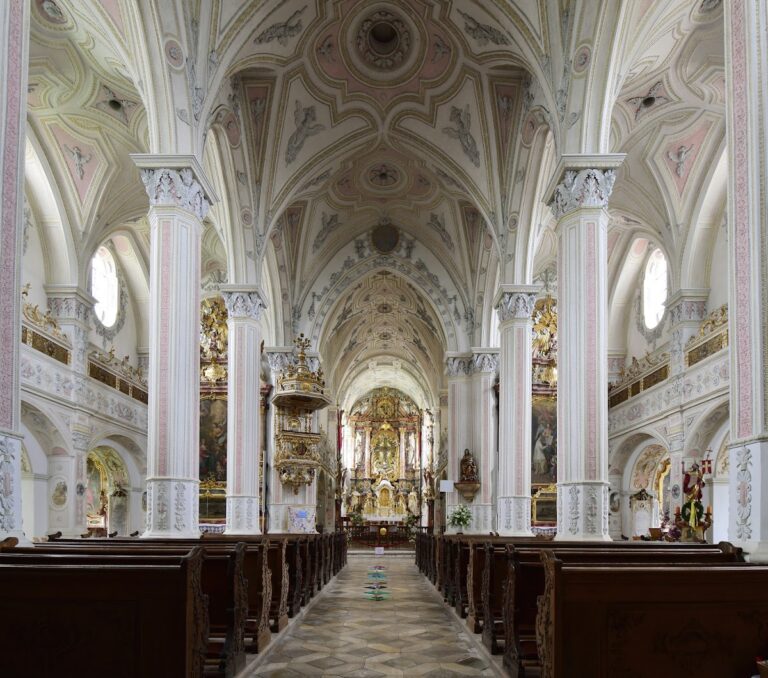
The monastery church was modernized internally in 1655. In 1680 Abbot Leonhard Weiss began a large Baroque rebuilding of the church and monastery, employing the monastery’s own subjects, although a lack of funds prevented the complete execution of his plans. Weiss also helped establish the Bavarian Congregation in 1684 and affiliated Wessobrunn with it. This association of Bavarian Benedictine monasteries coordinated and regulated their common religious life.
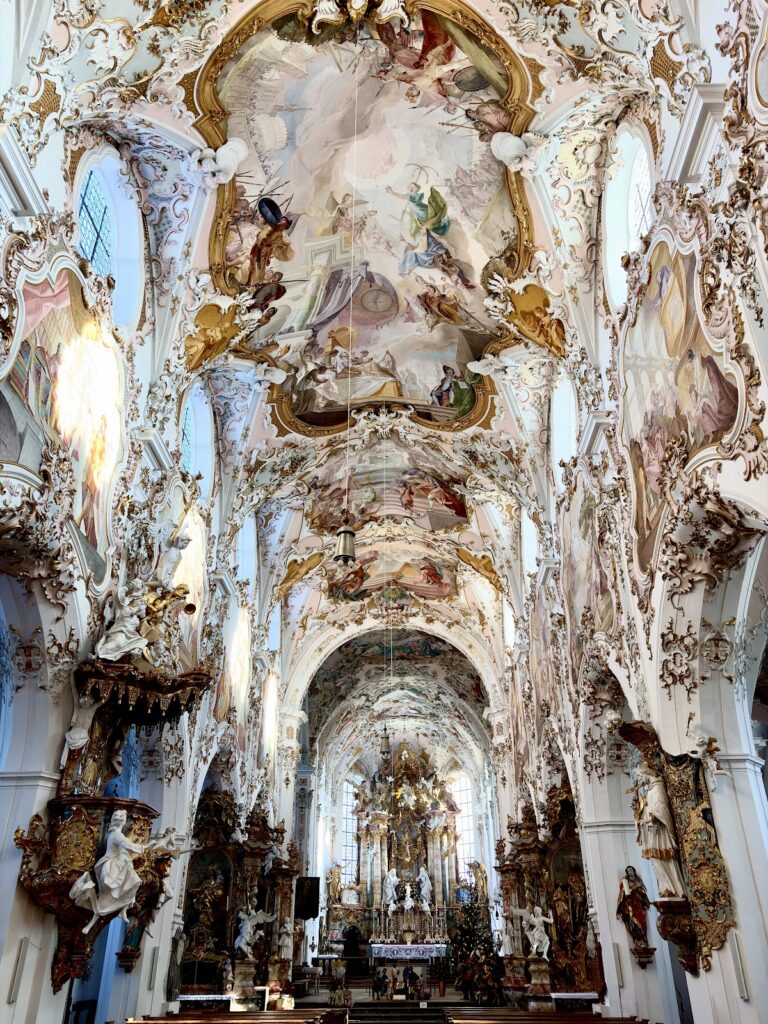
The monastery’s workshops attracted highly skilled specialists and produced the artistic tradition now known as the Wessobrunn School. Its craftsmen became especially renowned for ornamental stucco and plasterwork, and their influence spread throughout southern Germany and beyond. From the sixteenth century until the secularization of 1803, the monks also maintained an active literary culture. Their authors and teachers worked in schools across Germany, while the community produced historians, theologians, canonists, librarians, and scientists. Stephan Leopolder and Cölestin Leutner were among its historians; Gregor Zallwein and Johann Kleinmayern were canonists; and Anselm Ellinger served as librarian and scientist. Leutner, Alphonse Campi, Veremund Eisvogl, and Ulrich Mittermayr collaborated on a large Bible concordance published in 1751, a reference work arranging biblical passages by their words and subjects.
Dissolution and later communities
Wessobrunn was dissolved in 1803 during the secularization of Bavaria. The monastery church was demolished in 1810 because it had become structurally unsound, and much of the remaining complex was dismantled for building material used in the rebuilding of Weilheim after a fire.
The historian Johann Nepomuk Sepp bought part of the surviving complex in 1861 and preserved what remained. Baron Theodor von Cramer-Klett acquired the site in 1900. In 1913 he made the monastery buildings available to the Missionary Benedictine Sisters of Tutzing, who established a new Benedictine community there and occupied two former monastery wings. The buildings served as a retreat home for sisters returning from missionary service. In 1914 Cramer-Klett established a convalescent home for Red Cross nurses who had become ill during military service, and the local sisters provided its care.
From 1955 to 2001 the sisters operated a youth convalescent home. The last sisters left the monastery in 2012. Since 2014, two former monastery wings have been used by Martina Gebhardt’s natural-cosmetics company, while traditional craft businesses and a seminar operation occupy other parts of the complex. The monastery garden was planted with medicinal herbs. The Prelate’s wing and the large Thassilosaal, together making up roughly one-third of the former monastery buildings, have served as Wessobrunn’s rectory since the secularization. Ownership, long held by a benefice foundation, passed to the church foundation in 2024.
Remains
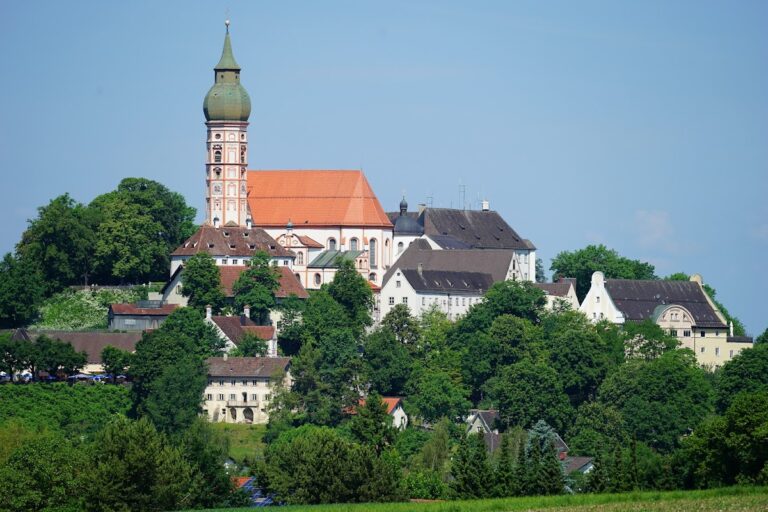
The surviving site is a remnant of the former Benedictine monastery. Its physical fabric includes two former monastery wings now used for secular purposes, the Prelate’s wing, the large Thassilosaal, a free-standing bell tower, the parish church associated with the former women’s convent, and springs linked to the foundation legend. Together these elements preserve parts of the monastery’s medieval, early modern, and post-secular history.
Monastery buildings
Former monastery wings
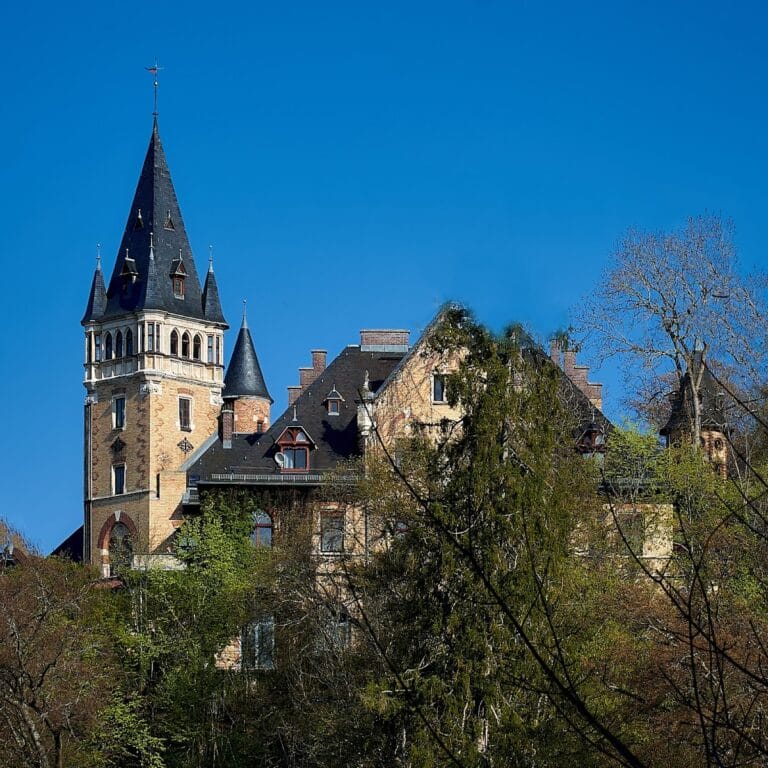
Two former monastery wings survive within the complex and were occupied by the Missionary Benedictine Sisters of Tutzing from 1913. They later accommodated the youth convalescent home operated by the sisters between 1955 and 2001. Since 2014, secular uses have included a natural-cosmetics company, traditional craft businesses, and a seminar operation.
Prelate’s wing and Thassilosaal
The Prelate’s wing and the large Thassilosaal remain part of the former monastery buildings and together comprise roughly one-third of the complex. Since the secularization, they have served as Wessobrunn’s rectory. The monastery garden has been planted with medicinal herbs, retaining a cultivated element within the surviving complex.
Churches and bell tower
Monastic church
The monastic church was rebuilt during Adelbero’s abbacy in 1064, reconstructed again after the destruction around 1220, internally modernized in 1655, and included in the ambitious Baroque rebuilding campaign begun by Abbot Leonhard Weiss in 1680. Structural decay led to its demolition in 1810.
Saint John the Baptist Church
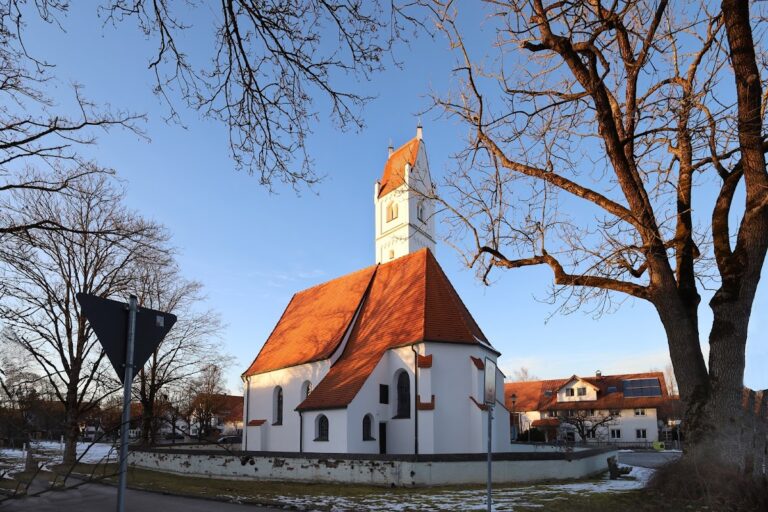
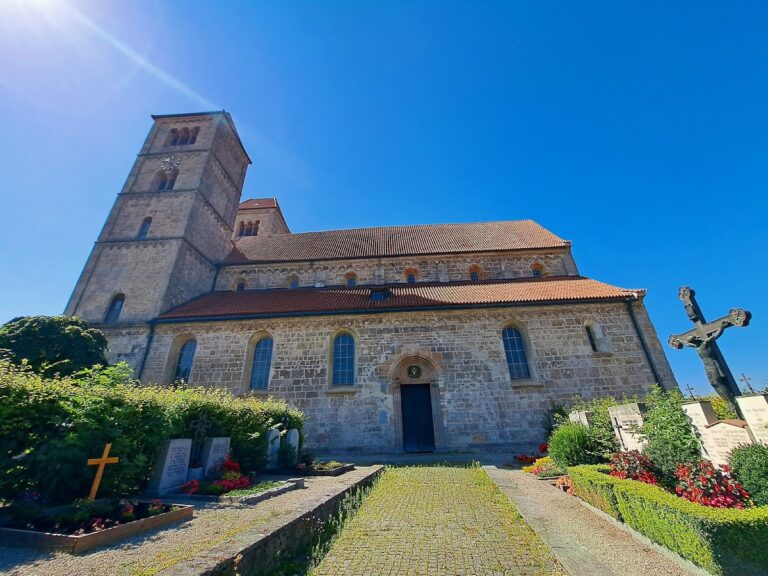
A separate church dedicated to Saint John the Baptist was built in 1128 for the surrounding population. The former women’s convent occupied the site of the present parish church, linking the surviving parish setting with the monastery’s medieval female religious community.
Free-standing bell tower
A free-standing bell tower survived the secularization because it was needed by the adjacent parish church. Its survival preserves a visible element of the former ecclesiastical complex after the demolition of the monastic church.
Springs and literary remains
Foundation springs
Springs associated with the foundation legend remain visible at the site. In the traditional story, they were the place where Wezzo found the water sources arranged in a cross-like form, fulfilling the vision attributed to Tassilo.
Wessobrunn Prayer
The monastery was the long-term repository of the Wessobrunn Prayer, an early medieval Christian manuscript traditionally associated with the abbey because it was preserved in its library. The manuscript was not composed at Wessobrunn. During the secularization, the library’s contents were transferred to the Bavarian State Library, where the Wessobrunn Prayer is now held.
Nearby sites