Wedderborg: A Historic Fortified Residence and Seat of Westerwolde


Site at a Glance
- Rating
- 4.4
- Popularity
- Very Low
- Country
- Netherlands
- Primary era
- Early Modern
- Eras represented
- Medieval, Early Modern, Modern
- Civilizations
- Dutch, Holy Roman Empire
- Site type
- Domestic
- Remains
- Castle
On this page16 sections
History
Wedderborg is a fortified residence in Wedde, the Netherlands, whose construction began in the 1360s. Also known as Addingaborg, Burcht Wedde, Wedderburcht, and Huis te Wedde, it became for centuries the seat of the Lords of Westerwolde or their representative. Its history is closely tied to the political and judicial development of Westerwolde, a lordship in the east of Groningen.
The Addinga lordship
The founder is identified as Adde Addinga, who held Westerwolde as a fief from the abbot of Corvey, a major Benedictine abbey in the Holy Roman Empire. Another tradition connects the grant with the bishop of Münster, an ecclesiastical ruler whose territorial authority extended into parts of the region. The Addinga family had originated in Reiderland, where its possessions were lost, reportedly through the expansion of the Dollard or the Saint Marcellus Flood of 1362.
Westerwolde was a lordship of Münster and the Abbey of Corvey, although its land law allowed the region to regulate most of its own affairs. Tension increased when the Addinga family attempted to transfer jurisdiction to Wedderborg. Their authority remained contested. An early Addinga ruler was killed by inhabitants in 1391. A later ruler moved the court from Vlagtwedde to Wedderborg and governed coercively. In 1475 another Addinga ruler was killed, and his son Haye II later became involved in the killing of suspects and priests as well as in conflict with the city of Groningen.
Destruction and rebuilding
Around 1460, the Addinga family began building a wall around the borg. With support from Groningen, the inhabitants defeated the Addinga family, and Groningen destroyed Wedderborg in 1478 while the wall remained incomplete. Groningen then built the Pekelborg on the Pekel A to extend its influence. Haye Addinga rebuilt Wedderborg in 1486 after receiving permission from the bishop of Münster. Groningen and Münster reportedly required that the rebuilt residence should not be fortified again.
In 1530, Berend van Hackfort captured Wedderborg for Charles of Guelders and became drost, the local administrative and judicial representative of a ruling authority. He greatly strengthened the borg in 1532. In 1536, Georg Schenk van Toutenburg captured it for Emperor Charles V, took the office of drost, continued the building campaign, and placed his coat of arms in the tower. Jan van Ligne, Count of Aremberg and lord of Westerwolde, acquired Wedderborg in 1561 and continued the works.
War and the Dutch Revolt
At the beginning of the Dutch Revolt in 1568, Adolf of Nassau took up residence at Wedderborg. The Dutch Revolt was the conflict in which the Dutch provinces rebelled against Habsburg rule and eventually established the Dutch Republic. Adolf marched from Wedde toward Heiligerlee, where he met the Spanish-aligned Jan van Ligne in battle. Both commanders were killed. Willem Lodewijk of Nassau-Dillenburg won the battle for the States, the forces supporting the revolt, but had to leave Wedderborg because he lacked the funds to maintain a mercenary army.
The heirs of Jan van Ligne appointed Mathias Ort as borg lord. During the next twenty-five years, Spanish and States forces repeatedly plundered the residence. Willem Lodewijk finally captured it in 1593. By 1594, Westerwolde had become part of the Dutch Republic’s Generality Lands, territories governed directly by the republic rather than by one of its provinces.
Judicial centre and seat of government
Between 1536 and 1539, a courthouse was built in the former outer courtyard opposite the main building. It also served as an inn and was described in 1559 as the “house of the innkeeper.” The courthouse moved to the fortress of Bourtange in 1593 and was later rebuilt at approximately the same location. Hotel Buenos Ayres and, from the 1970s, the former Bellingwedde town hall subsequently occupied this area.
For centuries, Wedderborg served as the seat of the Crimineel Gerechte, a criminal court. The drost of Wedde and judges from Vlagtwedde and Bellingwolde worked with two assessors. Prisoners were tortured and branded at the borg, death sentences were pronounced there, and executions took place at Geselberg outside Wedde. Between 1587 and 1597, witch trials resulted in twenty-one women and one man being burned at the stake at Geselberg. After witch trials were outlawed in the Dutch Republic in 1597, the site continued to be used for hangings and flagellation, a form of corporal punishment by whipping. A local tradition tells of an underground passage between the borg and the gallows hill.
The heirs of the House of Arenberg eventually recovered Wedderborg from the States General and sold it in 1617 to Willem van den Hove, a merchant from Alkmaar. He sold it to the city of Groningen in 1619, making Groningen the owner of the borg and lord of Westerwolde. Until the French period, the building remained the seat of the drost representing the city. Münster captured it briefly in 1665 and again in 1672.
The Haselhoff connection
Derck Haselhoff, who lived approximately from 1605 to 1649, became borggraaf, or castle steward, of Wedderborg in 1637. He was responsible for law enforcement in Westerwolde and leased the courthouse and its associated inn, which became known as the castle steward’s house. His descendants continued to lease the inn, sometimes together with the office of borggraaf, until 1803. The family also owned extensive land around Wedde.
Derck Haselhoff was the best-known Haselhoff resident of the inn and courthouse. His son Lucas Haselhoff, who lived from 1643 to 1723, held the lease but not the office of borggraaf. Derck’s brother Evert Haselhoff and his grandson Elso Haselhoff later held that office. Derck and his second wife, Magdalena Saxenhausen, were buried beside the church at Wedde, within the Jolingerf farmholding.
End of the judicial role
During the eighteenth century, Wedderborg fell into serious disrepair, and its last bastion was demolished around the middle of the century. During the French period, the lordship rights ended and Westerwolde became part of the province of Groningen. The last drost, Albert Hendrik van Swinderen, became bailiff while retaining judicial responsibilities. In 1803, the bailiff also assumed jurisdiction over Wedde and Westerwoldingerland from the Crimineel Gerechte.
The last bailiff, Willem de Sitter, left Wedderborg in 1818 to become president of the new court at Winschoten. The building thereby lost its judicial function. Groningen attempted to sell it for demolition in 1828. Notary Arnold Hendrik Koning bought it in 1829 for 6,800 guilders, demolished the prison tower and part of the former service building to create more space, and refurbished the residence. The Koning family owned Wedderborg, with a seventeen-year interruption, until 1955. The family bought it for a second time in 1905, after which the village population participated in renovation work that substantially altered the farm and entrance.
Twentieth-century conservation and new uses
In 1955, Wedderborg was sold to the Westerwolde water board for 66,786 guilders. The water board renovated the building and excavated the southern corner bastion. Its plans to excavate the northwestern bastion were abandoned for financial reasons. The probable former service building, which had later been used as a farm, was demolished in 1956. The water board occupied Wedderborg from 1959. It merged into Reiderzijlvest in 1968, Dollardzijlvest in 1992, and Hunze en Aa’s in 2000.
The East Groningen Regional Council moved into the building in 1977. The property was sold to the municipality of Bellingwedde in 1990, and the council moved to Oude Pekela in 2008 before being abolished in 2011. Plans made in 2004 to give the borg a tourist function and sell it to Monumentenzorg Groningen, a regional heritage-conservation organization, were abandoned in 2005. The proposed museum, conference, and seminar operation would have required underground rooms and a compulsory archaeological investigation whose cost was considered too high.
In 2006, the municipality appointed Peter and Anita Kuijer of Landgoed Bleyendael to manage Wedderborg. Their proposed name, “Landgoed Wedde,” was rejected because it was not historical, and the popular name “Wedderburcht” was chosen instead. A legal challenge followed, and in January 2007 the court ruled that the proposed sale could not proceed in that form and that the municipal council had to reconsider it.
In March 2007, the Kuijers, Frank Ferrari of the Westerwolds Monument Fund, and Leo Janson signed a declaration of intent to manage the borg jointly while the municipality remained the owner. Ferrari was to finance restoration and operate the upper floors as a children’s hotel and group accommodation. Kuijer was to operate the ground floor as a hospitality venue, restaurant, and wedding location, while Janson was to organize fairs, outdoor exhibitions, and open-air theatre in the garden. A foundation decided to proceed in March 2008, although Kuijer left it in 2009. Preparatory demolition began that year, renovation started in February 2010, and restoration was completed in 2015. Wedderborg is a Rijksmonument, a building or site designated as nationally important in the Netherlands, under monument number 8925.
Remains
The surviving building
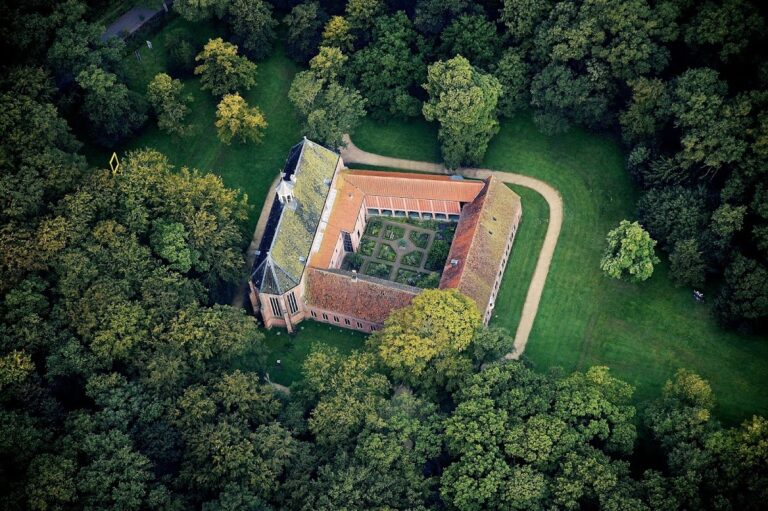
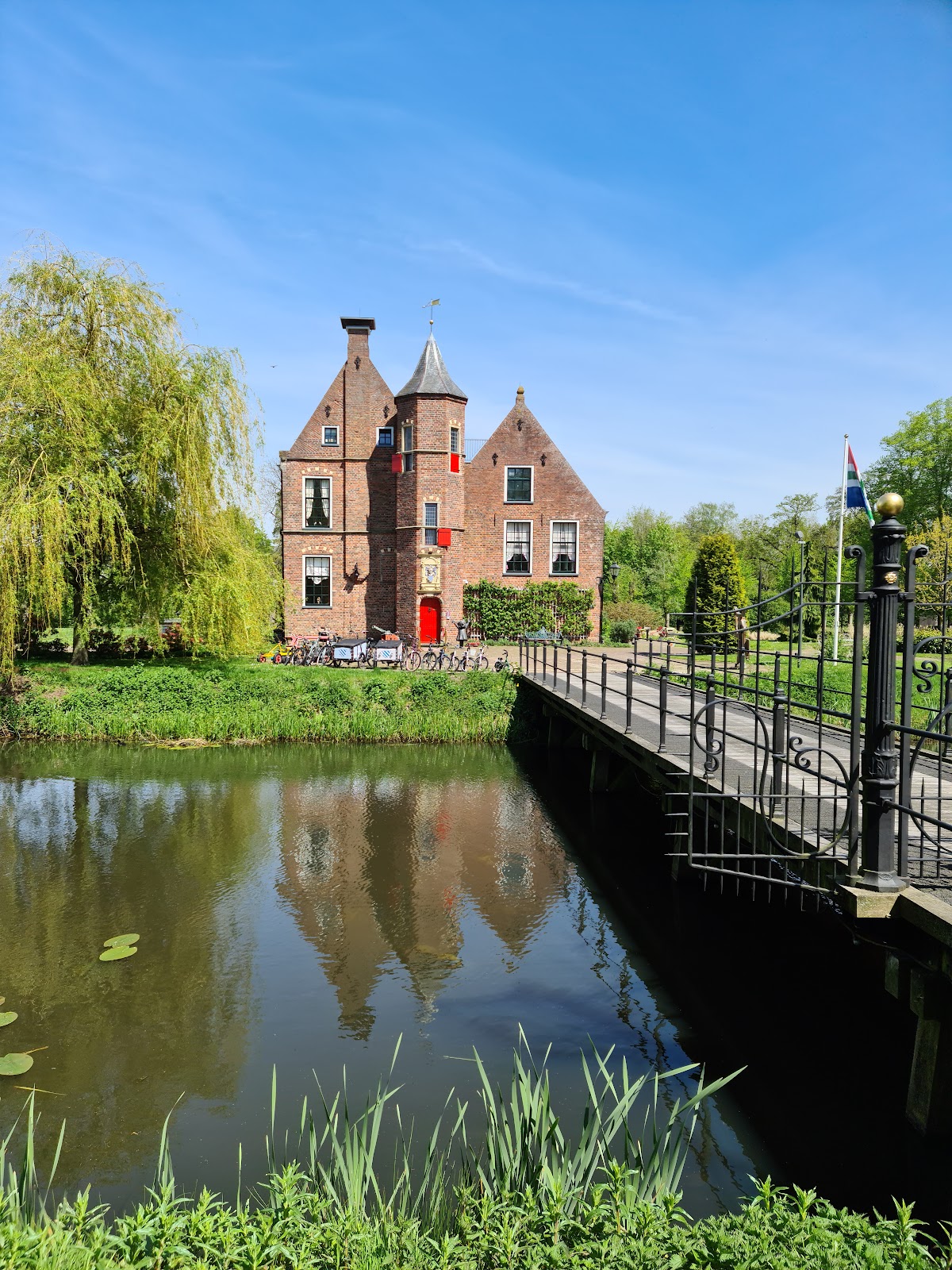
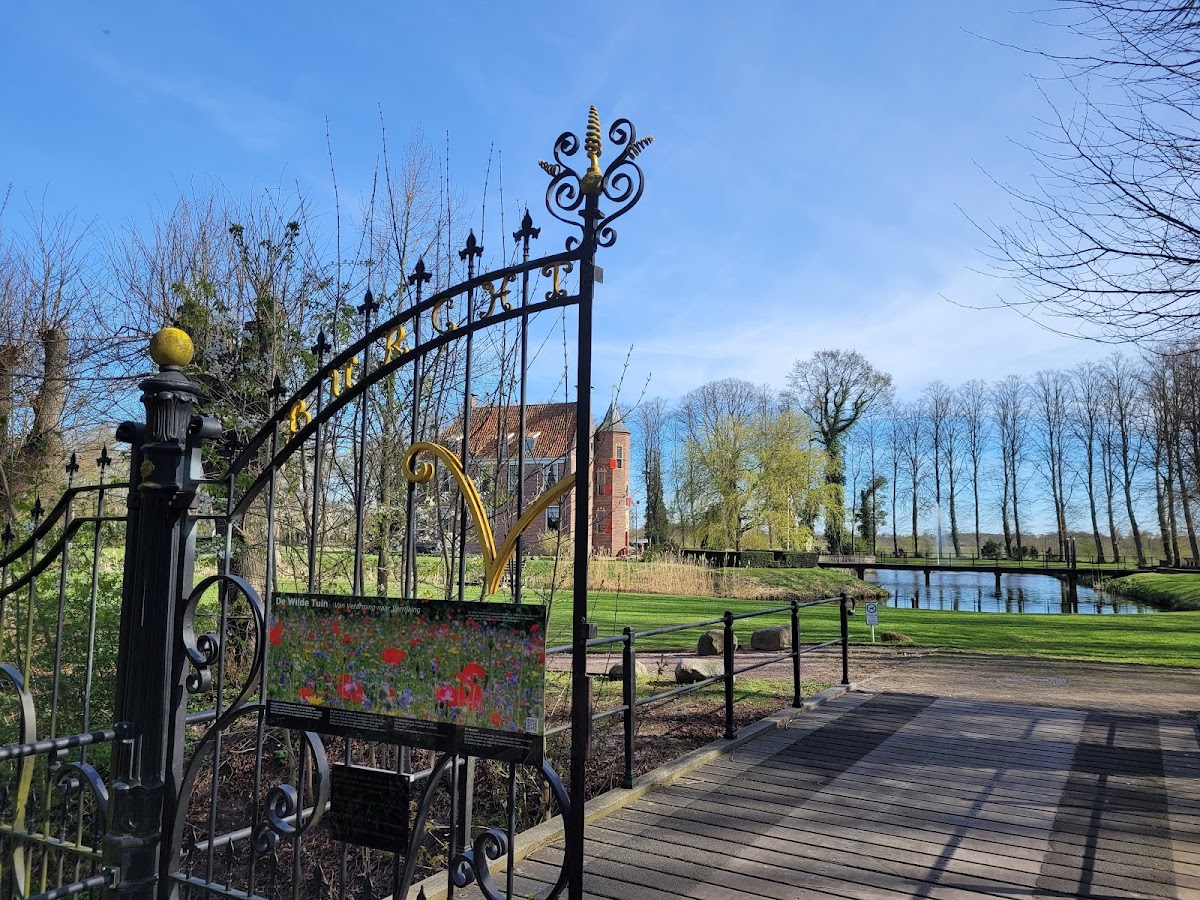
Wedderborg stands on the bank of the Westerwoldse Aa in Wedde, in the municipality of Westerwolde near the Dutch-German border. The present borg is considerably smaller than its medieval predecessor. Its surviving fabric brings together a fourteenth-century cellar, a fifteenth-century wing, and a sixteenth-century wing and tower. The building is surrounded by an inner moat. A new moat was dug around the borg in 1994, and an entrance gate for the inner moat was installed in 2011.
Fortifications and outer courtyard
Ring wall and bastions
The original fortifications included a wall enclosing the borg. The sixteenth-century rebuilding created a new ring wall with four bastions and a gatehouse containing prison cells. Stone from the demolished church tower at Vlagtwedde was used in the building works. The final surviving corner bastion was demolished in the mid-eighteenth century, while the southern corner bastion was excavated after the 1955 sale to the water board.
Courthouse and inn
The courthouse and inn stood in the outer courtyard opposite the main building. Built between 1536 and 1539, the courthouse later moved to Bourtange in 1593 and was subsequently rebuilt at the same general location. The site was later associated with Hotel Buenos Ayres and the former Bellingwedde town hall. The former service building connected with the complex was later used as a farm before its complete demolition in 1956.
Later alterations and commemorative features
Altered fabric
Successive interventions changed the physical form of the complex. Arnold Hendrik Koning demolished the prison tower and part of the former service building during his nineteenth-century alteration of the borg. The entrance and farm were substantially modified in 1905. Later renovation and restoration included work begun in 2010 and the restoration completed in 2015.
Interior and coat-of-arms stone
The tower carries the coat of arms of Georg Schenk van Toutenburg, placed there during his sixteenth-century building campaign. One room was named the Haselhoff Society in 2013 at the initiative of the Haselhoff Family Foundation and presents the history of the Haselhoff family in the surrounding area. A Groningen city coat-of-arms stone bearing the date 1658 stands in front of the borg. Installed in 1968, it refers to repairs carried out between 1653 and 1658.
The restored borg is used for hotel and children’s-hotel accommodation, group accommodation, hospitality, and restaurant functions.