Vryokastro: The Ancient City of Kythnos
Site at a Glance
- Popularity
- Low
- Country
- Greece
- Primary era
- Classical
- Eras represented
- Bronze Age, Iron Age, Classical, Medieval
- Civilizations
- Ancient Greek, Byzantine
- Site type
- City
On this page16 sections
History
Vryokastro was an ancient Greek city on a hill on the northwestern coast of Kythnos, Greece. It probably served as the island’s capital. The city site was inhabited by the 9th century BCE at the latest and remained occupied into the 6th or 7th century CE.
Origins and civic identity
Excavations on Vryokastraki, a nearby islet once connected to the coast, place human presence on Kythnos as early as the 12th century BCE. Ancient traditions offer different accounts of the city’s beginnings. One describes it as a Dryopian settlement, with the island also known as Dryopis. Another links its name to a figure called Kythnos. A further tradition says that Ionian settlers from Athens founded the city under the leadership of Kestor and Kefalenos.
The ancient city was called Kythnos, and the island took its name from it. Kythnos was a city-state whose territory covered the whole island; there were no other city-states there. It did not become especially powerful or prosperous.
Kythnos in Greek affairs
From the 6th century BCE onward, Kythnos struck its own silver coins. In 480 BCE, it sent two ships to fight on the Greek side at the Battle of Salamis, a major Greek victory over the Persian fleet. In the 5th century BCE, Kythnos belonged to the Delian League, an alliance led by Athens.
The city’s constitution was included among 158 constitutions associated with Aristotle’s school in Athens, which gathered information about the governments of Greek cities.
Macedonian and Roman-era episodes
During Philip V’s war against Rome, the island held a Macedonian garrison. In 199 BCE, Attalus I, king of Pergamon, and the Rhodians besieged the city. They abandoned the effort when they failed to take it quickly and judged that continuing was not worthwhile.
For a time after Roman emperor Nero’s death, an enslaved man who resembled him and was skilled in singing and playing music impersonated the emperor and attracted many followers.
Modern investigations and local memory
Excavations took place in 1990-1995 and again in 2001. From 2002, the University of Thessaly worked at the site with support from Greece’s archaeological administration. That year, archaeologist Alexander Mazarakis-Ainian led work at the acropolis to look for remains and establish whether a sanctuary or another religious building had stood there. The sanctuary was excavated from 2000 to 2016. Underwater research at the ancient harbor ran from 2005 to 2011, and investigation of its monumental retaining wall began in 2009. Buildings in the Upper City sanctuary complex were cleared from 2016 to 2018, while excavation on Vryokastraki took place from 2018 to 2020. Work in the area continues.
Since March 2011, the northwestern part of Kythnos that includes the site has belonged to a Natura 2000 Special Protection Area, part of a European network for conserving habitats and species. Local tradition holds that fairies lived on Vryokastraki.
Remains
Settlement plan and defenses
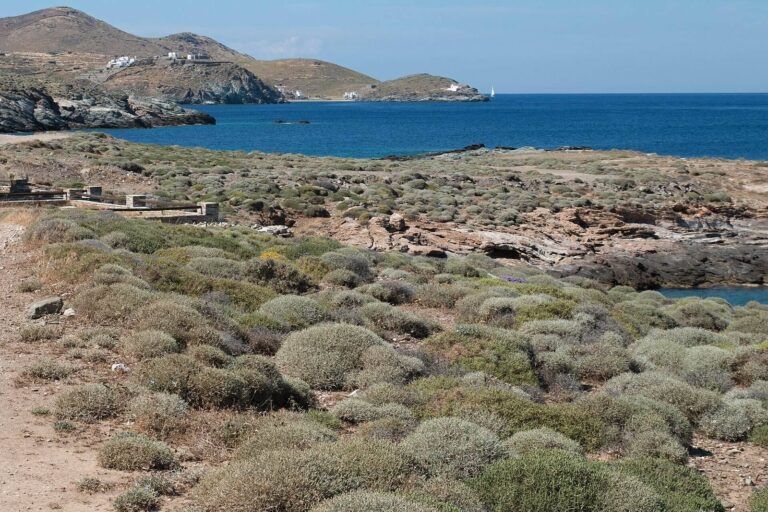
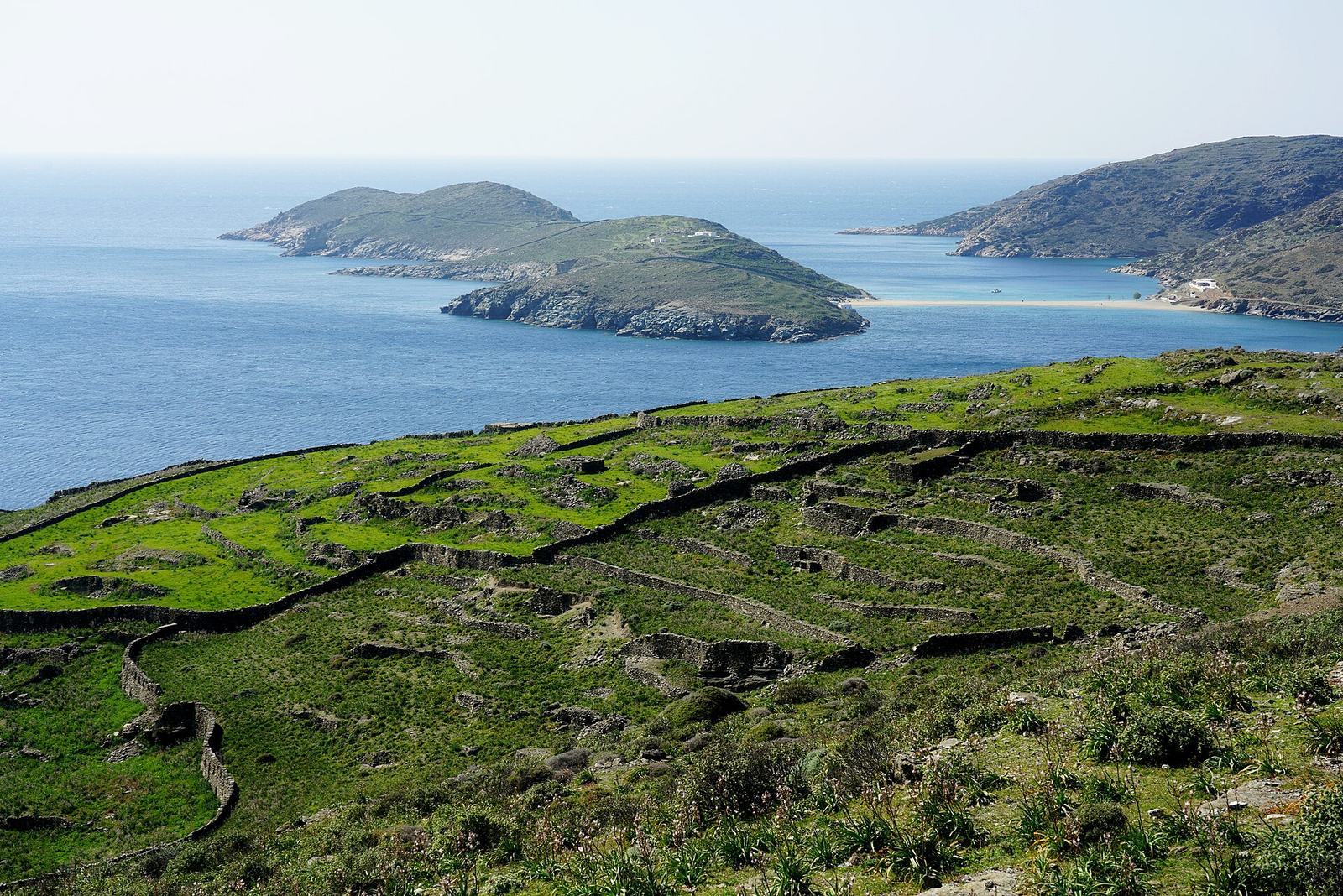
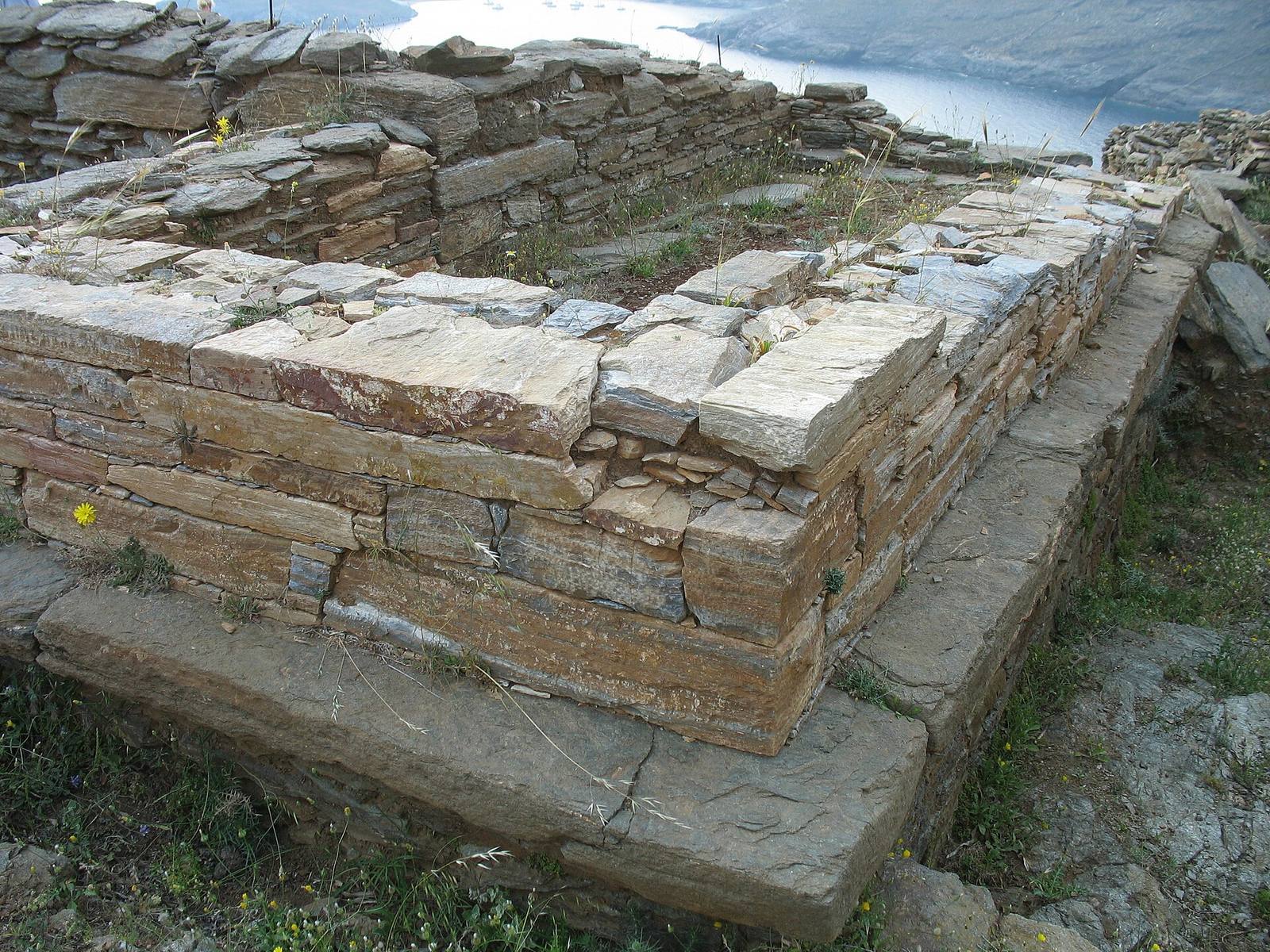
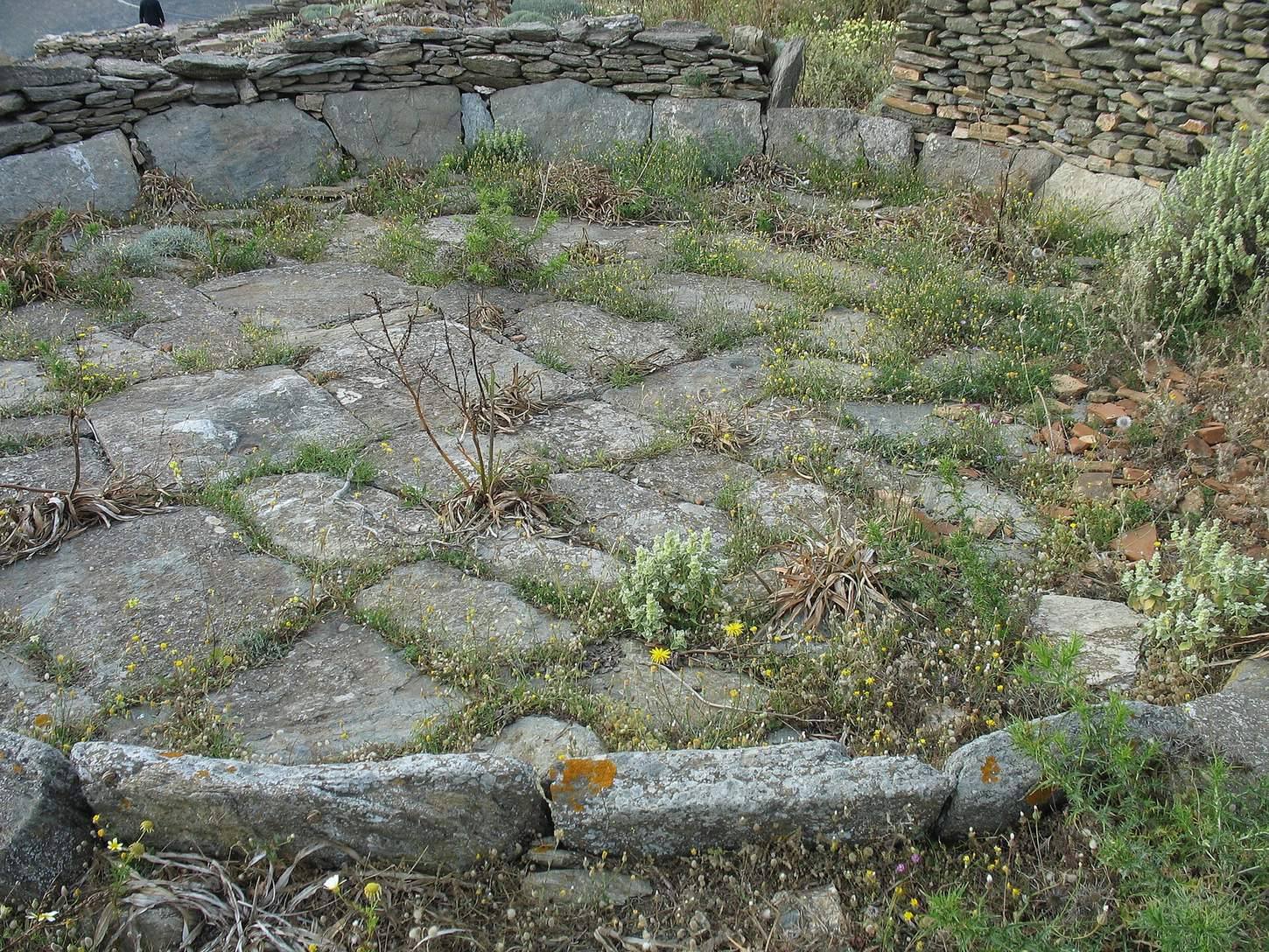
The city covered about 30 hectares on a hill forming a peninsula between the bays of Merichas and Apokrisi. Its buildings included public and private structures, an agora, a public space used for gatherings and markets, and an acropolis, the city’s fortified high area. The settlement also had an aqueduct, water cisterns or reservoirs, two cemeteries, a harbor, and sanctuaries. One large building is dated to the Late Classical and Hellenistic periods, successive phases of ancient Greek history.
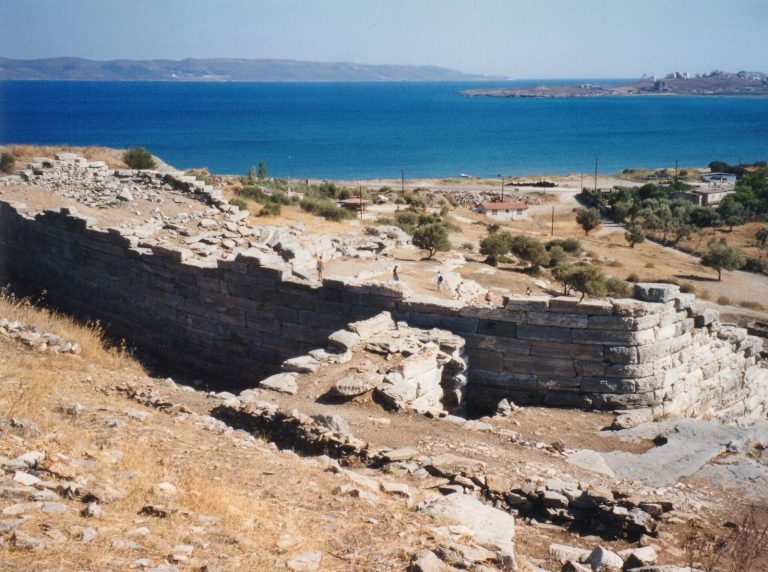
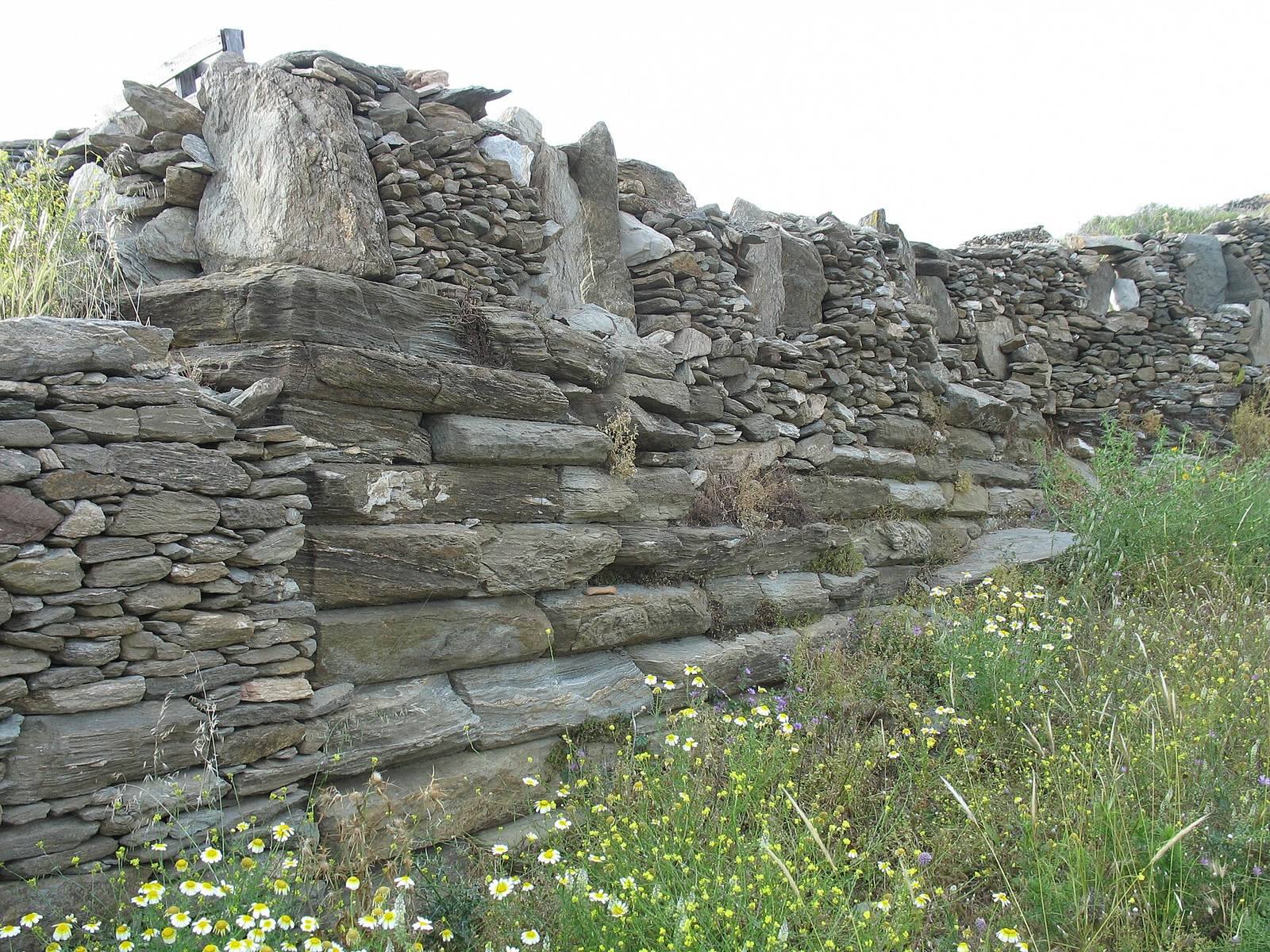
Walls surrounded the city, and fortifications protected the acropolis. The line of the city wall can be followed for nearly its full circuit, with some sections still standing.
Sanctuary complex
The city’s religious buildings include a principal sanctuary and a row of structures in the Upper City. Several identifications of these places remain tentative.
Principal sanctuary
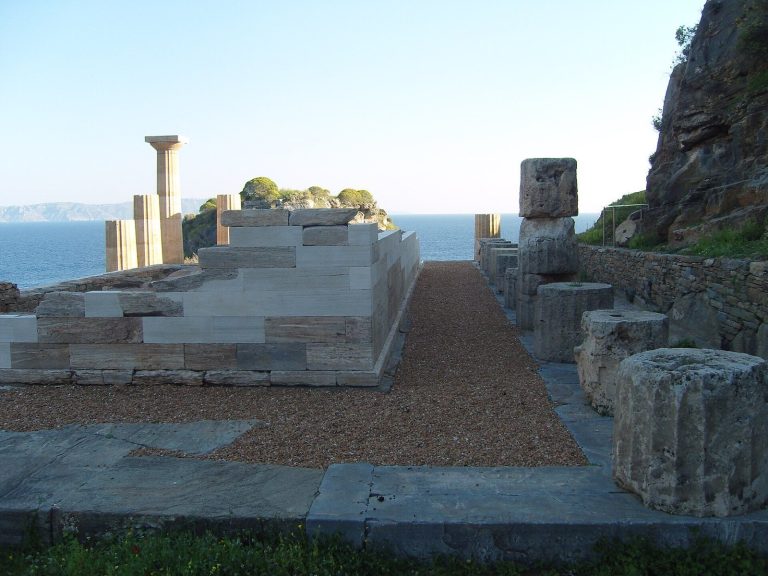
Known as Building 3, the principal sanctuary was used from the Archaic through the Hellenistic period, successive phases of ancient Greek history. Its temple had two parts and took the form of a sacred house. It was found intact and unplundered, with offerings still in place. Two altars stood south of the temple beside a votive deposit, a collection of objects dedicated to a deity, containing hundreds of valuable items. The sanctuary has been tentatively associated with Apollo, linked with prophecy and music, and Artemis, associated with hunting. Other proposed identifications connect it with Demeter, goddess of agriculture, possibly with Kore, another name for Persephone, or with Hera.
Retaining wall and lower building
A monumental retaining wall stands west of the sanctuary. Farther down the slope is a two-storey building that may have served as the city’s prytaneion, a civic building connected with public and administrative life, during the Classical and Hellenistic periods.
Upper City buildings
A row of buildings in the Upper City sanctuary complex extends for about 800 metres. They have been tentatively identified as temples of Asclepius, the god of healing; the Samothracian gods, deities of the mystery cult of Samothrace; Aphrodite, associated with love; and Apollo and Artemis.
Ancient harbor and Vryokastraki
Harbor
The ancient harbor is now Mandraki Bay. Underwater investigation mapped the harbor and identified buildings along the shore and on the seabed. One excavated structure appears to form part of a wall.
Vryokastraki
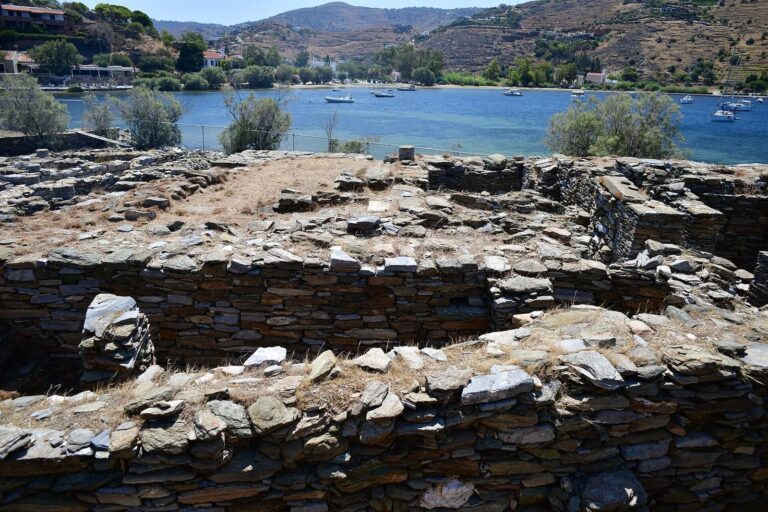
Now a rocky islet about one kilometer southeast of Vryokastro, Vryokastraki once formed the western part of the city’s harbor and was joined to the coast. Rising sea levels separated it from the mainland; buildings and wall sections that once stood on land now lie underwater. Excavations on the islet uncovered a monumental retaining wall, a monumental altar, and a 90-metre-long building complex with 15 rectangular rooms. They also revealed a three-aisled basilica, a church with a central area flanked by two side aisles, dating to the Early Christian or Proto-Byzantine period, a transitional phase leading into the Byzantine era. It was the first basilica of this type found on Kythnos.
Cemeteries and finds
The cemeteries have yielded numerous sculptures, reliefs, and inscriptions. Other finds from the city include pottery, figurines, and jewelry made from gold, silver, amber, ivory, and other materials. Finds from Vryokastro are displayed in the Archaeological Museum of Kythnos in Chora.
Northeastern hot springs
Hot springs in the northeastern part of Kythnos were used in antiquity, and remains of ancient buildings have been found nearby.