Roman Bridge of Patras: A Multi-Phase Roman Road Bridge
Site at a Glance
- Popularity
- Very Low
- Country
- Greece
- Primary era
- Classical
- Eras represented
- Classical, Modern
- Civilizations
- Byzantine, Greek, Roman
- Site type
- Infrastructure
- Remains
- Bridge
On this page10 sections
History
The Roman road and first bridges
The Roman Bridge of Patras is a multi-phase Roman road crossing in Greece, built on the public route linking Patras with Aigion. Its earliest single-arched bridge probably formed part of a public building program commissioned by Emperor Trajan around AD 114. A later bridge probably replaced it between AD 276 and 283.
An inscription found in the foundations of later construction associates funding for the third-century bridge with Artemios, a resident of Mesatis. He intended his contribution to make travel to Patras easier for his fellow villagers. Mesatis had been joined with Patras through the consolidation of settlements into a single civic community.
The late Roman rebuilding
A two-arched bridge was built over earlier structures around AD 397, during the reign of Arcadius, emperor in the eastern Roman Empire from AD 395 to 408. Its construction followed the Visigoths’ sack of the Peloponnese. The Visigoths were a Germanic people whose military incursions affected parts of the Roman Empire.
Flooding and rediscovery
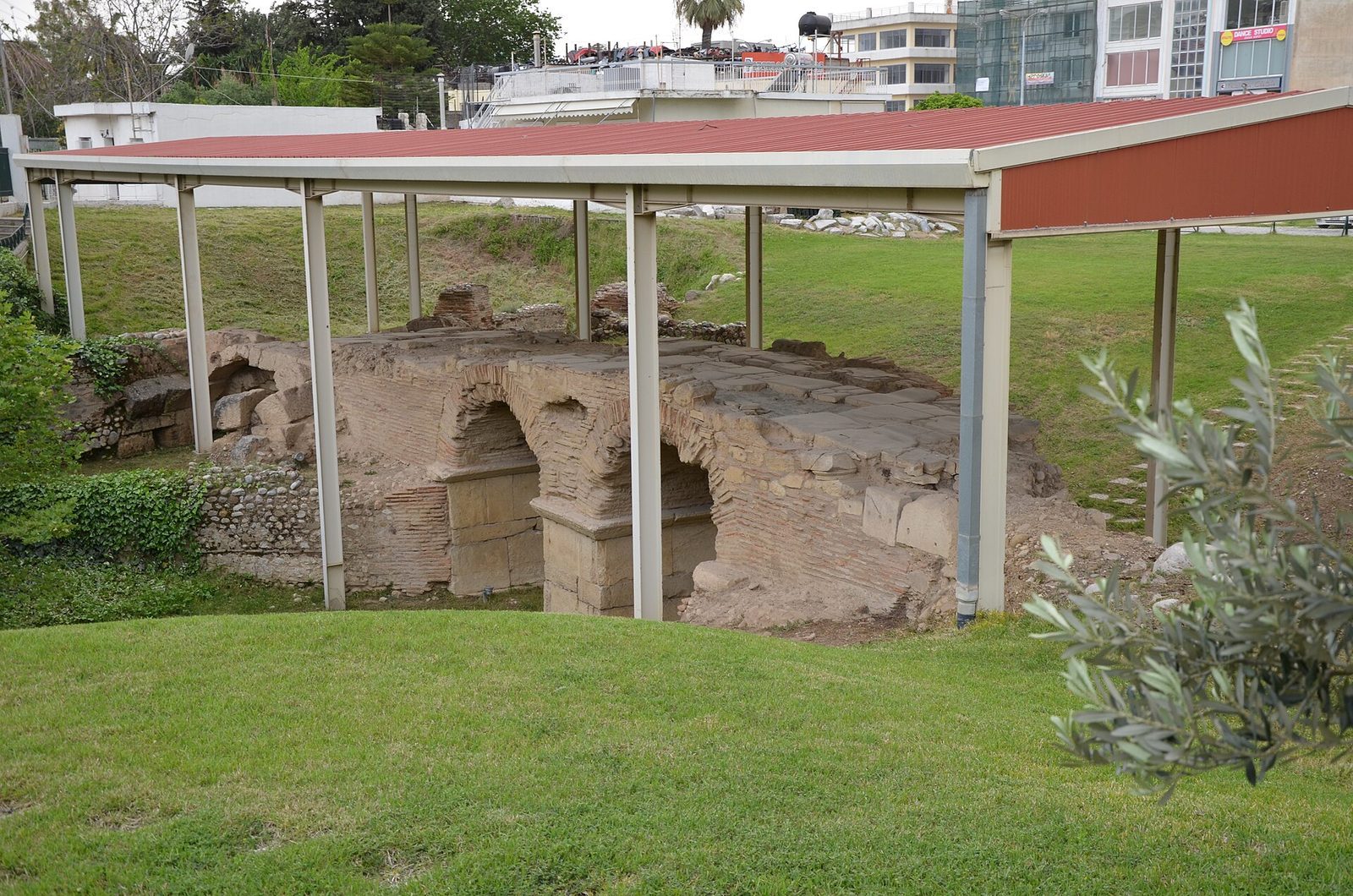
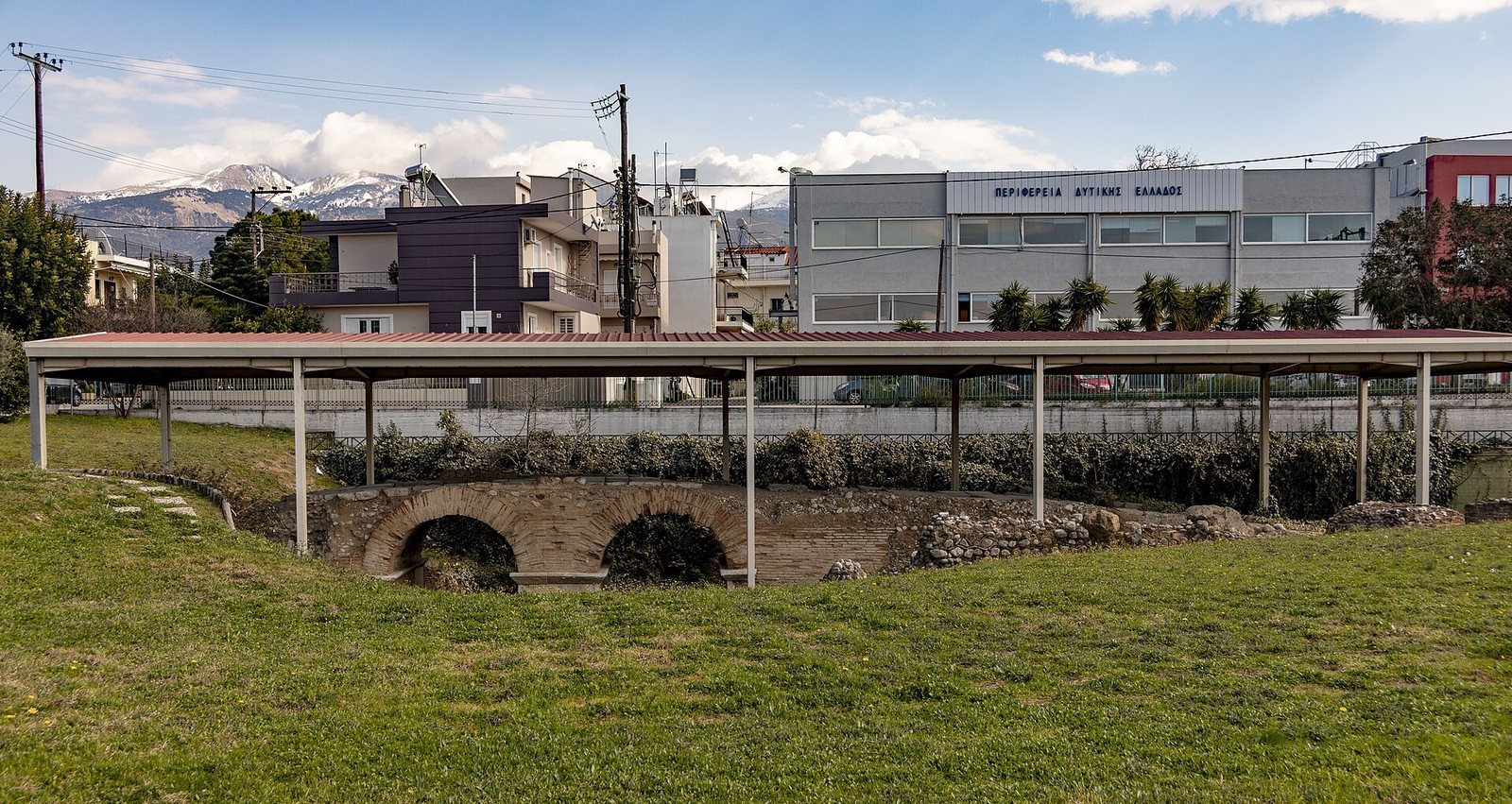
A major flood changed the river’s course and damaged the bridge, leaving it dry. The crossing nevertheless continued to serve as a road for many years. Housing construction led to its accidental discovery in the early 1980s. The former riverbed was located in 2001, and later excavation and work by the regional archaeological service cleared the remains and added a protective metal roof.
Remains
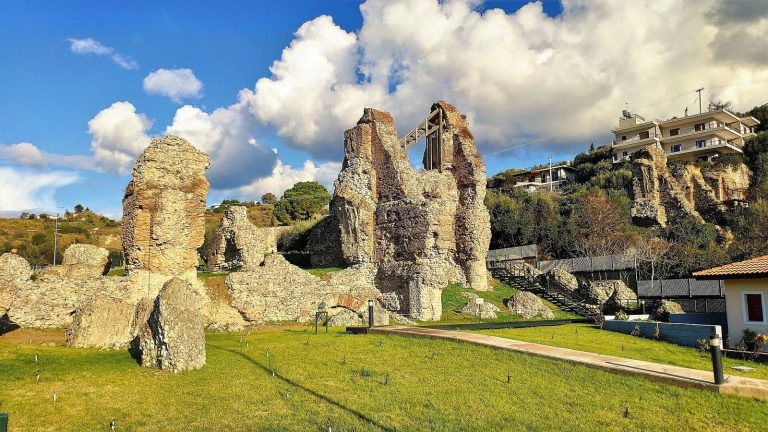
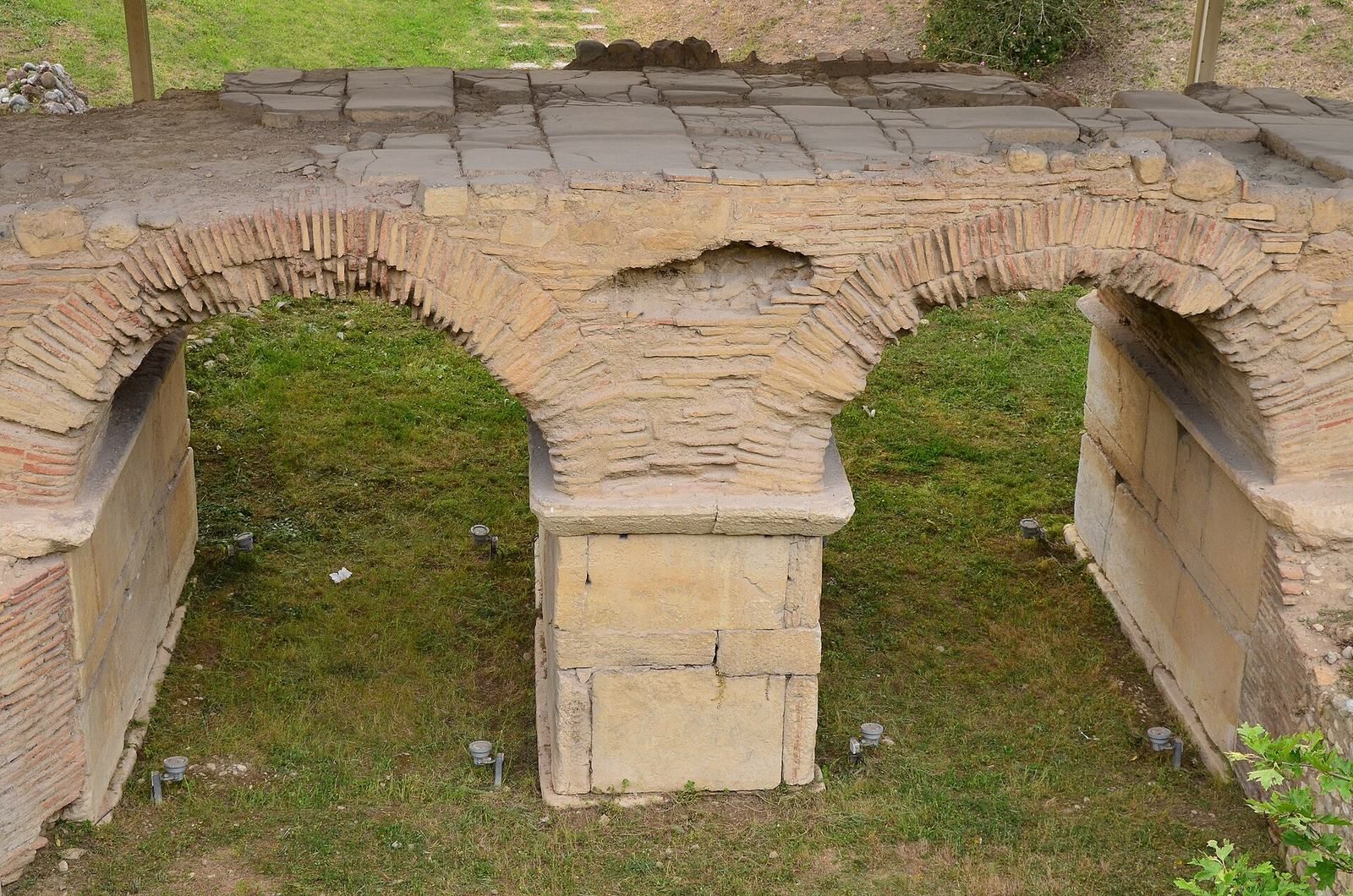
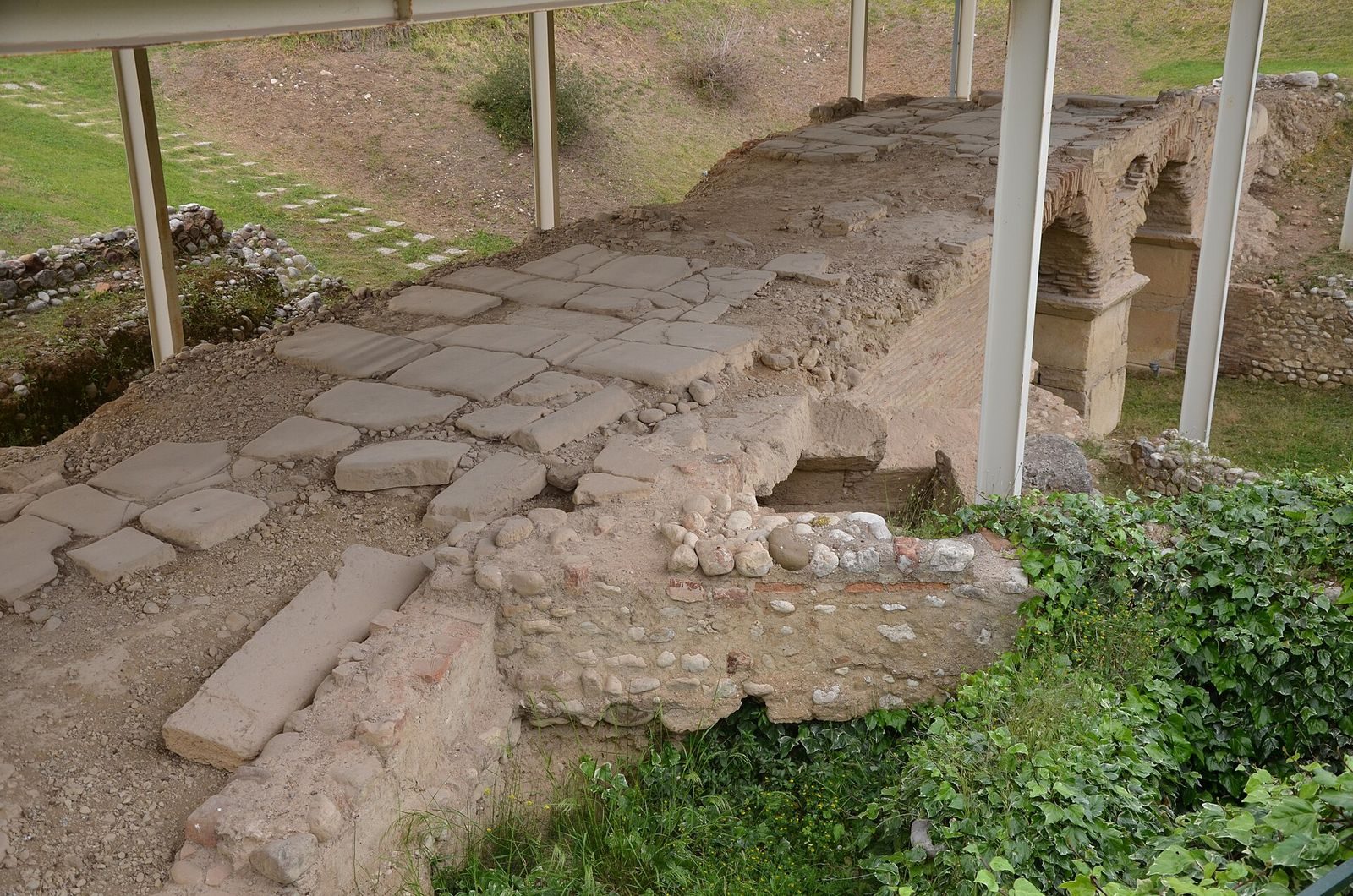
The surviving complex includes a single arch and a later two-arched bridge built over earlier structures. Its construction materials include brick, pebbles, reused architectural pieces, stone blocks, and Roman concrete.
Bridge arches and supports
The single arch
The earlier bridge’s stone arch remains visible. When the later bridge was built, the opening of this arch was narrowed, probably to help with irrigation.
The two-arched bridge
The two-arched bridge is Greece’s best-preserved ancient example of its type. Its supports have hard-stone facing, while only scant remains survive of the intervening bridge that preceded it.
Roadway and river works
A section of paved roadway survives, with wheel ruts left by passing vehicles. Parts of the parapets, the low protective walls along the road, are also preserved; they were made from reused architectural material, including pieces from demolished buildings. Straight riverbank works remain and were probably intended to reduce flood risk. The former riverbed lies about 100 metres north of the river’s present course.
Finds from the foundations
The bridge foundations yielded remains of two headless marble statues and two coins dating to the fourth century.