Archaeological Site of Silver Mines at Drymos of Lavreotike: An Ancient Mining Landscape in Greece

Site at a Glance
- Rating
- 4.6
- Popularity
- Low
- Country
- Greece
- Primary era
- Classical
- Eras represented
- Classical
- Civilizations
- Ancient Greek
- Site type
- Economic
- Remains
- Mine
On this page19 sections
History
The Archaeological Site of Silver Mines at Drymos of Lavreotike is part of an ancient mining landscape at Laurium in Greece, created through the long exploitation of mineral resources by communities of the Aegean and ancient Greek world. Systematic extraction began around 3200 BC, while more intensive underground mining developed in the late sixth century BC. The wider Lavreotiki district, also known as Laurion or Lavrion, extends across southeastern Attica, the peninsula containing Athens, from Mount Paneion near Keratea to Cape Sounion and Legraina. It became the largest silver-mining centre of ancient and modern Greece.
Early exploitation and the growth of Laurion
Mineral exploitation in Lavreotiki began during the transition from the Late Neolithic to the Bronze Age. Lead in Bronze Age objects from the Aegean has been linked isotopically to Laurion, while a block of litharge, the lead oxide produced during silver refining, shows that cupellation was practised at Thorikos in the sixteenth century BC. Further litharge remains occur in eleventh-century BC Protogeometric levels.
The earliest workings followed surface outcrops at boundaries between schist and limestone. These geological contacts, or boundaries between different rock layers where minerals accumulated, contained lead-silver ores. More systematic extraction began in the late sixth century BC, particularly after miners located the rich third contact near Maroneia. This deepest and richest mineralised zone lay underground between marble and schist, making vertical shafts and extensive galleries necessary.
Silver and Athenian naval power
By the fifth century BC, Laurion had become a major source of revenue for the Athenian state. In 483 BC, approximately 100 talents of silver were available from the mines, equivalent to about 600,000 drachmas or 2.5 tonnes, although the precise number of years represented by this revenue is uncertain. The Athenian statesman and military leader Themistocles proposed using the money to build 200 triremes, fast warships propelled mainly by three banks of oars, rather than distributing it among the citizens.
The fleet financed in part by Laurion silver helped Athens defeat Persia at Salamis in 480 BC and later supported Athenian dominance in the Aegean. Laurion’s output also supported the Athenian economy, the production of owl tetradrachms, and trade in the eastern Mediterranean. These silver coins, marked with an owl associated with Athena and Athens, circulated widely. Mining revenue contributed to major public works, including the Propylaea, while the district also supplied lead and copper and smaller quantities of ochre and cinnabar.
Classical prosperity and collapse
The fifty years after the Persian Wars brought prosperity to the mines. Intensive production encouraged urban and industrial development at Thorikos, an ancient settlement on the eastern coast of the district, and depended on a very large enslaved workforce. Mining and processing were distributed across the landscape, linking underground workings with workshops, furnaces, water installations, settlements, roads, and ports.
Spartan attacks on Attica and Laurion in 430 and 427 BC damaged mining infrastructure but did not permanently end production. The permanent Spartan occupation of Decelea in 413 BC had a more severe effect. More than 20,000 enslaved people, including mine workers, fled, causing an abrupt collapse in mining and the ruin of many concessionaires. Fortifications at Cape Sounion, Thorikos, and Anaphlystos secured supplies, but they did not restore extraction.
Recovery and Hellenistic decline
Recovery during the first third of the fourth century BC was slow. Much of the renewed activity involved reworking old galleries and discarded surface waste. Production intensified during the second half of the century, when new shafts and galleries were opened and numerous furnaces developed in port areas. A temporary crisis in the middle of the fourth century BC reduced investment in new galleries. High grain prices and unsuitable fiscal, legal, or social conditions have been proposed as possible explanations, but these remain hypothetical.
Production continued until the end of the fourth century BC, although the number of concessionaires listed on the final mining inscriptions declined markedly. Mining became less intensive during the Hellenistic period. Limited extraction continued in the second and early first centuries BC, but ore exhaustion, Athens’s reduced international importance, and the availability of precious metals from Macedonian and eastern sources made Laurion less profitable.
Ancient extraction was eventually abandoned in the first century BC. Some later activity, including the reworking of ancient slags, took place during the Roman and Byzantine periods, but the mines were abandoned by Late Antiquity. The district was later transformed into a major modern mining centre. Its ancient and modern industrial history is now represented on Greece’s UNESCO Tentative List as Ancient Lavrion, submitted in 2014 under criteria (ii) and (iv). Much of Lavreotiki is legally protected as an archaeological site, a historical site, and an area of outstanding natural beauty.
Modern revival and archaeological study
The mines were rediscovered around 1860, when Greek and foreign companies reopened old galleries, reworked ancient slags, and extracted lead, silver, zinc, and iron. The Greek Lavrion Metallurgical Company and the French Compagnie Française des Mines du Laurium were among the enterprises involved. The Lavreotiki Affair produced competing Greek and French operations and helped turn Laurion into a multicultural industrial centre. Commercial exploitation continued into the 1970s, and mining in the Laurion area ended altogether in 1990.
Modern mining created new villages, churches, schools, transport links, a port, metallurgical plants, and a railway opened in 1885. During the interwar period, the French company introduced scientific management of labour, while Laurion became a centre of social and political conflict. Since 1994, the former French industrial plant has housed the Lavrio Technological and Cultural Park, operated by the National Technical University of Athens.
Archaeological investigations at Thorikos began in 2012 and have mapped nearly 5 km of underground workings through photogrammetry, forming the Mythos network. The work belongs to an international research programme examining mineral resources, settlement, and territories across the Laurion district. The protected landscape reflects the survival of an extensive technological and cultural system rather than a single isolated monument.
Remains
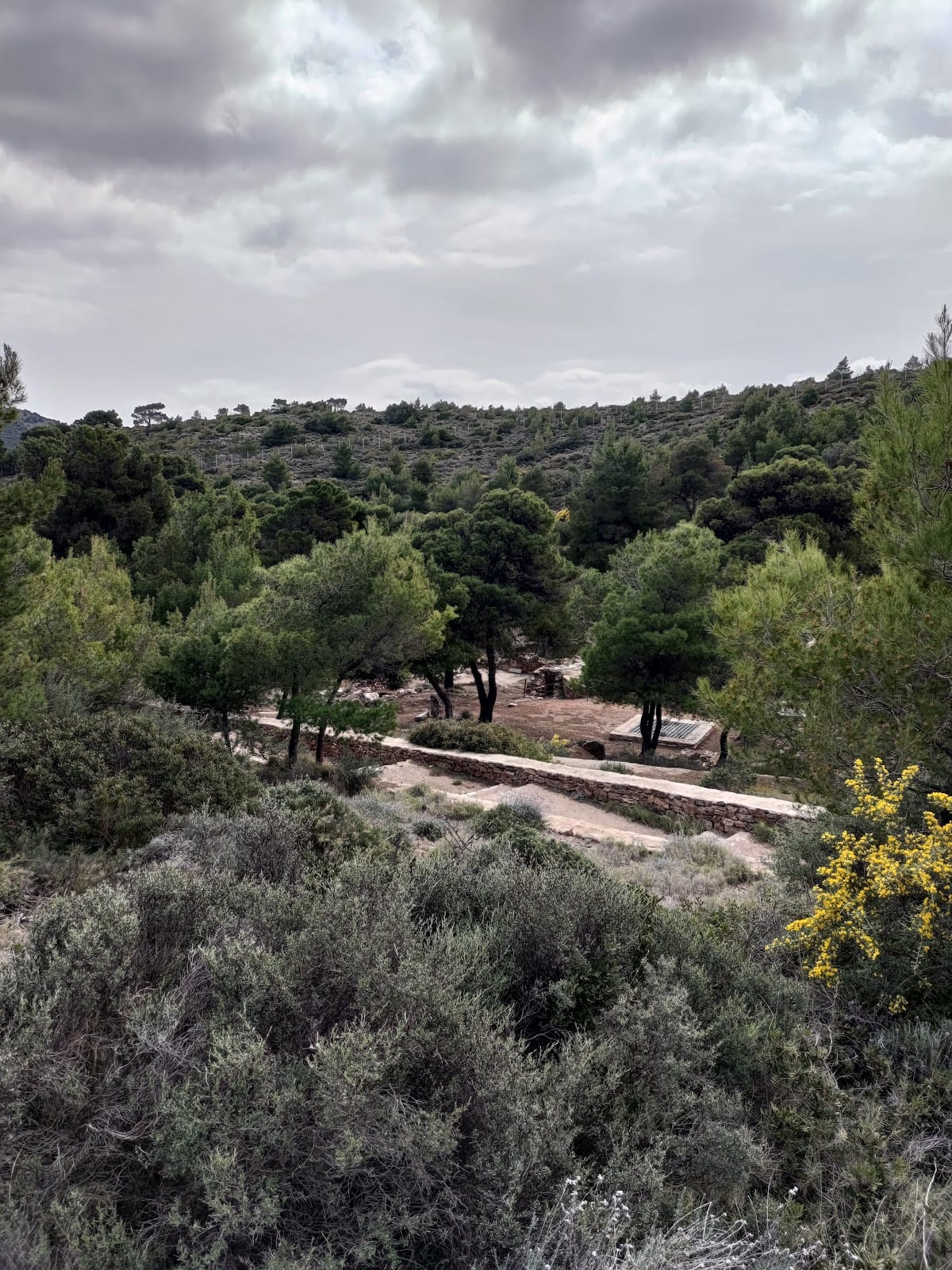
The site forms part of a mining landscape spread across the Lavreotiki district. Its physical remains include underground workings, surface processing areas, water installations, metallurgical facilities, settlements, roads, fortifications, cemeteries, and religious buildings. The geological setting consists chiefly of alternating layers of light limestone or marble and dark, foliated schist. Lead-silver ore formed in cavities at three contacts between these rocks, with the first reaching the surface and the third lying deep underground.
Underground workings
Shafts and galleries
More than 1,000 ancient shafts and approximately 120 to 150 km of Classical-period galleries extend across several dozen hectares of the wider district. Shafts were generally rectangular or square, less than 2 m across, and usually 50 to 60 m deep. Their sides were cut flat and their vertical deviation was slight. The deepest recorded shaft reaches 119 m, and excavating a 100 m shaft may have taken two workers about 20 months.
Galleries were commonly only 50 to 60 cm wide and 60 to 90 cm high. Their narrow dimensions allowed rapid progress but required miners to work while crouching, kneeling, or lying down. Miners followed irregular geological contacts through branching passages. Where mineralisation extended vertically, overlapping levels were connected by labyrinthine galleries, while reconnaissance passages and upward or downward probes approached larger ore bodies. In larger excavations, poorer rock was left as a supporting pillar, known as an ormos; timber supports were also used in some places.
Mining equipment and ventilation
Workers cut the rock with a hammer weighing about 2.5 kg and fitted with a short olive-wood handle, iron chisels or pointed rods about 25 to 30 cm long, and pickaxes. In hard marble, a worker may have used 10 to 13 pointed tools during a ten-hour shift. Iron hooks, woven-fibre or leather baskets, pulleys, and low anchoring walls helped remove ore and spoil. The remains of some lifting walls survive around the shafts.
Small terracotta oil lamps supplied light for working shifts of approximately ten hours, and lamp niches occur in some galleries. Ventilation was managed by dividing shafts vertically with a sealed wooden partition packed with clay. One compartment contained rough wooden steps, while the other approximately two-thirds carried ore and waste. Parallel shafts, shafts reaching the same galleries at different elevations, surface chimneys, and fires were used or proposed to circulate air. Workers also blocked unneeded passages with spoil to conserve ventilation.
The Kitso shaft
The Kitso shaft near Maroneia illustrates the miners’ geological methods. Workers descended through thin upper marble and schist until reaching a marble layer at 59 m. They abandoned their lateral searches after finding that this was an isolated limestone block, while the true third contact lay 20 m deeper. The shaft therefore preserves evidence of underground exploration directed by the structure of the mineral-bearing rocks.
Ore processing and water management
Sorting, crushing, and grinding
Surface installations included ore-sorting areas, crushing and grinding workshops, washeries, furnaces, cisterns, settling basins, channels, and reservoirs. Ore was first separated by weight and colour, then crushed with stone or iron hammers in stone mortars. Workers ground it on marble tables and mills, using both hopper mills and conical mills. Some millstones were made from hard volcanic rock, including trachyte imported from Milos. Conical mills could process about four tonnes of ore in 24 hours, and spoil heaps remain around many shafts.
Washeries
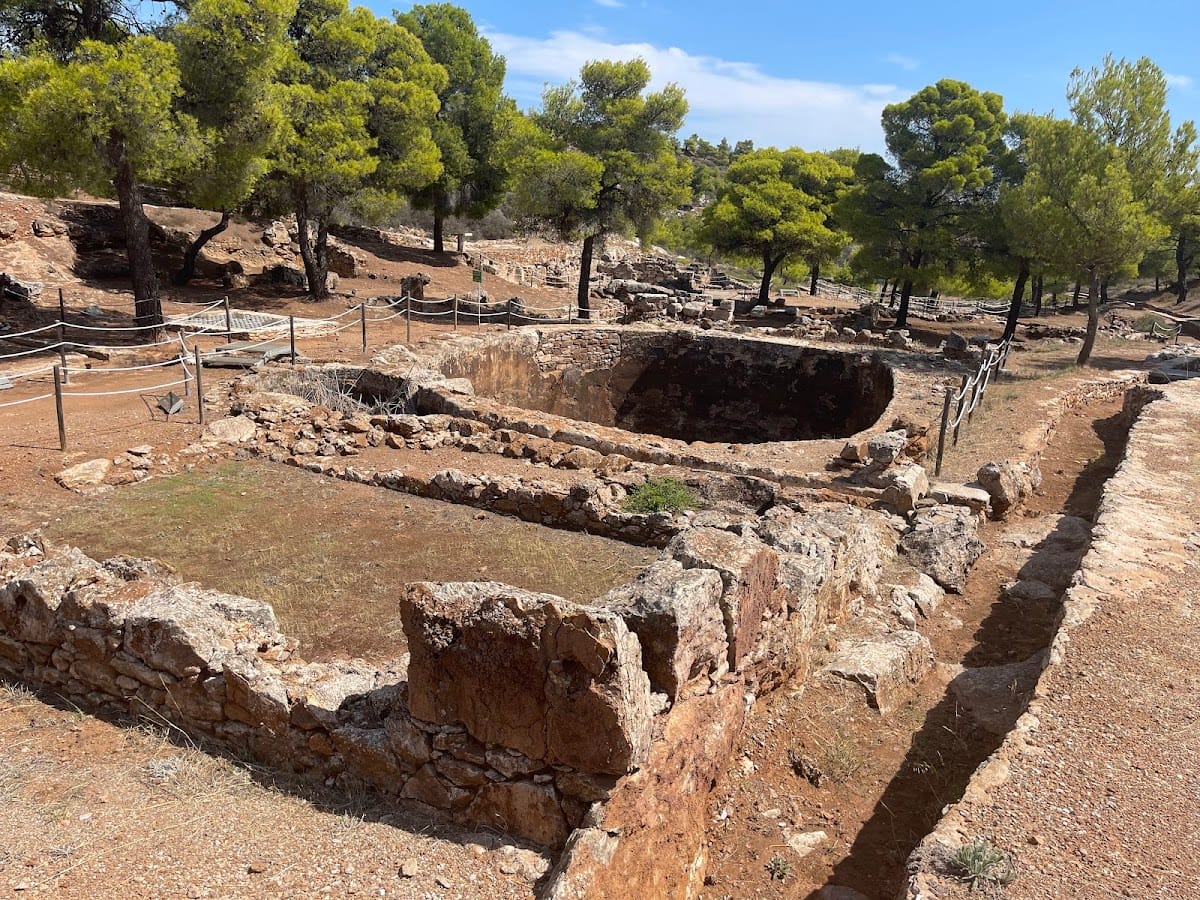
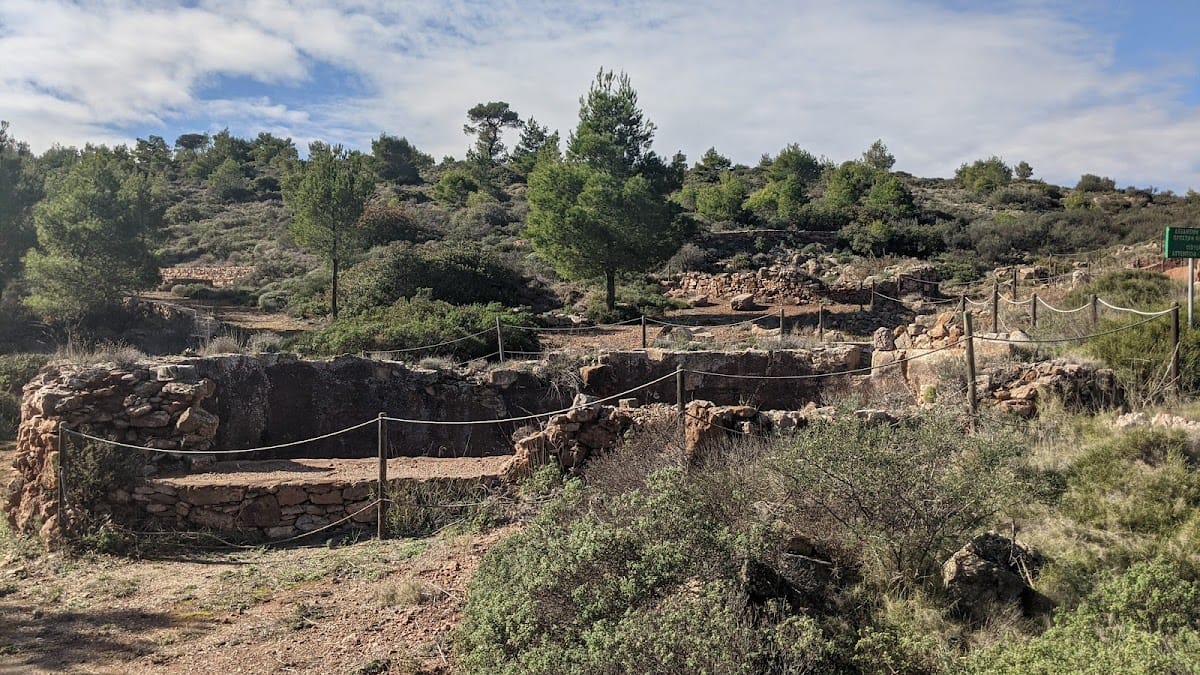
Ore washeries, or katharisteria, were cut into bedrock and coated with waterproof plaster. Their areas ranged from a few square metres to several dozen square metres, and some retain exceptionally well-preserved plaster. Flat washeries used inclined washing tables supplied by four to eight outlets from an elevated reservoir. Water carried lighter waste away while heavier mineral particles settled in channels and compartments before the water returned to the reservoir.
Four helicoidal washeries also survive in the Laurion district. Each consisted of an open, slightly sloping circular channel about 7 m in diameter, with successive settling compartments for treating smaller quantities of ore. The operation of the flat washeries remains debated. One interpretation places removable wooden sluices beneath the outlets, while another places the principal concentration process in the reservoir itself.
Cisterns and reservoirs
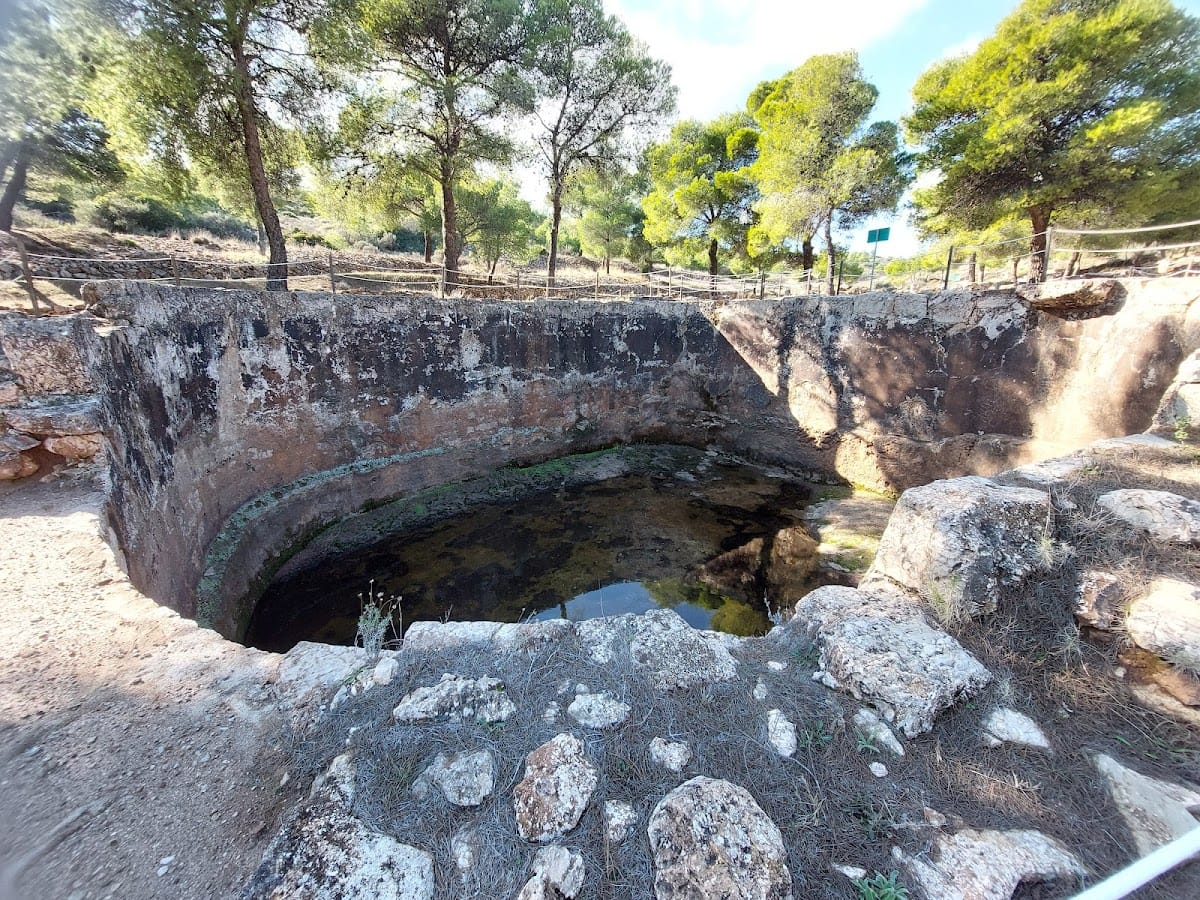
Water-management systems comprised circular or rectangular cisterns, small settling basins, covered channels, central canals, and small reservoir dams. Cisterns generally held between 100 and 1,000 m³, while preliminary settling basins held about 2 to 5 m³. A medium-sized washery required approximately 1,000 m³ of water each year.
Cisterns were built in masonry or cut into natural rock, coated with thick waterproof plaster, and roofed with wooden boards to reduce evaporation. Their close spacing along valleys and covered connections with washeries created integrated systems for storing, settling, and reusing water.
Smelting and refining installations
Furnaces and slag
Prepared ore was smelted in furnaces about 1 m in diameter and 3 to 4 m high. These were built from refractory or low-fusibility stone, including micaschist and trachyte, and were commonly arranged together against a terrace. Layers of ore and charcoal were fed through the upper opening, while leather bellows intensified combustion.
Smelting required approximately five tonnes of wood for each tonne of ore. Heavy demand reduced local woodland, encouraging the importation of fuel and timber and the gradual movement of smelting installations toward coastal ports. Lead-silver metal separated from the slag, which initially retained 8 to 10 percent lead. Later reworking reduced the lead content of slag to about 2 to 3 percent, and large deposits were exploited during the Roman and modern periods.
Cupellation and lead products
Cupellation refined silver from lead in a refractory clay cup placed inside a domed clay furnace. At approximately 880 to 960°C, the lead oxidised into litharge and flowed away, while silver remained in the cupel. Repeated refining could reduce foreign metals in the silver from about 10 percent to 1 or 2 percent and produce metal exceeding 99 percent purity.
Litharge served as a yellow pigment and was also used in medicine and healing. Recovered lead was reduced again in furnaces and cast into ingots weighing about 15 kg. Lead supplied water pipes, lamps, weights, anchors, sling bullets, and fastenings for iron or bronze elements in fortifications and public buildings.
Archaeological evidence and environmental change
Finds from the mining district include blocks and debris of litharge, ancient lamps, mining tools, slag heaps, food remains such as deer bones, fragments of timber supports, and concentrations of iron and copper. A copper mine has been identified in the Spitharopoussi sector. Together, the remains show the linked stages of extraction, ore concentration, smelting, water management, and labour organisation.
Ancient mining also altered the wider environment. The demand for fuel reduced local woodland, while the movement of furnaces toward coastal ports reflects the changing relationship between mineral production, transport, and available resources. Ancient output has been estimated, with a wide margin of error, at approximately 3,500 tonnes of silver and 1,400,000 tonnes of lead.