Vovnushki: A Medieval Ingush Complex of Defensive and Watchtowers
Site at a Glance
- Rating
- 4.9
- Popularity
- Low
- Country
- Russia
- Primary era
- Medieval
- Eras represented
- Medieval, Early Modern
- Civilizations
- Unclassified
- Site type
- Military
- Remains
- Tower
On this page8 sections
History
Vovnushki is a medieval Ingush complex of defensive and watchtowers in Russia’s Ingushetia, built between the twelfth and eighteenth centuries, although the dates of its individual towers remain uncertain. Traditionally associated with the Ozdoi teip, a traditional Ingush and Chechen kinship or clan group, the complex reflects an ancestral and communal connection to the site.
Origins and Early Descriptions
Vovnushki’s name comes from an Ingush expression meaning “place of defensive towers.” The complex was formed by two separate fortified groups, linked in the past by a suspension bridge. Its earliest reliable descriptions date to the beginning of the eighteenth century.
A traditional siege story tells of a Vainakh woman, a member of the closely related Ingush and Chechen peoples, who carried infants in their cradles across the remaining rope after enemies destroyed the bridge. The story resembles a historical event, but its historicity is uncertain.
Modern Recognition
Vovnushki is part of the Dzheyrakh-Assinsky State Historical, Architectural, and Natural Museum-Reserve and is protected as a cultural-heritage monument of Russia. The complex became a finalist in the Seven Wonders of Russia competition in 2008. In 2009, it appeared on the Russian postal stamp for the Republic of Ingushetia in the “Regions” series. The Bank of Russia depicted one of its watchtowers on a silver three-ruble commemorative coin issued in 2010, with a mintage of 10,000 and a weight of 31.1 grams.
Remains
Setting and Layout
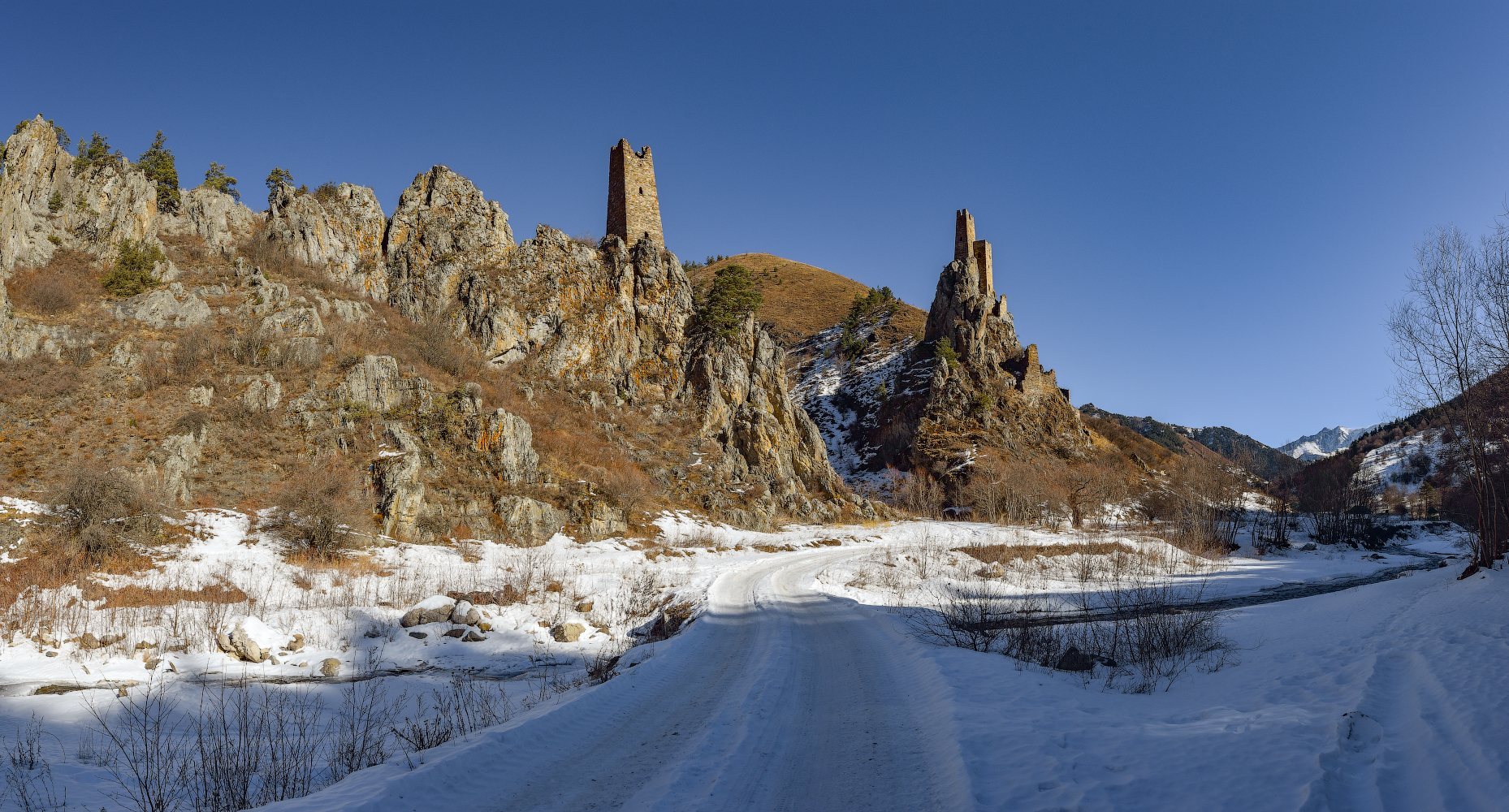
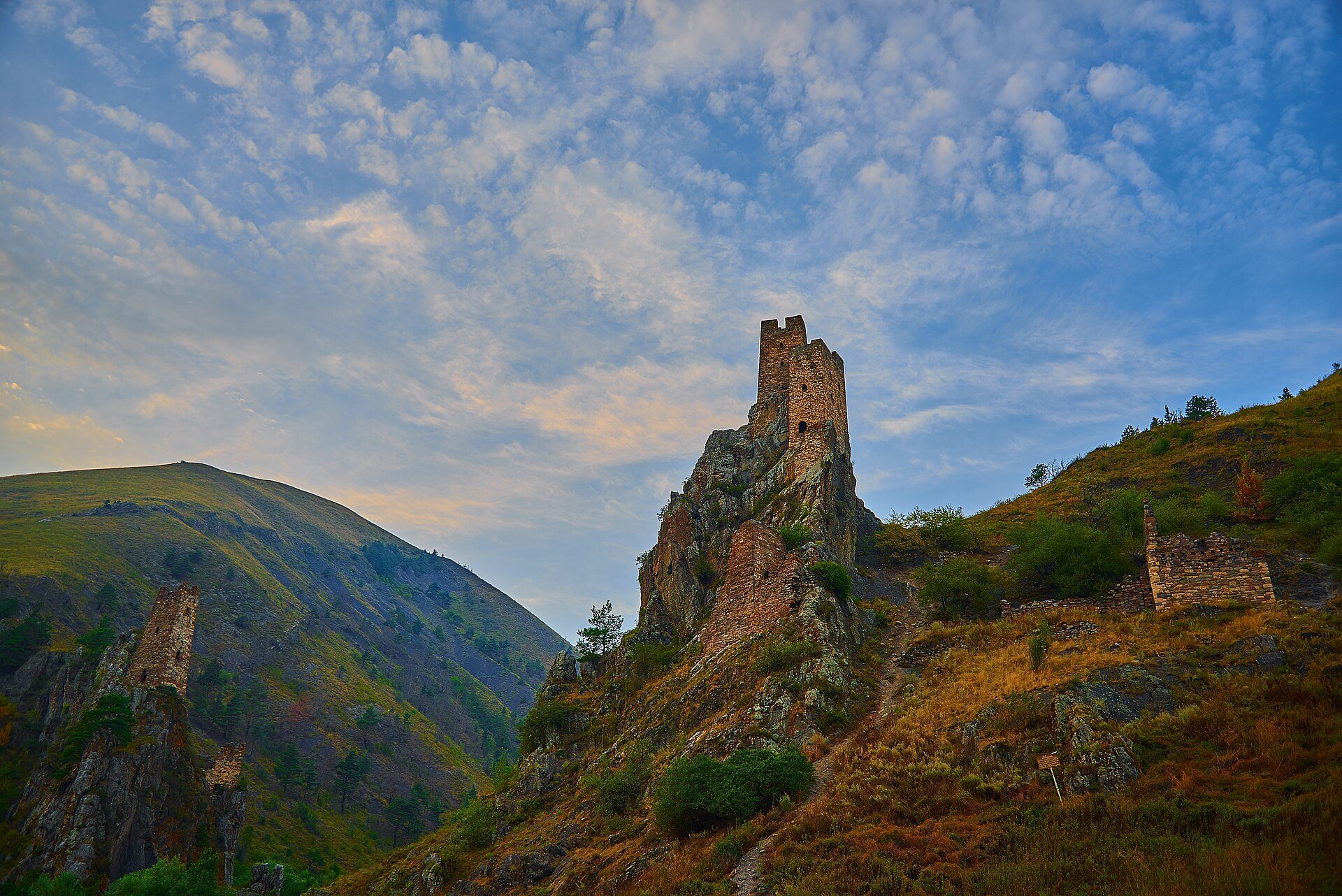
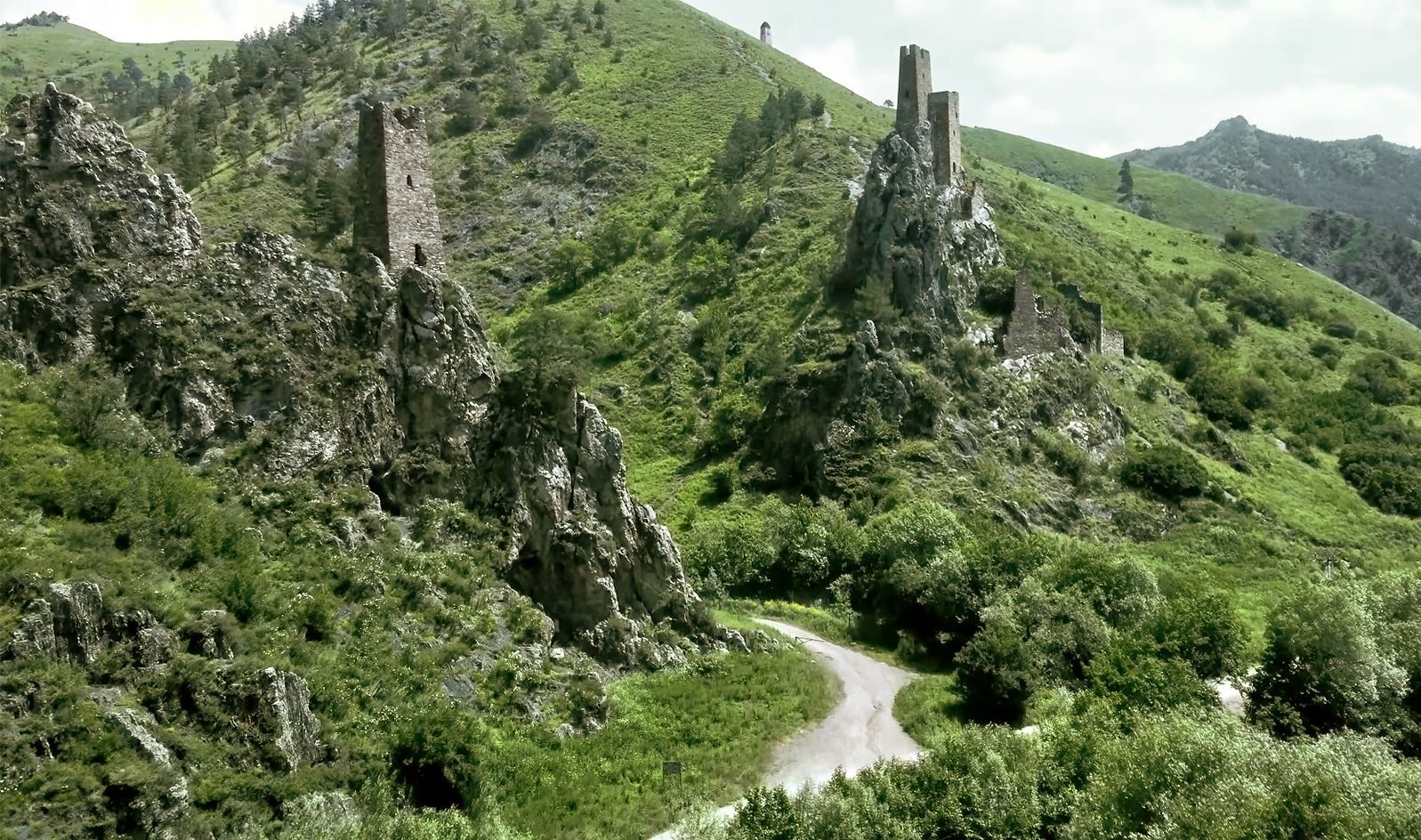
The monument stands in the gorge of the Guloyhi River, among steep cliffs and the ridges of the Caucasus. Its three principal towers occupy two opposing rock formations: two rise on the summit of one rock, while the third stands on the other. The former suspension bridge connected these separate fortified groups, while the surviving monument consists of the towers and their defensive setting.
Towers and Defenses
The Two-Tower Group
The pair of towers on one rock are stone-built, four-storey structures with truncated-pyramidal forms, flat roofs, and narrow loophole windows. Their masonry follows the natural shape of the rock, making the buildings appear to continue the surrounding formation.
The Opposing Tower
The third tower occupies the opposite rock and shares the same general construction: stone walls, four storeys, a narrowing upward form, a flat roof, and narrow openings for defense. Barrier walls block access and are integrated into the steep terrain, reinforcing the protection provided by the difficult-to-reach cliffs.