Voljavča Monastery: A Serbian Orthodox Monastic and Uprising-Era Site


Site at a Glance
- Rating
- 4.9
- Popularity
- Low
- Country
- Serbia
- Primary era
- Medieval
- External website
- Open
- Eras represented
- Medieval, Early Modern, Modern
- Civilizations
- Ottoman, Serbian Despotate
- Site type
- Religious
- Remains
- Monastery
On this page8 sections
History
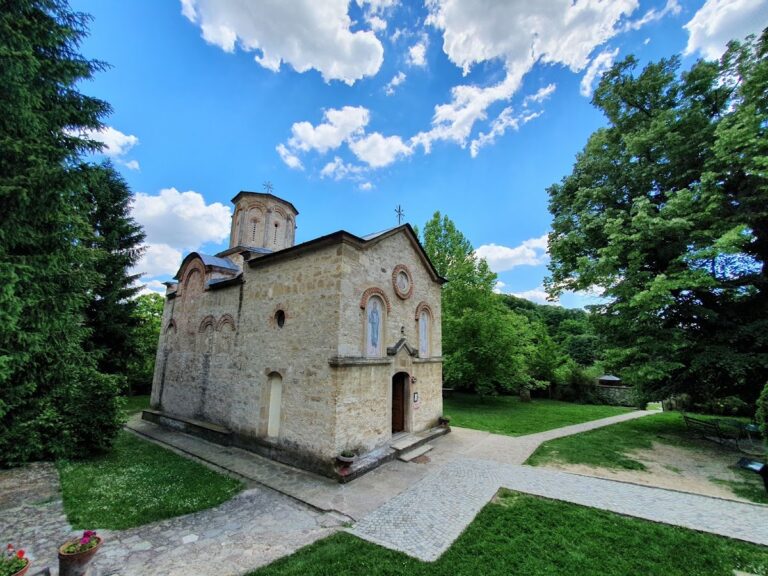
Voljavča Monastery is a Serbian Orthodox monastery in Serbia, reconstructed at the beginning of the fifteenth century in the Morava architectural tradition on the ruins of an older church dating to around 1050. Dedicated to the Archangels Michael and Gabriel, it belongs to the Eparchy of Šumadija, a diocesan jurisdiction of the Serbian Orthodox Church, and continues to house a religious community.
Medieval and Ottoman-period monastery
The fifteenth-century rebuilding was an endowment of Mihailo Končinović, a nobleman and vassal of Despot Stefan Lazarević, the Serbian ruler who held the title of despot during that period. Ottoman tax registers for the Smederevo Sanjak mention Voljavča in 1516, when the monastery had a strong financial position and paid 4,714 akçe in tax. Later sixteenth-century registers list two monks paying 500 akçe.
During the abbacy of Zachariah, a monastic typikon, or rulebook for Orthodox communal and liturgical life, was written in 1607. A monastery title deed is recorded from 1680. The complex suffered during Ottoman-Austrian conflicts in 1759, when it was closed for three years and required to pay a heavy Ottoman tax.
Rebuilding and resistance
In 1765, Abbot Aleksije arranged the construction of a new konak, a residential or administrative building associated with a monastery, and acquired many liturgical books and icons. In 1786, Abbot Hadži-Ruvim gathered gifted young people at Voljavča, teaching them literacy, woodcarving, stone carving, and painting. He also organized opposition to Ottoman rule.
On 6 April 1789, during the Austro-Turkish War of 1788–1791, Ottoman forces looted and burned the monastery in retaliation for Hadži-Ruvim’s activities. Voljavča later became associated with the First Serbian Uprising, the rebellion against Ottoman rule that began in 1804. Its leader, Karađorđe Petrović, repeatedly took refuge at the monastery, aided by the surrounding forests.
The 1805 Serbian council
In 1805, the monastery’s konak hosted the first meeting of the Praviteljstvujušči sovjet serbski, the first executive governing body of modern Serbia. The council was headed by Mateja Nenadović, a Serbian priest and political leader. Two centuries later, the Government of the Republic of Serbia held a ceremonial session in the same room. For the bicentenary, a permanent ethnological exhibition was installed on the ground floor of the konak, with the National Museum in Kragujevac presenting aspects of everyday life in the monastery complex during the first half of the nineteenth century.
Nineteenth-century completion and later history
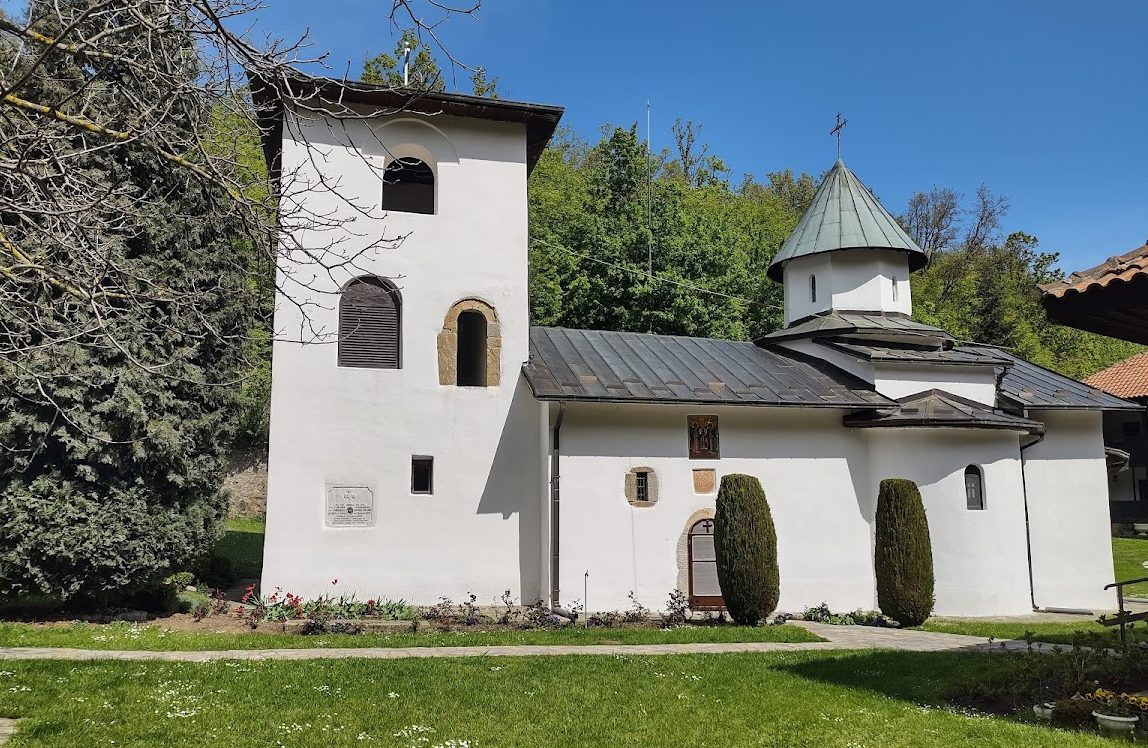
Janićije Đurić erected a large bell tower on the west side of the church in 1838. The work is associated with the tenure of Abbot Hadži-Maksim Nešković in 1841, and the monastery acquired its present appearance in 1865. After Ottoman forces beheaded Tanasko Rajić, Karađorđe’s standard-bearer, at Ljubić near Čačak, his head was embedded beside the church wall near the left choir area. Akvilina Čukanović served as abbess from 1990 to 2018. Voljavča is protected as a monument of great cultural importance in Serbia.
Remains
Church and bell tower
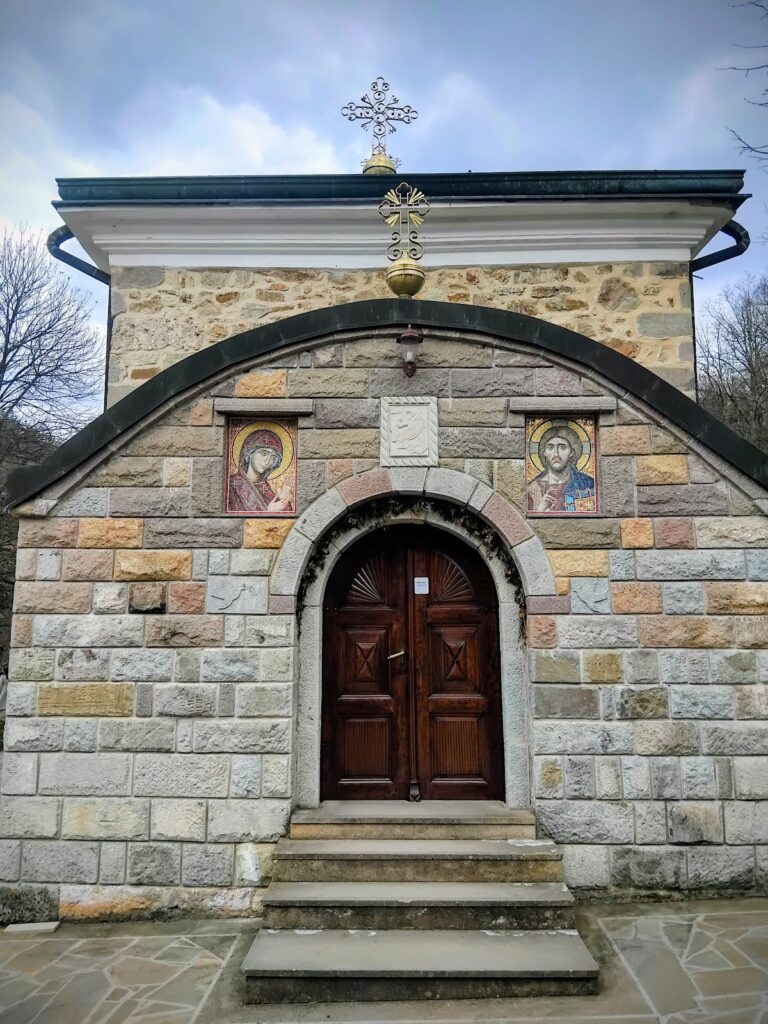
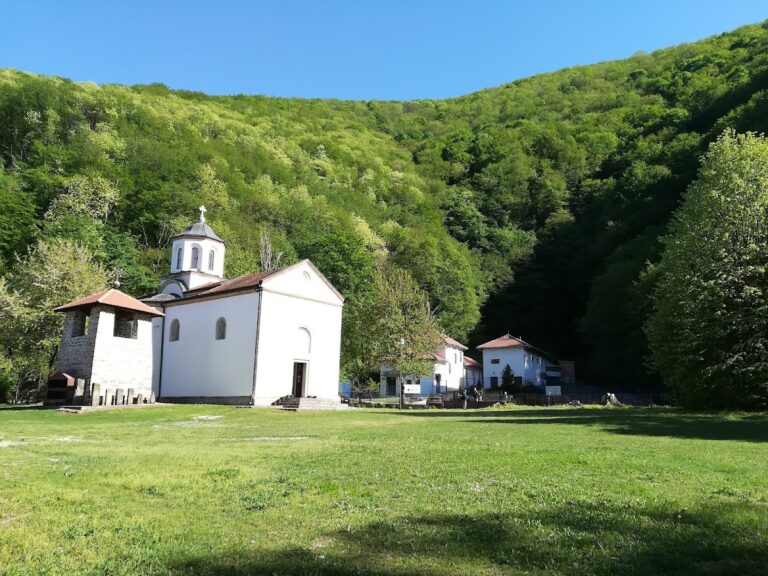
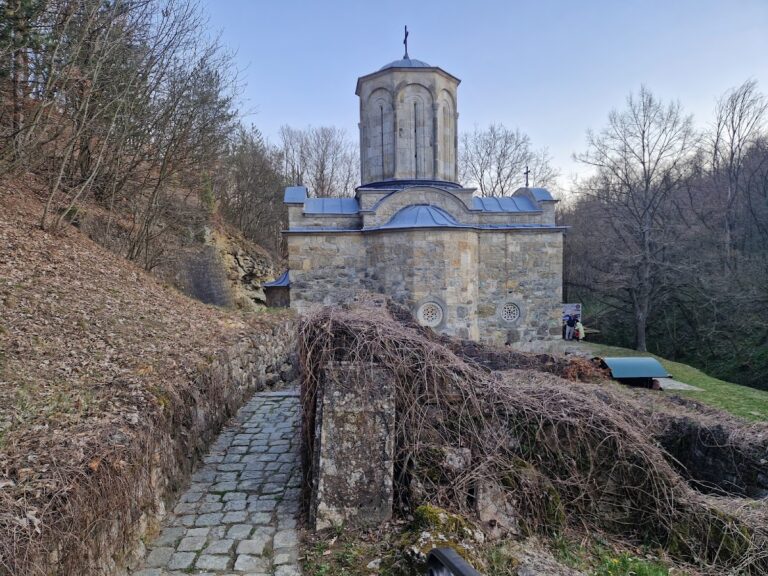
The monastery stands in dense woodland beside the Voljavča stream on the northeastern slopes of Mount Rudnik, near Stragari. The church was built over the remains of the earlier church from around 1050 and follows the trefoil plan associated with the Morava School, a late medieval Serbian tradition known for centralized or trefoil church designs. A dome rises above the central space, while semicircular apses extend to the north, east, and south. A large bell tower stands on the church’s western side and dates to 1838.
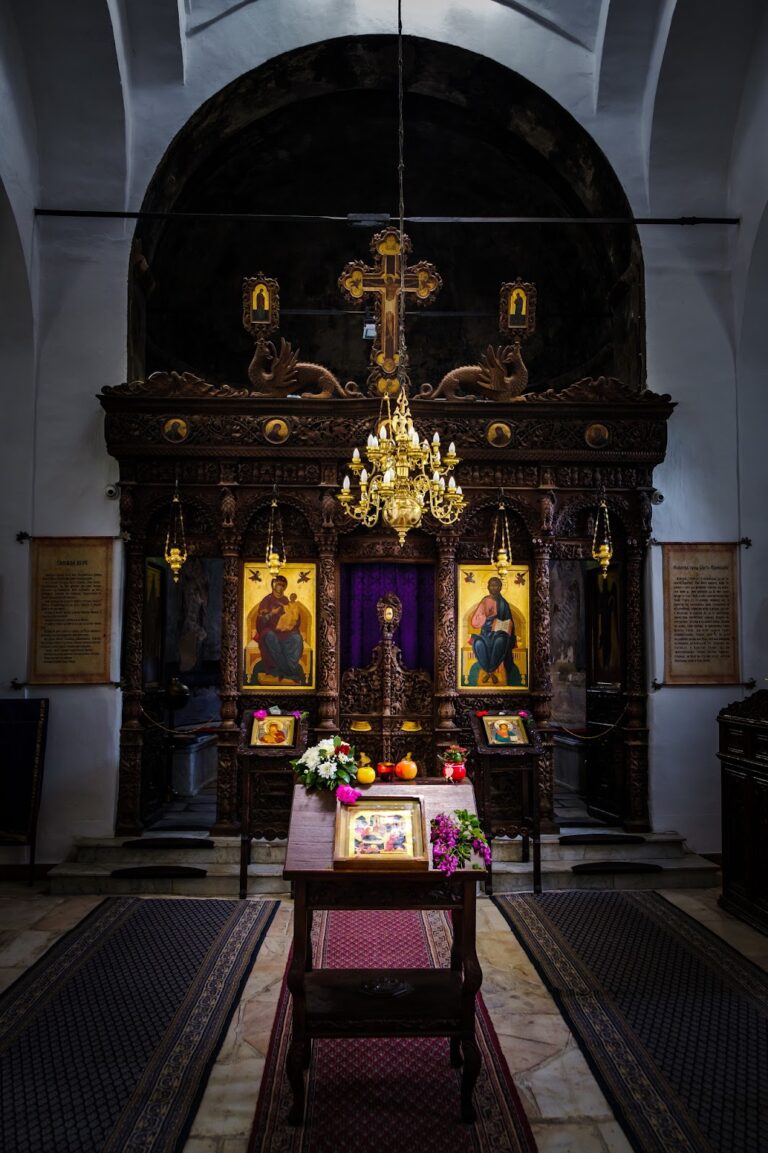
The church’s original painted decoration, known to have existed in the seventeenth century, was destroyed through repeated damage and rebuilding. Professors and students of the Faculty of Applied Arts repainted the interior in 2014 and 2015. The head of Tanasko Rajić remains embedded beside the wall near the church’s left choir area.
The eighteenth-century konak
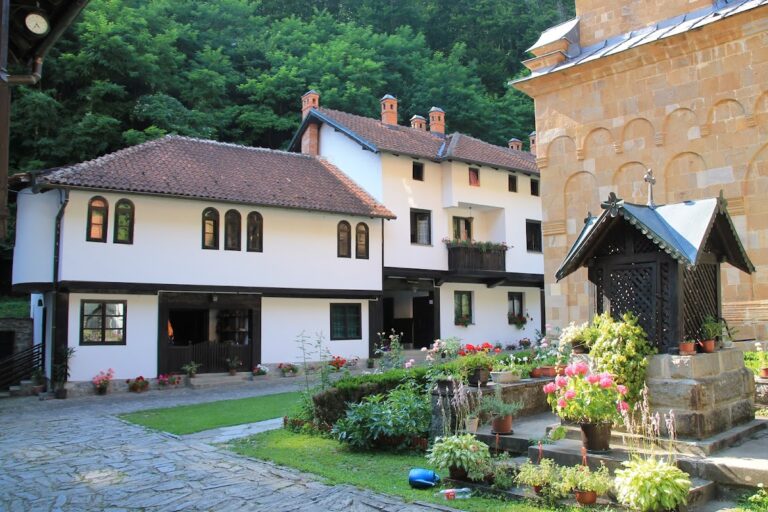
Built in 1765, the monastery’s residential building is among the oldest konaks in Serbia. Its design reflects Balkan architectural traditions together with strong influences from Ottoman residential and civic architecture. The building contains the room where the Serbian council met in 1805, and its ground floor houses the permanent ethnological exhibition created to commemorate that event.
Nearby sites