Vodiane Hillfort: An Early Iron Age and Early Medieval Settlement in Ukraine
Site at a Glance
- Popularity
- Very Low
- Country
- Ukraine
- Primary era
- Medieval
- Eras represented
- Iron Age, Medieval
- Civilizations
- Kievan Rus
- Site type
- Military
- Remains
- Fortified Town
On this page8 sections
History
Early Iron Age settlement
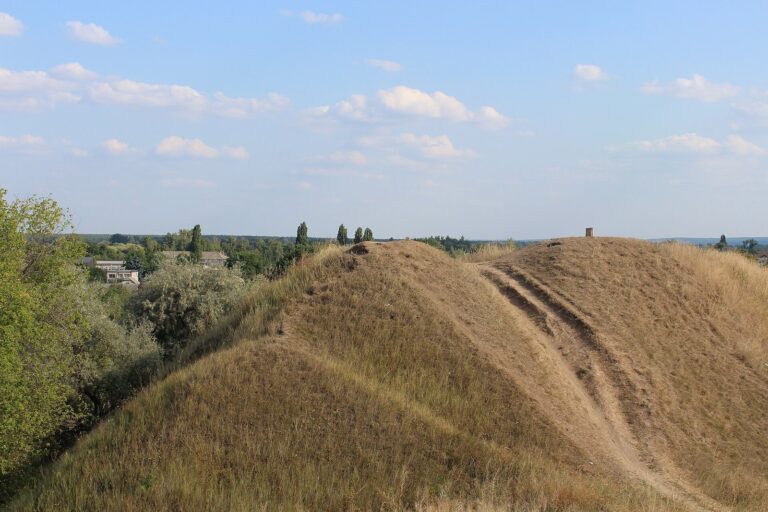
Vodiane Hillfort is an archaeological settlement in Ukraine, on a high spur along the right bank of the Uda River. Its archaeological chronology extends from the mid-fifth century BCE to the beginning of the second millennium CE, with occupation concentrated in two main phases. A permanent, defended settlement developed during the Early Iron Age.
Severian settlement
East Slavic groups known as the Severians revived the site in the tenth and early eleventh centuries. They initially made use of the earlier defenses, then constructed a new defensive line. The Polovtsians, a Turkic-speaking nomadic people also known as the Cumans, displaced the Slavic population. The settlement was not occupied again.
Investigation and protection
A. Volchenko discovered the hillfort in the early twentieth century, and M. Fuks published its first description in 1930. In 1948, Ivan Lyapushkin excavated test trenches across the inner earthwork and identified it as early medieval. Boris Rybakov inspected the site in 1950. An expedition led by Boris Shramko mapped it and dug exploratory trenches in 1951 and 1952, also excavating one Slavic dwelling.
Investigations led by V. V. Koloda in 2002 and 2003 covered about 2,000 square metres and identified 22 archaeological complexes, or groups of associated remains. Koloda and Yu. H. Chendiev carried out soil and past-climate studies in 2012 and 2013. The hillfort is an archaeological monument of national significance and has been under state protection since 3 September 2009.
Remains
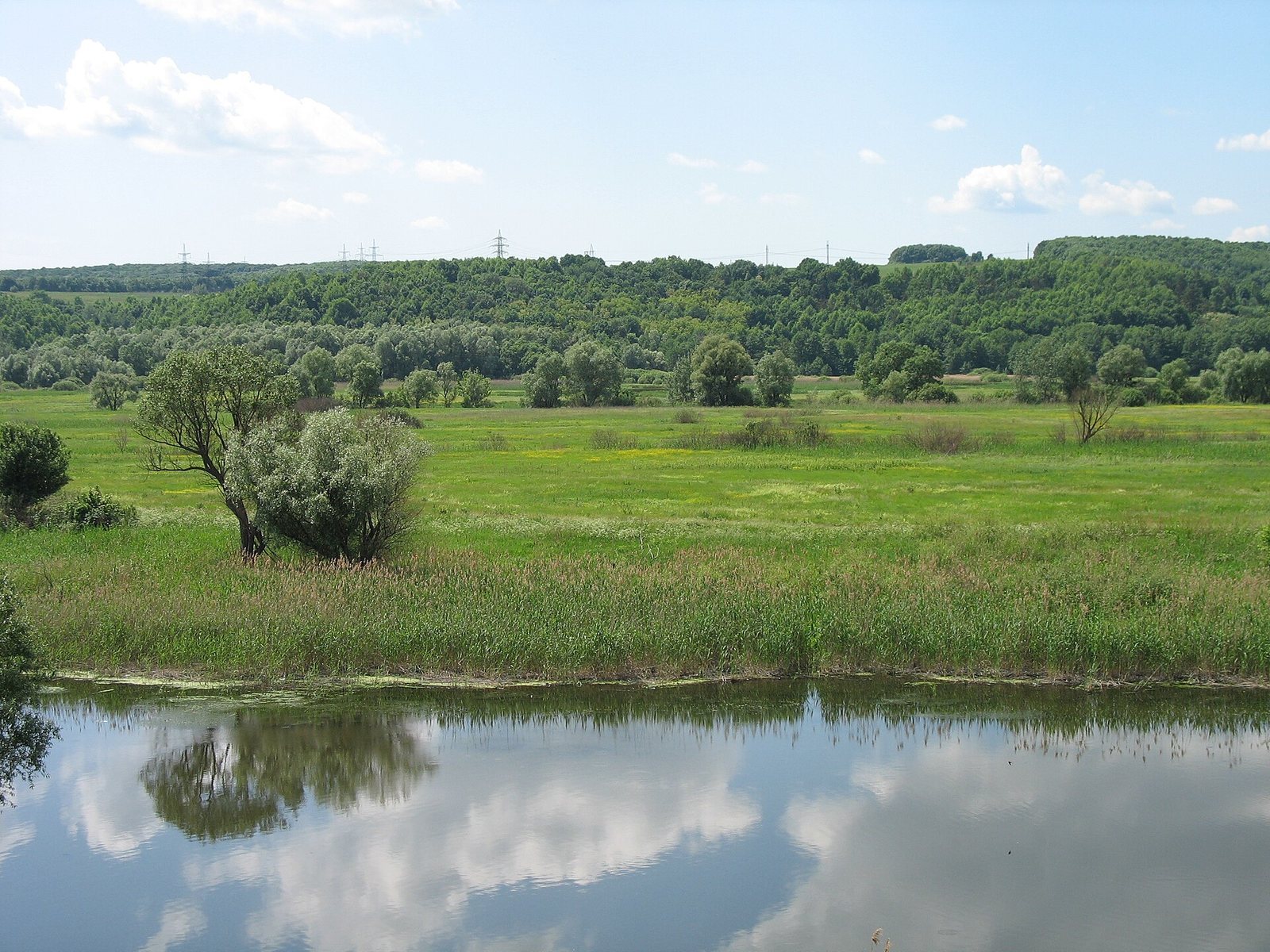
The hillfort covers 2.5 hectares on a high spur beside the Uda River, a tributary of the Siverskyi Donets. It lies in the Kholodnyi Yar tract, about one kilometre east of Vodiane village and roughly midway between Vodiane and Krasna Polyana. Its defenses and enclosures belong to the site’s two periods of settlement.
Fortifications
Early Iron Age earthworks
Early Iron Age defenses included an earth rampart and ditch. The outer ditch, associated with the Scythian period, an Iron Age phase linked to Scythian cultures, survives in the southeastern part of the hillfort beneath forest plantations. This earthwork reaches up to 0.5 metres in height.
Early medieval defenses
The early medieval defensive line includes an earth rampart up to 1.5 metres high and a ditch up to one metre deep. The northern, smaller enclosure remains well preserved. The larger enclosure has been more heavily affected: planned tree planting in the mid-twentieth century partly shifted its eastern soil layer containing archaeological remains, while economic activity in the early twenty-first century destroyed its central and western parts and remains of its defenses.