Vlaselniko: An Early Byzantine Hilltop Fortification in Greece
Site at a Glance
- Popularity
- Very Low
- Country
- Greece
- Primary era
- Medieval
- Eras represented
- Medieval
- Civilizations
- Byzantine
- Site type
- Military
- Remains
- Fort
On this page8 sections
History
Ancient and Early Byzantine phases
Vlaselniko is an ancient and medieval fortified site near Dervesh in northern Greece. Its fortification dates to the Early Byzantine period, an earlier phase in the history of the eastern Roman Empire. A Roman fort and cemetery are thought to have preceded it on the hill. An ancient rural sanctuary dedicated to a local hero, a figure honored through worship in ancient Greek religion, may also have stood there.
The fort was part of a group of similar strongholds in the Sminitsa Mountains. These settlements had been abandoned by the seventh century at the latest.
Late Byzantine and Ottoman activity
In the Late Byzantine period and during Ottoman rule, the area around the hill appears to have served as an ascetic center for monks from Serres Monastery. An ascetic center is a place where religious practitioners lead disciplined, withdrawn lives. Dervesh had a village in 1346, 1351, and 1357.
Remains
Hilltop fortification and settlement
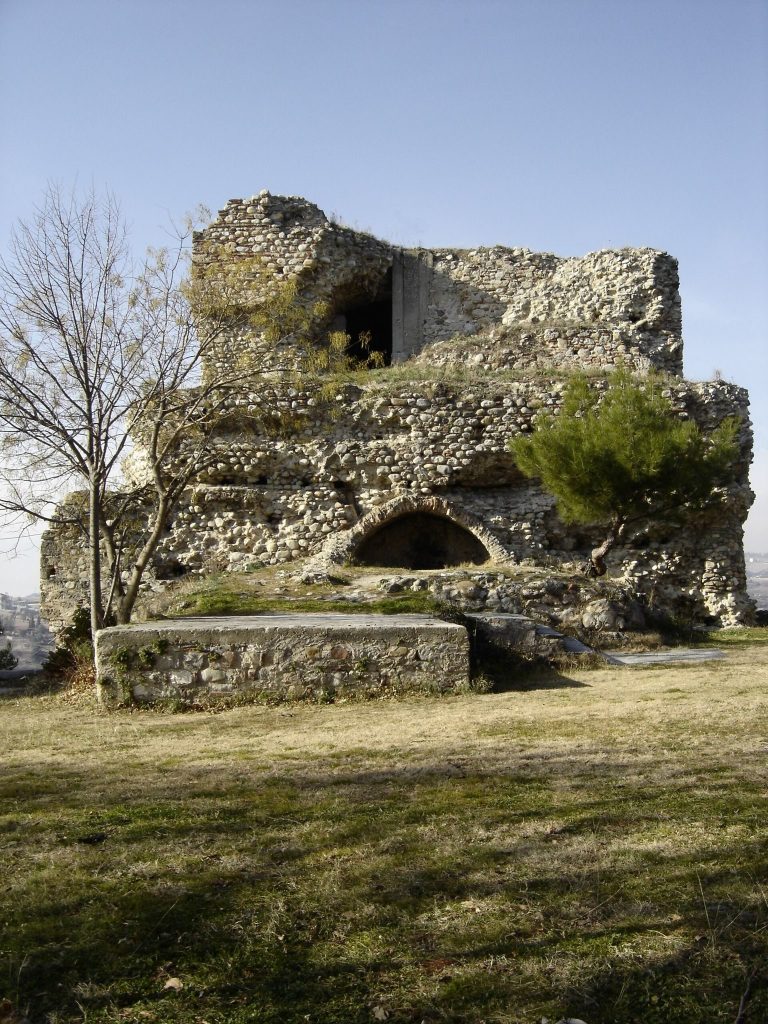
The fortification occupies the flattened summit of Vlaselniko Hill in the Sminitsa, or Menikio, Mountains, about half a kilometre north of Dervesh. At 190 metres above sea level, the summit forms the last rocky rise where the gorge ends. Sheer limestone cliffs surround most of it. The eastern approach, where a narrow neck joins the hill to the descending slope, was protected by a continuous wall about 80 metres long. The perimeter measured 150 to 160 metres. Built from rubble stone and white mortar, the wall has largely collapsed down the steep slopes, though traces follow its course. Its best-preserved stretch is 15 metres long and reaches 1.5 metres in height. Stones and pottery fragments lie across the plateau, while foundations and plastered walls on the southern slope show that the settlement extended beyond the wall. Burials are also visible on that slope.
Features at the southwestern foot
Rock painting
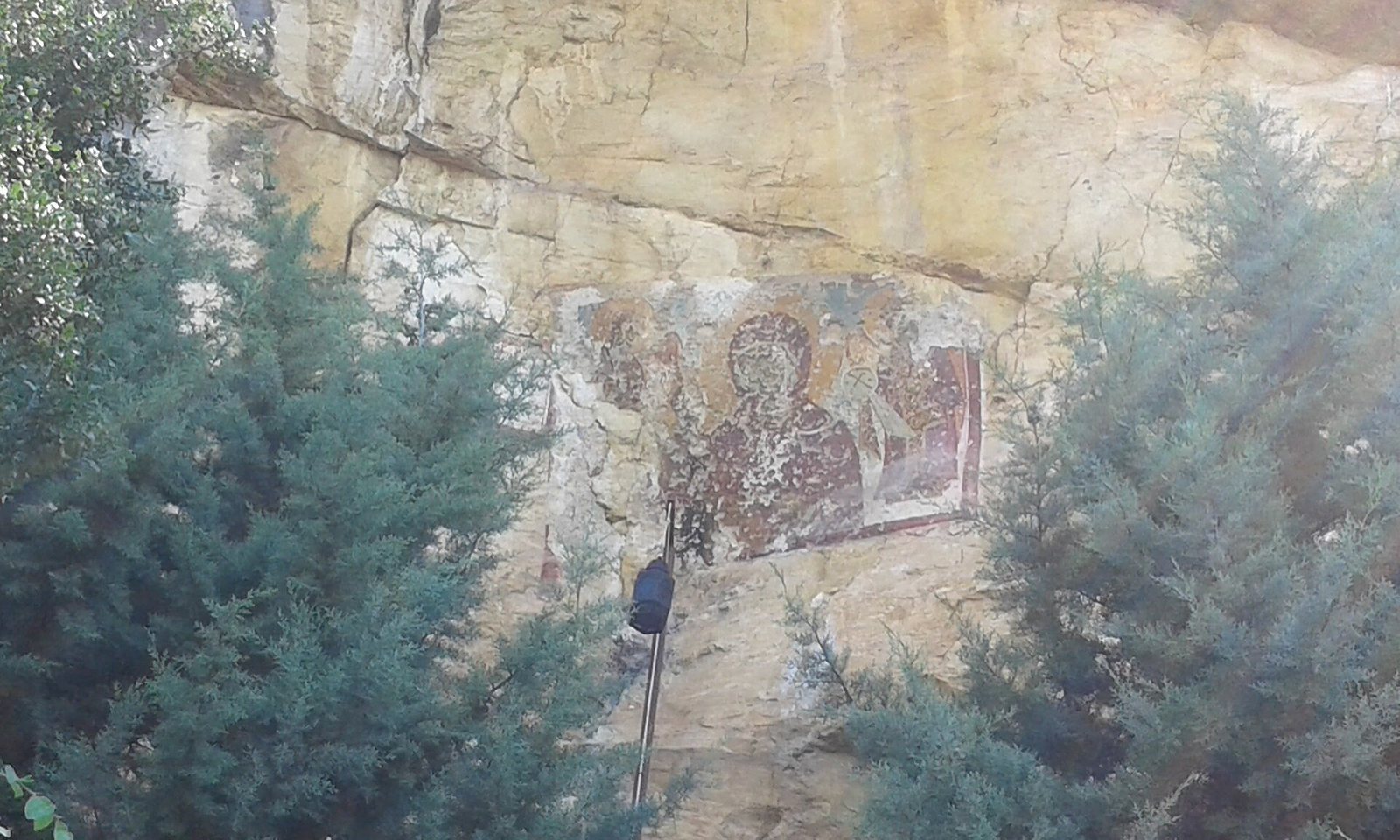
A rock painting lies at the hill’s southwestern foot. It carries a patron’s inscription, which names the person who sponsored or commissioned a religious work, dated to 1382.
Churches
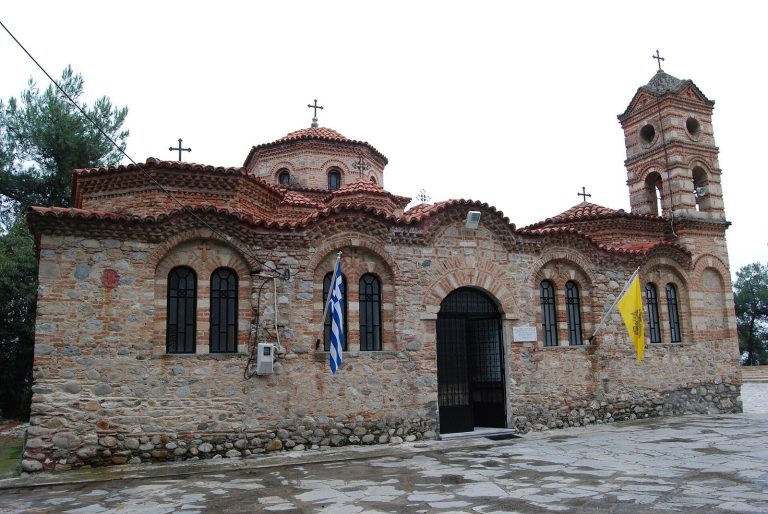
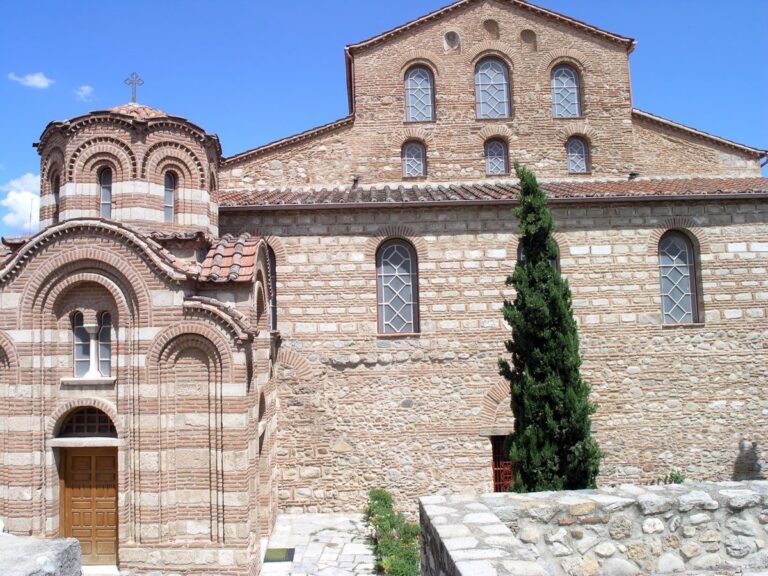
A small church once stood beside the rock painting. The modern Church of the Dormition of the Virgin is also at the southwestern foot, beside a deep gorge formed by the waters of the Durvitsa.