Vincy Castle: An Eighteenth-Century Estate in Vaud, Switzerland
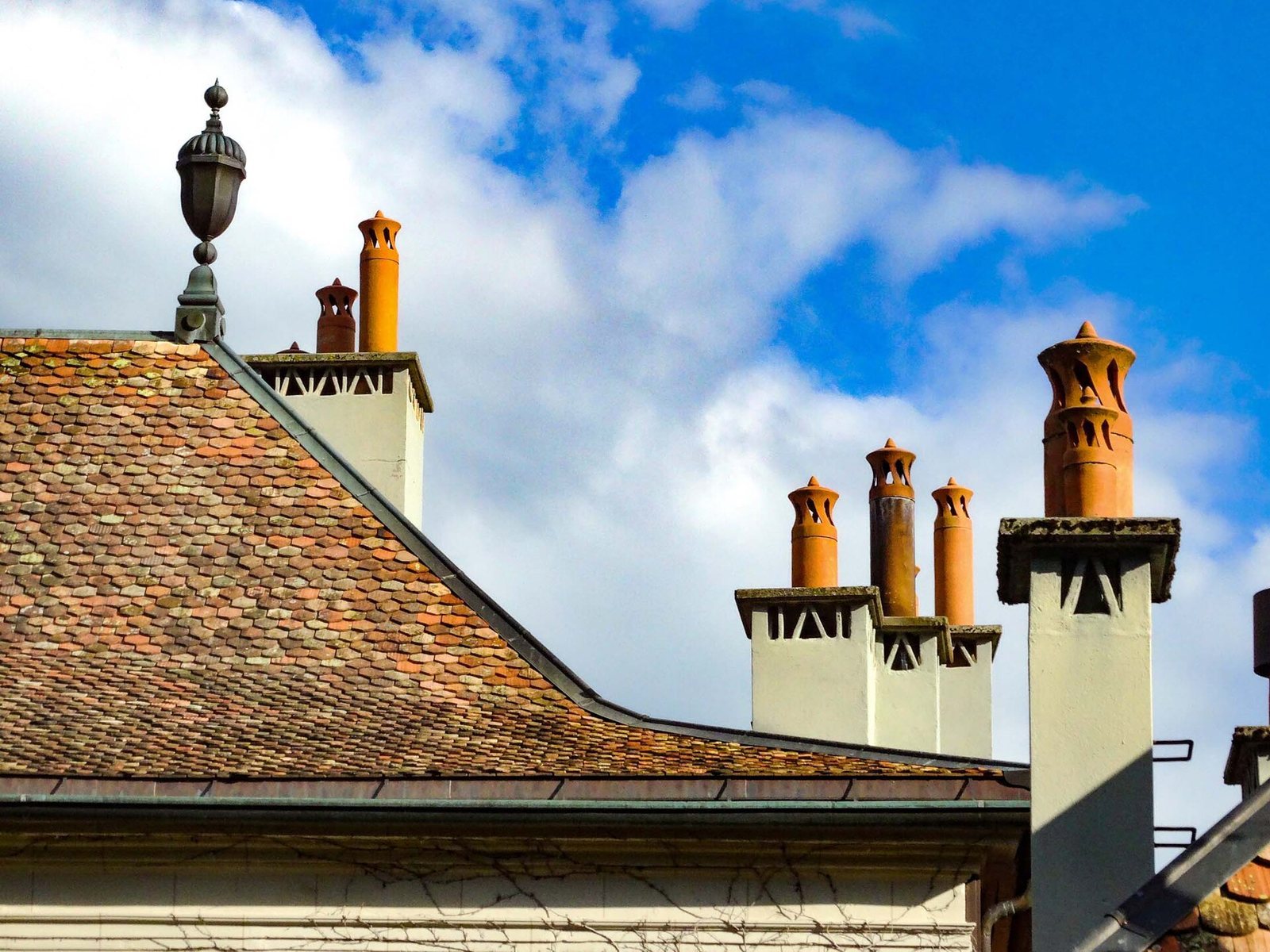
Site at a Glance
- Popularity
- Medium
- Country
- Switzerland
- Primary era
- Early Modern
- Eras represented
- Early Modern, Modern
- Civilizations
- Swiss
- Site type
- Domestic
- Remains
- Castle
On this page7 sections
History
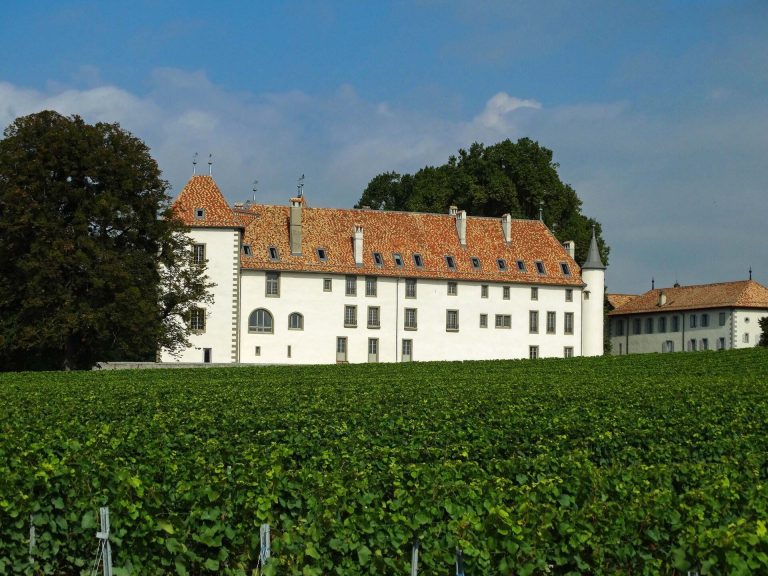
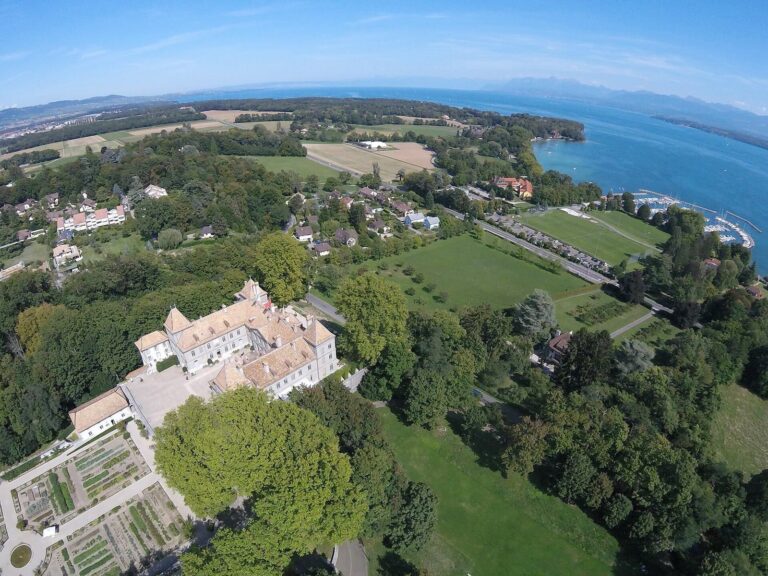
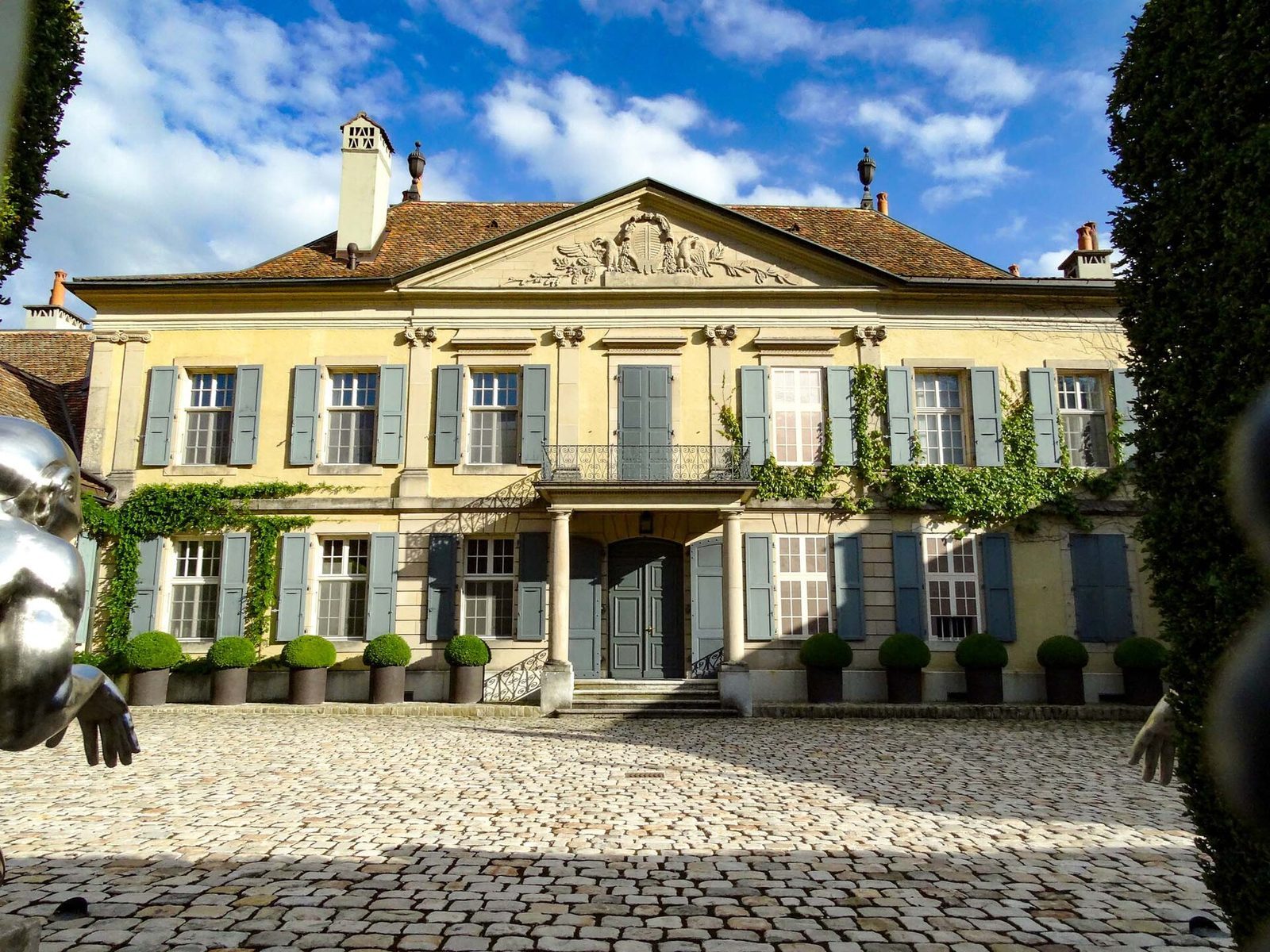
Vincy Castle is an eighteenth-century castle in the hamlet of Vincy, within the municipality of Gilly in Switzerland’s canton of Vaud. Jean and David Vasserot had it built between 1721 and 1724. In the later eighteenth century, the estate became a refuge for French royalist exiles.
Early fortified holdings
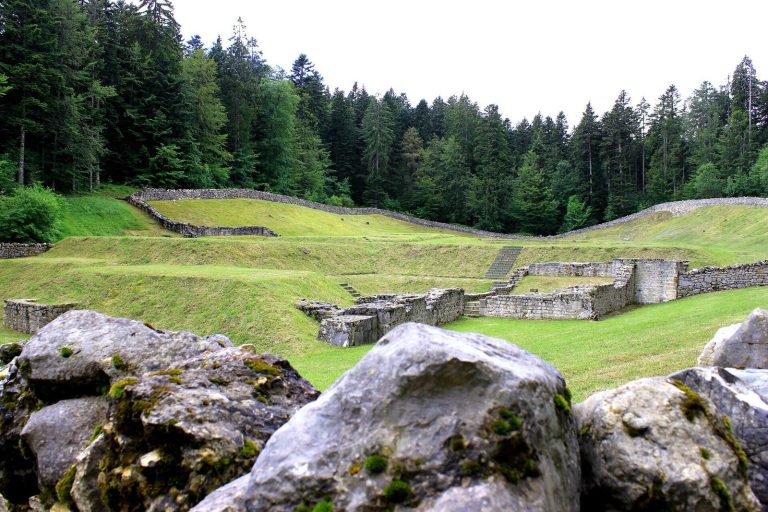
Three fortified sites figure in Vincy’s earlier history. Castle of La Motte was probably built in the eleventh or twelfth century, then destroyed in 1293 during a conflict between the lords of Prangins and the House of Savoy, a dynasty that ruled territories in the western Alps.
The neighboring Vaux and Vincy fiefs, landholdings held under feudal tenure, were distinct properties. Vaux is recorded from 1313, with a seigneurial manor mentioned in 1436, and was closely linked to the Mestral family. The Vincy fief was also associated with the Mestrals, probably from the fourteenth century, and is recorded in 1449. In 1623, Vaux passed to Bernese patrician Albert Manuel, then to Anne de Gingins in 1643. She was the widow of François Gaspard de Mestral and already held the neighboring Vincy fief. Jean Vasserot acquired the Vaux lordship in 1720.
Construction under the Vasserots
Jean Vasserot and his son David commissioned the castle between 1721 and 1724. They were bankers in the Netherlands and France who prospered through international speculation set in motion by John Law, a Scottish-born financier whose schemes helped fuel a major speculative boom in France. The King of Prussia ennobled them in 1713. Genevan architect David Jeanrenaud designed the castle and also worked for the family at Château de la Bâtie-Beauregard in Collex-Bossy. In 1724, property of the Vincy fief passed to David Vasserot.
Political upheaval and changing ownership
The castle passed to Horace Vasserot in 1750, and he made major changes to its interiors. In 1787, it passed to Auguste Vasserot, a career officer and committed royalist who supported counter-revolutionary activity in France and sheltered many refugees at Vincy. In 1802, the Bourla-Papey, insurgents in Vaud rebelling against feudal dues, partly burned the castle’s archives.
The French poet Lamartine spent about one hundred days at Vincy in 1815 while in exile. The estate passed to Albert Vasserot, a painter and music lover, in 1841, then to Gustave de Fernex in 1872, René Delessert in 1883, and Jacques-Rodolphe de Wurstemberger in 1956. Architect Lord Norman Foster and his wife, Lady Elena, have owned it since 2007.
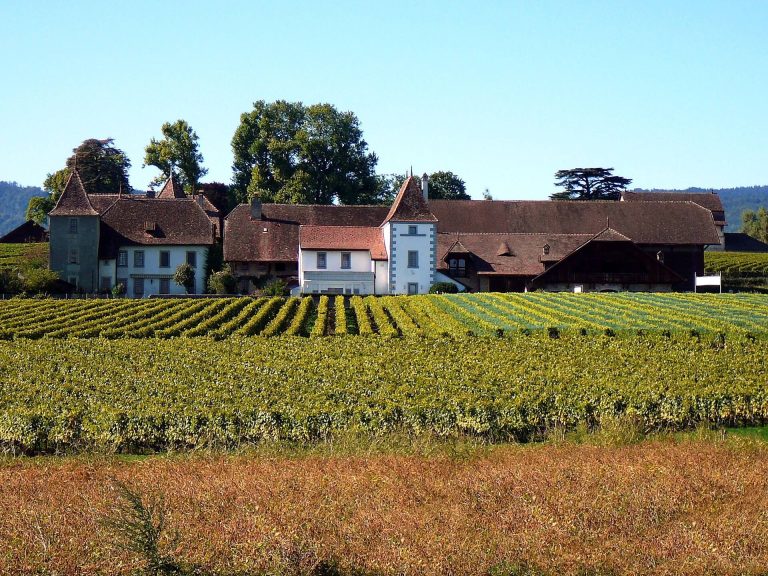
The castle entered Vaud’s cantonal heritage inventory in 1974 and is designated a cultural property of national significance in Switzerland. Its furniture and historical collections were dispersed at a major auction in 1996. Museums acquired some items, including portraits and a Chinese porcelain tea service dating to about 1765. The estate’s vineyard produces several grand cru wines named for the castle; grand cru is a high-quality wine designation whose precise meaning varies by region. The vineyard is separate from the neighboring Coteau de Vincy estate.
Remains
The castle and its decoration
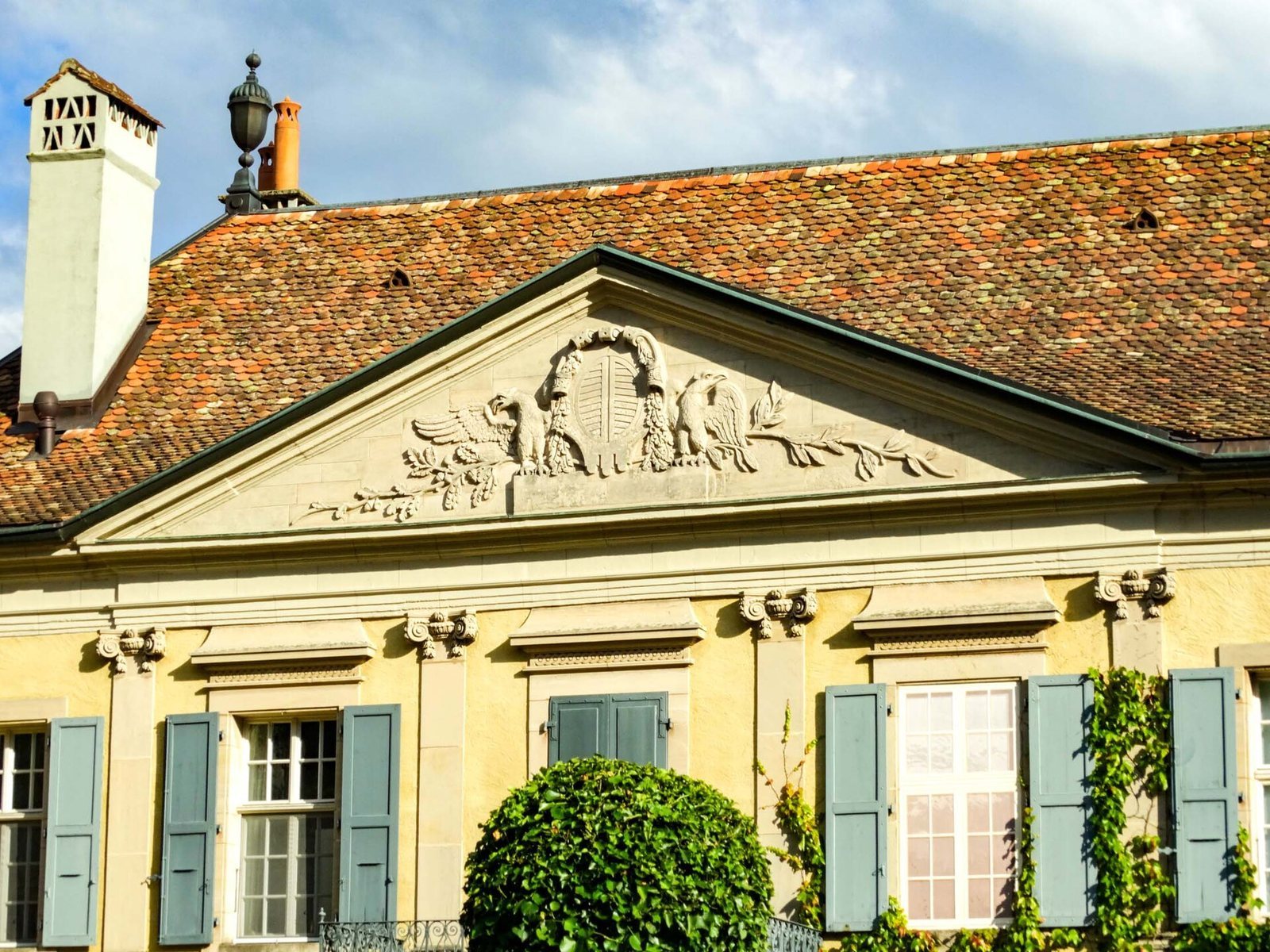
The present castle stands on the site of the former Vaux manor. Its main courtyard and two principal façades were embellished between 1792 and 1804. Inside, Genevan sculptor Jean Jaquet created elaborate stucco, or decorative plaster work.
Earlier fortified sites
La Motte stood on a rise overlooking the entrance to the Vaux valley, at about the same elevation as the former fortified sites of Mont-le-Grand and Mont-le-Vieux. Farther down, the fortified houses of Vaux and Vincy were about 100 metres apart, on opposite sides of the Flon-de-Vincy stream. The earlier Vincy fortified house stood northeast of the present castle, at La Colombière on the stream’s eastern bank. A farm replaced it around 1745, and that farm was demolished in 1939.