Duillier Castle: A Rural Castle and Lordship Center in Switzerland
Site at a Glance
- Rating
- 4.9
- Popularity
- Very Low
- Country
- Switzerland
- Primary era
- Medieval
- External website
- Open
- Eras represented
- Medieval
- Civilizations
- Duchy of Savoy
- Site type
- Military
- Remains
- Castle
On this page8 sections
History
Medieval origins and the alliance of 1490
Duillier Castle is a rural castle in Switzerland, first mentioned in the twelfth century. In 1490, Jean d’Usier sold a house or tower at Duillier to Amédée de Chatillon. Carved coats of arms on one tower record an alliance formed around the same time between the Favre de Begnins and Chatillon de Michaille families.
The Bernese period
After Bern took control of Vaud in 1536, the lordship of Duillier passed through several families. This era, known as the Bernese period, placed the territory within the political system administered by Bern. In 1586–1587, Hans Rudolf Wurstemberger, bailiff of Nyon, purchased the fortified house. A bailiff was a regional official responsible for government and justice on behalf of the ruling authority.
In 1655, Vincenz Wagner inherited the property from his mother, Ursula. He raised the domain to the status of a lordship and received jurisdictional rights, giving its holder legal authority over the territory and its inhabitants. Wagner also served as a senior commander of the Pays de Vaud, the historic territory corresponding broadly to the canton of Vaud, and as bailiff of Moudon.
Printing, ownership, and modern history
Jean-Baptiste Fatio acquired the castle in 1669. Under his patronage, Jean Hermann Widerhold established a printing press there in 1675, later passing it to David Ritter. The press specialized in counterfeiting and produced, among other works, the first French–Italian–Latin dictionary and the first French dictionary arranged according to a systematic method.
From 1753, the Bazin de Liméville family held the castle. The family was first allied with the Fatios and later with the Guiguer de Prangins family. The property subsequently passed to Count Saint-George de Marsay, who already owned neighboring Changins Castle. The Humbert family purchased the estate in 1922 and remains its owner.
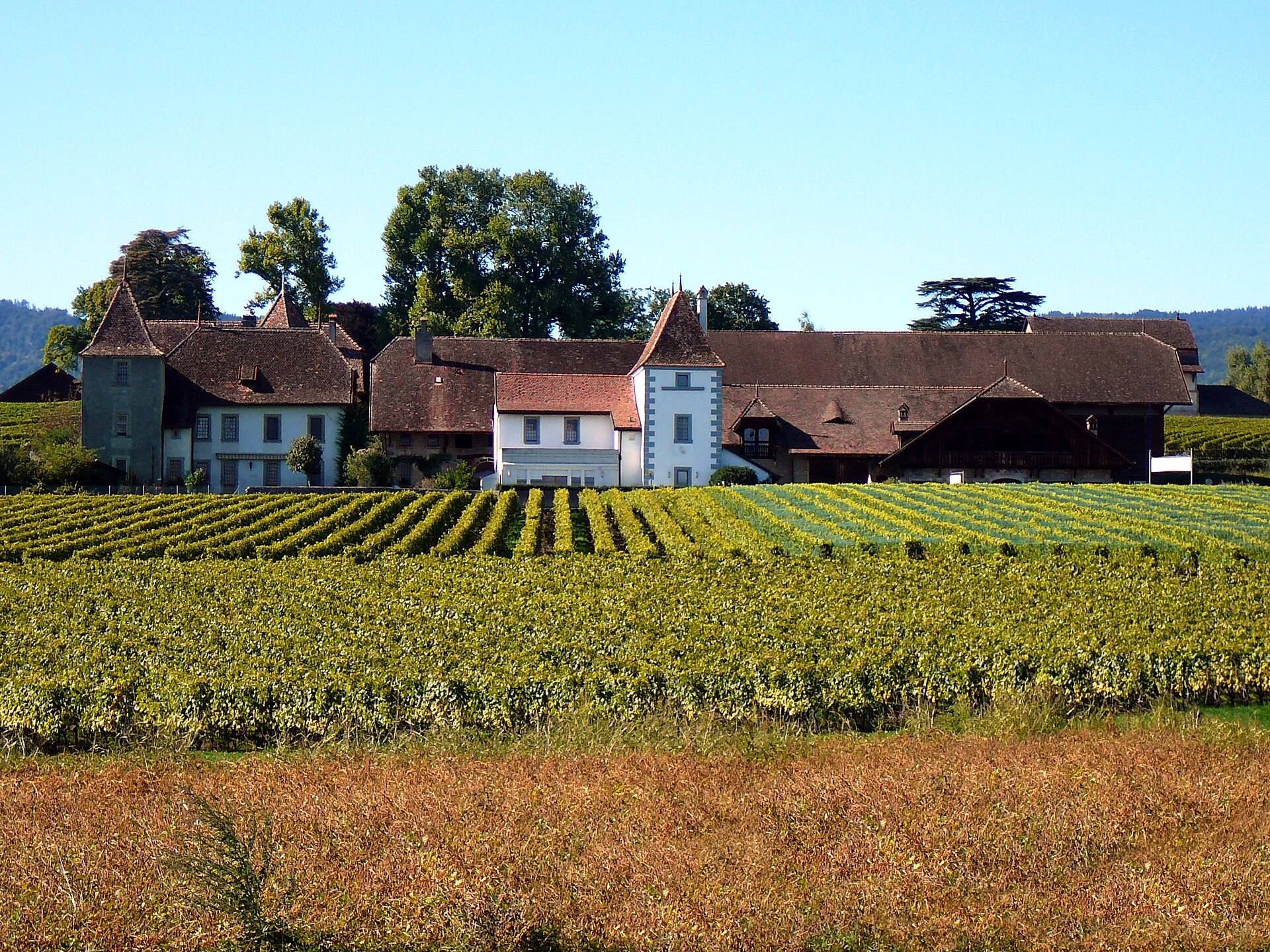
A fire during the night of 7–8 December 2011 partially destroyed part of the castle. Duillier Castle has been listed as a Swiss cultural property of national significance since 1976 and was classified as a historic monument on 9 March 2016. The castle stands within a 14-hectare vineyard where the first Pinot Blanc wines of La Côte, the wine-growing region along the northern shore of Lake Geneva in Vaud, were vinified.
Remains
Courtyard buildings and fortified features
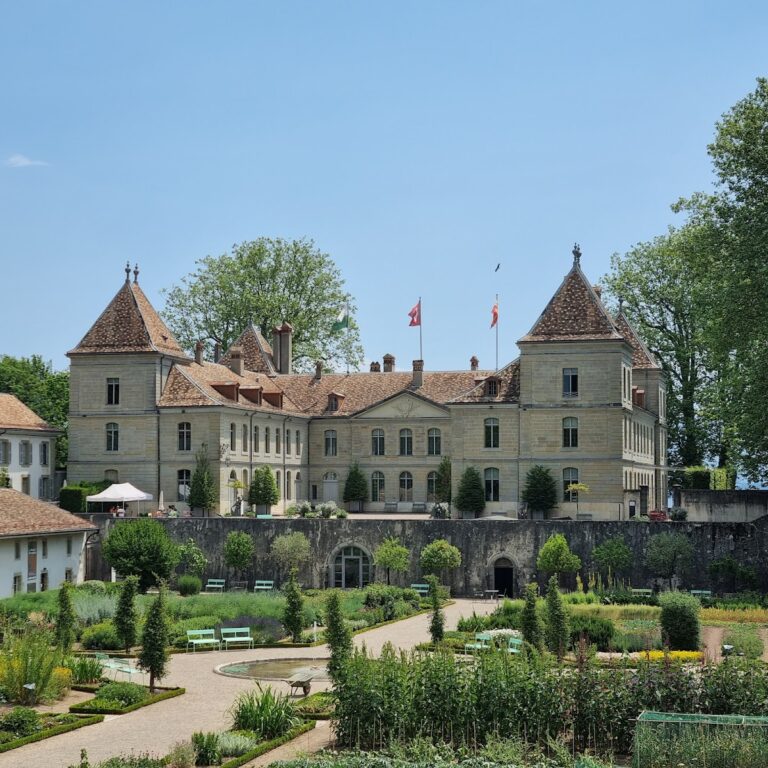
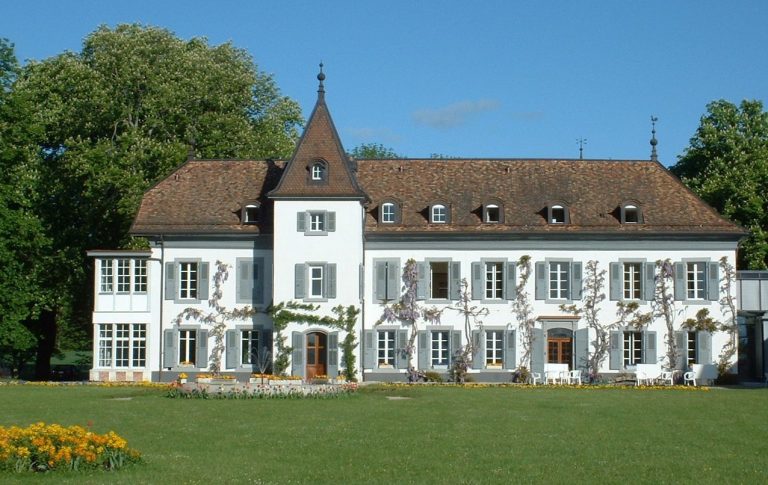
Duillier Castle consists of several rural buildings arranged around a central courtyard, together with associated outbuildings. Its form developed as a fortified house, a residence equipped with defensive features rather than a large military fortress. The complex also includes two dungeons, reflecting its former function as the jurisdictional center of the lordship.
Rear building
The long building at the rear of the courtyard combines agricultural and residential uses. A wine press and cellars occupy the ground floor, while the upper floors contain living accommodation.
Tower facade
One tower retains sculpted coats of arms on its facade. These carvings represent the alliance formed around 1490 between the Favre de Begnins and Chatillon de Michaille families, linking a surviving architectural detail to the castle’s late medieval history.