Château de Château-Gontier: A Medieval Castle in France
Site at a Glance
- Popularity
- Medium
- Country
- France
- Primary era
- Medieval
- Eras represented
- Medieval
- Civilizations
- French
- Site type
- Military
- Remains
- Castle
On this page7 sections
History
Foundation and early lords
The Château de Château-Gontier was a medieval castle in France, founded in 1007 under Fulk III Nerra, count of Anjou, probably to strengthen his frontier with Brittany. Between 988 and 999, Fulk had granted the domain of Bazouges and its church to the Benedictines of Saint-Aubin Abbey in Angers. The Benedictines were members of a Christian monastic order. Their grant included rights to collect rents and dues on sales, and they established the Priory of Saint John the Baptist, a figure Christians regard as Jesus’s forerunner.
The castle and town are dated to 1007, the year Geoffrey Martel, a later count of Anjou, was born. The castle occupied land at Bazouges that Fulk had taken from the monks in exchange for Hondainville. He entrusted its defense to Gontier, an officer and vassal. A charter from 1037 distinguishes Fulk’s castle from a tower he had begun and Renaud I of Château-Gontier completed. Renaud, the first lord of Château-Gontier and son of Yves, also completed a larger fortified tower after an earlier, smaller fortification.
Renaud secured a plot from the abbot for inclusion within the town’s enclosure. Its area equaled one-quarter of the monks’ court at Bazouges. In return, he pledged loyalty to the abbot and formally acknowledged the abbot and his successors as lords. Renaud enclosed the land that defined the town’s perimeter rather than leaving that expansion to later generations.
Conflict on the Breton frontier
In 1066, Conan II of Brittany advanced on Château-Gontier after taking Pouancé and Segré, then besieged the settlement. The Norman chronicler William of Jumièges says it fell. Conan died before the town on 11 December 1066. A claim that a traitor poisoned him on William the Conqueror’s orders remained an accusation, and William, then duke of Normandy, was suspected of arranging the killing. Conan’s campaign probably aimed to recover territory lost to Norman expansion and restore Brittany’s earlier boundary, which had reached the Mayenne under the Breton ruler Erispoe.
Decline and later history
The castle suffered during the English occupation of 1368–1369. In 1414 it was described as an old castle that had already been demolished. It remains uncertain whether Cardinal Richelieu, a leading minister to King Louis XIII, ordered the castle ruins destroyed in 1628. The thirteenth-century remains were listed as historic monuments by an order dated 5 April 1930.
Remains
The castle site
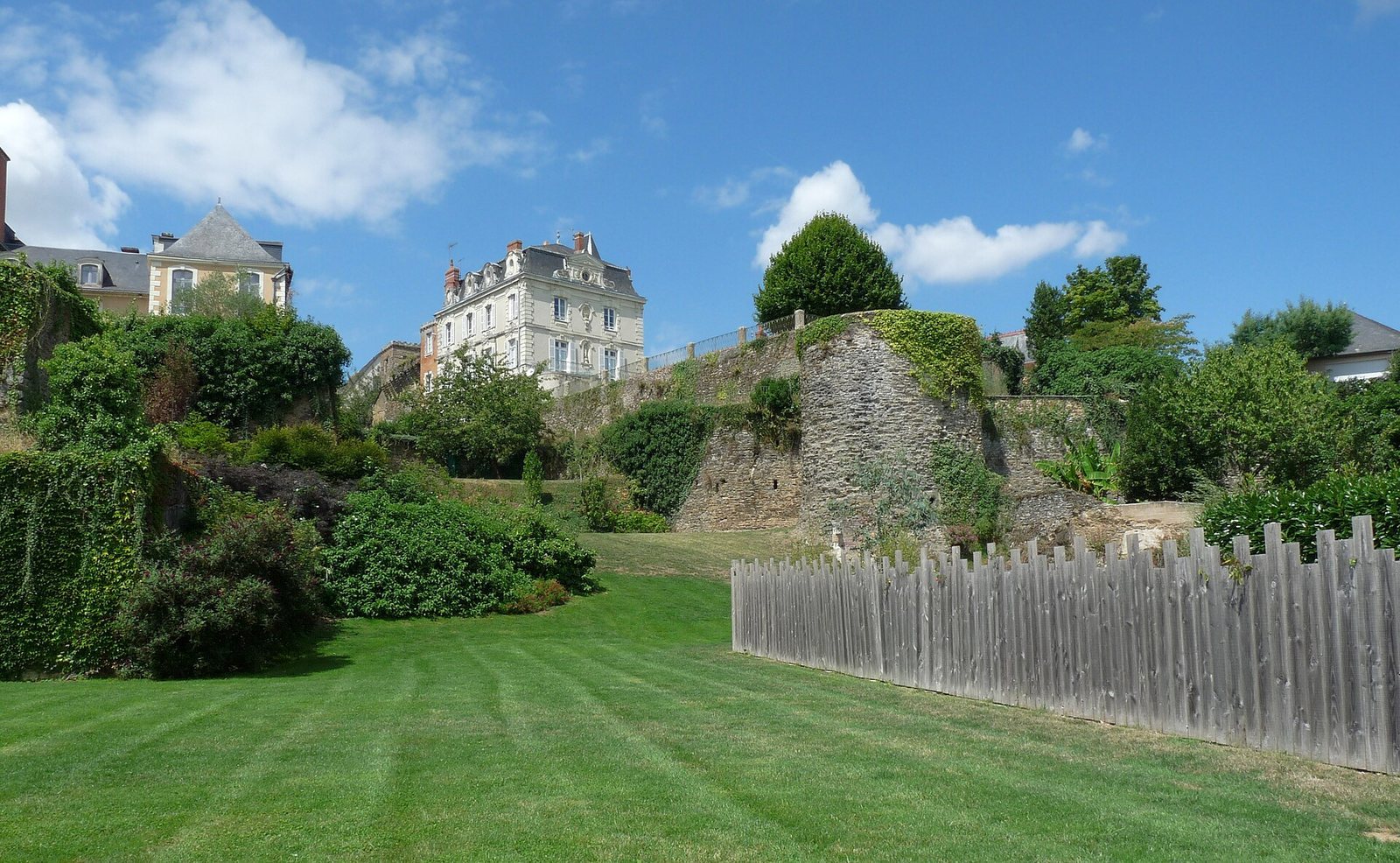
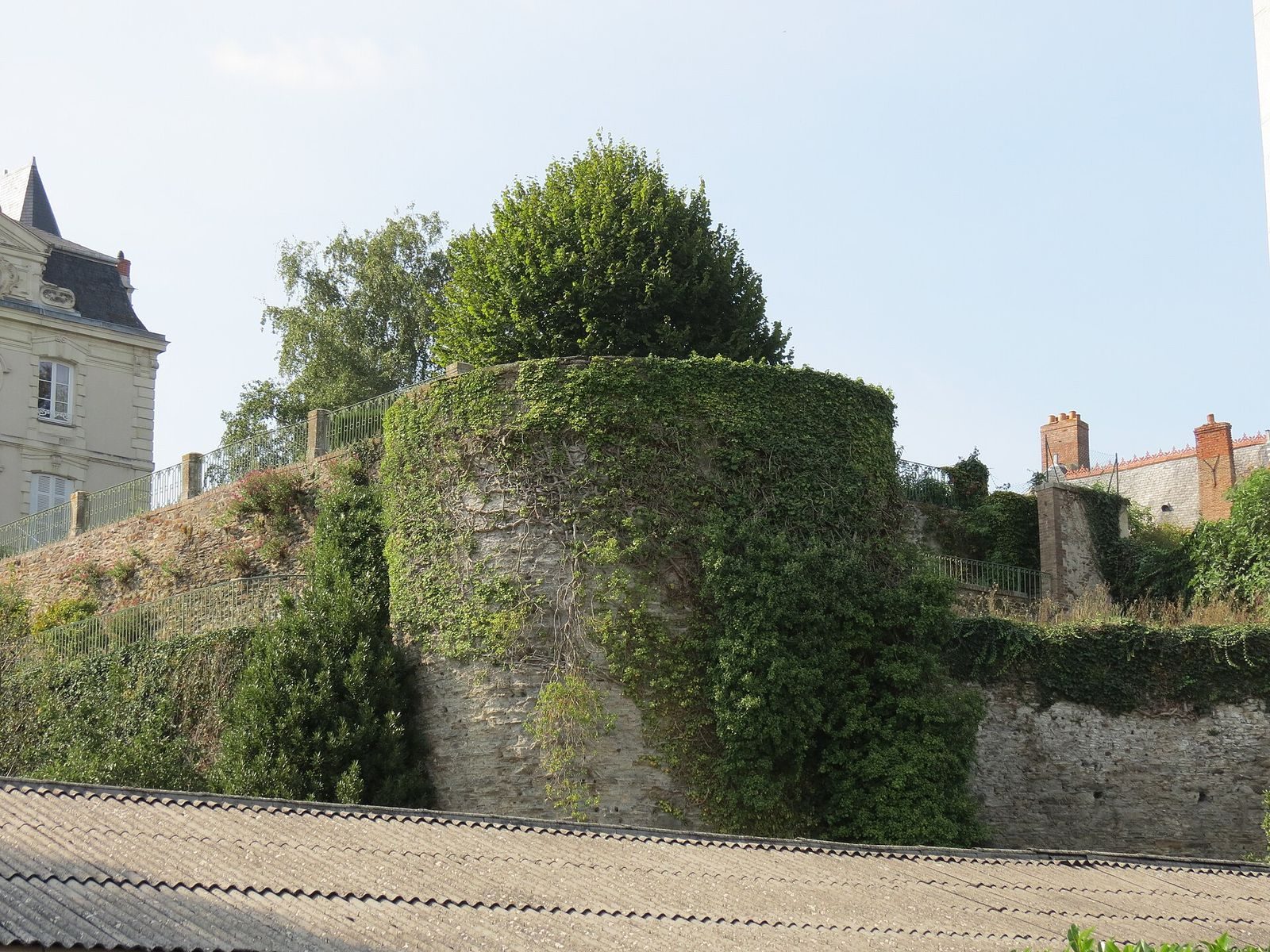
The castle occupied the northeastern end of the town. Ruined fortifications on Rue du Théâtre belong to the thirteenth-century castle, and traces and ruins of the lords’ main residence also remain. Demolition work exposed underground galleries belonging to the former fortified castle; their present condition is unspecified. A house built on the former castle site in 1731 still exists.
Regional frontier earthworks
A line of Breton frontier defenses ran from the Mayenne above Bazouges to the Seiche opposite Availles. It consisted of two ditches and two earthen banks, strengthened at intervals by raised earth defenses. Surviving traces follow a line marked by places called the Miaules. The defenses faced an enemy approaching from the north.