Despot Stefan Tower: Medieval Fortress Tower and Observatory in Belgrade


Site at a Glance
- Rating
- 4.8
- Popularity
- Very Low
- Country
- Serbia
- Primary era
- Medieval
- External website
- Open
- Eras represented
- Medieval, Modern
- Civilizations
- Serbian
- Site type
- Military
- Remains
- Castle
On this page9 sections
History
Despot Stefan Tower, also known as Dizdar Tower, is a medieval Serbian fortress tower in Belgrade, Serbia, built around 1405 during the renovation of Belgrade Fortress under Stefan Lazarević. The Serbian Despotate was the medieval Serbian state ruled by despots during the period between the decline of the Serbian Empire and the Ottoman conquest of Serbia. The tower formed part of the principal entrance to the fortress’s Upper Town, a role that made it important to the city’s medieval defenses.
The Fortress under Stefan Lazarević
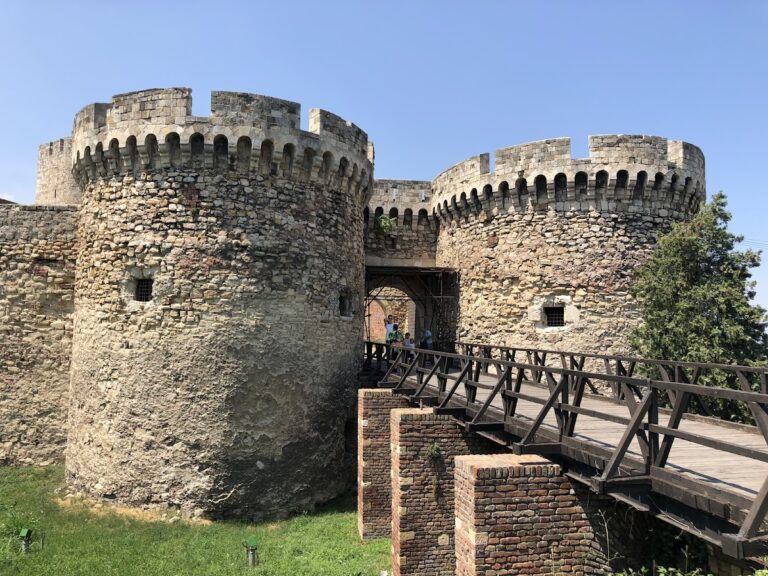
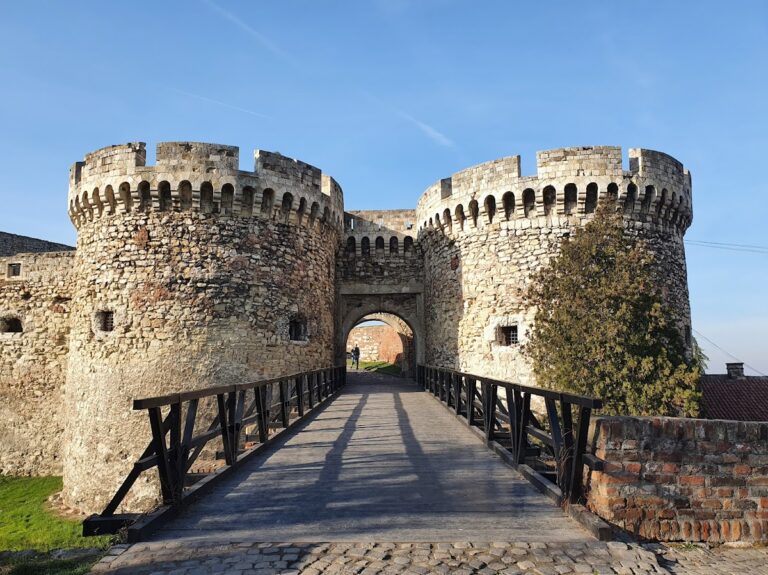
Belgrade became the capital of the Serbian Despotate under Stefan Lazarević, a medieval Serbian ruler and military leader who held the title of despot in the early fifteenth century. The adjoining Despot’s Gate was built over the remains of ancient walls and protected by a moat, a double wall, and a drawbridge. Together, the tower and gate controlled entry into the Upper Town.
The Despot’s Gate and the northeast wall preserve the best-preserved segment of the Upper Town’s medieval fortifications from the first half of the fifteenth century. The gate alone has retained its original form, while the tower has undergone later reconstruction.
The Siege of 1456
During Sultan Mehmet II’s siege of Belgrade in 1456, the decisive fighting took place at the Despot’s Gate. Ottoman forces entered the Upper Town through the entrance, but Hungarian defenders eventually drove them back. The battle was later depicted in a Turkish miniature in the Hünername, now held by the Topkapi Museum in Istanbul. The Church of the Mother of God in Olomouc, in the Czech Republic, also contains a depiction of the battle.
Damage and Modern Use
Bombardment during the fighting at Belgrade in 1915 severely damaged the tower. It was partially reconstructed in 1938, and renovation work in the late 1970s added its crenellated defensive parapet. In May 1963, the Belgrade city administration, the Institute for the Protection of Cultural Monuments, and astronomical societies agreed to adapt Dizdar Tower for use as an observatory. The tower now serves as the seat of the Astronomical Society Ruđer Bošković and houses its Popular Observatory.
Remains
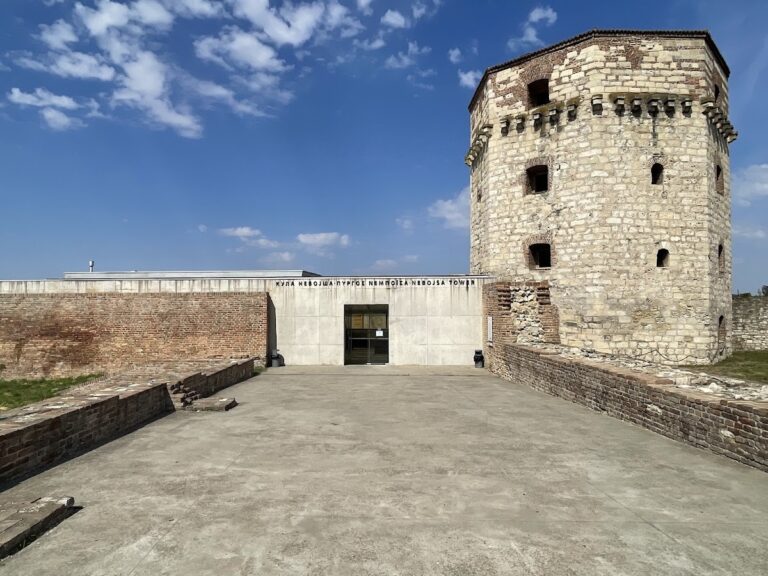
The surviving complex consists of a square stone tower beside the Despot’s Gate on the eastern side of the Upper Town. The gate has a double wall and two entrances, while the surrounding northeast wall forms part of the preserved medieval fortification line.
Medieval Fortifications
Despot Stefan Tower and Despot’s Gate
The square tower stands directly beside the gate and is also referred to as the Castellan Tower. The name reflects its later association with the fortress commandant, or castellan, the officer responsible for commanding or administering a fortress. The gate’s two entrances formed a controlled passage through the defensive works. Its inner entrance has a masikula, a projecting defensive opening or balcony above a gate used to observe and attack assailants below. Beneath it is a niche intended for an icon of the Mother of God, regarded as the city’s protectress.
Northeast Wall and Gate Defenses
The northeast wall belongs to the medieval fortification segment renovated under Stefan Lazarević. A moat, double wall, and drawbridge strengthened the approach to the gate. These elements worked together with the tower and entrance to protect access to the Upper Town.
Observatory
The tower’s present astronomical equipment includes a Zeiss refractor measuring 110/2200 mm and a Tall 200 K reflector measuring 200/2200 mm. Both instruments are used mainly for observations at night. Four panoramic telescopes are mounted on the tower for viewing Belgrade, continuing the building’s modern use as the home of the Popular Observatory.