Church of the Assumption of the Virgin Mary: A Gothic Parish Church in Číhošť, Czechia
Site at a Glance
- Rating
- 4.8
- Popularity
- Very Low
- Country
- Czechia
- Primary era
- Medieval
- External website
- Open
- Eras represented
- Medieval, Modern
- Civilizations
- Holy Roman Empire, Kingdom of Bohemia
- Site type
- Religious
- Remains
- Church
On this page9 sections
History
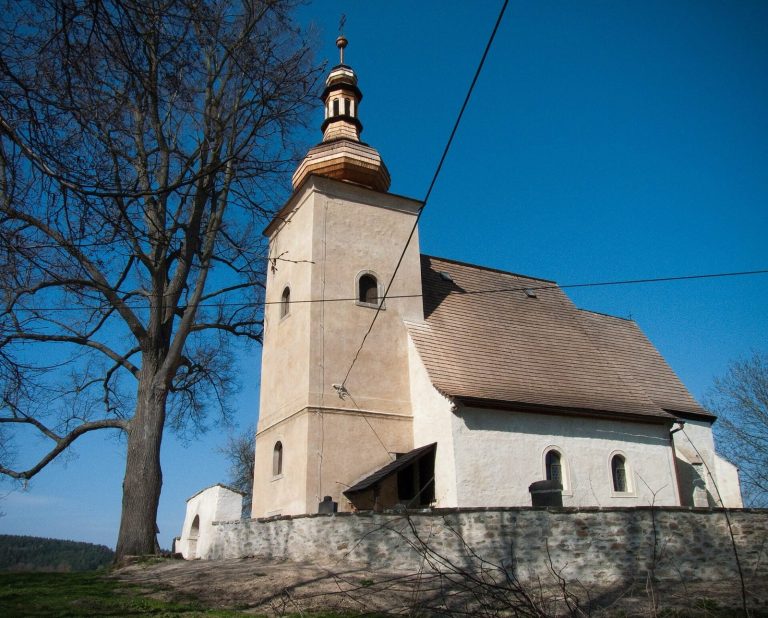
The Church of the Assumption of the Virgin Mary is a Gothic church in Číhošť, Czechia, first mentioned in 1350. A cemetery formerly surrounded the building, which has served as the local parish church within the Roman Catholic Church.
From filial church to parish
After the Hussite Wars, a series of conflicts in fifteenth-century Bohemia associated with the reform movement led by Jan Hus, Utraquist priests served at the church. Utraquism advocated receiving communion in both bread and wine, and its clergy remained active in parts of Bohemia after the wars. The church was then a filial church under the parish of Ledeč. It received its own parish priest in 1856.
Today the church belongs to the Czech ecclesiastical province, the Diocese of Hradec Králové, the Humpolec vicariate, and the parish of Číhošť. It has been listed as a cultural monument since 1963.
Josef Toufar and the Číhošť miracle
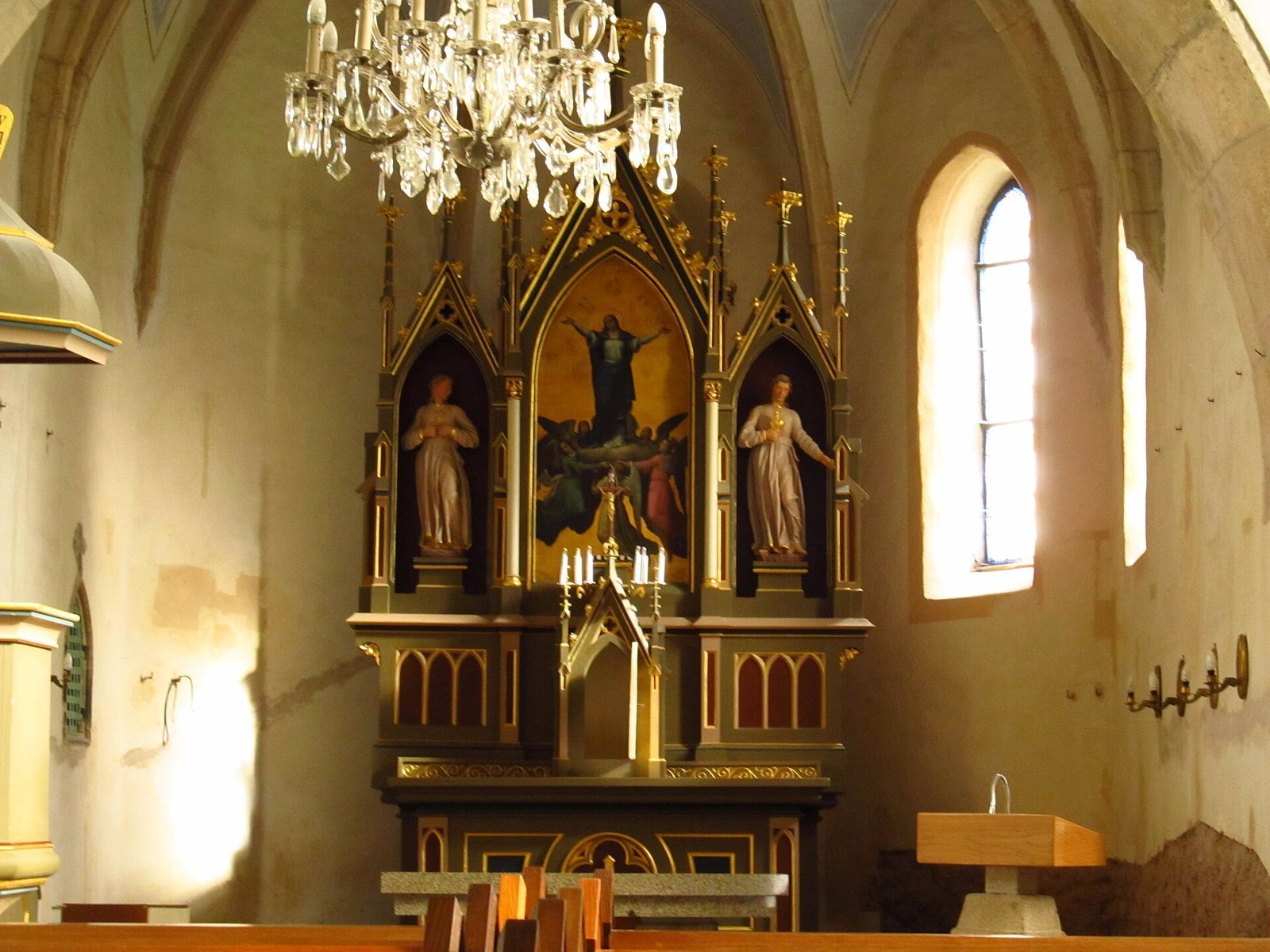
From 1948, the Roman Catholic priest Josef Toufar served at Číhošť. During his sermon on 11 December 1949, a cross roughly half a metre high above the tabernacle on the high altar allegedly moved several times. A tabernacle is the container used to keep the consecrated Eucharistic host. Toufar learned of the event only several days later, when parishioners told him what they had seen.
The phenomenon was allegedly repeated on Christmas Day and during Lent, including after Toufar’s death. The communist Czechoslovak State Security, the country’s secret police and security service, accused him of staging what became known as the Číhošť miracle. He died from torture during the investigation on 25 February 1950. The original cross was removed by the State Security, and its whereabouts remain unknown. A copy was later placed on the altar.
Memorial and restoration
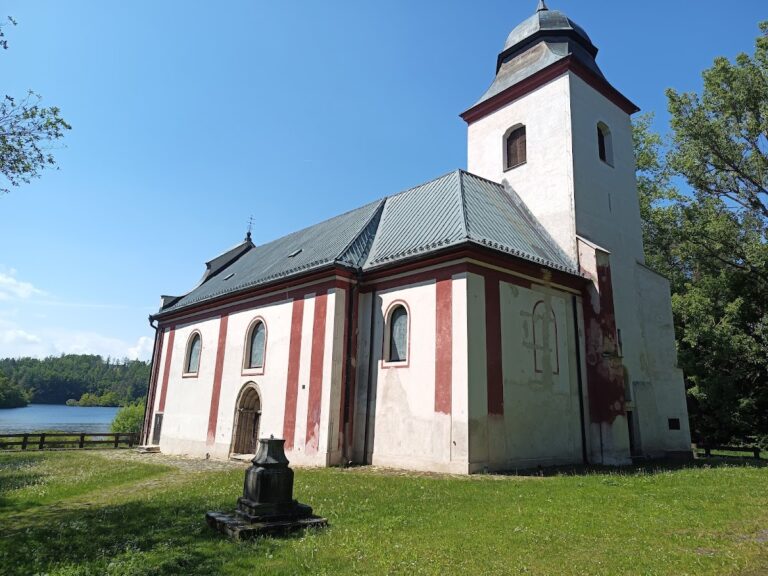
A monument commemorating Josef Toufar was unveiled beside the church in 1990. On 12 July 2015, a solemn mass was held at which his remains were interred at the church. Jan Vokál, bishop of Hradec Králové, celebrated the mass, and Dominik Duka, archbishop of Prague and primate of the Czech Republic, also addressed the ceremony.
In June 2012, the municipality of Číhošť established an endowment fund for the church. Its purpose was to support restoration and ongoing maintenance, bringing together believers and non-believers. The planned work included uncovering and restoring frescoes, repairing the tower, repainting the exterior, renovating the altars and electrical installation, and repairing the rectory facade.
Remains
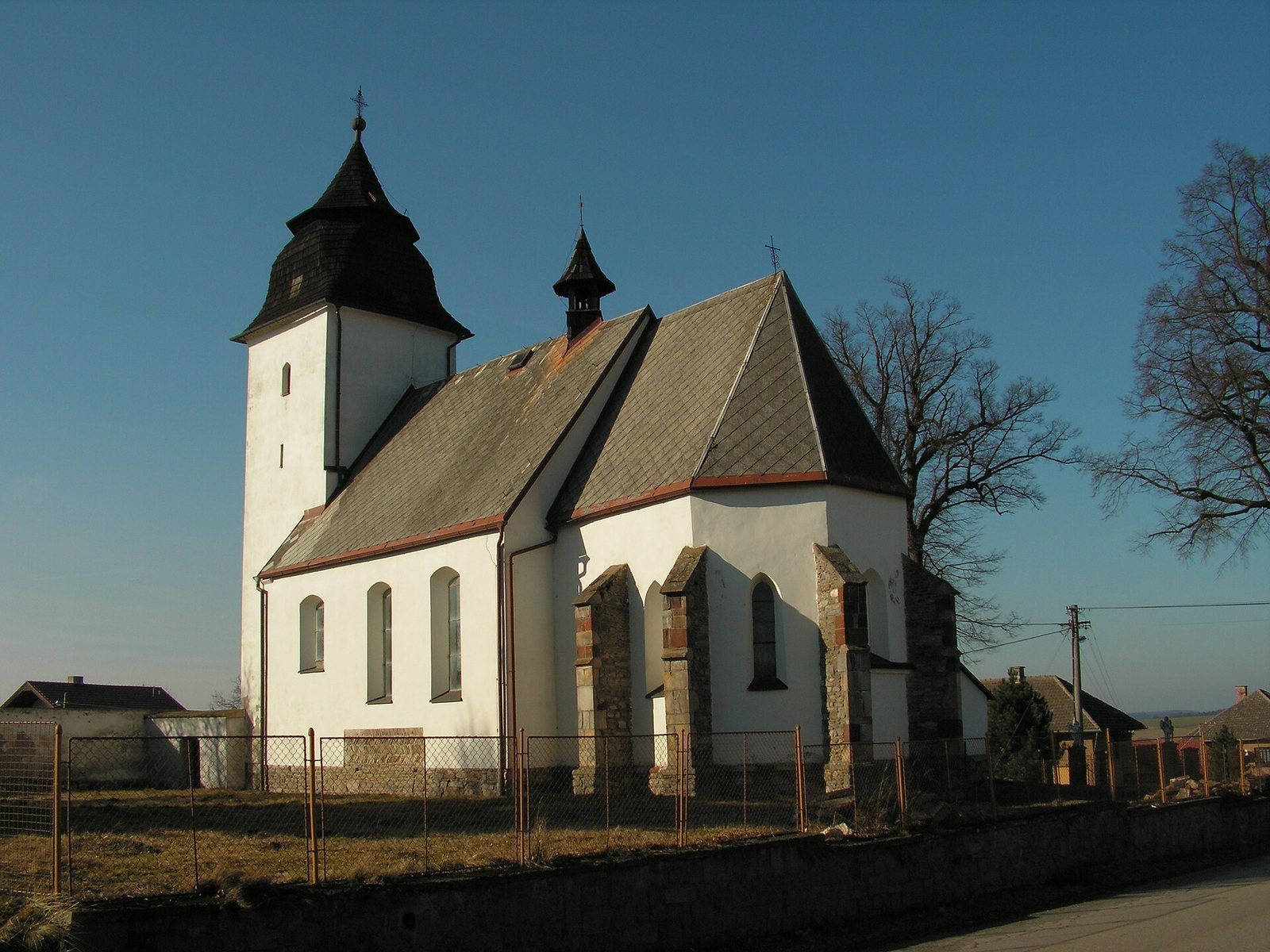
The surviving church is a single-nave Gothic building with a five-sided-ended presbytery, the area surrounding the high altar, and a sacristy on the north side. Its exterior facade is distinguished by herringbone masonry, while the interior retains furnishings and traces of decoration from several periods.
Physical features
Gothic structure
The nave forms the principal space of the church and leads to the five-sided-ended presbytery. A sacristy, a room for vestments and liturgical equipment, is attached on the north side. The exterior wall surface is marked by herringbone masonry, a pattern formed by arranging the masonry in angled courses.
Altars and mural
The high altar dates from 1888 and stands on the original stone altar table from the church’s construction period. The original side altars reached critical condition, so side altars from the demolished Church of St John the Baptist in Dolní Kralovice were brought to Číhošť in 1974 as replacements.
The nave formerly contained Christ the King and the Czech Heavens, a mural painted in 1946 by Rudolf Adámek, an academic painter from Prague. The deteriorating ceiling was repaired for safety, but the mural was not restored. Photographic documentation of the painting survives.
Linden trees
Three linden trees once stood beside the church. They were approximately 300 years old. One was felled in 1984, and the other two were felled in 2010 because they posed a danger to the church and its visitors.