Vigala Church: A Parish Church and War Memorial in Estonia
Site at a Glance
- Popularity
- Very Low
- Country
- Estonia
- Primary era
- Modern
- Eras represented
- Medieval, Early Modern, Modern
- Civilizations
- Russian, Swedish
- Site type
- Religious
- Remains
- Church
On this page9 sections
History
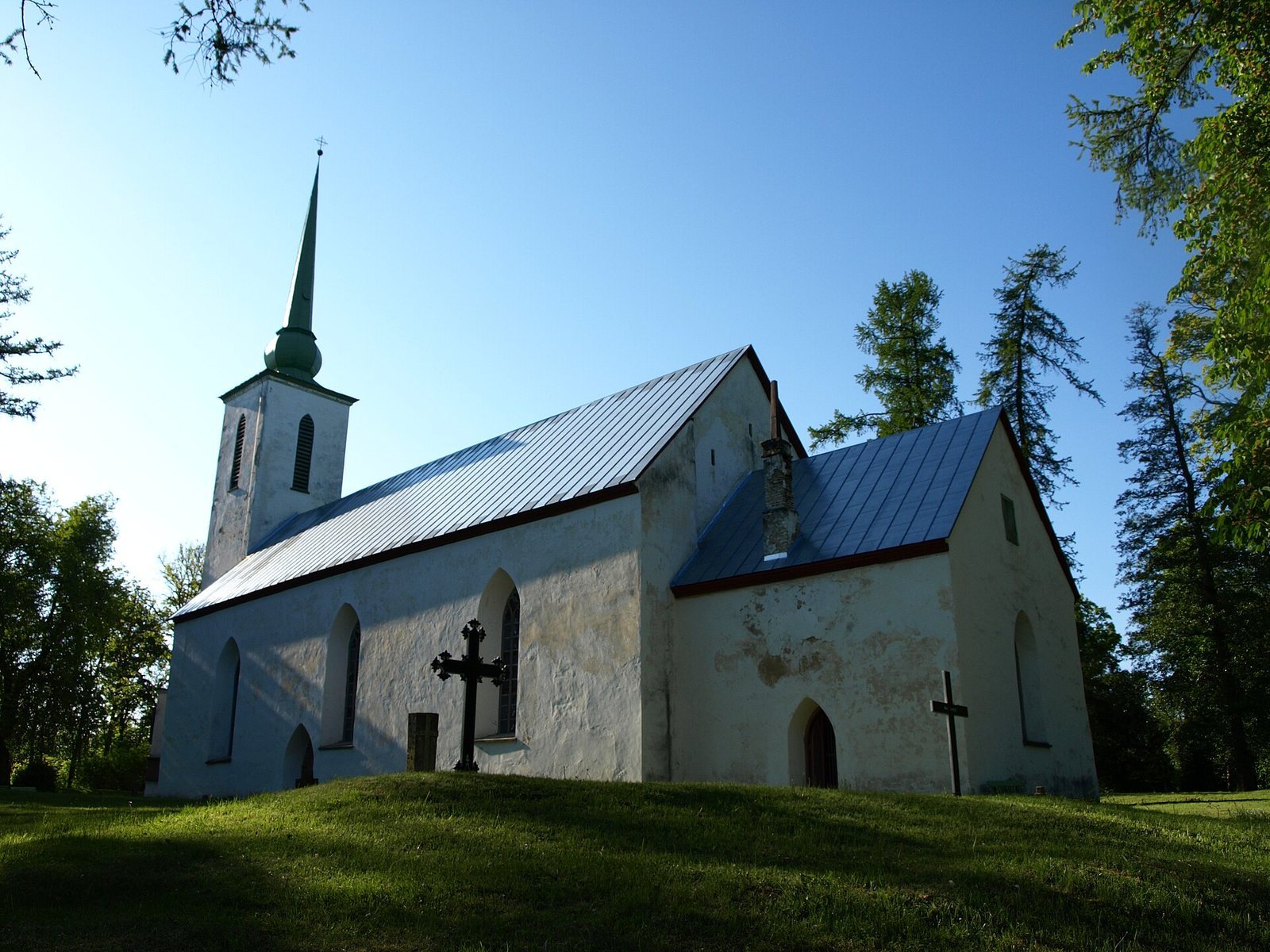
Vigala Church is a parish church in Kivi-Vigala, Estonia, built in the 14th century and repeatedly rebuilt. It serves the Vigala Maarja congregation and belongs to the Estonian Evangelical Lutheran Church, a Lutheran Protestant church body.
Medieval origins
The church’s beginnings are conventionally associated with 1339, when a priest named Johannes of Vigala is mentioned. The church was built during the 14th century and underwent repeated rebuilding.
Nineteenth-century rebuilding
In 1842, the church assembly agreed to enlarge and lengthen the building at the proposal of its patron, Boris von Uexküll, owner of Vana-Vigala Manor. The new church was completed in 1845 and consecrated on 11 August 1846. Part of the earlier church was retained as the sacristy, a room for preparing worship and keeping church furnishings or sacred objects.
Tower and memorial
A 45-metre tower was completed in 1933 as both a church tower and a memorial to men from Vigala who died in the 1905 peasant unrest, the First World War, and the Estonian War of Independence. The 1905 unrest formed part of revolutionary upheavals in the Russian Empire. The War of Independence was fought for Estonia’s independence after the First World War. Architects Alar Kotli and Karl Lüüs and sculptor Richard Hammer-Vasard designed the tower and memorial, which opened ceremonially in 1933.
In autumn 1944, Pastor Ferdinand Jürgenson ordered the memorial plaques covered with thick lime mortar and the image of Estonia’s Cross of Liberty, a state decoration associated with service in the War of Independence, concealed beneath sheet metal to protect them from destruction under Soviet rule. In autumn 1950, during Pastor Agu Põld’s tenure, the two sculptures were taken down and buried beside the tower.
The memorial was restored on 11 May 1988 after several days of work, becoming the first War of Independence memorial restored in Estonia. The church remains the only place of worship in Vigala rural municipality and is registered as an Estonian cultural monument. Its principal organ was repaired in 1997; the sacristy organ received major repairs in 2005 and was then dedicated by Archbishop Andres Põder.
Remains
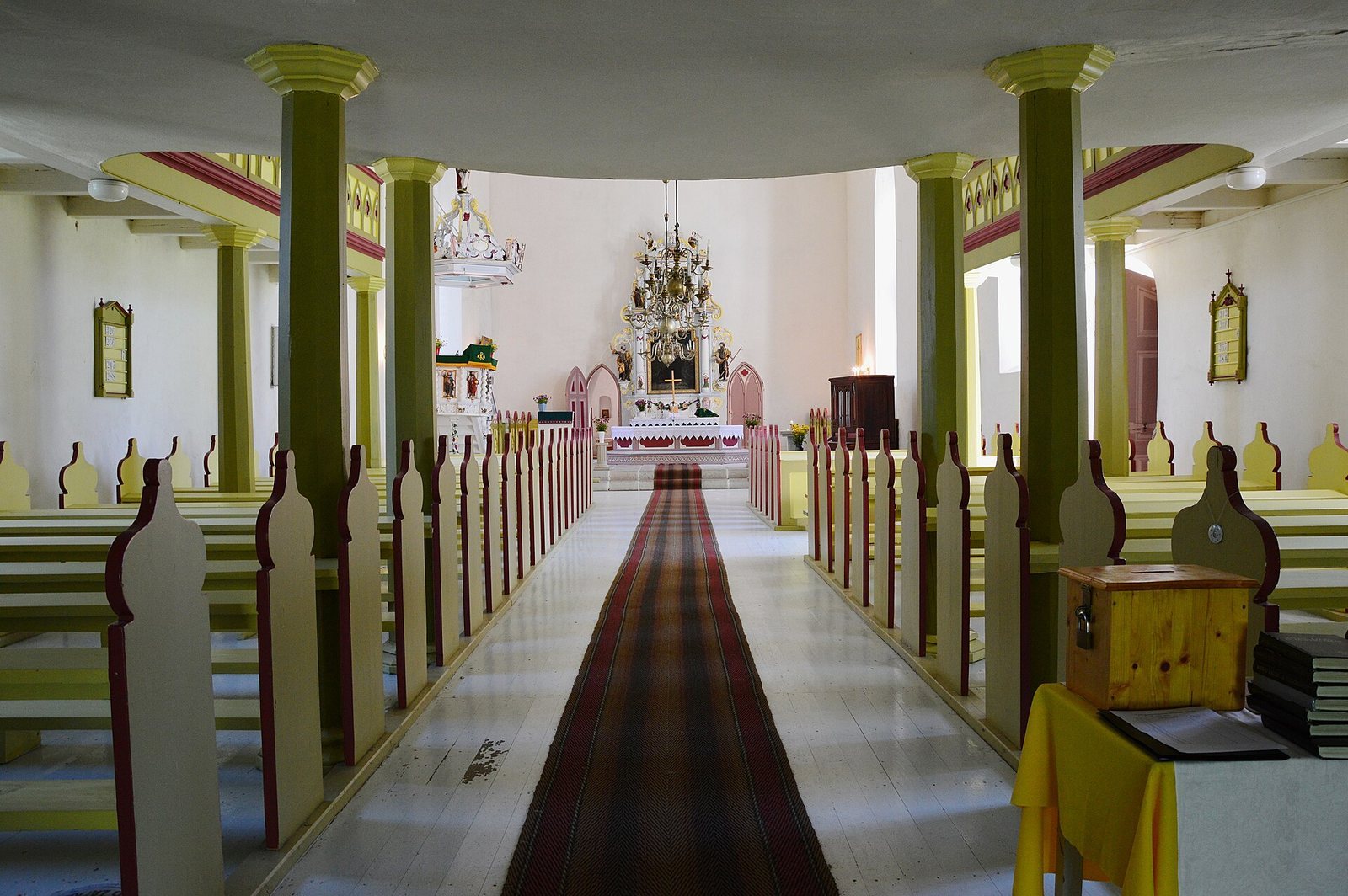
The church’s surviving layout includes the main worship space, an altar room, a sacristy behind the altar, and the tower. The building preserves features from different periods of its history, including medieval fabric and furnishings from later centuries.
Sacristy and medieval objects
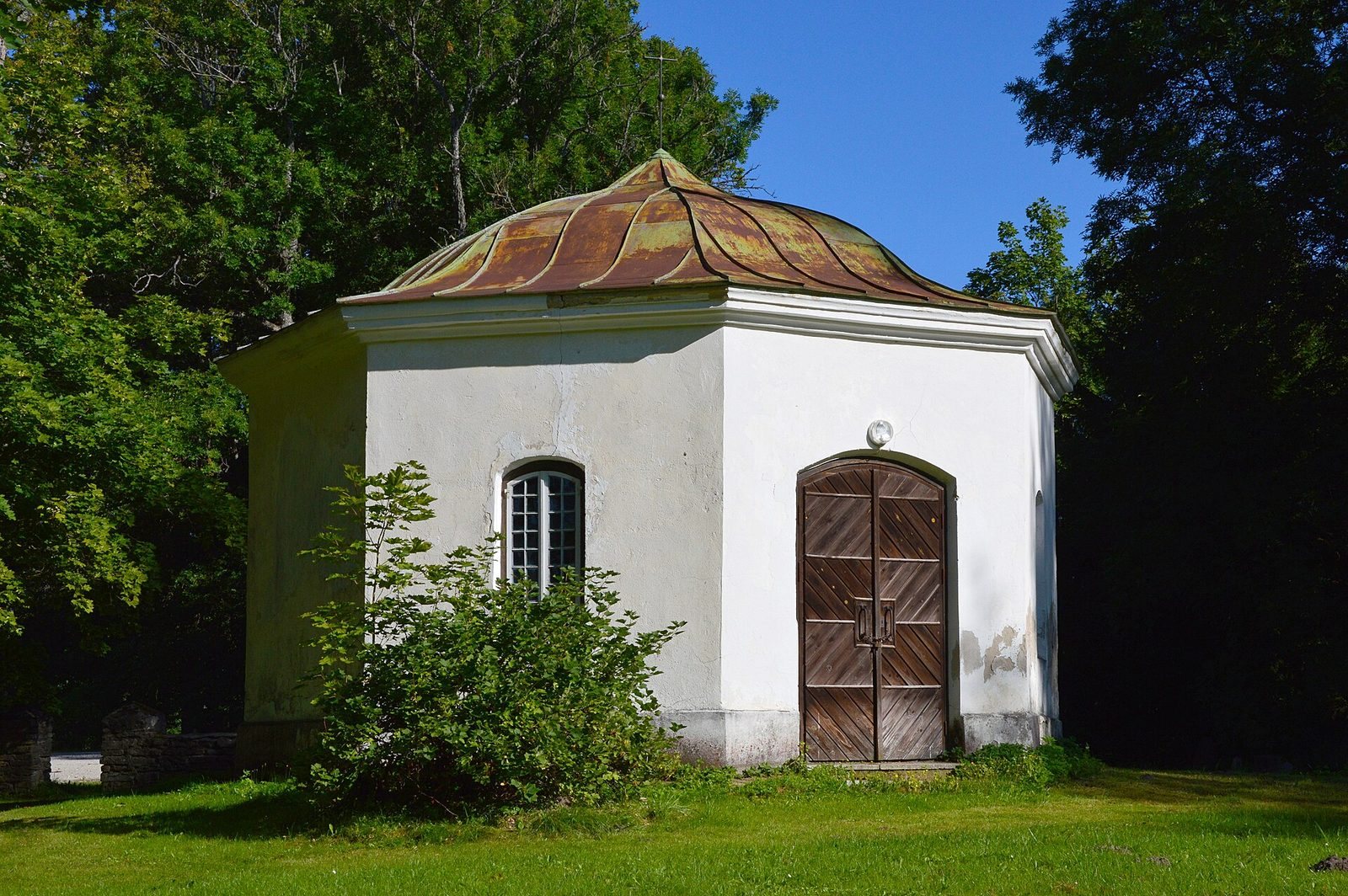
The sacristy is the oldest surviving part of the church. A stone grave slab dated 1390–1400 lies in its floor. The room also contains a tabernacle, a receptacle for sacred objects, and a late-13th-century object known as the bishop’s cross. It depicts a bishop with raised hands and combines pagan and Christian symbolism. Its imagery has been interpreted as reflecting a time when Estonians had not yet lost their rights and older beliefs were being incorporated into Christian tradition.
Altar and painted decoration
Christian Ackermann made the altar around 1680 and also carved the pulpit. The altar bears paintings of Christ on the Cross and Christ in the Garden of Gethsemane; it is regarded as one of Estonia’s most accomplished works of its kind. The altar room also contains the church’s largest painting, depicting the Last Supper.
Organs and stained glass
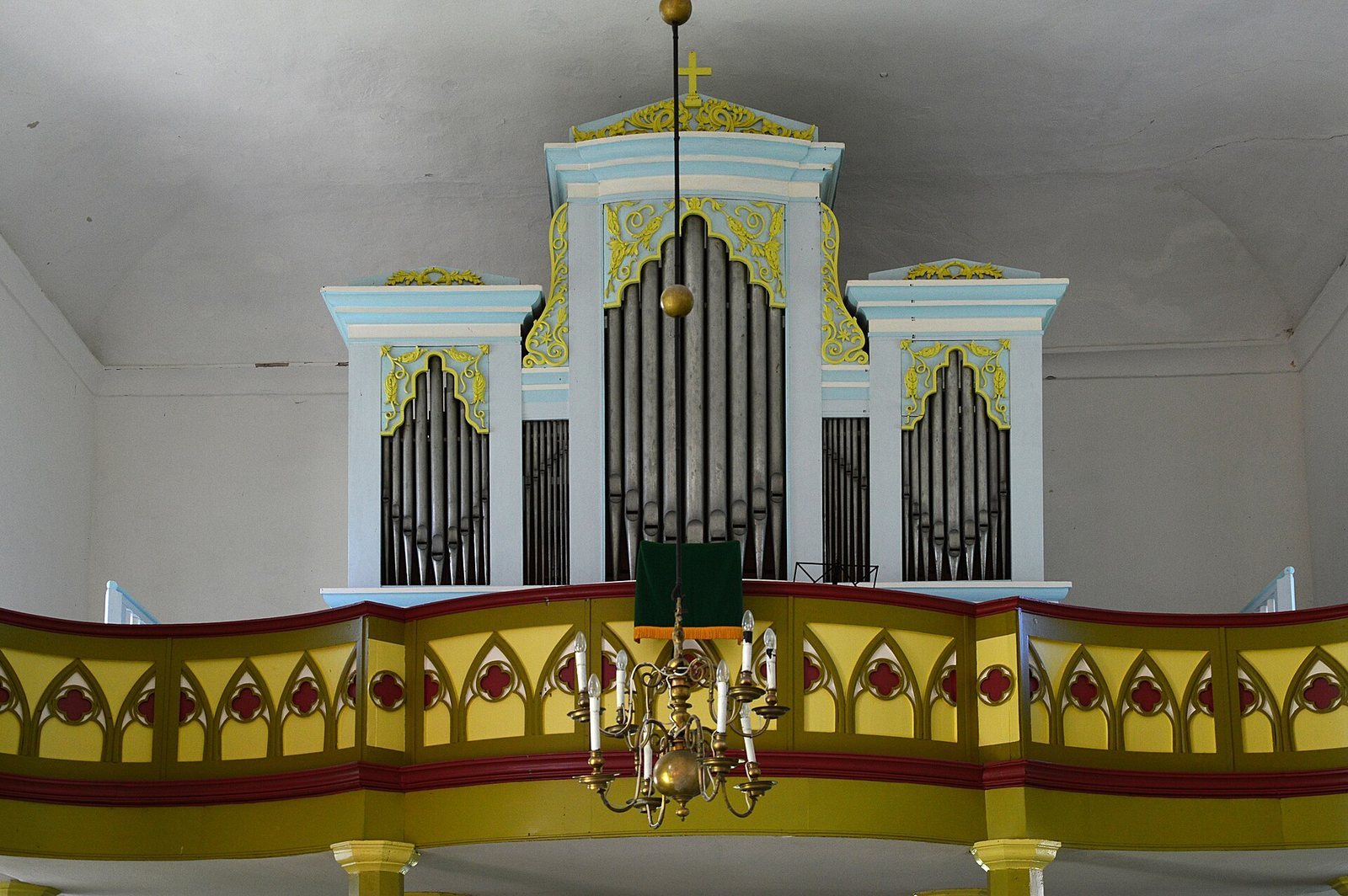
The principal organ stands in the organ gallery. Friedrich Wilhelm Müllverstedt built it in 1886 for Tartu St Peter’s Church, and Vigala’s congregation received it after it was apparently found too small for that larger church. An organ beside the altar is popularly called the Tormis organ; it was brought there on the initiative of Jaak Uibo, elder brother of organist Andres Uibo. In the sacristy, an organ made by Vigala master Jüri Gildemann was completed in 1887. A stained-glass window by Andrei Lobanov features stylized motifs and represents late-20th-century glass painting.
Tower and memorial features
The tower’s stone section rises 25 metres, with a spire of about 20 metres above it. The memorial includes plaques bearing the names of the fallen and an image of the Cross of Liberty. Its sculptures, titled “Soldier” and “Peasant,” were made using a stone-working machine devised by Richard Hammer-Vasard.