Basilica of San Nicandro, Venafro: A Medieval Roman Catholic Sanctuary
Site at a Glance
- Rating
- 4.7
- Popularity
- Very Low
- Country
- Italy
- Primary era
- Early Modern
- Eras represented
- Medieval, Early Modern, Modern
- Civilizations
- Italian, Kingdom of Naples
- Site type
- Religious
- Remains
- Basilica
On this page13 sections
History
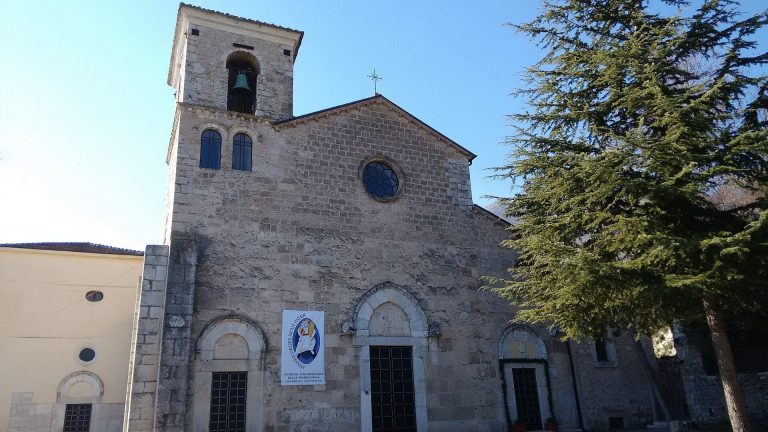
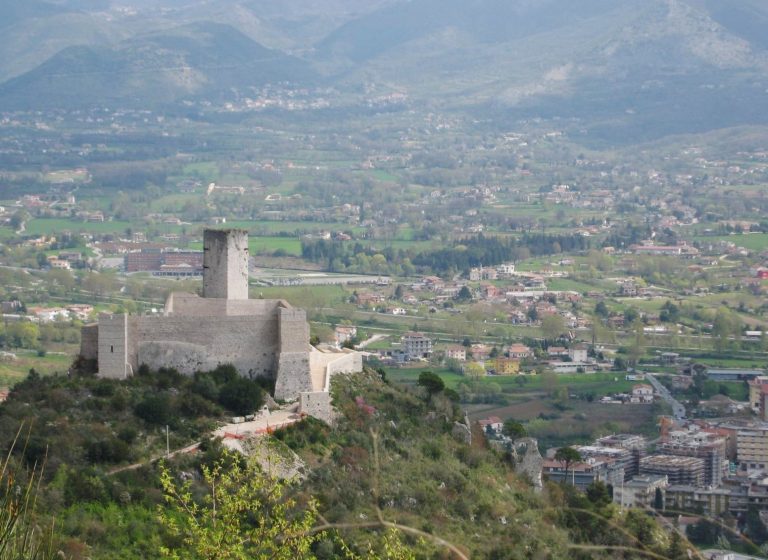
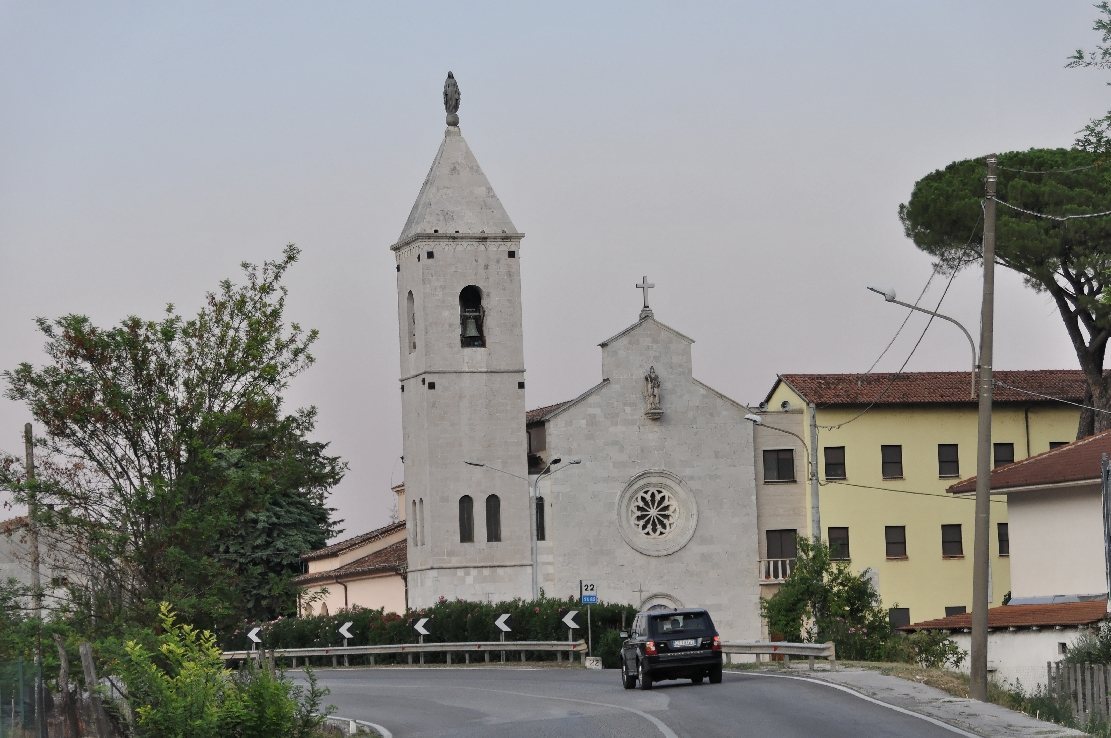
The Basilica of San Nicandro, Venafro, is a medieval Roman Catholic sanctuary in Italy with a Romanesque façade, dedicated to the martyrs Nicandro, Marciano, and Daria. It stands at the eastern entrance to Venafro within the Diocese of Isernia-Venafro. The precise date and circumstances of its foundation remain uncertain, but the church has long been associated with the burial and veneration of Saint Nicandro.
Origins and the cult of Saint Nicandro
Tradition holds that Basilian monks brought Saint Nicandro’s relics to Venafro in the eighth century. Another tradition places the foundation of the church in the tenth century, while a church at the martyr’s burial place is mentioned before 955. These traditions do not establish the date of the present building, whose origins remain uncertain.
The account of Nicandro’s martyrdom is also complex. His feast is traditionally held on 17 June, although neither the place nor the year of his death is fixed. The Hieronymian Martyrology places the martyrdom at Dorostoro in Moesia, while some manuscripts associate it with Capua and another tradition identifies Venafro as his burial place. A twelfth-century account distinguishes a Nicander who died at Atina in 273 from another who died at Dorostoro in 302.
Greek-rite Basilian monks were linked with the church and with the nearby Abbey of Santa Croce. The movement of Greek monks and relics into Italy was connected with the eighth-century Iconoclast controversy, a dispute in the Byzantine Empire over the religious use of images during the reign of Emperor Leo III the Isaurian. Santa Croce Abbey was destroyed in the fifteenth century, but devotion to Saint Nicandro continued at Venafro.
Medieval pilgrimage and religious administration
The church appears in the Chronicon Vulturnense in connection with a donation made by the Lombards to Joshua, abbot of San Vincenzo al Volturno. Its position on routes followed by pilgrims travelling from Venafro toward Benevento or Caserta helped sustain the local cult.
In 1268, during the campaign associated with the Battle of Tagliacozzo, Charles I of Anjou, the Angevin king of Sicily and Naples, was said to have stopped at the church to pray. In November 1290, Pope Nicholas IV granted an indulgence to visitors.
The church remained in the care of the Basilians until 1554, when Pope Sixtus V abolished the order. After a period of abandonment, the complex was assigned to the Capuchins in 1573, with Father Giovanni Maria da Tusa as its first rector. A papal bull issued by Pope Gregory XIII in 1577 formally entrusted the church to the friars as the tenth Capuchin convent of the Province of Sant’Angelo. The Capuchins were a reform branch of the Franciscan order that followed a communal and austere interpretation of Franciscan practice.
Suppression, restoration, and continuing devotion
The Capuchin community remained until the convent was suppressed under French laws in 1811. The friars returned in 1816, but the convent was closed again under Piedmontese laws in 1867 and transferred to the Commune of Venafro, which used it as a public cemetery. Custody returned to the Capuchins in 1870 under Father Clemente of Morcone.
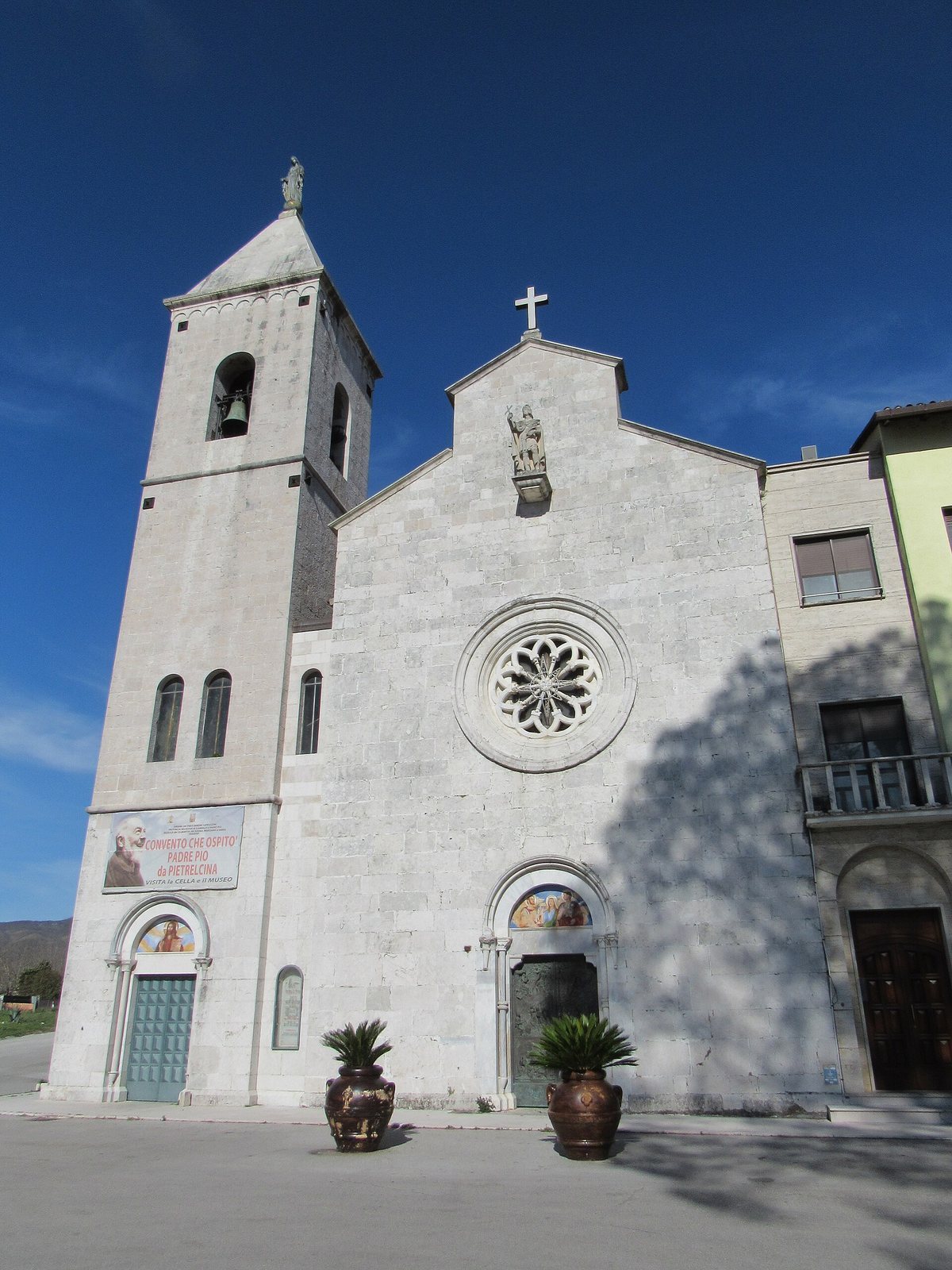
At the turn of the nineteenth and twentieth centuries, the convent housed the young Francesco Forgione, later known as Padre Pio of Pietrelcina, during an illness. Padre Pio was an Italian Capuchin friar and Catholic priest who later became widely venerated and was canonized as a saint.
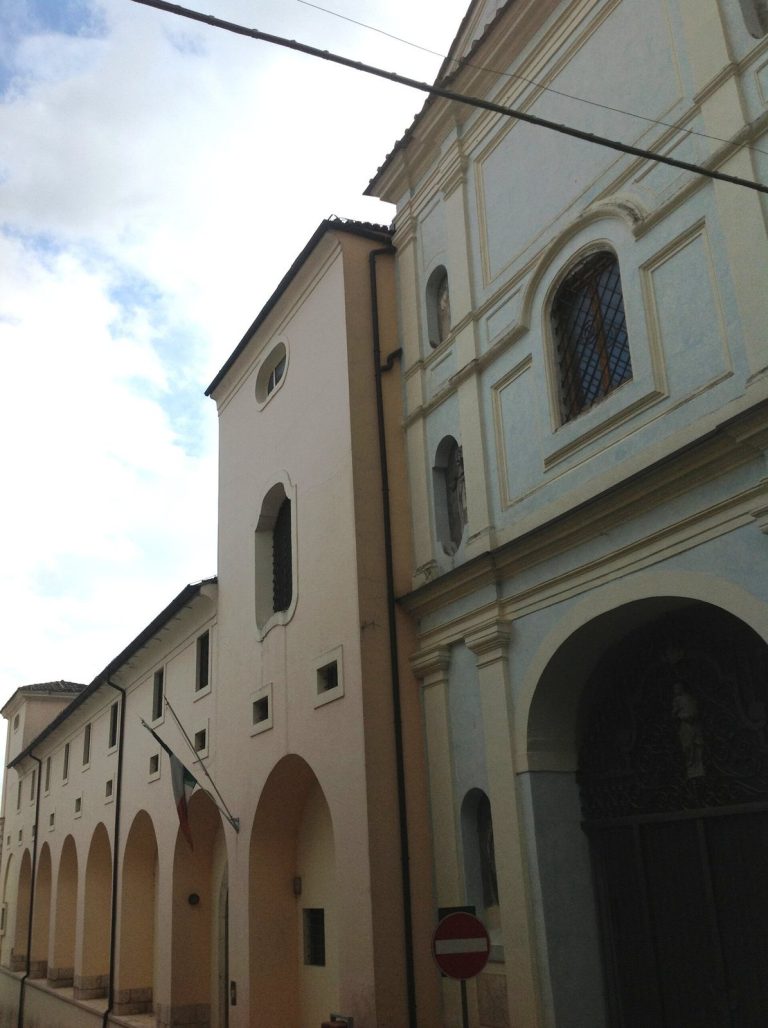
During the Fascist period, the exterior of the convent was extensively remodelled. The Romanesque façade was restored, additional entrances were made, and the convent rooms were modernized. In December 1930, Fathers Leone Patrizio and Francesco Angelantonio Carusillo began excavations from the main altar, which had been walled up during the convent’s suppression. They rediscovered the sarcophagus associated with Saint Nicandro. In 1933, Father Guglielmo of San Giovanni Rotondo, then rector, placed it in a newly reconstructed crypt.
Venafro celebrates Saint Nicandro’s principal annual festival from 16 to 18 June, in connection with the traditional 17 June date of his martyrdom. The rites include the procession of a silver reliquary bust and other relics from the Church of the Annunciation to the basilica, episcopal services, and processions honouring the town’s patron saints. A reliquary is a container made to preserve or display relics associated with a saint or martyr.
Remains
The basilica has a rectangular plan and combines a Romanesque exterior with a late-Baroque interior. The adjacent convent forms a separate quadrangular complex to the right of the church, centred on a cloister with round arches and a well. Together, the church, convent, forecourt, and crypt preserve the principal architectural and devotional elements associated with the sanctuary.
Exterior and convent
Romanesque façade
The façade is built from dressed stone painted white and is arranged with sloping side sections. A central round-arched portal provides the main entrance. Above it are a modern mosaic with a gold background and the original radial rose window. In the forecourt stands a stationary cross made from a column dating to the Roman period.
Bell tower
The original bell feature was a bell gable above the façade. It was replaced by the present quadrangular tower, built of stone and concrete in 1949 and crowned by a pyramidal spire.
Convent cloister
The convent has a quadrangular plan and stands beside the church. Its centre is occupied by a cloister with round arches and a well. The rooms were modernized during the extensive remodelling carried out during the Fascist period.
Interior furnishings and crypt
Naves and Crucifix
The interior is rectangular and divided into two late-Baroque naves. Its stucco decoration was remade during the nineteenth century. The lateral nave contains a painted wooden Crucifix dating from the late fourteenth century.
Choir and tabernacle
The apse contains a large inlaid wooden choir with an altar tabernacle made by the eighteenth-century friar Bernardino of Menton. The tabernacle’s centre is shaped as a small classical temple. Its niches contain paintings and panels, including a central altarpiece by Dirk Hendricksz, known in Italy as Teodoro d’Errico, showing the Virgin and Child with Saints Francis, Nicandro, and Marciano. Other niches contain Saint Fidelis of Sigmaringen and Saint Felix of Cantalice. A portrait of Saint Michael appears above them, while two lunettes depict Saint Bonaventure of Bagnoregio and Saint Louis of Toulouse.
Crypt and sarcophagus
Below the main altar lies the reconstructed crypt containing the original sarcophagus associated with Saint Nicandro. It is a plain, undecorated, roughly made coffin carved from a single ancient monolith. The crypt also contains a stone tomb attributed to Saint Nicandro and dated to the fourth century. This tomb periodically exudes a liquid traditionally known as the Holy Manna of Saint Nicandro.