Velika Nedelja Castle: Teutonic Order Frontier Fortress in Slovenia


Site at a Glance
- Rating
- 4.4
- Popularity
- Low
- Country
- Slovenia
- Primary era
- Early Modern
- External website
- Open
- Eras represented
- Medieval, Early Modern
- Civilizations
- Crusader, Duchy of Styria, Holy Roman Empire, Teutonic Order
- Site type
- Military
- Remains
- Castle
On this page12 sections
History
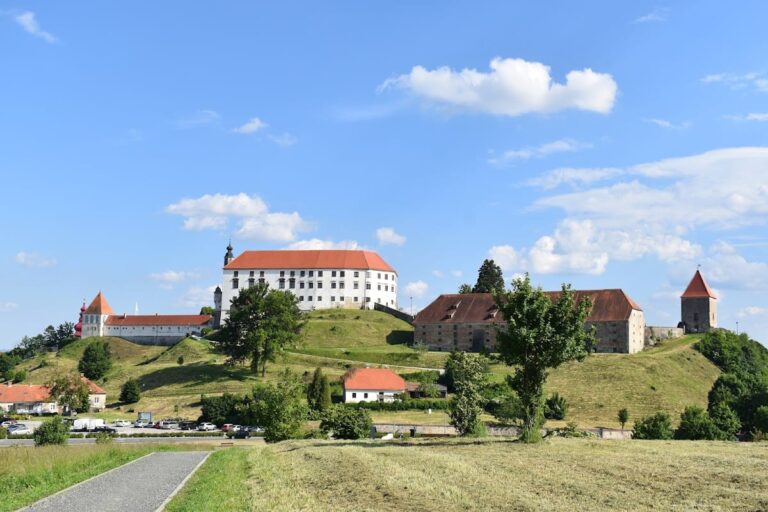
Velika Nedelja Castle is a hilltop fortress in Slovenia, built and developed by the Teutonic Order from the medieval period onward. Its construction dates to no later than the mid-thirteenth century, while its present appearance is chiefly Baroque. Above the village of Velika Nedelja, it formed part of the Order’s frontier possessions and helped administer and defend territory near the Kingdom of Hungary.
The frontier and the Teutonic Order
The area became strategically important after the Battle of the Ptuj Fields on Easter Sunday, 18 April 1199. Friedrich III of Pettau, a nobleman associated with the Ptuj region, defeated Hungarian forces with support from Teutonic Order knights and secured his territory as far as Ormož. The frontier with the Kingdom of Hungary remained in place until 1918.
A chapel on the later castle hill was recorded by 1198 and was served by the Teutonic Order. After the battle, Friedrich III donated it to the Order, which was charged with establishing a parish and securing the surrounding territory. Around 1210, Friedrich III founded the Order’s commandery with the Hospital of the Virgin Mary at Ptuj. A commandery was a local administrative and religious establishment of a military order, usually governed by a commander. The foundation gave the knights patronage over the area and strengthened their territorial organization.
Medieval stronghold and administrative center
The castle’s first written mention dates from 1273, although the construction of the fortress had begun no later than the middle of the thirteenth century. It belonged to a chain of fortifications that included the castles of Ormož, Muretinci, Ptuj, and Ljutomer. Together, these strongholds protected the land against Hungary. Velika Nedelja also served as an administrative center from which the Teutonic Order managed its possessions, known in 1259 as the territory between the Drava and Mura rivers.
Austrian records called the castle “haus Suntag” in 1321. Its chapel, dedicated to Saint Catherine, had been completed by 1410. This religious foundation remained part of the castle complex as the site continued to function within the Order’s frontier administration.
Baroque transformation and modern ownership
Between 1610 and 1612, the castle was altered and enlarged under Markwart, Baron of Eckh and Hungersbach, the Teutonic Order’s Land Commander. A Land Commander was a senior official responsible for administering a territorial unit of the Order. These works established the principal form of the present complex. The castle was renovated again at the beginning of the eighteenth century, after which it underwent no further structural alteration.
The Teutonic Order retained Velika Nedelja Castle until the end of the Second World War. The castle and its associated lands were then nationalized. Since 1991, the property has belonged to the state of Slovenia. Parts of the castle were restored in 2007 and 2008, and it became a Slovenian national monument in 2008. The building now houses the Ethnological Department of the Regional Museum of Ptuj-Ormož as an external branch.
Remains
Fortress layout
Four-winged building
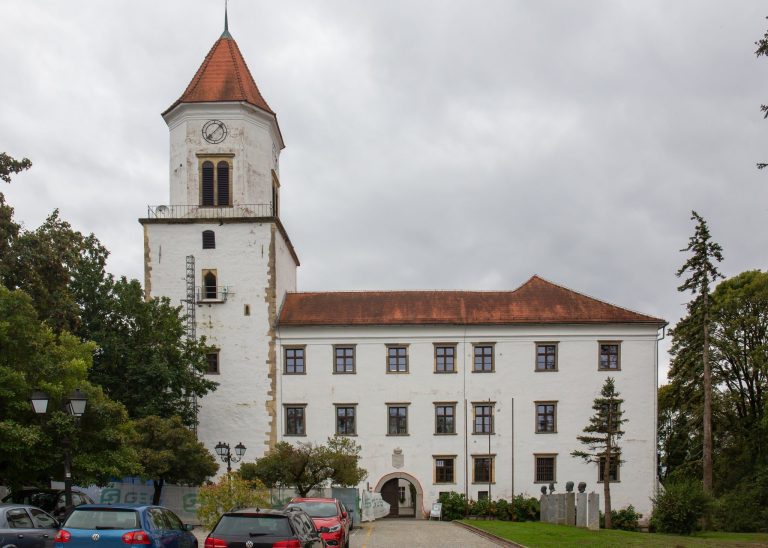
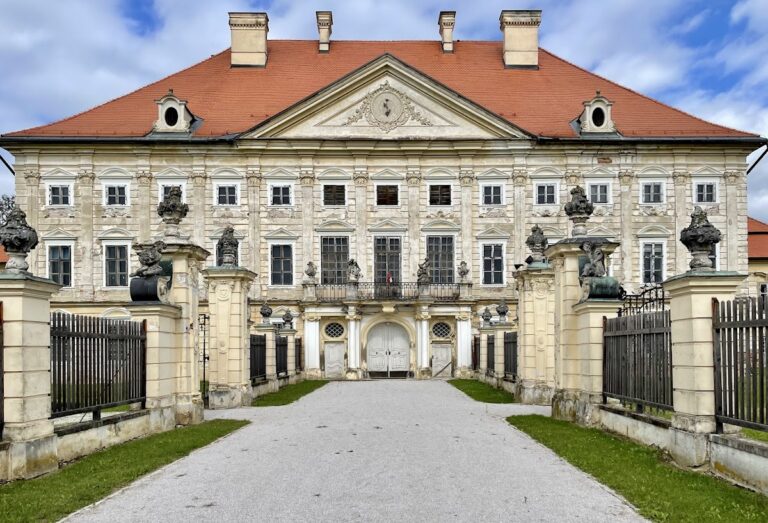
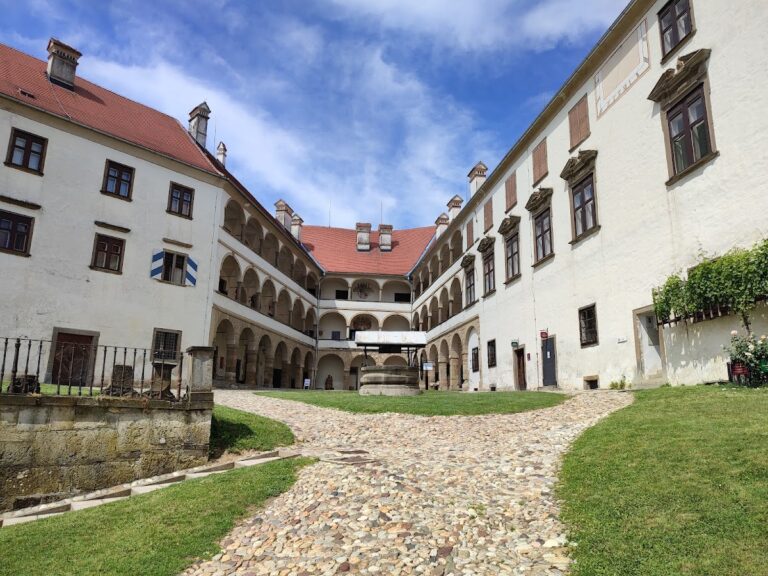
Velika Nedelja Castle stands at approximately 218 meters above sea level. Its present form is a Baroque four-winged building with small round towers at the corners. The walls and cellars preserve parts of the earlier complex, linking the later residence and fortress to the medieval site.
Courtyard features
Within the courtyard, a cross pattée stands in front of a Baroque wrought-iron well. A cross pattée has arms that widen toward their ends and was strongly associated with the Teutonic Order. On the north side of the inner courtyard, a heraldic relief of Markwart, Baron of Eckh and Hungersbach, bears the date 1612. The relief probably came from the Italian sculptor Philibert Pacobello and carries an inscription recording Markwart’s commissioning of the building’s erection and completion.
Chapel
The north wing contains the castle chapel of Saint Catherine. Originally Gothic, the chapel was later altered during the Baroque period, a style known for elaborate decoration and complex spatial composition. In 1724, the Italian-born Baroque painter Martino Altomonte decorated the chapel, adding to the artistic character of the eighteenth-century complex.
Artworks and visual records
Altomonte’s painting
Altomonte’s principal work associated with the chapel, Mary with Saint Florian, is held in the Ptuj Regional Museum. The statues of Saint Catherine and Saint Barbara, dated to 1410, are also preserved there.
Seventeenth-century engraving
A 1681 engraving by Georg Matthäus Vischer, an Austrian topographer and engraver, depicts Velika Nedelja Castle and provides a visual record of the complex during the period of its later development.