Vatnås Church: A Seventeenth-Century Timber Church in Norway
Site at a Glance
- Popularity
- Low
- Country
- Norway
- Primary era
- Early Modern
- Eras represented
- Early Modern, Modern
- Civilizations
- Denmark–Norway, Norwegian
- Site type
- Religious
- Remains
- Church
On this page16 sections
History
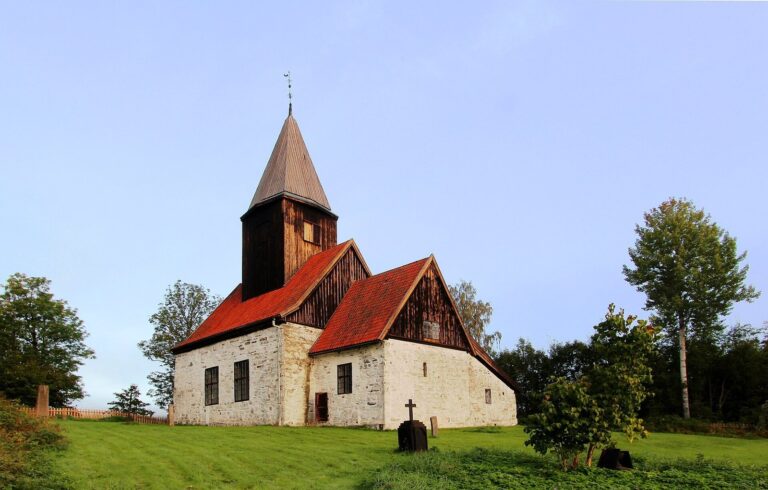
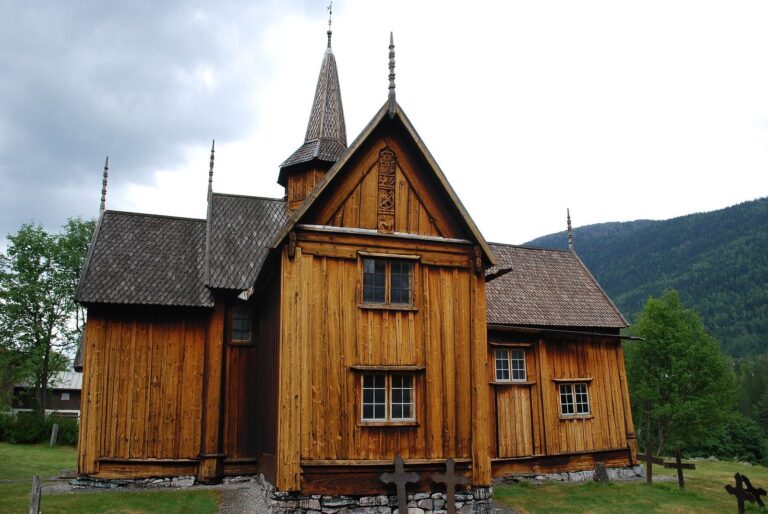
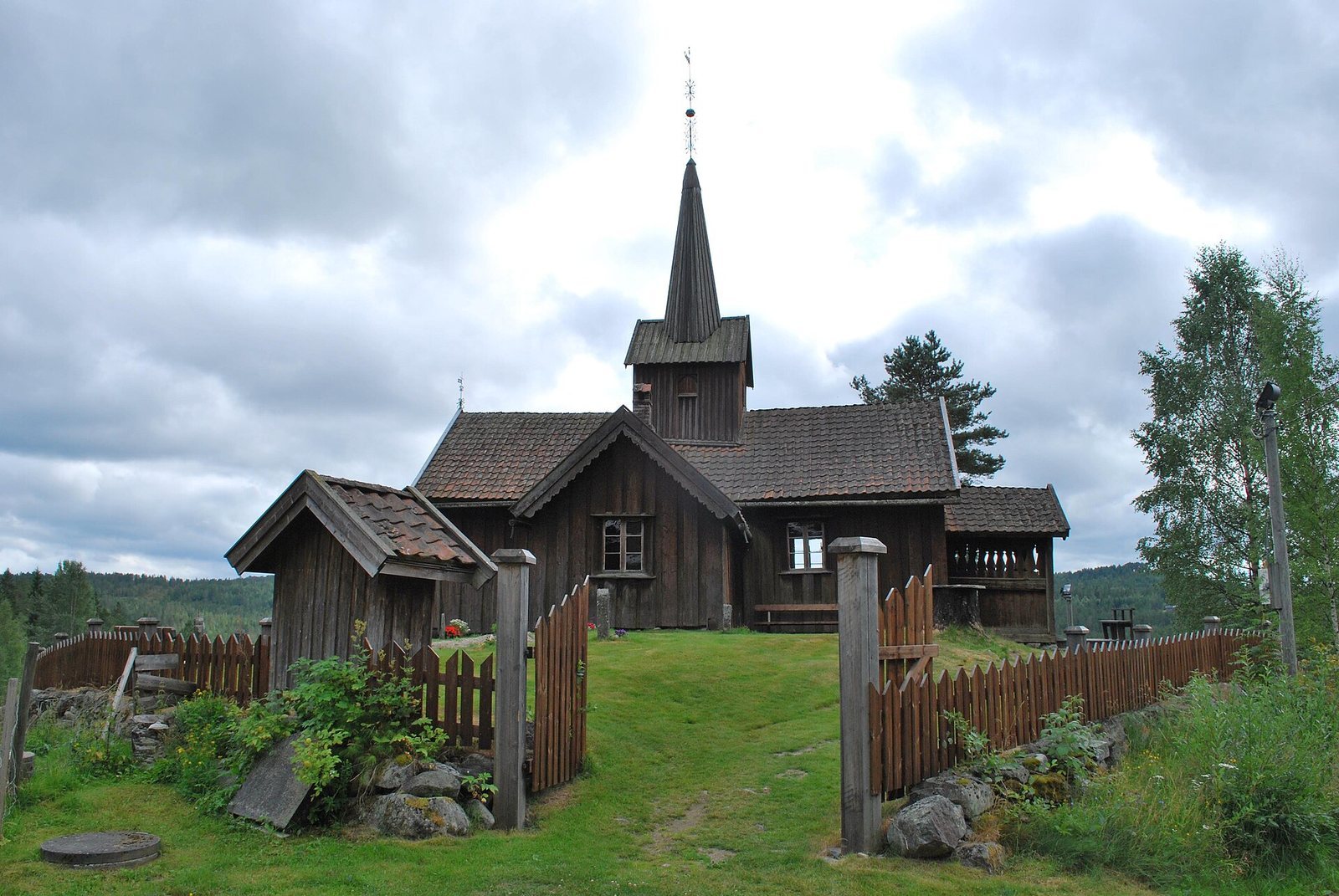
Vatnås church is a small, cross-shaped timber church in Solumsmoen, Norway, generally dated to about 1660. A medieval church stood on the site before it. The present church is affiliated with the Church of Norway, the country’s Lutheran church, and belongs to Eiker deanery in Tunsberg diocese. It is associated with Sigdal parish, while residents of Grenskogen have been regarded as its owners.
The medieval church and its successor
In the 1590s, Bishop Jens Nilssøn described the medieval church as ruined and isolated in the forest. Its bells and ornaments had been removed long before. Writing in 1745, parish priest Bernhoft said that the church had stood deserted from the Black Death, the plague pandemic that devastated populations across Europe in the mid-fourteenth century, until the new church was completed. He gave 1655 as the completion date.
The construction date of the present church is not certain, and it is generally placed around 1660. A priest may have held a service there as early as 1663. The building relied on gifts rather than regular income from tithes or invested funds. Contributions from visitors helped pay for its construction and upkeep. It remains uncertain whether the church ever had its own priest and parsonage.
Religious traditions and worship
The church stands near Olav’s Spring, whose water was believed to have healing properties. Its location is one reason the church is probably dedicated to St Olaf, or Olaf II Haraldsson, the Norwegian king associated with the country’s Christianization and venerated as a saint after his death. Local tradition tells that Olaf became lost while hunting with his party as he sought to Christianize the people of Sigdal. He promised to build a church if he found water. When a spring emerged from the rock, he saw what appeared to be a small church of pure gold and ordered a church built there, naming it Vatnås.
The medieval church held several worship services each year. The new building initially had one annual service, later increased to two, one around Christmas and another near midsummer. During the nineteenth century, the yearly total rose first to four and then to six. Midsummer worship remains popular, sometimes drawing hundreds of people, with others gathering in the churchyard. Visitors’ gifts continued to support maintenance until they declined during the nineteenth century, when residents of Grenskogen took responsibility for upkeep.
Alterations and restoration
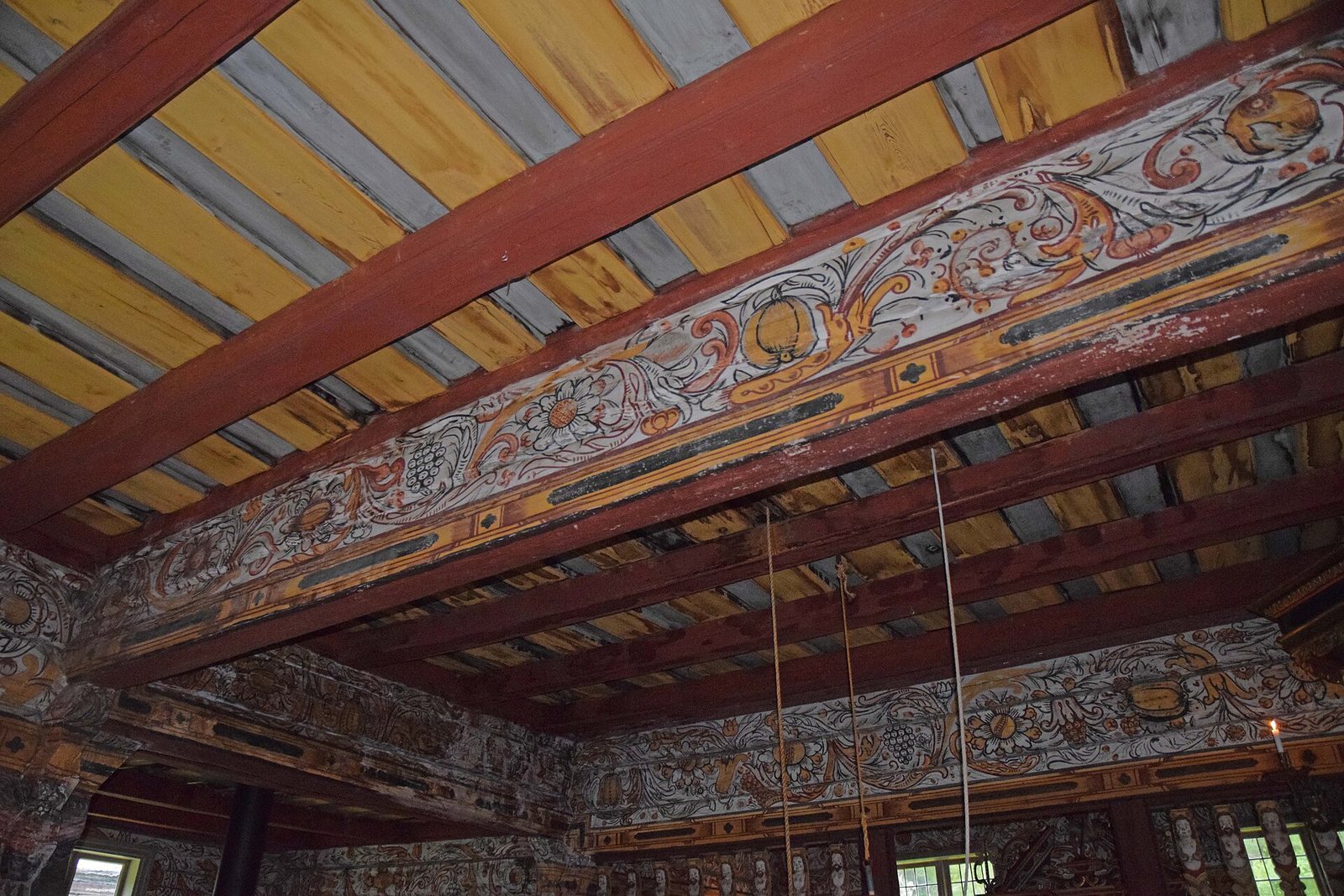
The church was altered in the 1870s, including substantial changes to its interior in 1875. In 1947–48, architect and art historian Finn Krafft led a restoration intended to recover the building’s earlier appearance. The work returned some furnishings to earlier positions and restored earlier colours to painted elements.
A relic casket was once thought to have come from the medieval church and to have remained on its altar as late as 1745. It was said to have been sent to Copenhagen in 1748. The connection with Vatnås is now doubted; the attribution is thought to have arisen when archaeologist Ingvald Undset confused objects while cataloguing Norwegian antiquities in foreign museums.
Remains
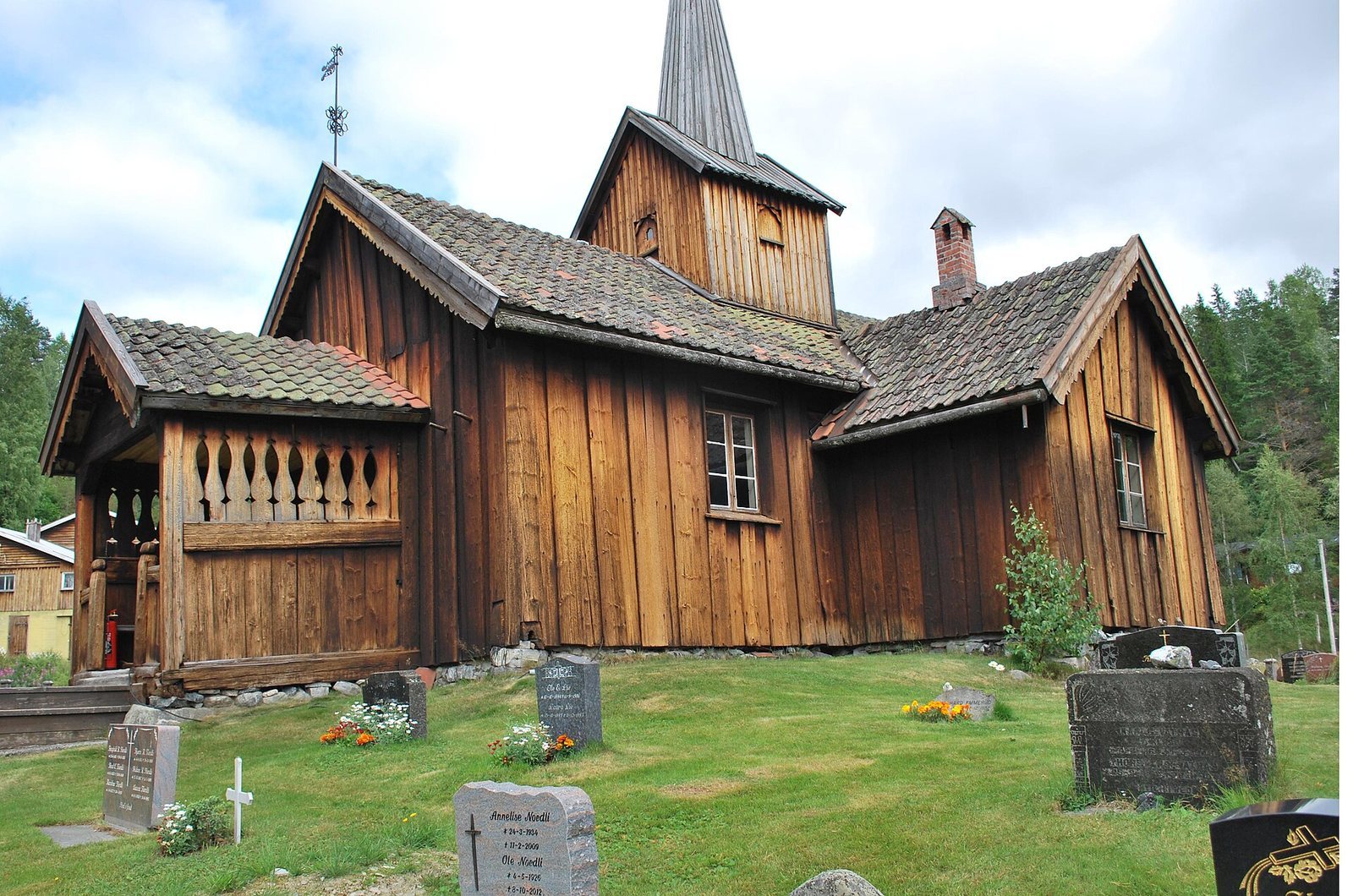
The church is a compact timber building with a cross-shaped plan and an associated cemetery. It has seating for 125 people. The choir occupies the eastern arm and measures about 6 metres wide by 3.5 metres long externally. The western arm is about 6 metres wide and 5 metres long; the lower, narrower cross-arms, or transepts, are about 4 metres wide and 3 metres long. Round logs form the walls, hewn flat on the interior, while profiled, tarred boards cover their exterior. The decoration and furnishings give the building a distinctly seventeenth-century character.
Exterior and openings
West entrance
The original west portal has a horizontal lintel and measures 205 by 89 centimetres. Its threshold is formed by the wall sill, and an open porch stands in front. The west door, measuring 213 by 97 centimetres, consists of three joined planks, each 4 centimetres thick. Its exterior, originally tarred, is faced with profiled panels arranged in a herringbone pattern and fastened with large-headed iron nails set in a decorative arrangement. A bronze animal-head ring, 11 centimetres in diameter, bears the date “1-6-81” and an inscription stating that AOS Lofve gave the ring to Vatnås church.
Choir doorway and windows
The choir’s south portal is made in the same manner as the west entrance and measures about 145 by 70 centimetres. Its bronze animal-head ring is 9 centimetres across and is of the same type as one at Eggedal church. The choir has two windows on its eastern side, while the other arms have windows facing north and south. One window in each arm probably belongs to the original arrangement. Two window frames have leaded panes and measure about 47 by 69 centimetres.
Gable and roof ornaments
Wrought-iron ornamental spires on the west gable and eastern choir gable carry the dates 1672 and 1688, respectively, and the initials SHS and TGSS. The roof turret has a finial with a ball and forged ornaments dated 1672. Its initials, NNG, identify Niels Nielsen Griis.
Interior furnishings
Altarpiece
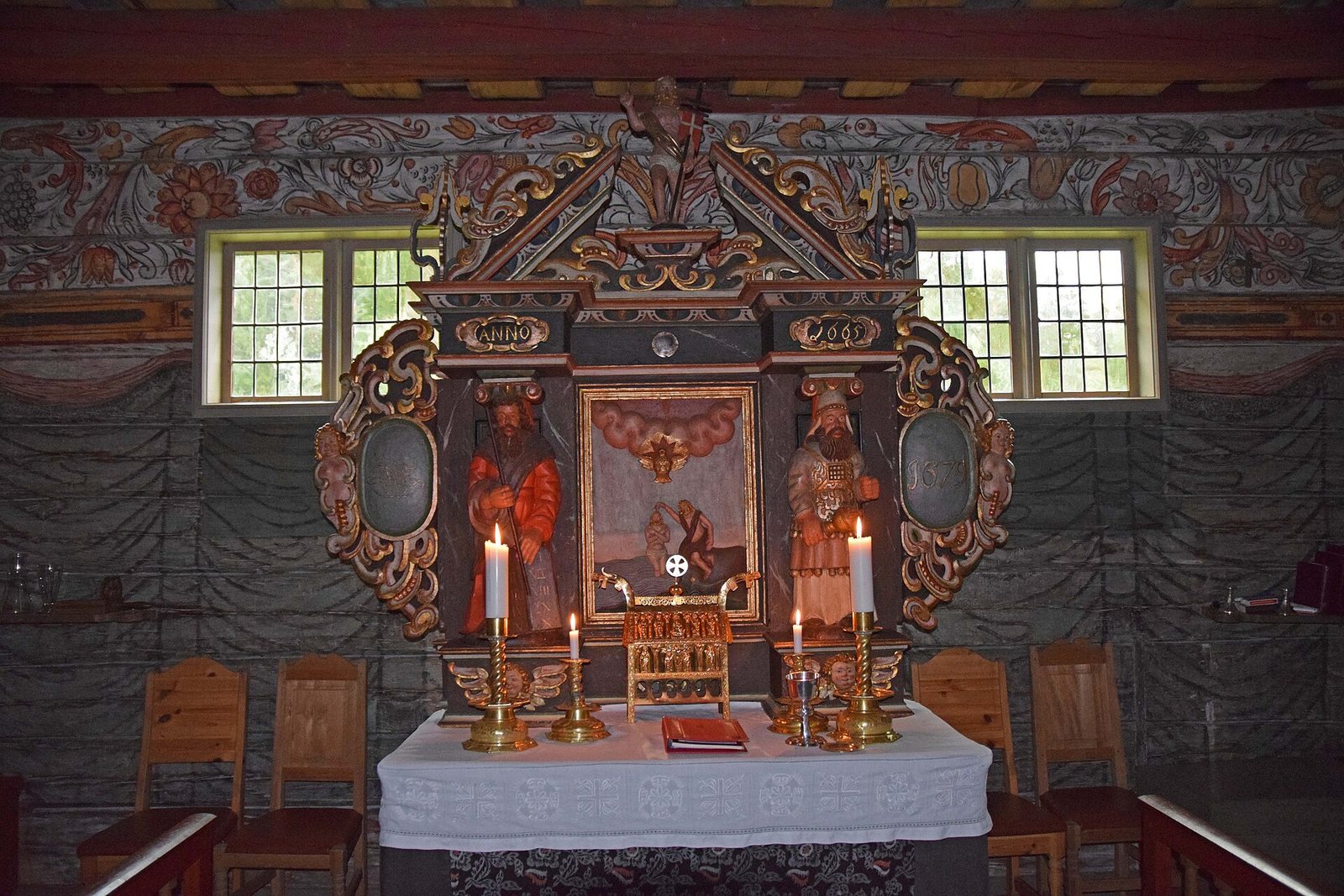
The altarpiece’s carved work is dated 1665 and attributed to Norwegian woodcarver Christopher Ridder. Moses stands on the left and Aaron on the right, with a relief of Christ’s baptism in the central panel. Above, a carved figure of the risen Christ holds a cross banner in his left hand. The wings have large oval medallions and angel figures at their outer edges. Painted decoration dates to 1679: the left wing carries the mirror monogram NG, identified as Niels Griis, and the right bears the year. The base, or predella, carries a Christ monogram.
A small round silver plaque fixed to the altarpiece’s horizontal upper beam is inscribed with a message meaning “God is my refuge,” followed by “Maren Pouels Datter L. S. 1677.” The donor was probably from Laag in Lyngdal.
Altar and chancel screen
The altar has moulded framework, with two panels on its front and one on each short side. Its mouldings match those of the chancel screen, the barrier separating the choir from the rest of the church. The leather-covered kneeler probably dates from the nineteenth century. The altar rail was made in 1875 and has a leather-covered kneeling rest. During the 1947–48 restoration, the dismantled chancel screen was put back in place.
Pulpit and font
The carved and joined pulpit is probably contemporary with the altarpiece, as is its canopy. Its painted decoration is thought to date from 1796, the year given on the reading desk in an inscription identifying TPS of Bringe Eie, from Flesberg. The 1947–48 restoration returned the pulpit to the south side after it had been moved north. The octagonal wooden font dates from the seventeenth century and is 88 centimetres high and 59 centimetres in diameter. Painted lettering on four sides of its bowl records 1685 alongside the initials NE and MIDS.
Medieval objects and paintings
The relic casket, now in the National Museum’s medieval collection in Copenhagen, is made of pine covered with gilded copper. Raised and chased metalwork decorates its surface. The casket is shaped like a small house with a gabled roof; openwork vine ornament runs along the ridge, and dragon heads with open mouths and large tongues decorate the gables. It measures 46 centimetres high, 52 centimetres long and 12 centimetres wide. A copy stands on the church altar. A crucifix measuring 83 by 83 centimetres, probably from the early fourteenth century, is believed to have come from the medieval church. The church also has a canvas painting of the Crucifixion.
Lighting, bells and other furnishings
A wrought-iron chandelier measures about 40 centimetres across. Beside the pulpit is an S-shaped iron lamp arm, 70 centimetres long, engraved with leaf motifs and bearing the painted text “OAS IAD 1694.” One of the church’s two bells is medieval and measures 29.5 centimetres in diameter and about 28 centimetres high. The other is 59 centimetres in diameter and about 49 centimetres high; its inscription names Niels Niels Griis and Dietrich Kessler and gives the date 1687. Two twisted-iron clasps known as Olav clasps hang from the bell ropes. Four hourglasses stand by the pulpit, and a clerk’s bench is in the choir. The organ was made by the Norwegian Organ and Harmonium Factory.
Olav’s Spring
The spring associated with St Olaf lies near the church. Marks in the surrounding rock are identified in local tradition as hoofprints made by Olaf’s horse.