Vari Cave: An Ancient Greek Sanctuary on Mount Hymettus
Site at a Glance
- Popularity
- Medium
- Country
- Greece
- Primary era
- Classical
- Eras represented
- Iron Age, Classical
- Civilizations
- Ancient Greek
- Site type
- Religious
- Remains
- Sanctuary
On this page9 sections
History
Vari Cave, on a southern spur of Mount Hymettus in Greece, was a sanctuary dedicated to Apollo, Pan, and the Nymphs. Apollo was a major Greek god, Pan was associated with wild and pastoral life, and Nymphs were female nature spirits. The cave was one of five near ancient Athens linked with the worship of Pan. Inscriptions name Archedemus of Thera as its builder. He described himself as a nympholept, a person believed inspired or possessed by Nymphs, and said a Nymph had guided his work. The earliest inscription dates to about the beginning of the sixth century BC, and the sanctuary was in continuous use from about 600 to 150 BC.
Early worship and later traditions
No ancient writer securely identifies Vari Cave. Claudius Aelianus, a Roman-era author, and Olympiodorus the Younger, a late-antique philosopher, may have described a place on Mount Hymettus where Plato’s parents, Ariston and Perictione, took the infant philosopher and made offerings to Pan, Apollo, the Muses, and the Nymphs. The identification is uncertain, and the reliability of both writers has been questioned. The deities in their story, however, closely match those worshipped at the cave.
Roman-period use
After its early period of use, the cave appears to have stood unused for four or five centuries. It was occupied again around the reign of Constantine the Great (307–337), a Roman emperor. Its popularity grew under his son Constantius II (337–361), and people still visited during the reign of Arcadius (395–408). The sanctuary was abandoned by about the sixth century. Late Roman Platonists, philosophers who developed ideas associated with Plato, may also have visited because of the cave’s possible connection with him.
Christian-designed Roman oil lamps and the deliberate destruction of pagan sculptures led excavators to propose that the cave had become a Christian shrine. Later interpretations have questioned this conclusion: the lamps alone do not establish Christian worship, since pagans elsewhere used Christian-designed lamps when other kinds were unavailable. The cave may instead have allowed traditional religious practice to continue discreetly after imperial persecution of pagans began. If Christians destroyed the sculptures, that damage may have taken place toward the end of the cave’s Roman-period reoccupation.
Rediscovery and excavation
Richard Chandler visited the cave in 1765, and other scholars followed during the nineteenth century. The American School of Classical Studies at Athens excavated it in 1901–1902 under the direction of archaeologist Charles Heald Weller.
Remains
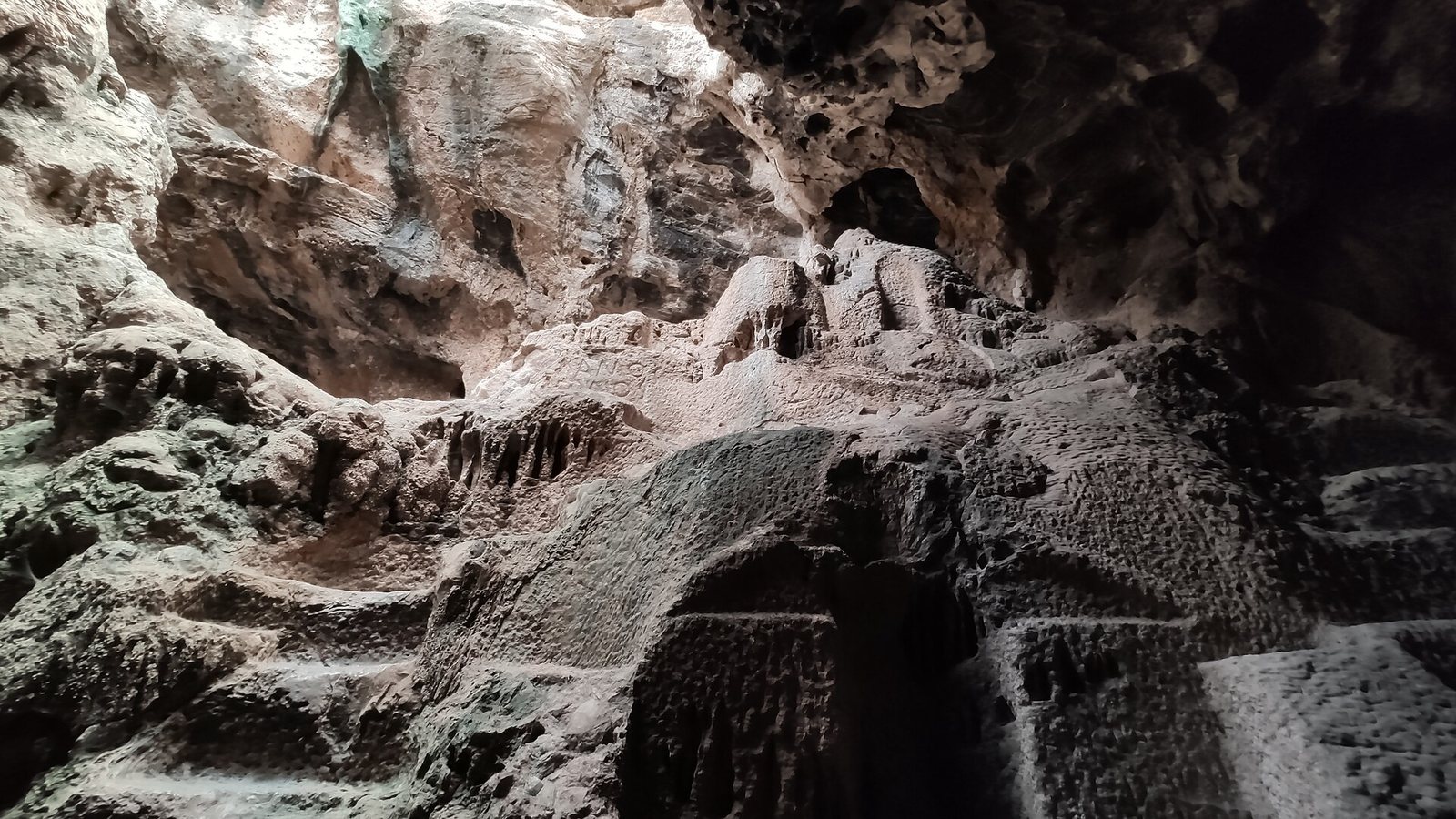
The sanctuary occupies a cave near the summit of Mount Hymettus, at an elevation of about 300 metres. Its natural chambers are divided by a large rock partition formed by stalactites. The cave’s carved steps, shrines, and reliefs are cut into the rock.
Entrance and main chamber
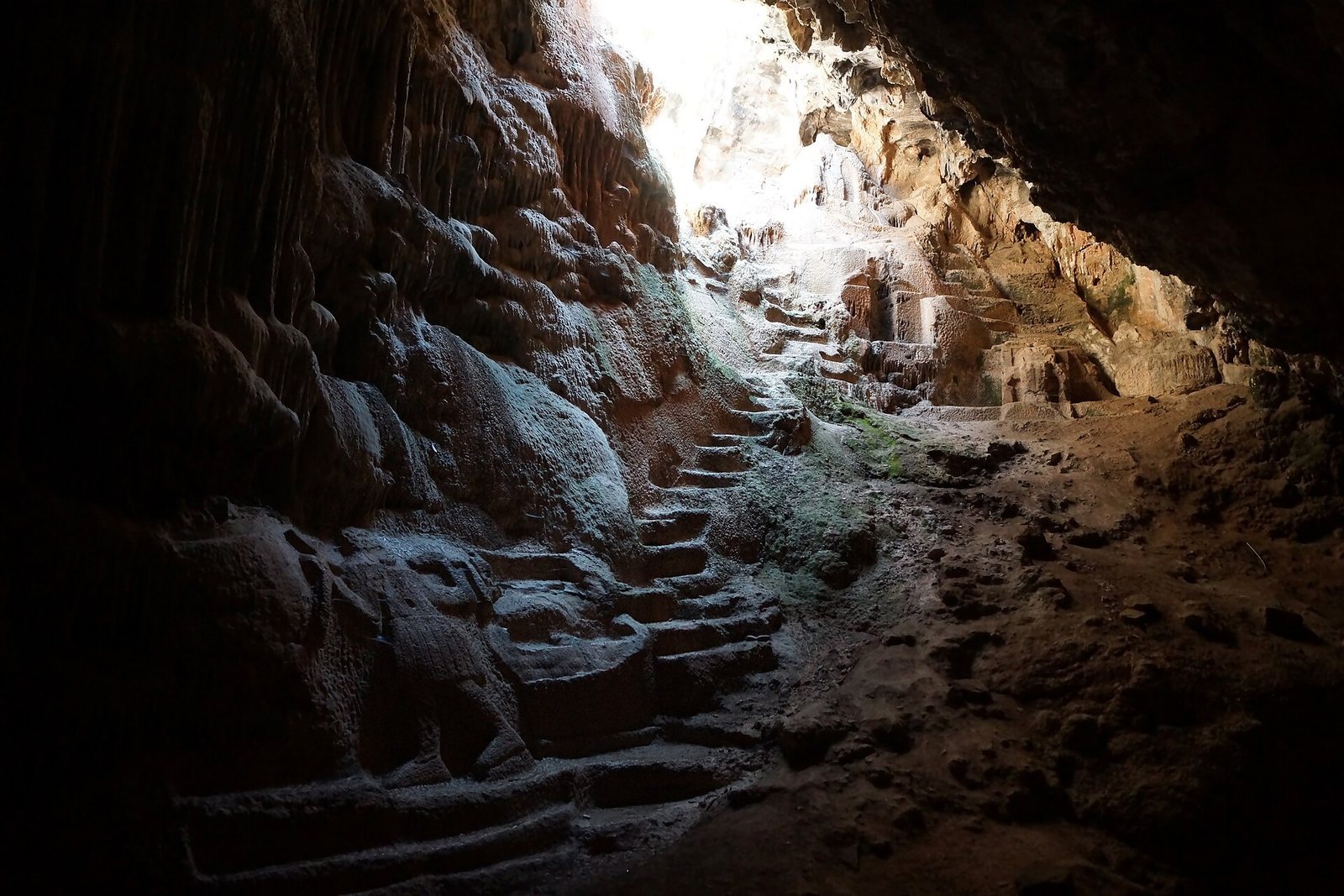
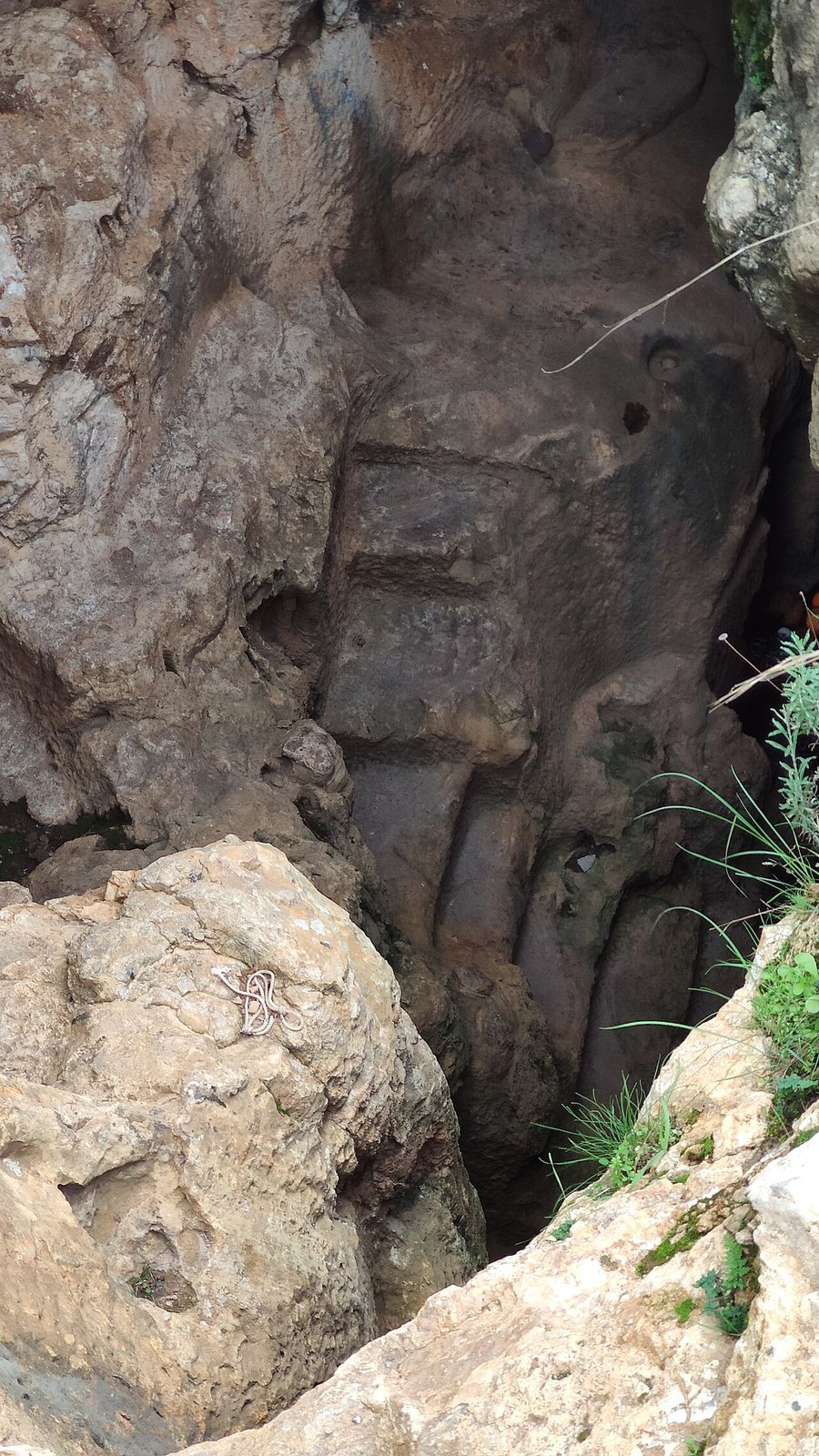
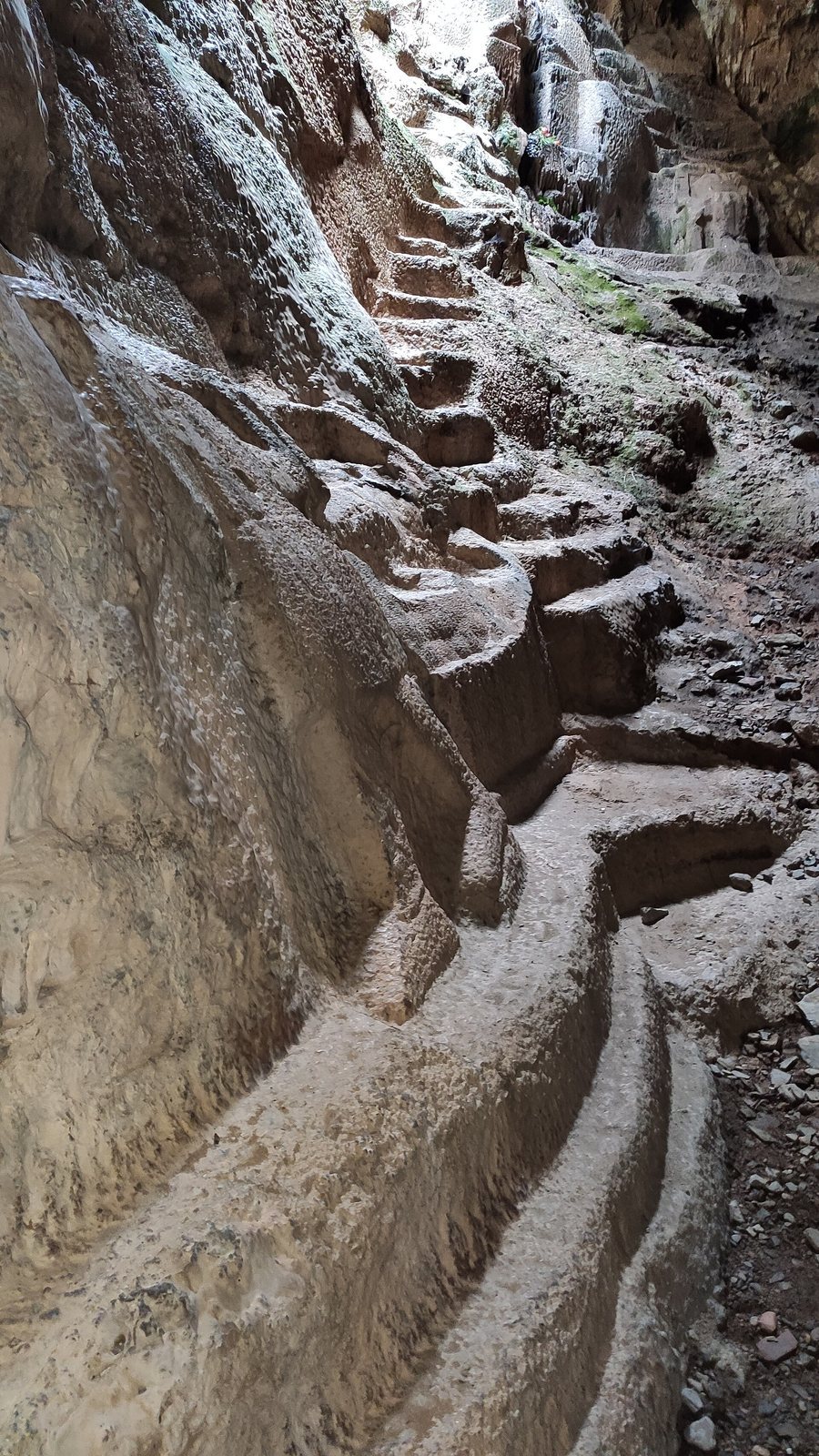
The entrance drops almost vertically and measures about 5 by 2 metres. Around a dozen steps cut into the western ridge lead down toward a landing, though the steps are now broken. From the landing, the cave divides into two visible parts. The main chamber measures about 26 metres long, 23 metres wide, and 10 metres high, with carved steps and reliefs on its walls.
Pan shrine
An ancient stairway climbs from the landing to the upper side of the larger chamber, where the cave’s largest shrine is dedicated to Pan. The rock-cut shrine roughly imitates a temple front. Its carved features include a headless seated figure, thought to represent a goddess, and an object resembling an omphalos, a sacred object that symbolized the world’s center. Both are too damaged for confident identification.
Apollo shrine and Archedemus carving
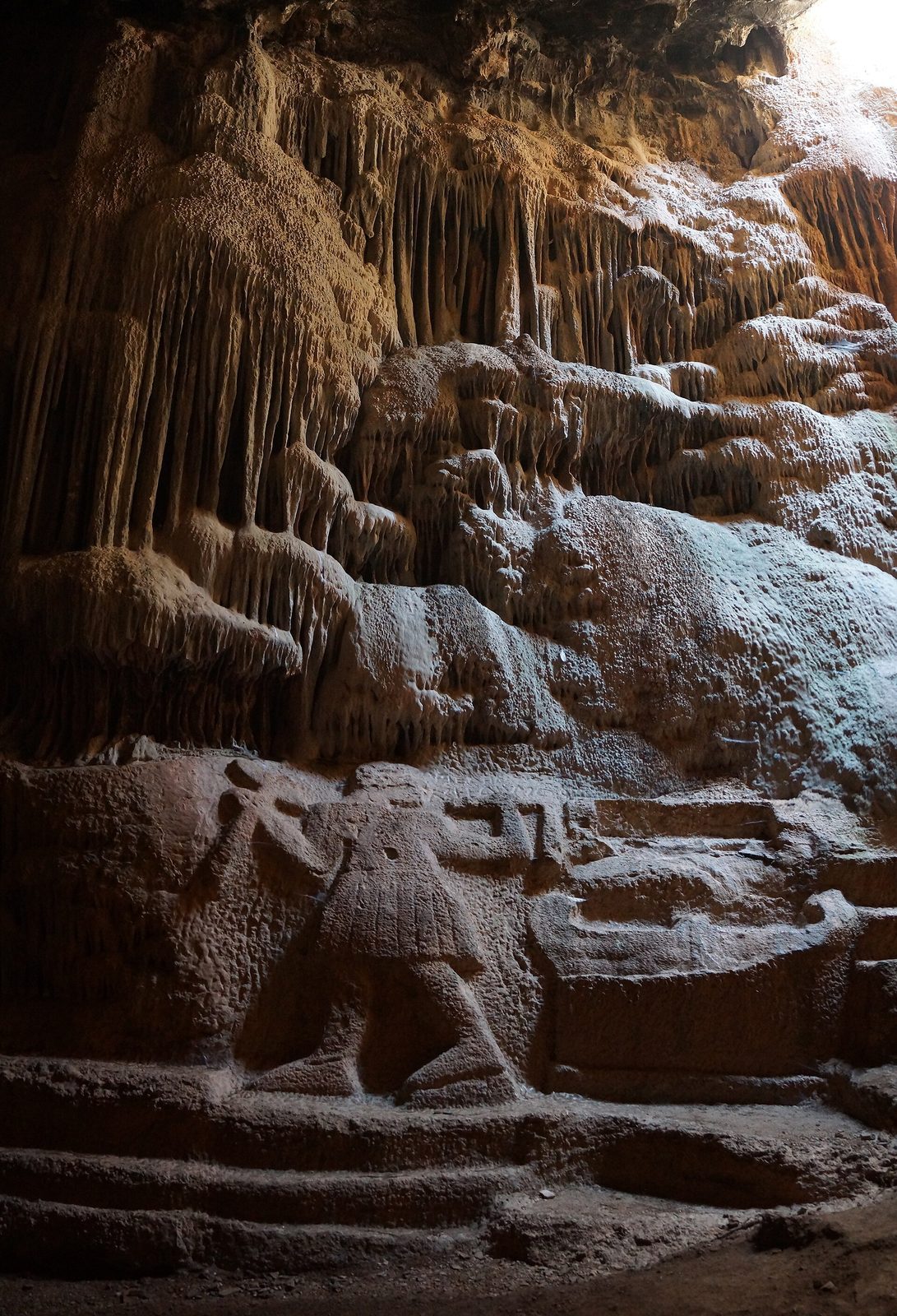
Further steps descend toward a rock-cut shrine dedicated to Apollo Hersus. Beside it is a carving of Archedemus with stonecutting tools, including a chisel and hammer. He wears a pleated garment resembling the fustanella, traditionally worn by men in parts of Greece and the Balkans. A cross-shaped mark on his right shoulder remains unexplained.
Excavated finds
Marble votive tablets from the cave are now exhibited at the National Archaeological Museum in Athens. Excavations also recovered hundreds of lamps and reliefs; two reliefs are displayed in the museum’s sculpture collection.