Titchikha Hillfort: A Ninth-Century Fortified Settlement in Russia
Site at a Glance
- Popularity
- Medium
- Country
- Russia
- Primary era
- Medieval
- Eras represented
- Medieval
- Civilizations
- Unclassified
- Site type
- Military
- Remains
- Fort
History
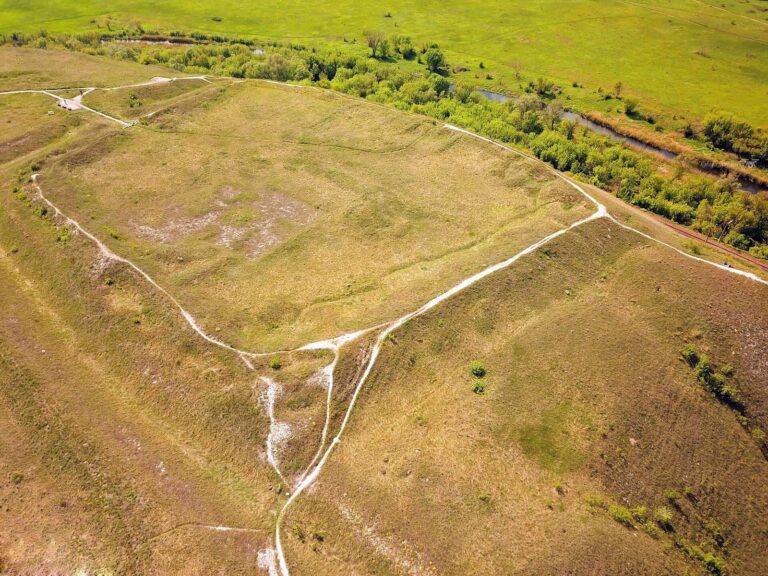
Titchikha hillfort is a fortified settlement near Titchikha farmstead in Liski District, Voronezh Region, Russia. Founded in the ninth century, it is associated with the Borshchevo archaeological culture, a classification based on material remains rather than proof of a specific ethnic identity. It is among the most extensively studied Borshchevo sites and has been described as the largest monument associated with the hypothesized Don Slavs, a proposed Slavic population of the Don region.
An archaeological expedition led by Voronezh archaeologist A. N. Moskalenko excavated Titchikha from 1954 to 1962. Archaeologist I. I. Lyapushkin had combined the Romny and Borshchevo cultures into a single Romny-Borshchevo culture. After studying the hillfort, Moskalenko agreed with Lyapushkin on many questions concerning the Don Slavs, including the relationship between the two cultures.
Moskalenko and A. Z. Vinnikov interpreted Titchikha as a settlement of the proposed Don Slavs and linked it to Vantit, a place-name mentioned in Arabic and Khazar sources. The Khazars were a medieval people who established a polity in the steppe north of the Caucasus. Russia designates Titchikha as a cultural heritage monument of federal significance.
Remains
The archaeological site comprises a hillfort and an adjacent settlement. The hillfort’s defenses combined an earth rampart with log walls.
Pottery attributed to the Saltovo-Mayaki culture was found at the hillfort, along with traces of Alan-Ossetian writing.