Ursuline Monastery in Olomouc: A Former Dominican Convent
Site at a Glance
- Popularity
- Low
- Country
- Czechia
- Primary era
- Medieval
- Eras represented
- Medieval, Early Modern, Modern
- Civilizations
- Austria-Hungary, Habsburg, Holy Roman Empire, Margraviate of Moravia
- Site type
- Religious
- Remains
- Monastery
On this page12 sections
History
The Ursuline monastery in Olomouc, Czechia, is a Catholic convent complex founded for Dominican nuns in 1287 and later occupied by the Ursulines. Built during the second half of the 13th century, it became one of the oldest Dominican nunneries in Bohemia and Moravia.
Dominican foundation and medieval development
The Dominican nuns, members of a Catholic religious order, belonged to the order’s Polish province and to the Archdiocese of Olomouc, a Catholic jurisdiction headed by an archbishop. In 1287, Vojslava of Deblín transferred to the monastery patronage rights over the church in Vážany. Early support also involved King Wenceslaus II of Bohemia, other members of the royal family, noble families, the pope, and the Bishop of Olomouc. Religious and secular authorities disputed control of the institution.
The community prospered in its early decades and reached its greatest development in the 14th century. Many Dominican nunneries disappeared after the Hussite Wars, 15th-century conflicts associated with the religious movement inspired by Jan Hus, but the Olomouc community continued.
Suppression and Ursuline occupation
Several major fires affected the complex. It was also damaged during the Thirty Years’ War, a major European conflict fought from 1618 to 1648, and in Olomouc’s 1709 city fire. Reconstruction in the mid-18th century formed part of a wider Baroque transformation.
In 1782, Emperor Joseph II, a Habsburg ruler whose reforms included suppressing some religious institutions, closed the Dominican monastery. The stated justification was that the nuns had not cared for the sick or promoted education. The Ursulines, a Catholic order historically associated with educating girls, then took over and remained until 1951. They adapted the buildings for their needs, adding classrooms and student housing. Changes that included work on the church interior were completed before the mid-19th century.
Secular use and preservation
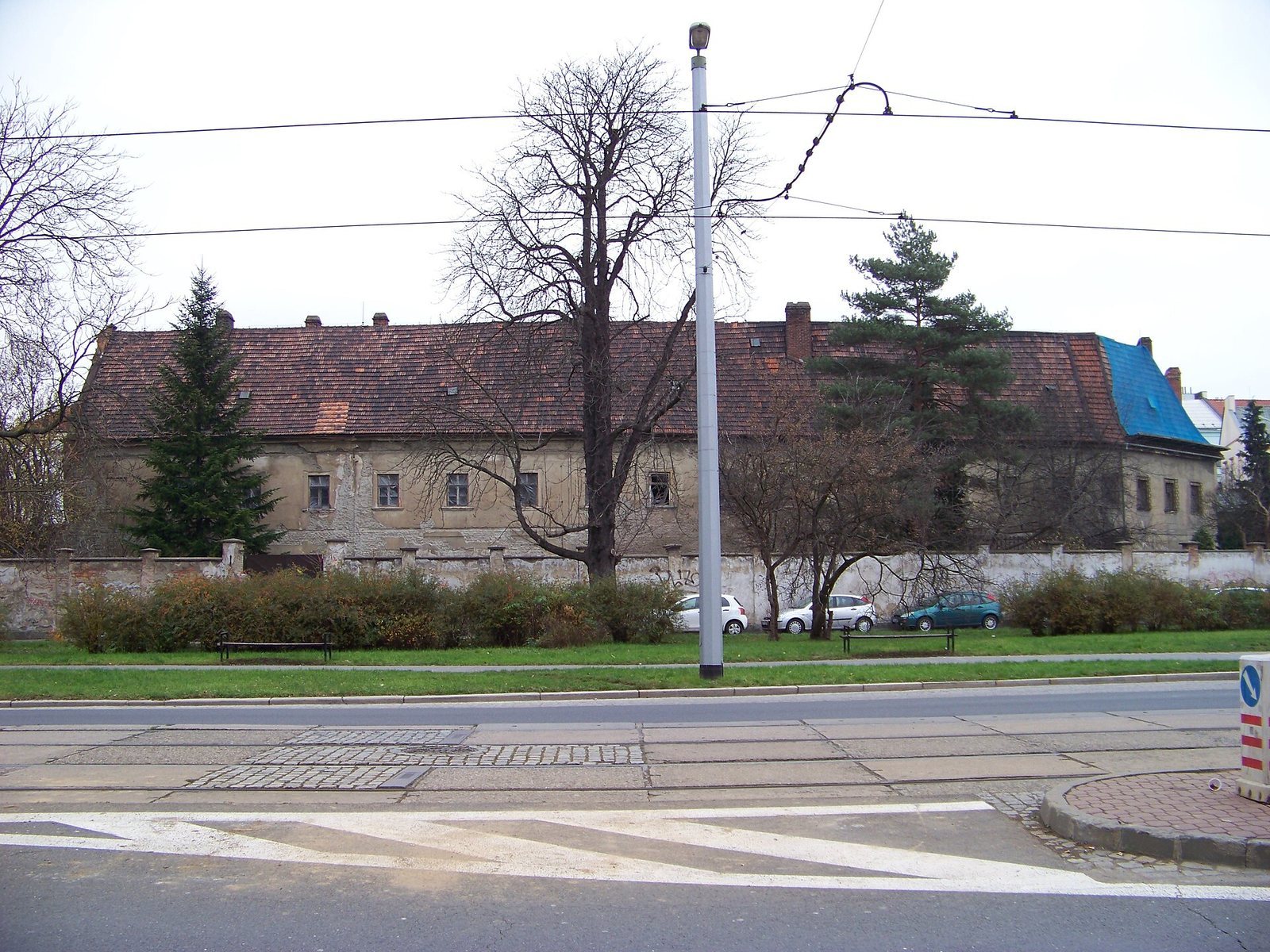
A school was built in the southern part of the complex in 1905. In 1951, the Czechoslovak Communist regime suppressed the Ursuline community, and the monastery was put to secular use, later serving as a museum. Architectural, art-historical, and historical research has examined the complex, but study remains incomplete. Its buildings are now mostly unused and await reconstruction and preservation.
Remains
The monastery occupies the foot of Michalský Hill at the southern end of Olomouc’s historic centre, in the area of today’s Lower Square. It lies between the city wall and housing near the marketplace. Houses now enclose the complex, and modern multi-storey buildings conceal parts of it.
Overall layout
The buildings are arranged around four courts, with a garden beside the western wall. The plan is asymmetrical: the complex developed in stages rather than following a single unified design.
Church of St. Catherine of Alexandria
Gothic structure
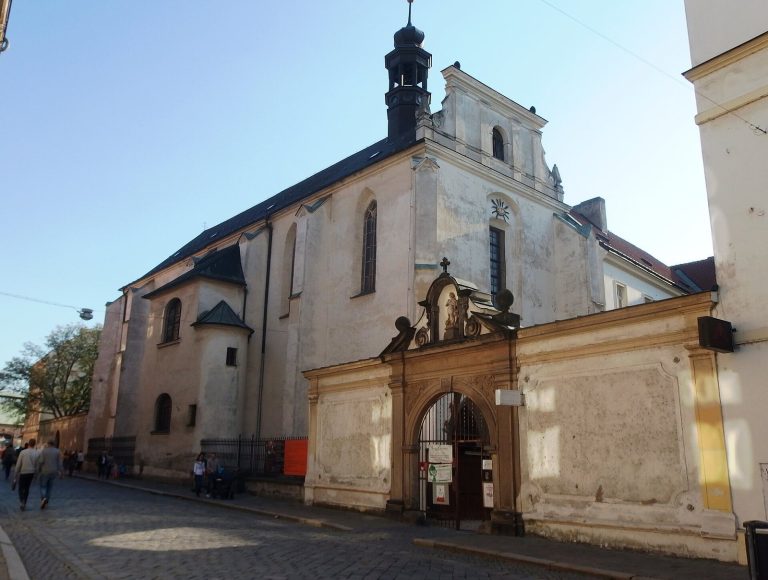
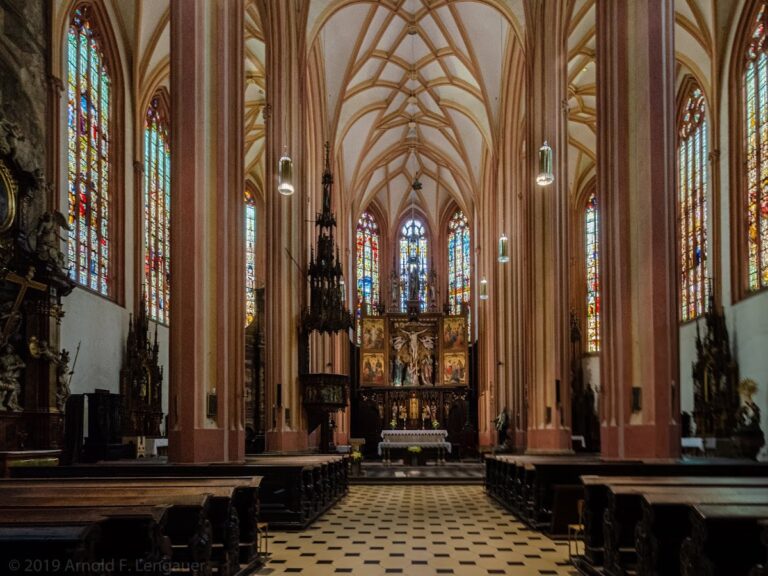
At the complex’s centre stands the church of St. Catherine of Alexandria, one of Olomouc’s oldest and most distinctive Gothic buildings. It is the best-preserved building in the monastery. Surviving details include portals, vaulting in the long sanctuary, a projecting cornice at the windows, a shortened support column with capitals, and tracery windows, whose stonework divides the openings into patterns.
Interior and decorative remains
Fragments of the church’s older interior and altar survive, along with several Baroque sculptures, images of saints and icons, and Neo-Gothic furniture. Fragments of artistic and handcrafted decoration also remain on the monastery walls.
Other buildings and architectural fabric
Convent buildings and school
Other parts of the complex contain medieval and Renaissance building fabric, much of it overlaid during Baroque reconstruction. The buildings reflect several architectural styles, and the southern section includes a school building.
Architectural details
Surveys have brought to light previously unknown architectural details in the oldest structure.