Hauterive Castle: A Medieval Manor and Estate in France
Site at a Glance
- Popularity
- High
- Country
- France
- Primary era
- Early Modern
- Eras represented
- Medieval, Early Modern, Modern
- Civilizations
- French
- Site type
- Domestic
- Remains
- Castle
On this page8 sections
History
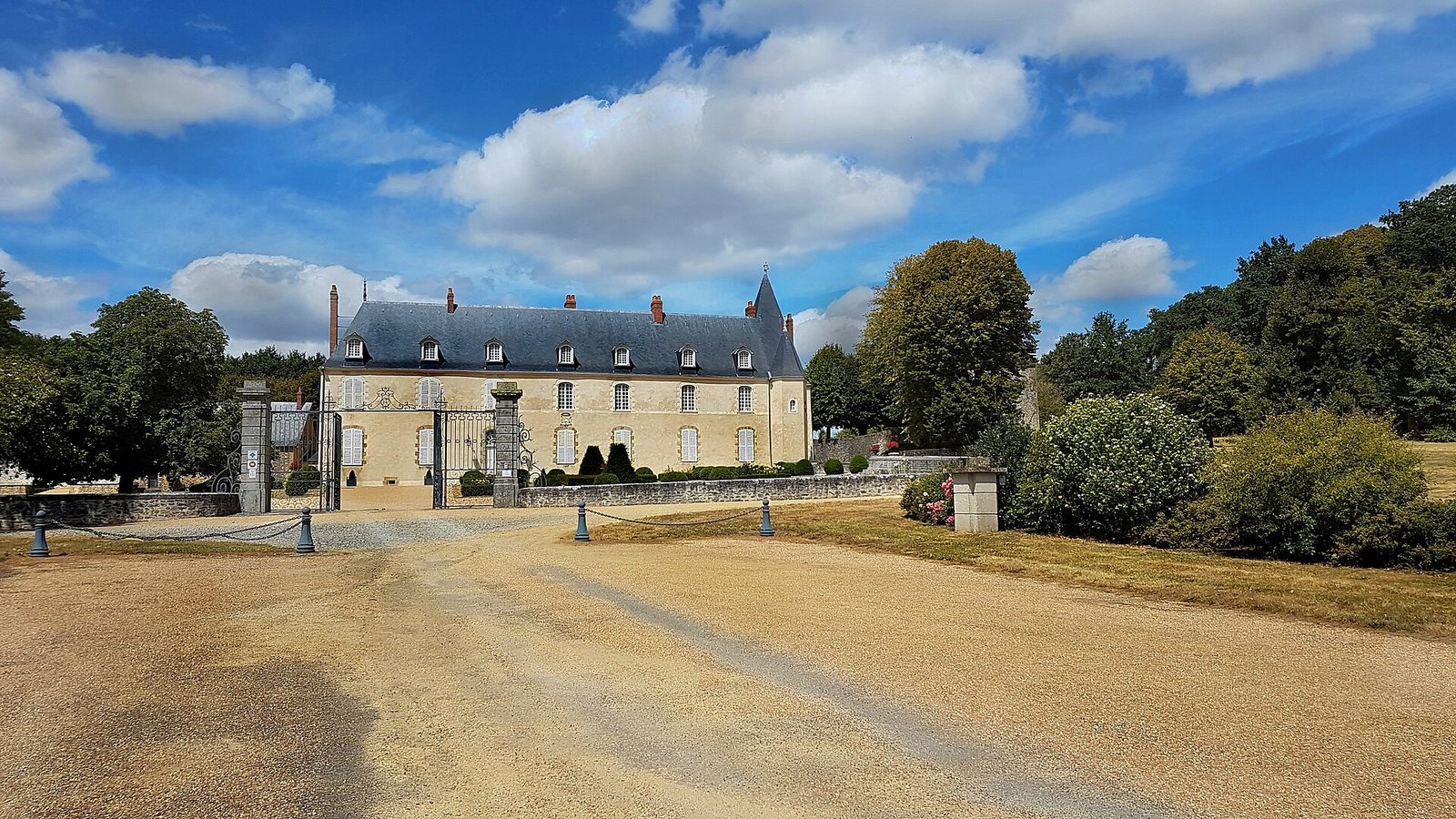
Hauterive Castle is an estate in Argentré, France, whose origins lie in a thirteenth-century manor. Its history encompasses feudal service, several noble family successions, and major rebuilding under the Berset family in the late eighteenth century.
Medieval manor and noble families
In September 1209, Guillaume d’Hauterives acknowledged that he held the manor and its dependencies from Savary d’Anthenaise, lord of Bazougers, in return for mounted military service. From the thirteenth century, the lord of Hauterive also had the right to use timber throughout the Forest of Frageu. In 1485, the count of Laval remitted the lord’s feudal obligations.
Ownership passed from the lord of Bazougers to the lord of Villiers, and then by inheritance to the du Bellay family. The estate later became linked to the Hautefort family through marriage: René du Bellay II married Catherine Le Voyer de Lignerolles. In 1508, Thomine de Villiers, lady of La Flotte and Hauterive, founded a chapel. The lords of Hauterive also held several rights at Saint-Vénérand Church in Laval. By 1533, the castle was described as a lodging and considered a secure refuge.
From the seventeenth century to the Revolution
During unrest in 1616, valuables were brought to the castle from Saint-Céneré for safekeeping. In 1737, a descendant sold the estate to Jean-Baptiste Berset, a merchant from Laval. Jean-Marie Berset later became lord of Argentré after building the castle and its present chapel as part of a late-eighteenth-century rebuilding of the manor. The Berset family held extensive lands and was described as Laval’s wealthiest family. The widow Berset de Vaufleury was represented at the 1789 Assembly of the Nobility of Maine, a regional gathering of nobles before the Revolution.
During the Reign of Terror, a period of mass arrests and executions during the French Revolution, members of the Berset d’Hauterives family were arrested. Madame d’Hauterives was taken into custody at the castle, and her husband later joined her. After Laval was evacuated, the family was transferred with other prisoners to Chartres. On 15 June 1795, a Republican detachment led by Gency arrived with a group of women to expel the Chouans, royalist insurgents active in western France, and plunder the castle. The attackers took linens, furniture, doors, windows, and wood paneling.
Later ownership and restoration
From September 1802, the bishop of Le Mans permitted Monsieur Berset to have Mass celebrated in the chapel. The estate later passed by inheritance through the Fitzgerald and Montalembert families, whose members were buried in the chapel. Actor Thibault de Montalembert spent part of his childhood at the castle. It was sold in 1975 and later passed through the hands of Italian owners; in the 1980s it belonged to printer Yves Floc’h (1932–1991).
The castle remained unoccupied from 1980 until 2007, suffering extensive pillaging and deterioration. Roxanne and Patrick Matton acquired it on 21 February 2007, and regional artisans carried out restoration work. The Mattons sold the estate to Melissa and Richard Bryant in 2025. Hauterive Castle has been listed as a historic monument since 13 March 1989.
Remains
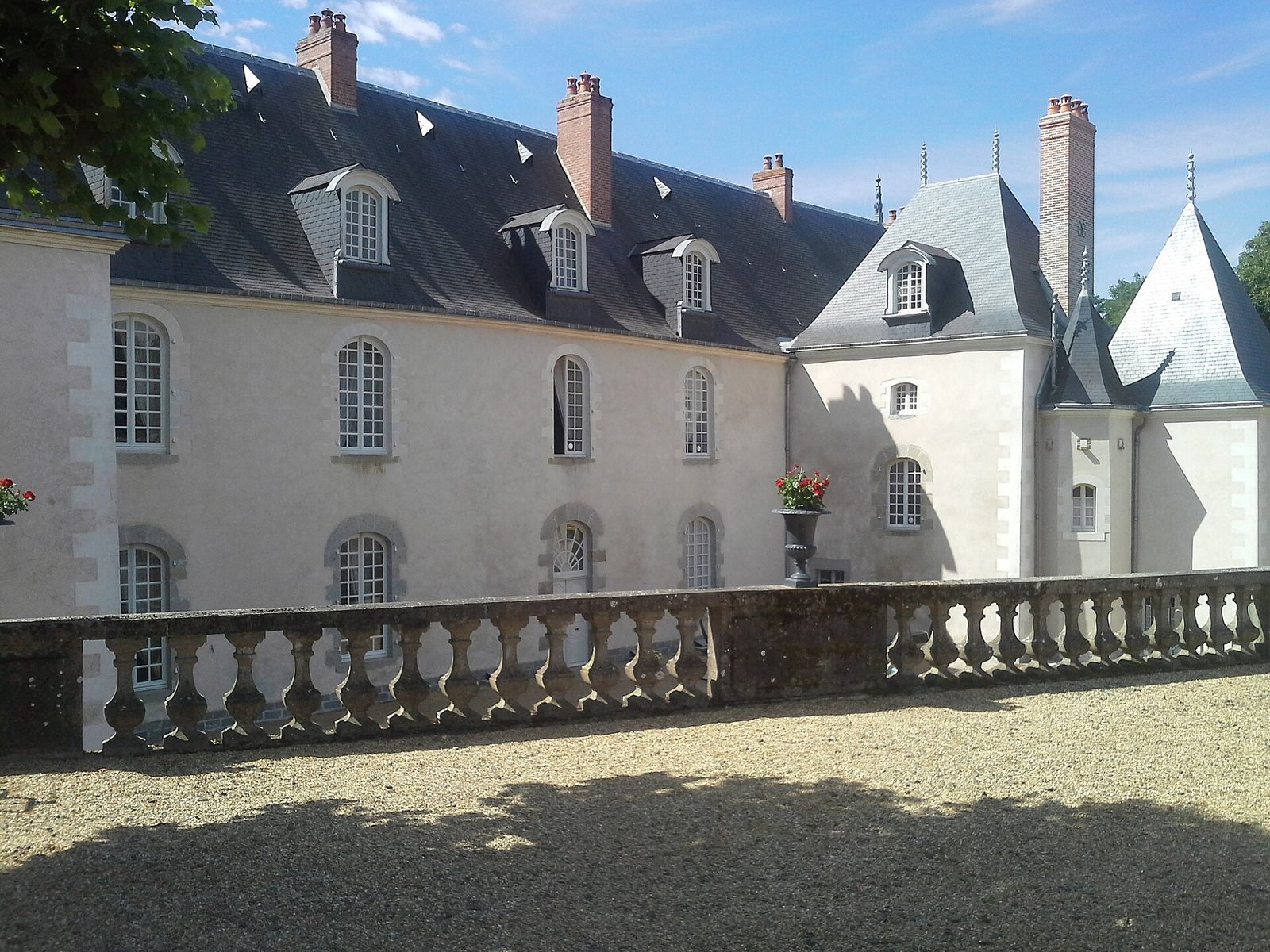
The estate brings together the castle and chapel with enclosed grounds, formal garden features, woodland, and service buildings. The surviving complex includes elements shaped by the late-eighteenth-century rebuilding and by later changes to the manor.
Castle and chapel
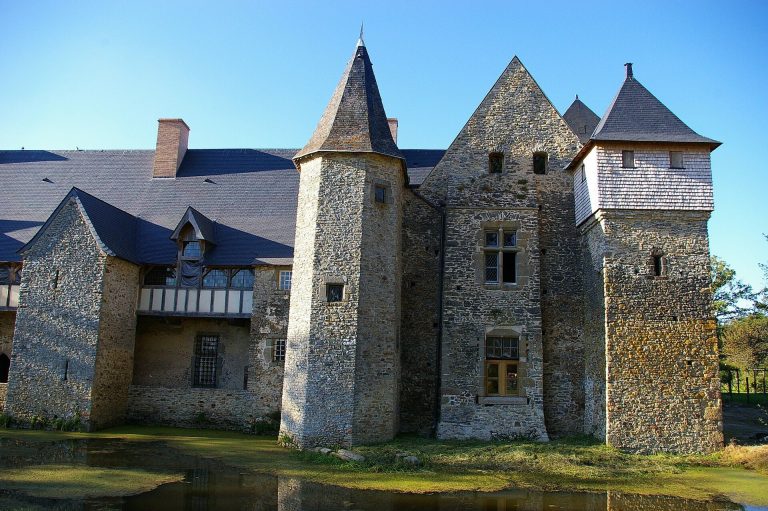
The manor was enlarged with corbelled turrets, formed by projecting courses of masonry that support an upper structure. The turrets were substantially altered in the nineteenth century, and a corner tower was demolished in the late twentieth century. The chapel built during the rebuilding is topped by a small, slender bellcote, a roof structure that houses a bell. Inside the castle, the great hall contains tapestries bearing the arms of the Hautefort family.
Enclosure and estate buildings
The estate includes an enclosure with moats and retaining walls, as well as a garden enclosure with a tower. Other buildings and structures include a dovecote, a structure for housing pigeons, whose façades and roofs form part of the estate, an isolated eighteenth-century pavilion, stables, and outbuildings.
Garden and park
The grounds include formal terraces, woodland, and broad avenues through the park. A monumental well and a large, intricate sundial stand in the garden; the small movable dial associated with the sundial is completely deteriorated. A statue of the Virgin Mary on a granite column was erected in 1762 at the meeting point of two paths through the woodland. An eighteenth-century labyrinth near the lower courtyard still existed around 1940.