Fort 50a “Lasówka”: An Interfield Armored Fort in Kraków


Site at a Glance
- Rating
- 4.1
- Popularity
- Low
- Country
- Poland
- Primary era
- Modern
- External website
- Open
- Eras represented
- Modern
- Civilizations
- Habsburg
- Site type
- Military
- Remains
- Fort
On this page6 sections
History
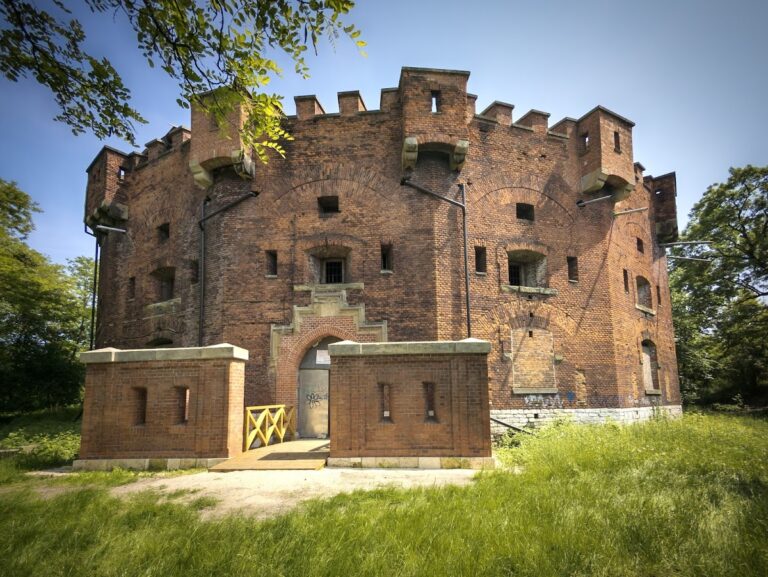
Fort 50a “Lasówka” is an interfield armored fort in Kraków, Poland, built between 1896 and 1899 as part of the Austro-Hungarian Kraków Fortress. An interfield fort was a detached defensive work positioned between larger fortifications, while an armored fort used protected armored structures or weapons. The fort belonged to the fortress’s VII fortified area and defended the southern bank of the Vistula, particularly the river valley, embankments, and a nearby crossing.
Construction and military role
Completed in 1899, Fort 50a formed part of the defensive system protecting Kraków and its approaches. Its position also enabled it to provide fire support to Fort 49½a “Mogiła” on the northern bank of the Vistula. Because water from the river filled its moats, the fort became known as a water fort. This arrangement was among several unusual solutions incorporated into its design.
Reuse and deterioration
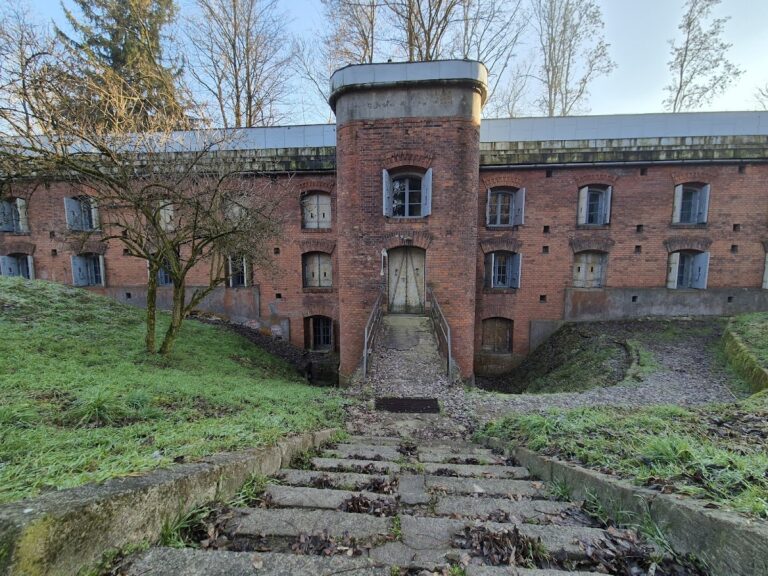
The fort was vandalized during the political upheaval of 1918–1919 and was later repaired. In the interwar period it briefly served as storage space, but severe dampness made that use impractical. It was used again as a warehouse during the Second World War. After the war, civil authorities took control of the fort. From the 1960s onward, continued vandalism and deterioration affected the structure, while warehouses added by the Barwa cooperative damaged its original form. In 2001, the fort’s armored shutters and original firing-step balustrade were stolen.
Fort 50a “Lasówka” was entered in Kraków’s heritage register as a protected historic monument under number A-973 on 1 April 1994.
Remains
Fortification and setting
The fort stands beside Golikówka Street on the southern bank of the Vistula in Kraków. It was constructed as an interfield armored fort, with defensive spaces organized around moats supplied with water from the river. The water-filled moats and armored elements formed part of the fort’s distinctive defensive arrangement.
Altered structure
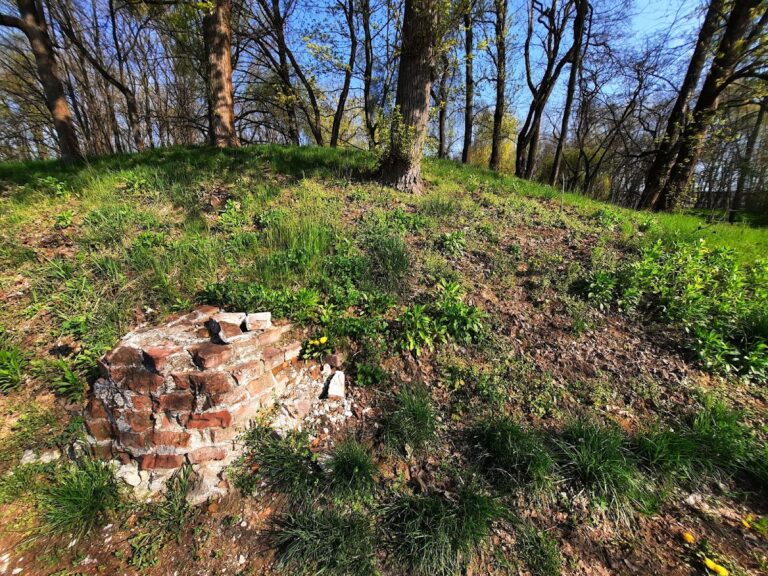
Later warehouse additions changed the fort’s original shape, and the structure subsequently fell into ruin. The theft of the armored shutters and the firing-step balustrade in 2001 further altered the surviving fabric of the fort.
Nearby sites