Unteres Schloss Gamburg: A Historic Estate in Baden-Württemberg
Site at a Glance
- Popularity
- Low
- Country
- Germany
- Primary era
- Early Modern
- Eras represented
- Early Modern
- Civilizations
- Holy Roman Empire
- Site type
- Domestic
- Remains
- Manor House
On this page5 sections
History
Unteres Schloss Gamburg is a historic estate in Gamburg, near Werbach in Baden-Württemberg, Germany. Johann Kuchenmeister built it in 1522 as a Freihof, an estate with certain legal or fiscal privileges that varied by place and period.
Foundation and changes of ownership
In 1546, Eberhard Rüdt von Collenberg acquired the Electorate of Mainz’s holdings in Gamburg, including Unteres Schloss and Burg Gamburg. Rüdt was an official, court steward, and councillor of the Electorate of Mainz, an ecclesiastical principality of the Holy Roman Empire ruled by archbishops who held the rank of prince-elector. After his death in 1568, his estate was divided by lot among his three sons-in-law. Eberhard Brendel von Homburg received Unteres Schloss, while Dietrich von Hattstein received Burg Gamburg.
Facing financial difficulties, Dietrich exchanged Burg Gamburg with Brendel in 1570, receiving Unteres Schloss and making a compensatory payment. After Dietrich died without male heirs, the estate passed to his son-in-law Franz von Kronenberg in the early seventeenth century. Through marriage and inheritance it later came into the possession of Johann Schweickhard von und zu Sickingen, around 1650. In 1686, Johann’s son Franz sold it to the Juliusspital, a historic hospital and charitable foundation in Würzburg.
The eighteenth-century main house
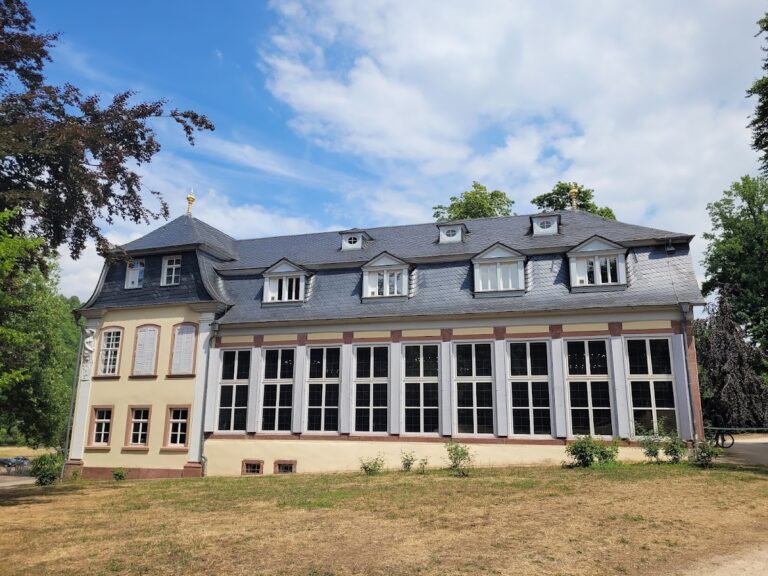
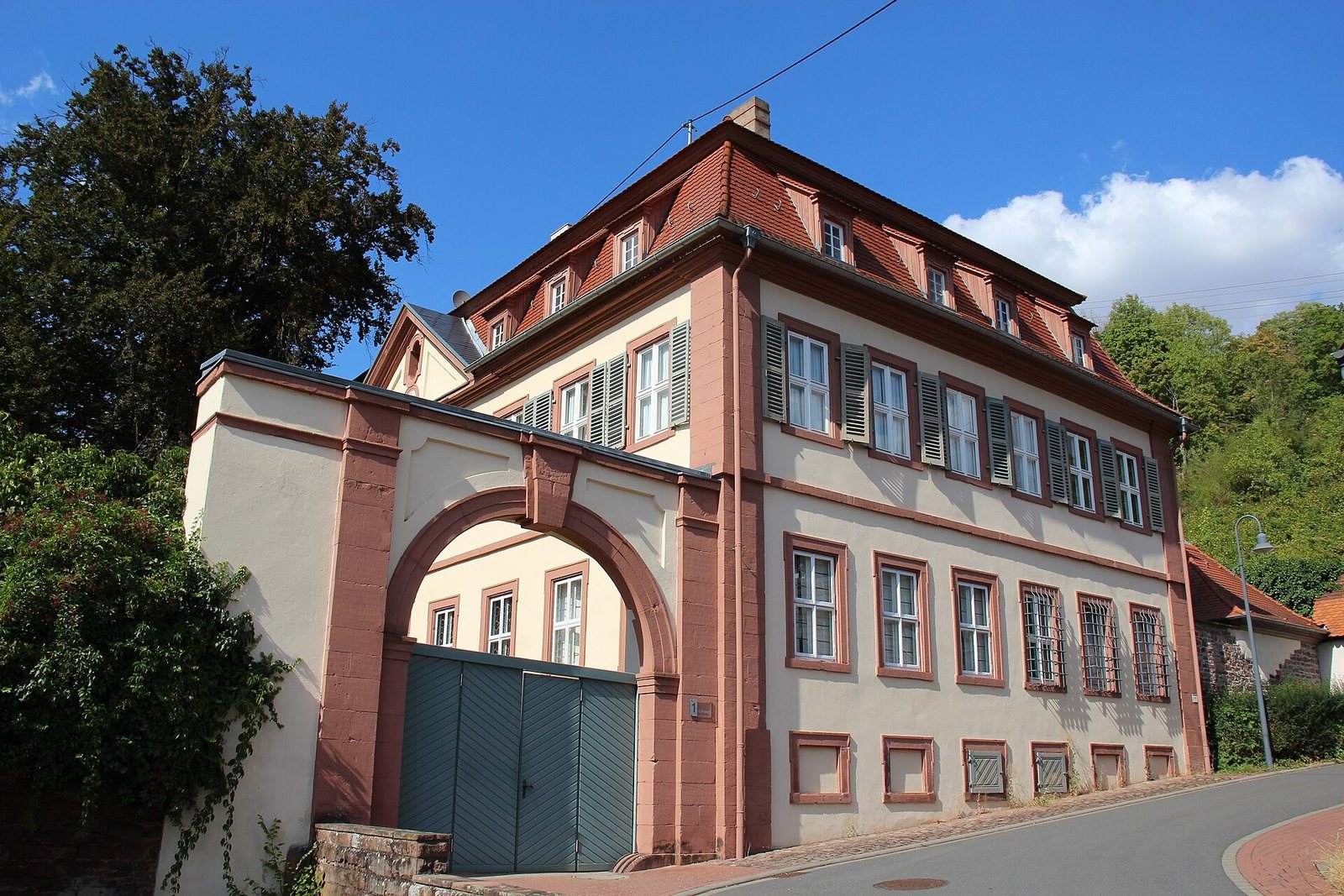
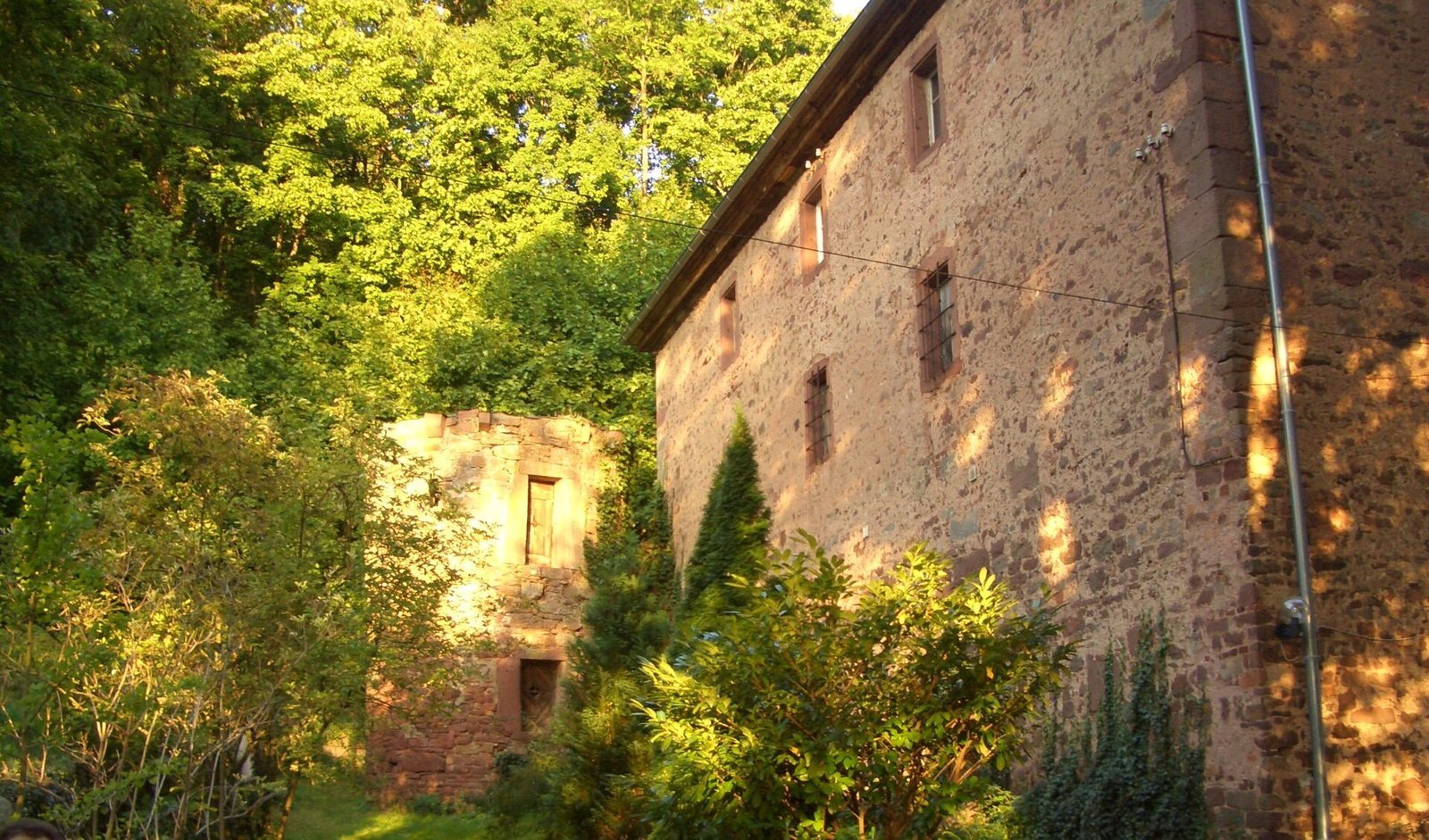
Work on the main house began with the laying of its foundation stone in 1751, and the building was completed in 1753. The Juliusspital retained ownership until 1877, when Privy Councillor Carl Jakob Christian Adolf Gerhardt bought the property from its foundation.
Gerhardt and later residents
Gerhardt, a noted physician in Würzburg and Jena who later headed a clinic at the Charité, a major university hospital in Berlin, had the estate renovated for holidays and relaxation with family and friends. It subsequently remained with his descendants. Joseph Archer Crowe, Gerhardt’s brother-in-law and friend, also lived at the estate. Crowe was a British journalist and diplomat who painted views of Gamburg.
Remains
The estate stands at the edge of the Tauber Valley, along Hohlweg. Its name, meaning Lower Castle, distinguishes it from Burg Gamburg, also known as the Oberes Schloss (Upper Castle). The main house is also referred to as the administrative building or estate office.