Tynnelsö Castle: A Medieval Stronghold and Renaissance Residence
Site at a Glance
- Rating
- 3
- Popularity
- Very Low
- Country
- Sweden
- Primary era
- Early Modern
- External website
- Open
- Eras represented
- Medieval, Early Modern, Modern
- Civilizations
- Swedish
- Site type
- Domestic
- Remains
- Castle
On this page11 sections
History
Medieval episcopal castle
Tynnelsö Castle is a castle on Tynnelsö Island in Lake Mälaren, Sweden, built and expanded by bishops of the Diocese of Strängnäs. Its earliest parts probably date to the 13th century. Tynnelsö is mentioned in 1282, and from 1306 its estate belonged to the diocese, a Christian church jurisdiction led by a bishop. During Bishop Thomas Simonsson’s time, the castle was described as one of Sweden’s strongest. Bishop Sigge kept a garrison of 100 men there during his tenure from 1449 to 1463.
The castle grew through the Middle Ages. Tradition attributes its first fortified stone house to Bishop Tord Gunnarsson near the end of the 14th century. Bishop Kort Rogge built a substantial stone house in the 1490s, forming the lower storeys. A 1443 inventory lists 24 firearms, including several cannon, 52 crossbows, a barrel of crossbow bolts, and 150 cannonballs.
War and royal residence
In 1522, forces led by Gustav Vasa captured the castle during the Swedish War of Liberation, the conflict in which his forces challenged Danish rule in Sweden. His army used it as an arsenal, a store for weapons and ammunition, during the siege of Stockholm. Gustav transferred the castle to the Swedish Crown in 1527 and stayed there on several occasions. His queen, Margareta Leijonhufvud, died at Tynnelsö on 26 August 1551.
After Gustav’s death in 1560, his widow Katarina Stenbock held the castle for a time. Duke Charles, Gustav’s son and later King Charles IX, took possession in 1568 and began turning the medieval castle into a Renaissance residence. He gave it to his first wife, Maria of Simmern, in 1579 and to his second wife, Christina of Holstein-Gottorp, in 1592. The estate later passed to Duke Charles Philip and Queen Dowager Maria Eleonora of Brandenburg. In 1636, Queen Christina gave it to her cousin Elizabeth Carlsdotter Gyllenhielm, daughter of Charles Philip.
Private ownership and abandonment
Following the Swedish Reduction, the Crown’s recovery of lands previously granted to other holders, the estate returned to the Crown in 1681. Queen Dowager Hedvig Eleonora held it from 1685 to 1715. In 1725, the castle was given to Anna Woynarowska as partial repayment of a debt. She was its last resident. The sale of the copper roof contributed to the building’s deterioration, and she left Sweden in 1748.
By the middle of the 18th century, the estate had passed to the counts of Hessenstein, sons of Frederick I and Hedvig Taube. Councillor Simon Bernhard Hebbe bought it in 1779 and, in 1800, made it a family entail for his son Philip Bernhard Hebbe. An entail restricted how an estate could be transferred, commonly keeping it within a family. Philip’s son Johan Philip inherited the property. His heir, Philip Boström, a cavalry officer who later became a county governor, considered plans to restore and modernize the castle but rejected them. A new manor was built in 1876, and the old castle was left abandoned.
Protection and preservation
After Philip Boström’s death in 1908, the estate passed to his eldest son, Erland Boström. Erland gave the castle to the Royal Swedish Academy of Letters, History and Antiquities in 1940. It became a protected historic building in 1966 and passed to the National Property Board in 1987; the Board took over its management in 2015. The former deer park became a nature reserve and joined the European Union’s Natura 2000 network of protected areas in 2003.
Remains
The castle
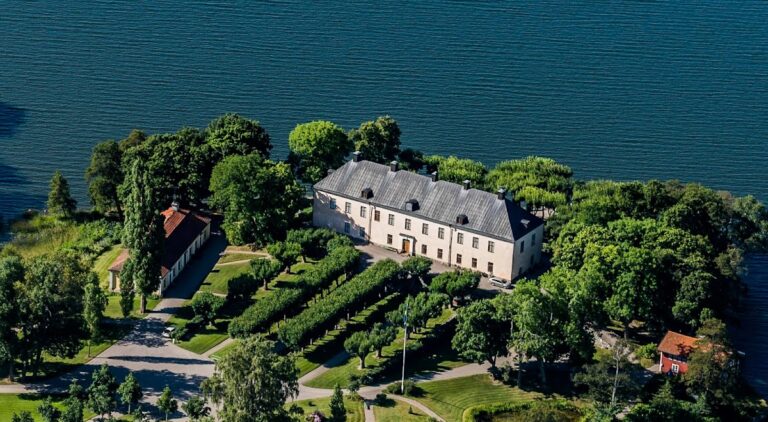
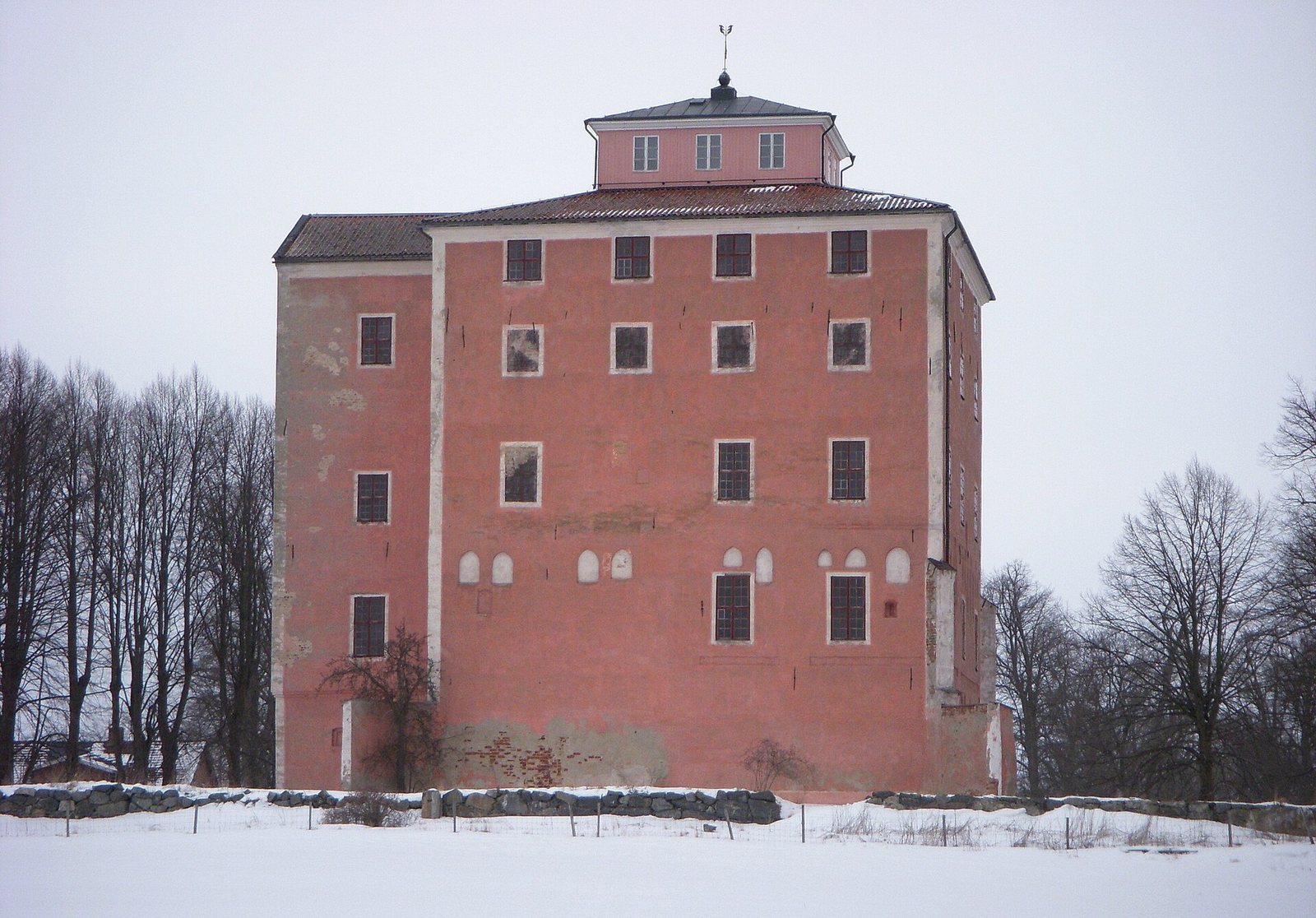
The castle stands on Tynnelsö Island, while most of the estate’s land lies across the strait on Selaön. Its five-storey brick structure combines a medieval core with later Renaissance additions.
Medieval core and plan
The oldest parts of the building are farthest from the water. The original brick structure was rectangular, and additions made through the Middle Ages gave it an almost square plan by the 15th century. The first storey and a tower preserve medieval fabric.
Renaissance and later features
Major rebuilding under Duke Charles around 1580–1590 raised the building, added two tower-shaped extensions, introduced Renaissance gables, and renewed the interior. The gables were later removed, probably during Anna Woynarowska’s ownership. The north side has a high staircase and a stepped window; the exterior repairs of 1826–1827 included installation of a new staircase and demolition of the southern extension.
The main portal, added in the early 17th century, survives, as do decorative paintings and two carved sandstone fireplace surrounds from the same period. A roof lantern added in the early 19th century gives the castle its present roofline. The lantern has been restored, and the foundations have been overhauled.
Grounds and orchard
Lime trees planted around the castle and garden remain, though they have grown wild. The former deer park surrounds the castle. Detailed plans of Johan Philip Hebbe’s orchard show numbered fruit trees linked to a catalogue, with garden walks named for members of the royal family, bishops, and other figures. The plans also mark a nursery and shrub nursery, nearby streams and vineyards, and other buildings, including a gardener’s house.
Tynnelsö Farm
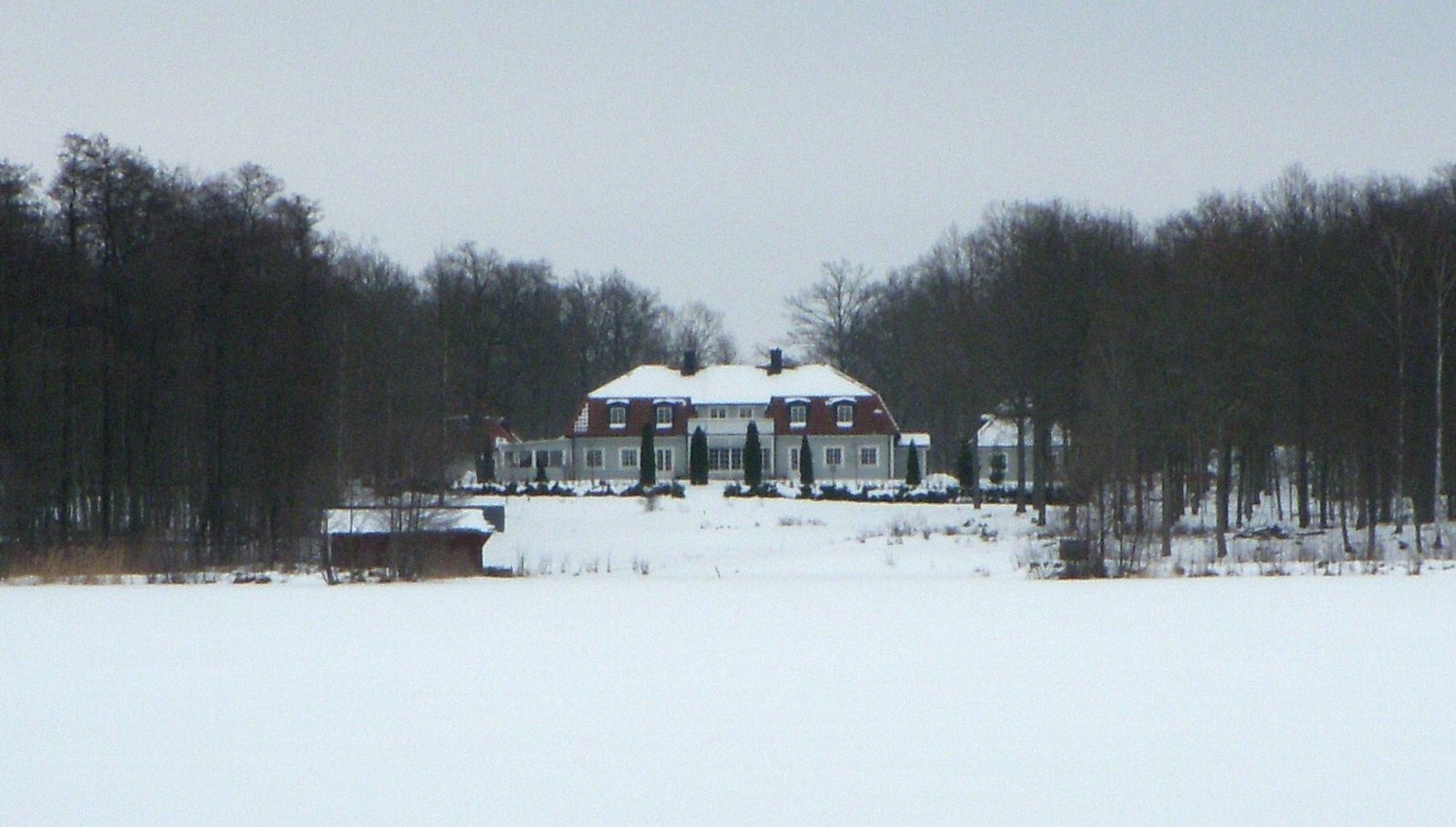
Across the strait on Selaön stands the estate manor, a stone building in the Italian villa style now known as Tynnelsö Farm.