Twelve Apostles Stone Circle: A Prehistoric Ritual and Funerary Monument in Scotland
Site at a Glance
- Popularity
- Medium
- Country
- United Kingdom
- Primary era
- Unclassified
- Eras represented
- Unclassified
- Civilizations
- Unclassified
- Site type
- Religious
- Remains
- Sanctuary
On this page7 sections
History
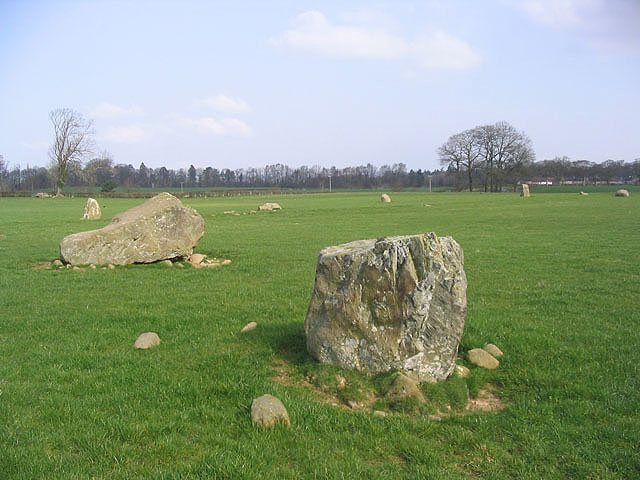
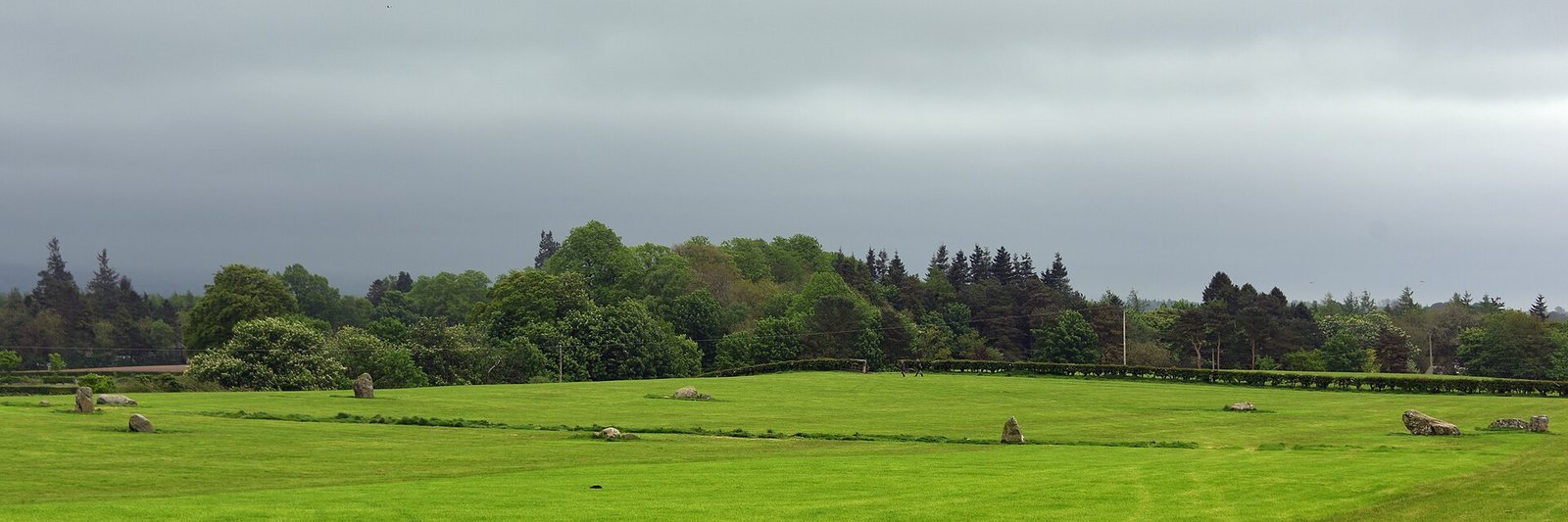
The Twelve Apostles Stone Circle is a prehistoric ritual and funerary monument near Dumfries, Scotland, United Kingdom. It is the largest stone circle on mainland Scotland and ranks seventh in size among those in Britain. Its design resembles circles in Cumbria, although it is considered an outlier of that group.
Easthill stone circle lies several miles to the west. Another circle once stood about a mile east, near the River Nith, but it was destroyed before 1837 and its stones reused as building material.
Nineteenth-century records and traditions
A plan made by Francis Grose in 1789 and the First Statistical Account of 1791 both depict twelve stones. One stone had been removed before 1837. A map published in 1850 also appears to show twelve, but the apparent extra stone came from an accidental ink spot on the original plan.
Local traditions connected the stones with the twelve apostles, the followers of Jesus Christ, and identified the removed stone with Judas Iscariot, traditionally associated with betraying Jesus. Another tradition held that the apostles themselves had raised the circle. The monument was designated a scheduled monument on 1 April 1924.
Remains
The surviving stones form an oval rather than a true circle, with a maximum diameter of about 89 m.
Stone circle and associated features
Form and construction
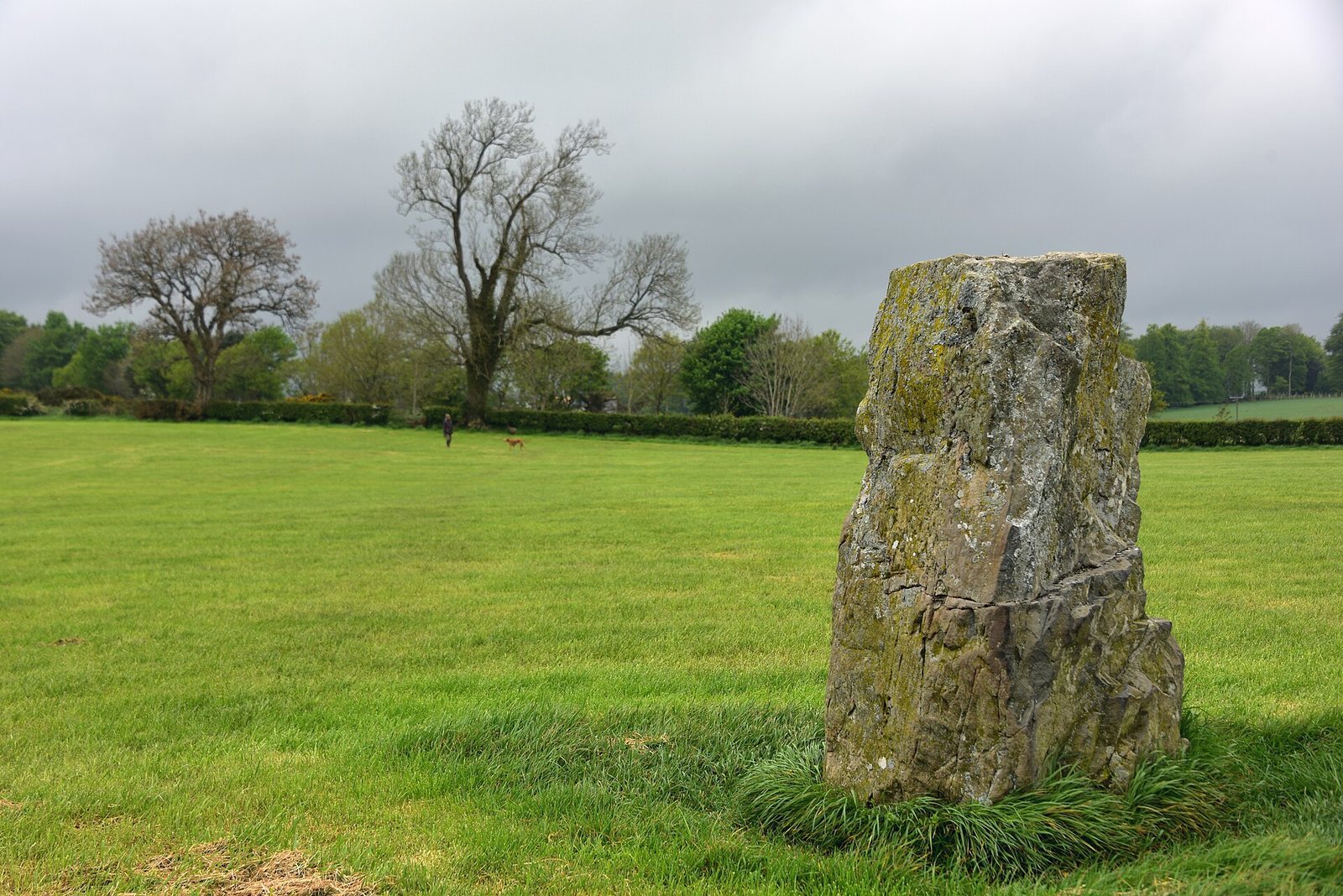
The elongated plan is classified as a Type B “flattened circle,” a geometric category for stone circles whose outline is oval rather than round. Five of the eleven stones are firmly set in the ground. The tallest upright stone is about 1.9 m high, while the longest, in the southwestern part of the circle, measures 3.2 m. All but one are made of Silurian rock, formed during the Silurian geological period. The exception is white porphyry, an igneous rock with larger crystals set in a finer-grained base. Four stones, including the porphyry stone, are natural boulders; the others were quarried. The nearest stated occurrence of Silurian rock is about two miles away, near Irongray Church.
Alignment and nearby earthworks
The arrangement in the southwestern part of the circle aligns with the midwinter sunset. Two nearby cursus monuments, long prehistoric earthworks often bounded by parallel sides, lie in the surrounding area. If extended, one would run toward the stone circle.
Bronze figure
A bronze figure about 10 cm (four inches) tall was found at the circle several years before the discovery was reported in 1882. It has been identified as Saint Norbert, a twelfth-century Christian leader who founded a religious community. The figure is now housed in Dumfries Museum.