Sweetheart Abbey: A Cistercian Monastery in Scotland
Site at a Glance
- Rating
- 4.4
- Popularity
- Medium
- Country
- United Kingdom
- Primary era
- Medieval
- External website
- Open
- Eras represented
- Medieval
- Civilizations
- Kingdom of Scotland
- Site type
- Religious
- Remains
- Monastery
On this page14 sections
History
Sweetheart Abbey is a former Cistercian monastery in New Abbey, United Kingdom, founded in the late thirteenth century by Dervorguilla of Galloway. Its foundation was initiated on 10 April 1273 in memory of her husband, John de Balliol, and the abbey is also dated to 22 November 1275. Built in the Early English phase of Gothic architecture, it was dedicated to St Mary the Virgin and became the last medieval Cistercian abbey founded in Scotland.
Foundation and Cistercian community
Dervorguilla commissioned the monastery as a place where her husband’s embalmed heart could be deposited and remembered in prayer. The heart was kept in an ivory-and-silver casket. When Dervorguilla died in 1289 or 1290, she was buried before the church altar with the embalmed heart on her breast. The abbey’s Latin name, Dulce Cor, meaning “Sweet Heart,” came from this association.
Sweetheart was a daughter house of Dundrennan Abbey, and monks from Dundrennan established the community, built its monastery, and conducted its prayers. The Cistercians were a Catholic order whose religious life combined communal prayer with disciplined work and self-sufficient agriculture. The first abbot was Henry. Later abbots included Eric, John, Thomas, William, Robert, John, and Gilbert Broun. The abbey also controlled the churches of Buittle, Crossmichael, Kirkcolm, Kirkpatrick-Durham, Lochkindeloch, and Wigtown.
The monks’ activities extended beyond worship and contemplation. They farmed, bred animals, and conducted commercial affairs, helping to shape agricultural life in the surrounding district. An abbot belonged to the First Estate, the clerical estate in the medieval Scottish Parliament, and sat there by virtue of his office as a representative of the church.
War, patronage, and rebuilding
During the Wars of Scottish Independence, the conflict between the Scottish kingdom and English kings over Scotland’s rule, Edward I of England stayed at the abbey in 1300 while campaigning in Galloway. Prolonged warfare impoverished the monastery and caused serious damage. Its barns were burned, and other buildings were destroyed.
Archibald Douglas, 3rd Earl of Douglas, known as Archibald the Grim, became a major patron in the fourteenth century and financed extensive repairs and rebuilding. The Maxwell family of Kirkconnell was also among the abbey’s principal benefactors. A serious fire followed a lightning strike in 1397. After the Battle of Flodden in 1513, the monks placed themselves under the protection of Lord Maxwell, who later refused an order to destroy the abbey.
The memorial to Dervorguilla and John de Balliol was rebuilt in a more monumental form during the early sixteenth century. It was destroyed during the Scottish Reformation, the sixteenth-century transformation that established a Reformed Protestant church in Scotland and suppressed many Catholic monasteries.
Reformation and dissolution
From 1565, the Crown placed Sweetheart Abbey under commendatory abbots. A commendatory abbot held the office and received its revenues without necessarily living as a member of the monastic community. Gilbert Broun, also called Gilbert Brown, was the last Cistercian abbot and the abbey’s only commendatory abbot. He defended Catholicism after the Reformation, was repeatedly prosecuted for promoting the Catholic faith, and was forced into exile after his arrest and trial. He returned briefly to Sweetheart in 1608 and 1609, later became rector of the Scots College in Paris, and died in 1612.
The monastery was officially dissolved in 1624, when the last monks died and its buildings and lands passed to Robert Spottiswoode, who took the title Lord of New Abbey. In 1633, Charles I sought the estate for the newly established Diocese of Edinburgh. The proposed grant was cancelled, and the estate was restored to Spottiswoode in 1641, although his later exile left it in Crown possession.
Later history and protection
After the dissolution, much of the abbey was quarried for stone used in houses in the neighboring village. The former refectory continued as a parish church until 1731, when it was demolished and replaced. That replacement church was demolished in 1877. Recognition of the abbey’s heritage value led to an initial protection measure in 1779. The buildings remained privately owned for about 150 years before being transferred to the state in 1928. Historic Scotland has managed the site since then, and it has been a scheduled monument since 1994.
Sweetheart Abbey is associated with the burials of John de Balliol and Dervorguilla, as well as James Carruthers, Eric Drummond, 7th Earl of Perth, Angela Mary Constable-Maxwell, Countess of Perth, and William Paterson, founder of the Bank of England.
Remains
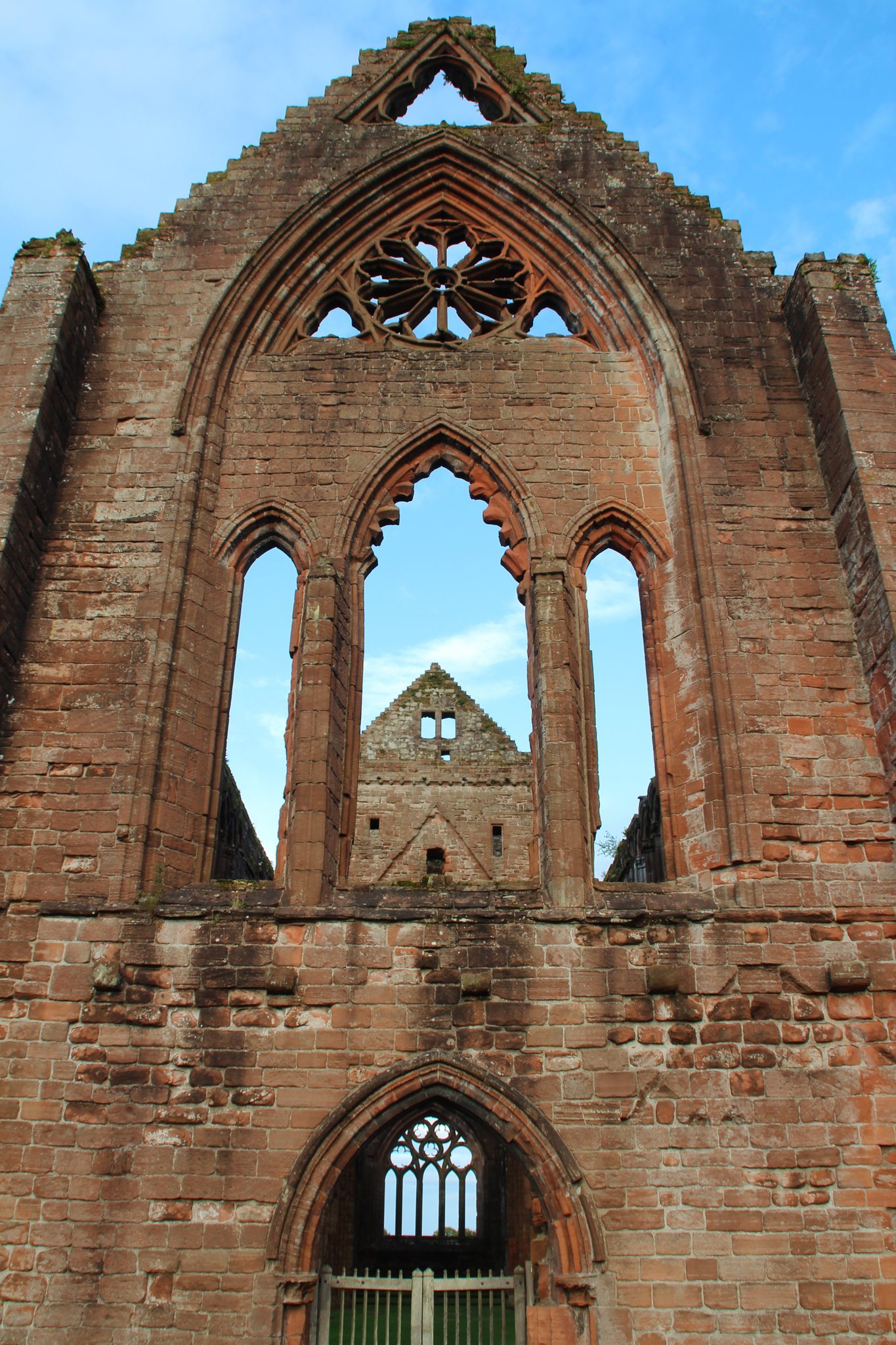
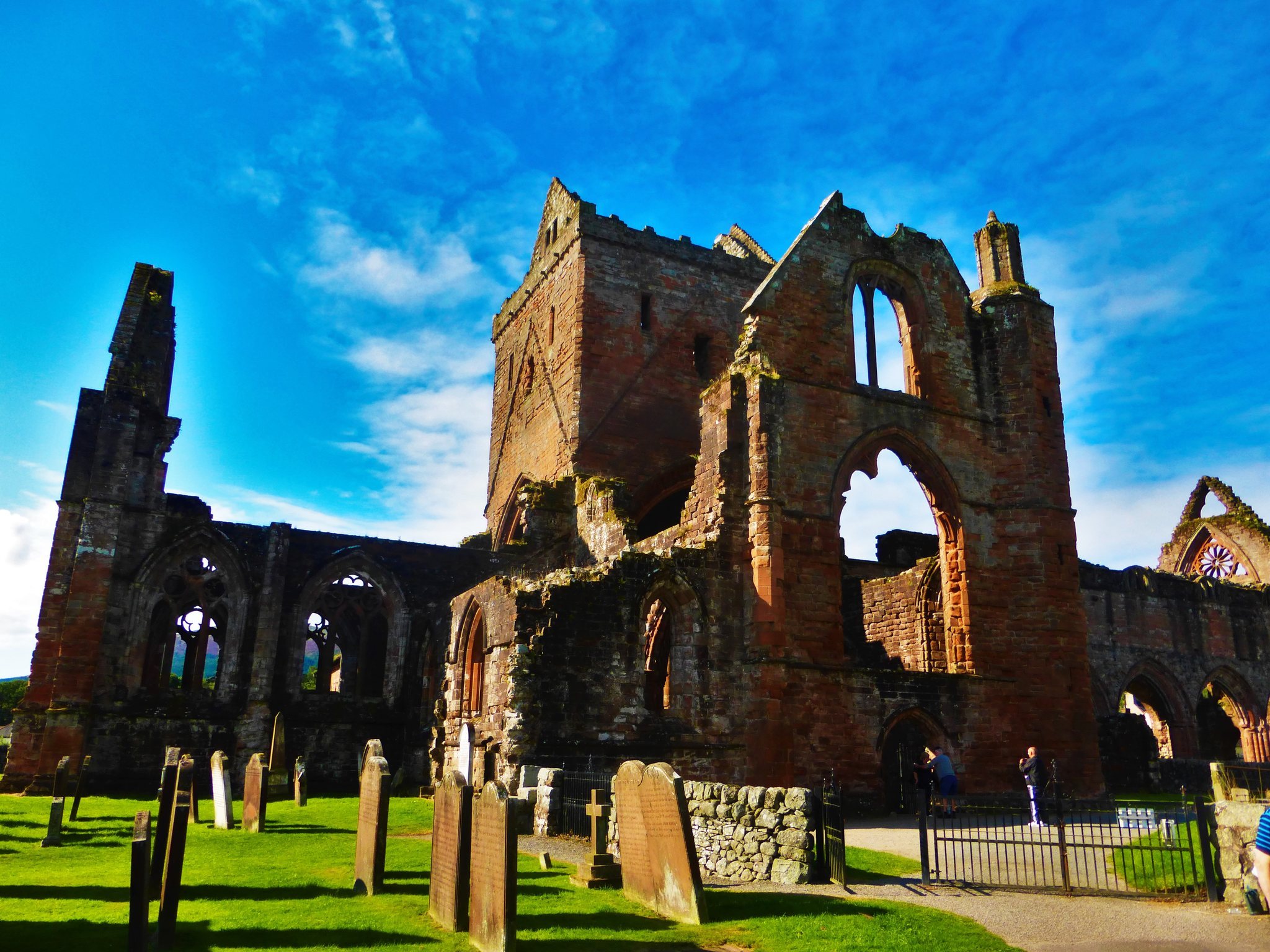
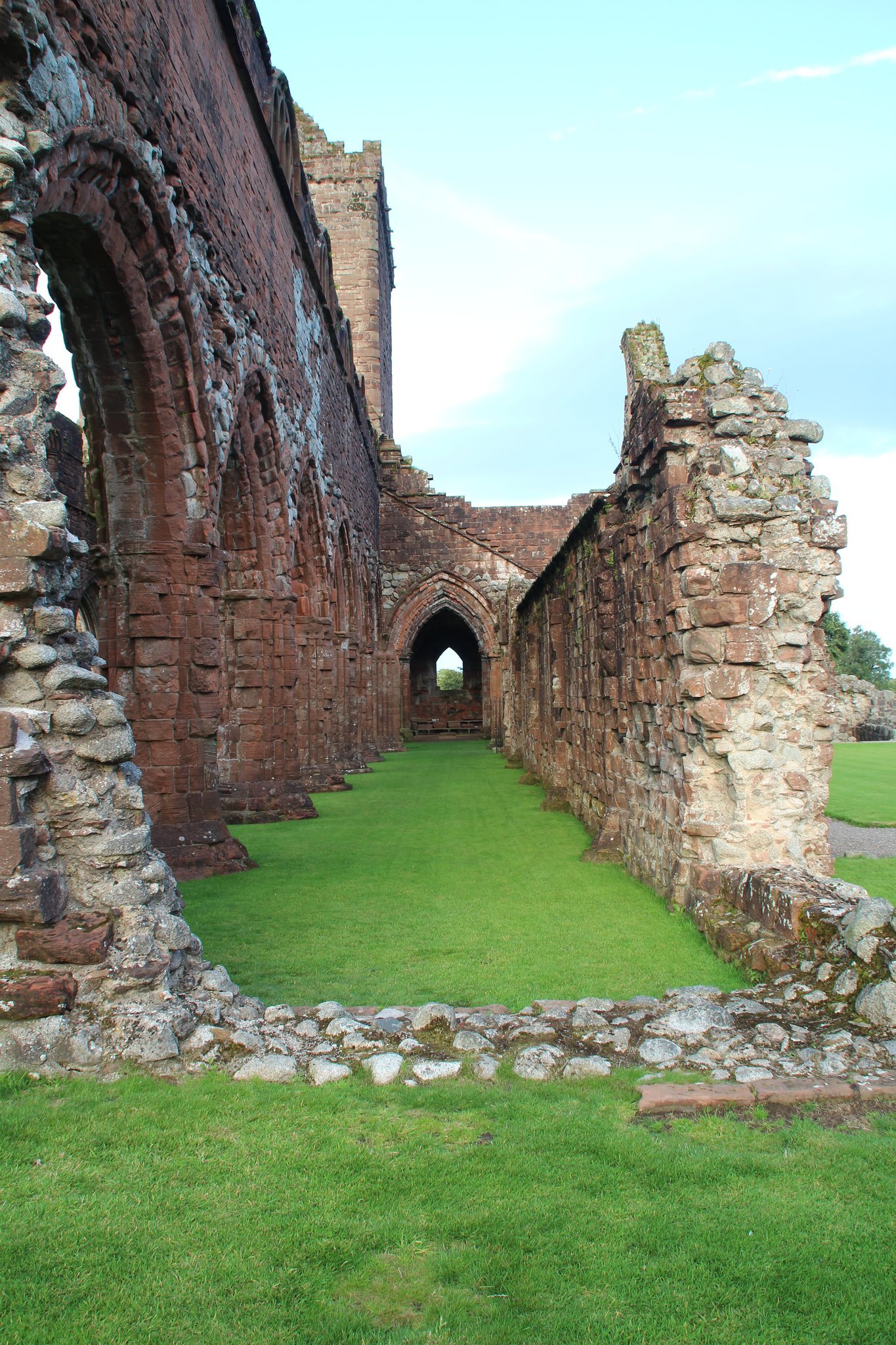
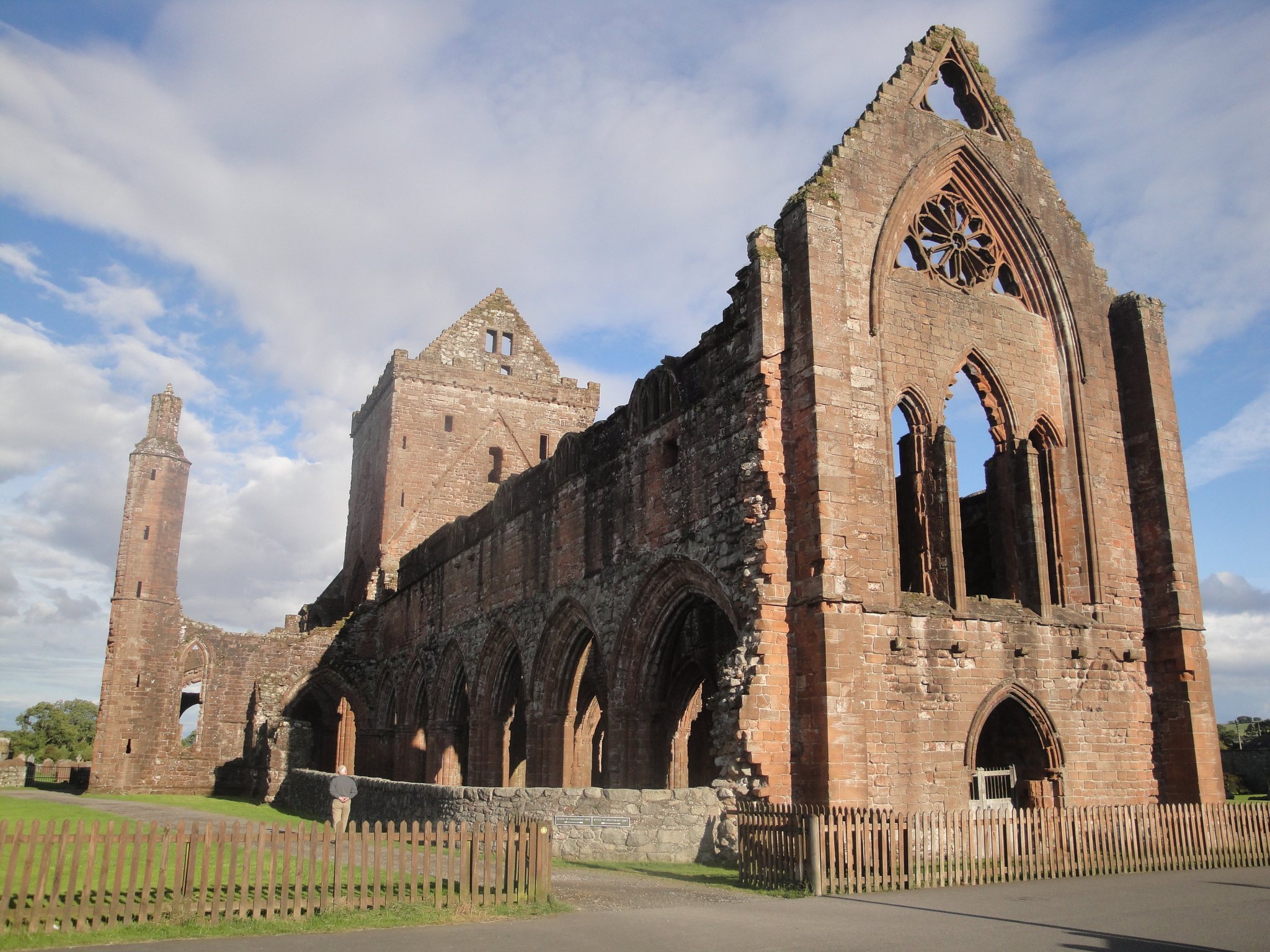
Sweetheart Abbey stands between New Abbey and its cemetery, beside the New Abbey Pow and near the estuary of the River Nith. Its precinct covered about 30 acres, or 12 hectares, and substantial sections of the surrounding wall remain visible. The surviving buildings were constructed chiefly from deep-red local sandstone in the Early English style, a Gothic form associated with pointed arches, elongated proportions, and developed stone window tracery.
Church and commemorative remains
Abbey church
A substantial part of the abbey church survives. The medieval building was about 203 feet, or 62 meters, long, while its central tower over the crossing rose approximately 92 feet, or 28 meters. Dedicated to St Mary the Virgin, the church forms the principal surviving element of the complex and remains prominent in the surrounding landscape.
Founder’s monument
The monument to Dervorguilla and John de Balliol was rebuilt in a more monumental form during the early sixteenth century. Its destruction during the Reformation forms part of the later history of the church and its commemorative furnishings.
Monastic buildings and associated features
Chapter house and library
The principal surviving monastic remains include the chapter house and the library, together with sections of the precinct wall. These structures form part of the surviving complex around the abbey church.
Refectory and parish church remains
The abbey’s former refectory was reused as a parish church until 1731. It was then demolished and replaced by another parish church, which was itself demolished in 1877. This sequence of reuse and demolition affected the later physical form of the monastic complex.
Monksmill
An earlier mill built by and for the monks served the farms surrounding the abbey. The present Monksmill buildings date from the late eighteenth century.
Sweetheart Abbey Breviary
The fourteenth-century Sweetheart Abbey Breviary, a prayer book associated with the monastery, is held by the National Library of Scotland in Edinburgh.