Dolmen de la Piatra: A Prehistoric Burial Monument in Spain
Site at a Glance
- Popularity
- Very Low
- Country
- Spain
- Primary era
- Bronze Age
- Eras represented
- Bronze Age
- Civilizations
- Unclassified
- Site type
- Burial
- Remains
- Tomb
On this page6 sections
History
Dolmen de la Piatra is a prehistoric burial monument and the remains of a corridor tomb, a burial structure with a passage leading to a chamber, in Nueno, Huesca, Spain. It dates to the third millennium BCE and belongs to the megalithic group of the Sierra de Guara.
The group also includes Caseta de la Bruja at Ibirque, Dolmen del Palomar at Santa Eulalia la Mayor, Caseta de las Balanzas at Almazorre, Capilleta at Paúles de Sarsa, and Losa de la Mora at Rodellar. Dolmen de la Piatra is also known as Dolmen del Gargantal and Dolmen de Belsué.
J. J. Generelo, a student at the Archaeology Seminar of the University College of Huesca, found the dolmen by chance in 1979. Archaeologists Almudena Domínguez Arranz and María José Calvo investigated it soon afterward with a team of students. The monument is protected in Spain as an Asset of Cultural Interest.
Remains
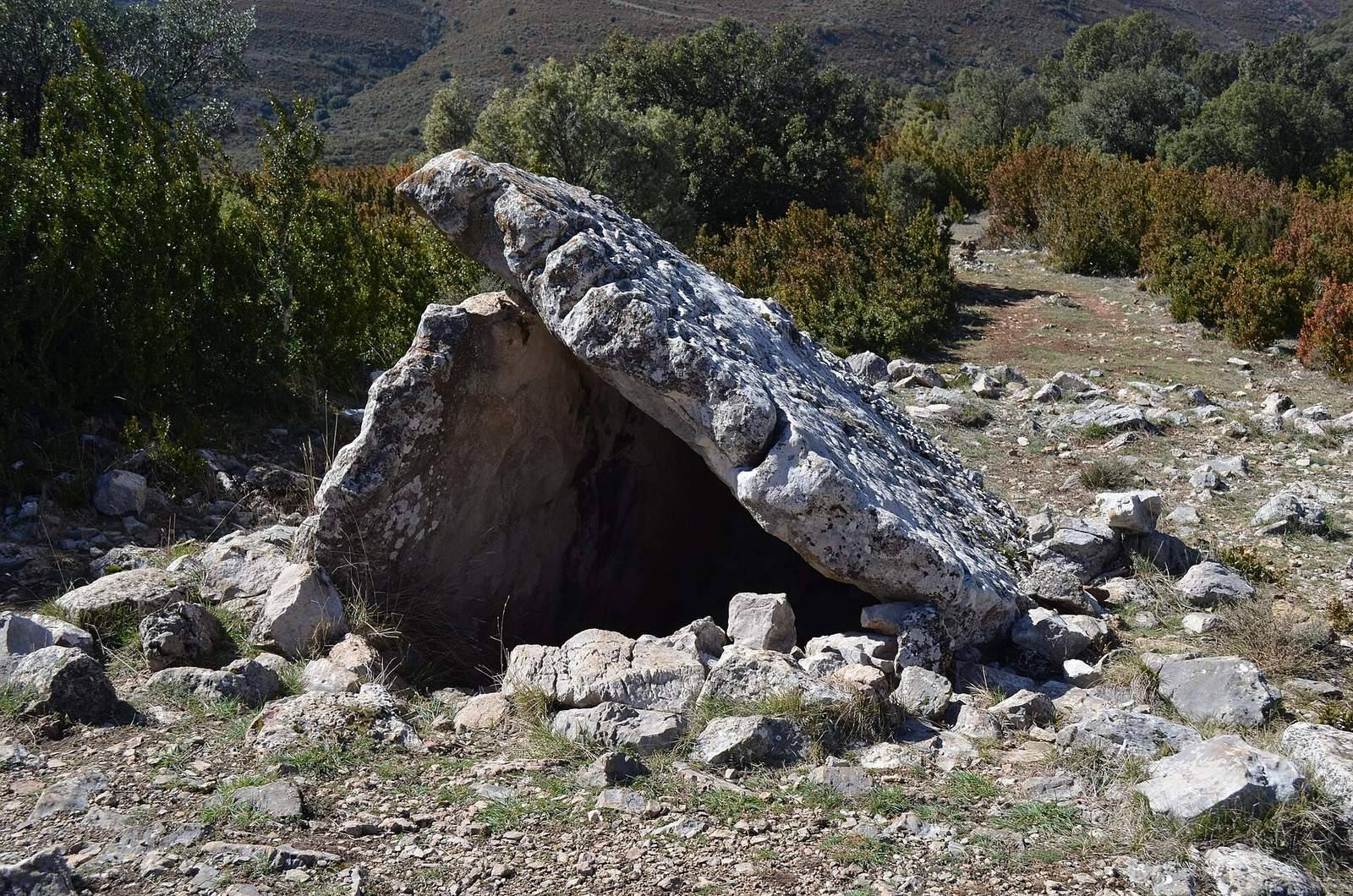
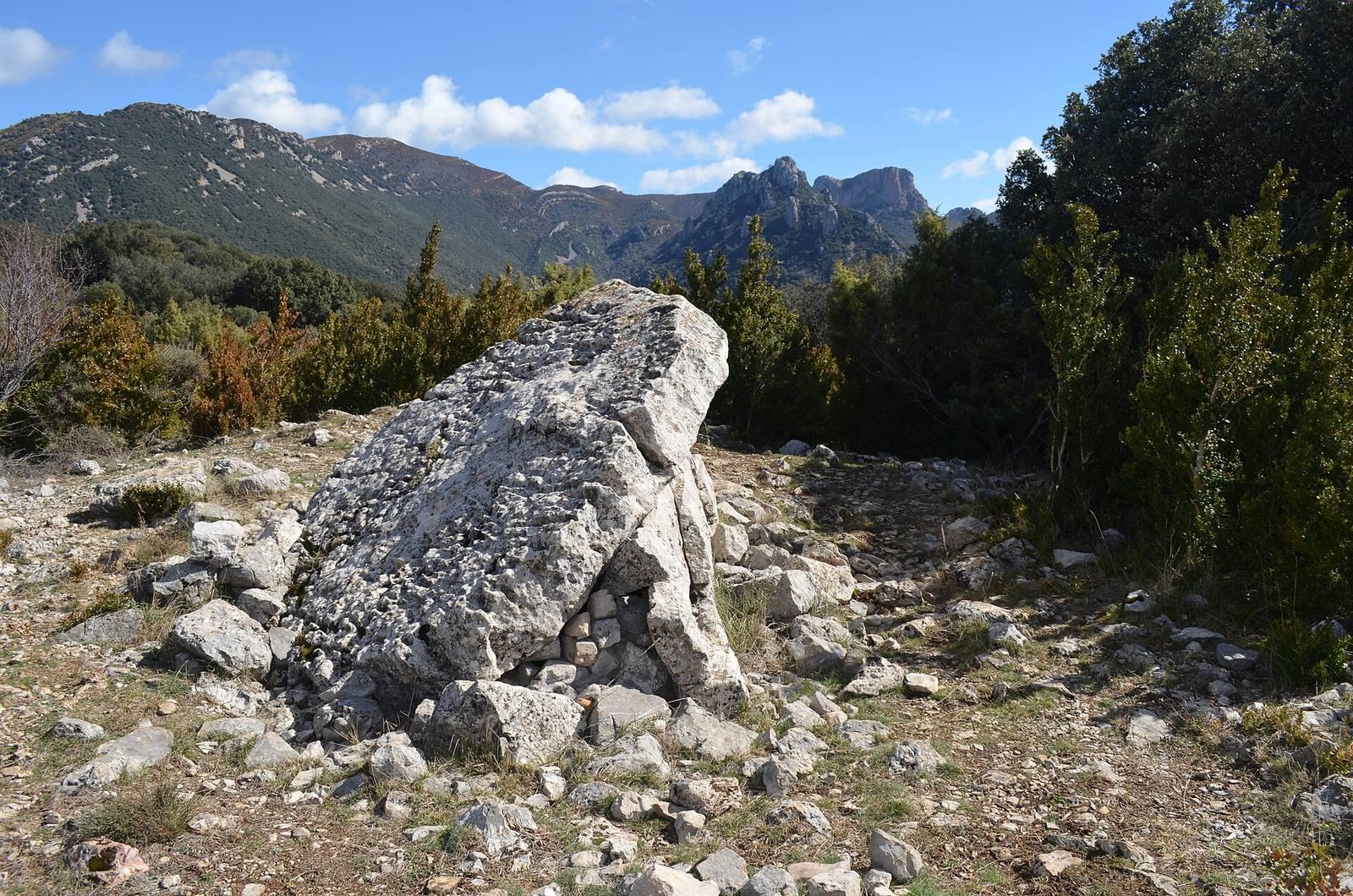
At an elevation of 977 m in the Pre-Pyrenees of Huesca, the dolmen occupies a flatter area of slope at a saddle between the Sabuco ravine and the Flumen River. Known as Paridera del Gargantal, the spot is near the Corral del Ciprés. The small monument has one chamber, formed from limestone slabs and covered by a sloping capstone; a later wall closes its north side.
The chamber and associated remains
Limestone chamber
Three limestone orthostats, upright stone slabs used in a structure, make up the chamber: one stands on the west side, while two smaller stones form the east side. The entrance faces east. The chamber measures 1.75 by 1.40 m. The three side stones measure 2.90 by 1.10 by 0.40 m, 0.30 by 0.60 by 0.15 m, and 0.70 by 0.40 by 0.15 m. A capstone measuring 2.90 by 2.20 by 0.30 m rests at a steep angle on the uprights.
North-side wall
A wall of irregular stones, built without mortar, was added later to close the chamber’s north side.
Excavated finds
Excavations recovered five small fragments of glazed pottery and modern bone remains. Flint flakes came from a lower level.
The Arica and Toro caves lie a short distance to the northeast and contain archaeological sites.