Tumulus de Colombiers-sur-Seulles: A Neolithic Burial Mound in France
Site at a Glance
- Popularity
- Medium
- Country
- France
- Primary era
- Stone Age
- Eras represented
- Stone Age
- Civilizations
- Unclassified
- Site type
- Burial
- Remains
- Burial Mound
History
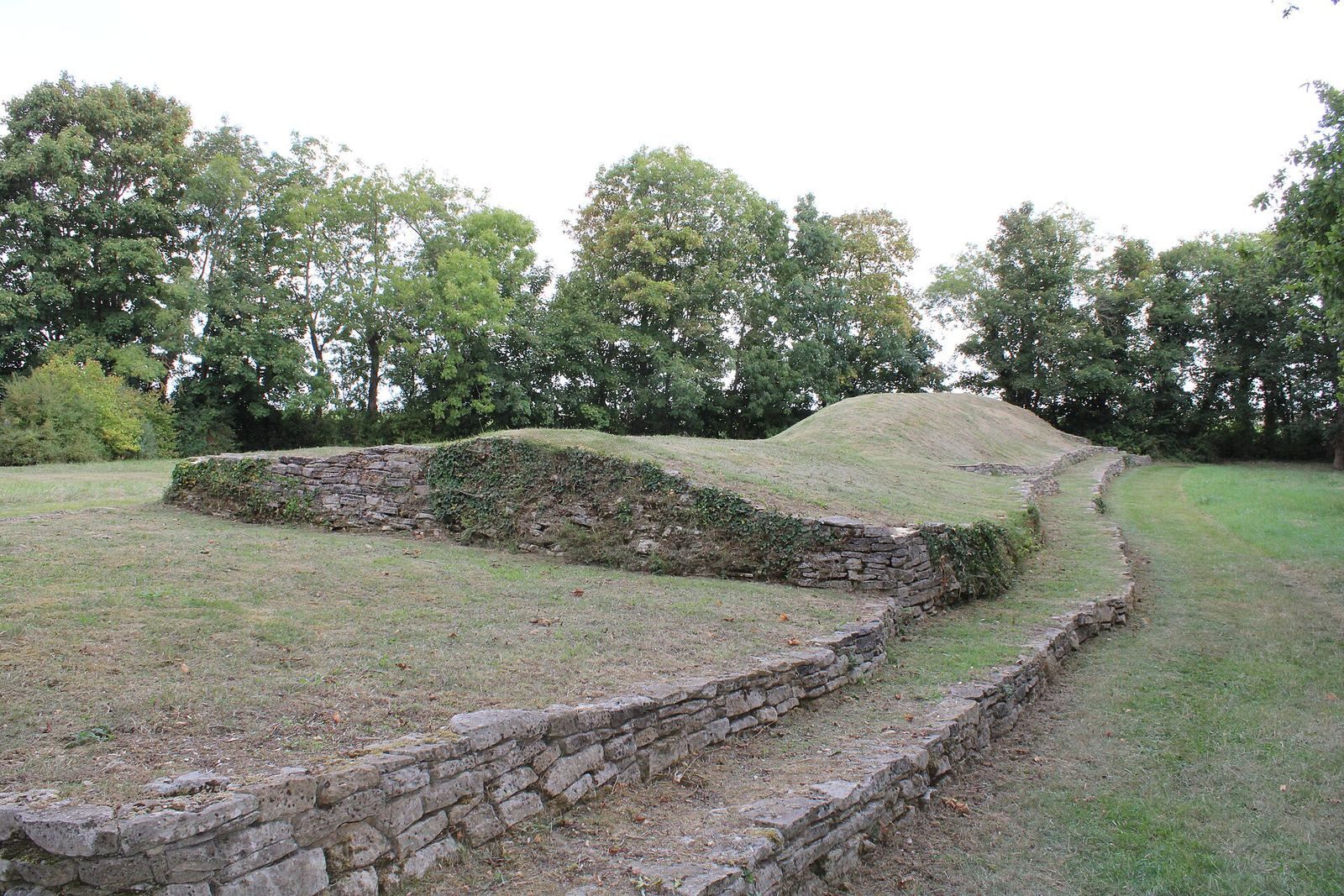
The Tumulus de Colombiers-sur-Seulles is a Neolithic burial mound in France, dated to about 4500–4000 BCE. The Neolithic was the later part of the Stone Age, when farming and settled communities became widespread. The monument is regarded as Normandy’s oldest monument and oldest surviving stone monument, and as one of Europe’s earliest megalithic structures, built with large stones. Its form is interpreted as an intermediate stage between early burial mounds without large stones and later monumental stone tombs. It is the only example of this type in Normandy.
Antiquarian Arcisse de Caumont and historian and cleric Gervais de La Rue excavated the mound in 1825. Caumont brought it to scientific attention in 1830. Excavations conducted between 1969 and 1997 dated the monument to about 4500–4000 BCE. It had been dug into and partly destroyed at an unknown time, then restored between 2001 and 2006. In 1894, Calvados had 12 burial mounds of differing forms; only two survive today.
Remains
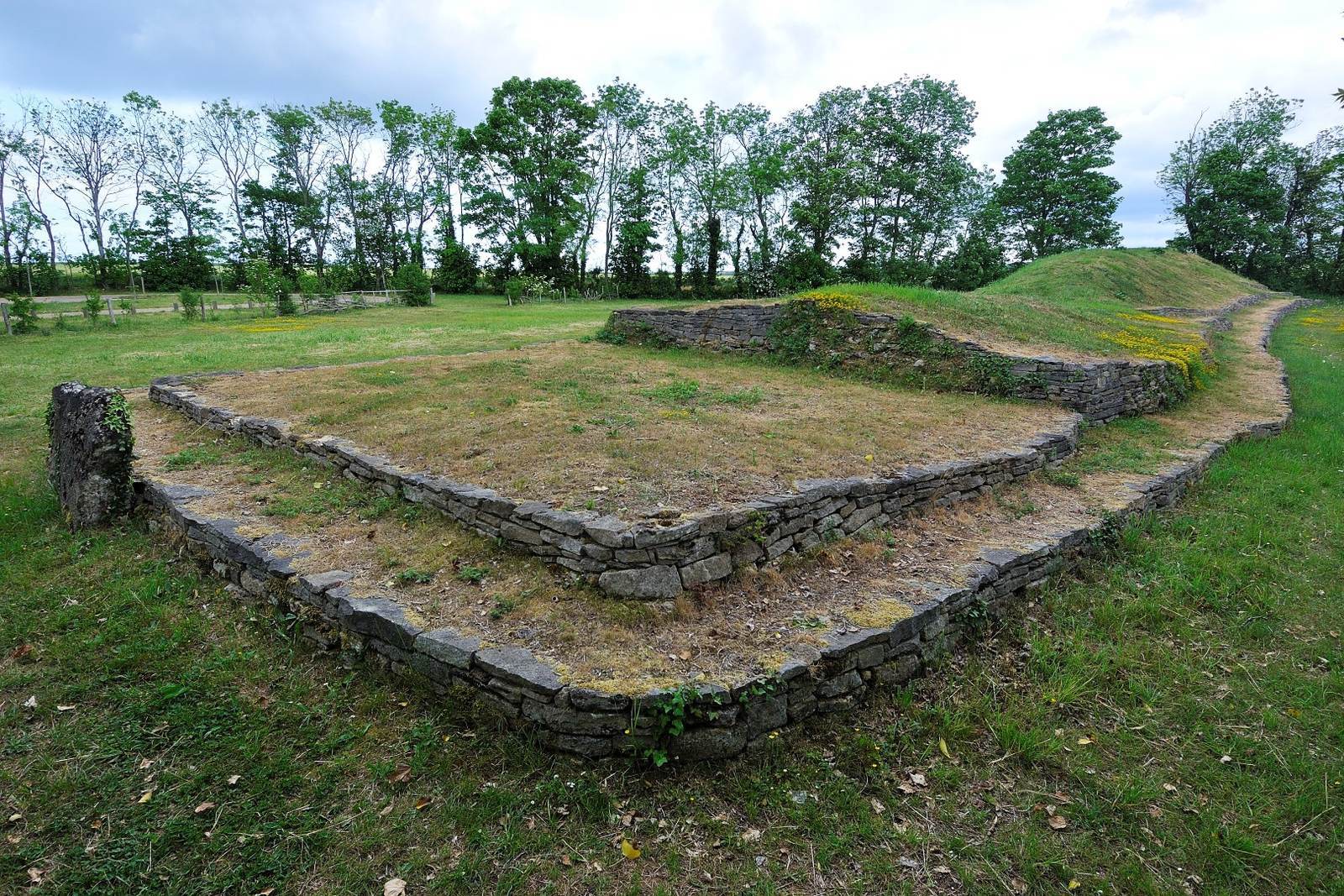
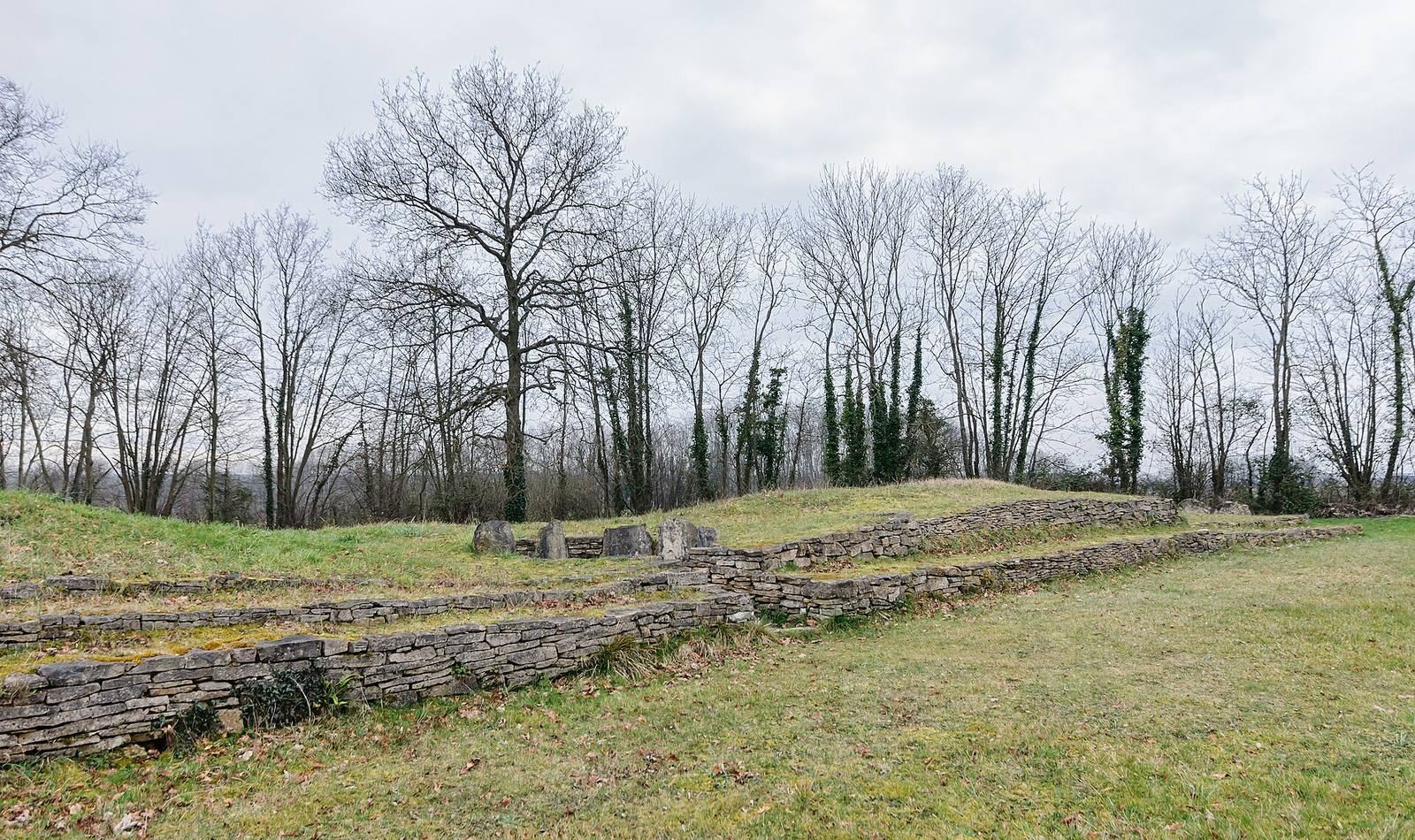
The mound stands on a plateau overlooking the Seulles valley, about 600 m from Pierre Debout de Colombiers-sur-Seulles and 900 m from the Menhir des Demoiselles, a prehistoric standing stone. It has a long, trapezoidal plan, measuring about 60 m in length and averaging roughly 10 m in width. The western end is about 9 m wide, while the rounded eastern end is about 18 m across. Its height is about 2.5 m, with a separate measurement of about 5 m at the center. Earth and small stones are divided into compartments by stone and wooden partitions. Dry-stone walls, built without mortar, surround the mound in a terrace-like arrangement, alternating with sections faced by upright stones.
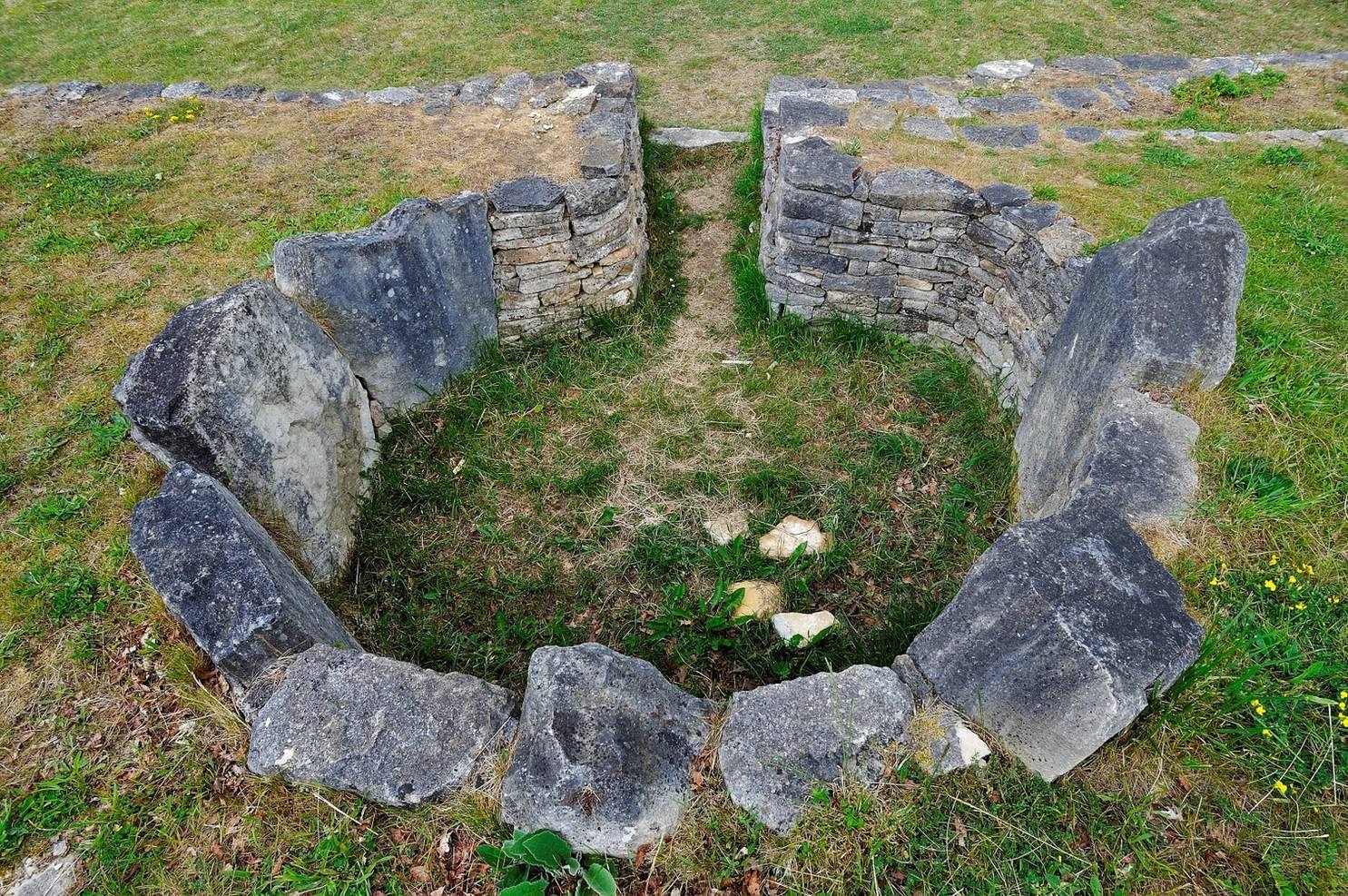
A single circular burial chamber, about 2.5 m in diameter, lies along the mound’s lengthwise axis, shifted slightly north. Six large stones form its outer wall, with dry-stone masonry between them that is not part of the original construction. A narrow passage once gave access from outside. The chamber occupies only a small part of the mound and now lacks its capstones. It contained numerous human bones, several partly burned. Two large stones in the outer wall at the western end may have framed an entrance to another small chamber or may be remnants of a stone perimeter.