Tsari Mali Grad (Belchin): A Late-Antique Roman Fortress in Bulgaria


Site at a Glance
- Rating
- 4.6
- Popularity
- Low
- Country
- Bulgaria
- Primary era
- Classical
- External website
- Open
- Eras represented
- Classical, Medieval
- Civilizations
- Byzantine, Roman
- Site type
- Military
- Remains
- Fort
On this page10 sections
History
Tsari Mali Grad (Belchin) is an ancient Roman fortress and fortified settlement near Belchin in Bulgaria. Its principal defensive phase began in the late 360s, during late antiquity, a period of transition from the ancient Mediterranean world to the early medieval era. The site occupied St. Spas Hill and developed from a much earlier place of human activity and ritual use.
Early activity and the Roman period
The earliest traces on St. Spas Hill belong to the beginning of the Bronze Age, dated here to the eighth to sixth centuries BCE. Depressions and numerous irregular pits across the hill may represent a Thracian cult sanctuary. The Thracians were ancient peoples who lived across parts of southeastern Europe, including present-day Bulgaria.
After Rome conquered the region, the site continued to function as a sanctuary. In the third century, it was enclosed by a wall of wood and clay. The sanctuary was burned in the middle of the fourth century, after which the site entered a new defensive phase.
Fortification and late-antique settlement
A stone fortress wall was built in the late 360s during the reign of Emperor Valens, who ruled the Roman Empire from 364 to 378. Under Emperor Justinian I, whose sixth-century reign included extensive rebuilding and fortification, the settlement was reconstructed. Tsari Mali Grad ceased to serve a defensive function after 578.
A Christian church ensemble also developed within the fortress. The first church was built at the end of the fourth century, and a second church followed in the sixth century. The latter was a basilica, a large church form usually arranged along a lengthwise plan and widely used in late-antique Christian architecture.
Excavation and restoration
Archaeological excavations on St. Spas Hill took place from 2006 to 2010. Investigations that began in August 2007 were led by the archaeologist Veselin Hadzhiangelov. The work clarified the fortress walls, towers, gates, and several internal buildings, while finds including Thracian coins, weapons, and pottery provided evidence of earlier activity and the site’s later occupation.
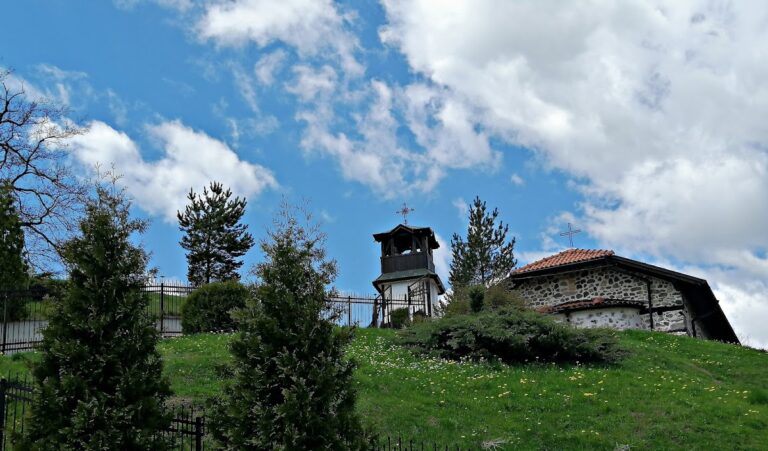
Restoration of the fortress began in 2012 with support from the European Union and was officially completed in 2013. The cultural and historical complex now brings together the late-antique fortress, its church ensemble, and a recreational and sports area on St. Spas Hill.
Remains
The fortress occupies a level area of St. Spas Hill slightly below its summit, near Belchin. Its surviving southern, northern, and eastern walls have been reconstructed, while archaeological investigations have established the arrangement of the fortifications, towers, gates, and several buildings inside the enclosure.
Fortress and internal buildings
The reconstructed stone defenses preserve the principal surviving parts of the late-antique enclosure. The excavated gates and towers explain how access and defense were organized, while the internal buildings show that the site was a fortified settlement rather than a wall alone. Ancient Thracian coins, weapons, and pottery recovered from the hill add material evidence for the site’s long period of use.
Church ensemble
First Christian church
The first Christian church, built at the end of the fourth century, forms part of the surviving church ensemble within the fortress. The ensemble has been restored, preserving the remains of Christian activity that developed alongside the late-antique settlement.
Sixth-century basilica
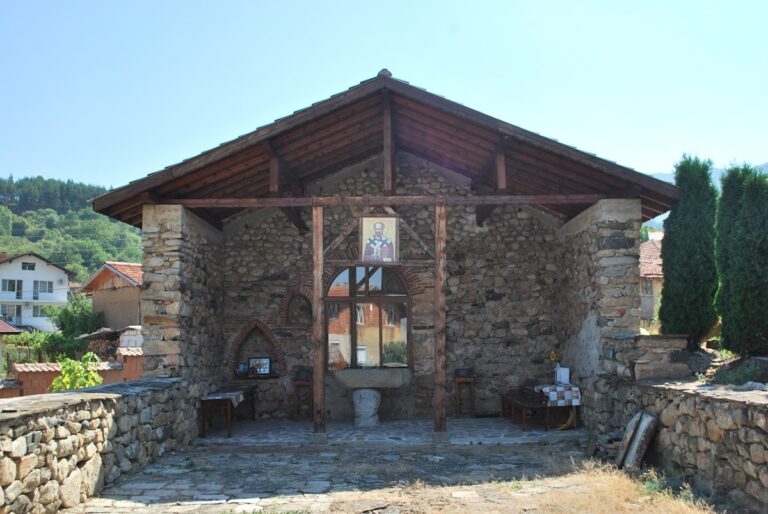
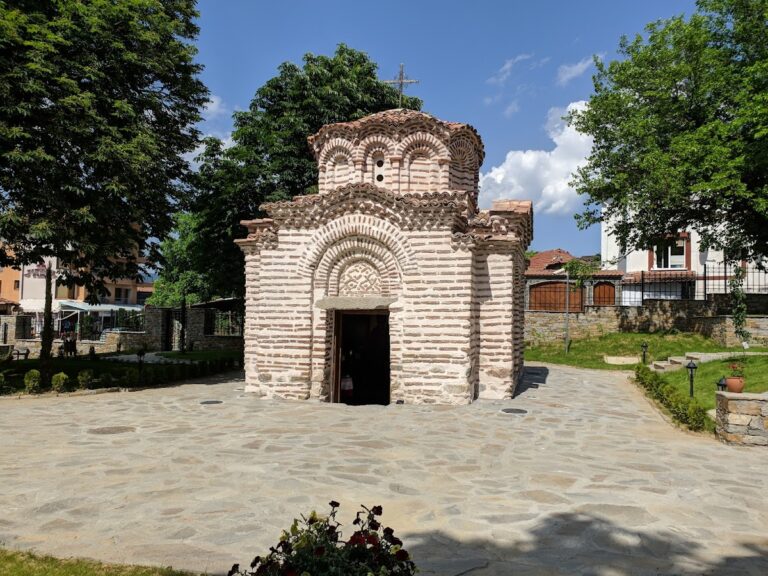
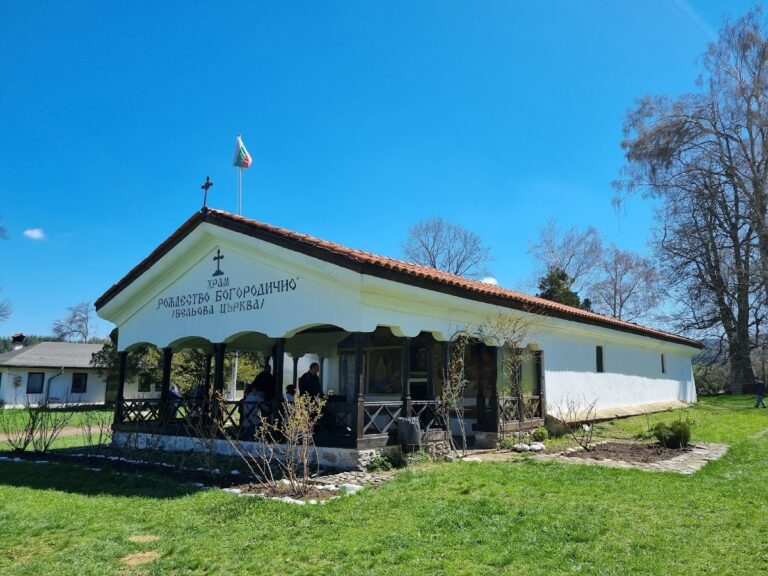
The second church was constructed in the sixth century as a basilica. Its form belongs to the Christian architecture of late antiquity and represents a later phase in the development of the church ensemble. A fifteenth-century church within the complex has also been reconstructed.
Museum displays
Museum displays installed within the complex present military life, prehistory, ceramics, numismatics, and everyday life and crafts in late antiquity. Numismatics is the study of coins and other forms of currency. Together with the excavated weapons, pottery, and coins, these displays interpret the physical remains across the site’s prehistoric, Roman, and Christian phases.
Nearby sites