Trauttmansdorff Castle: A Historic Castle and Museum in Merano, Italy


Site at a Glance
- Rating
- 4.8
- Popularity
- High
- Country
- Italy
- Primary era
- Medieval
- External website
- Open
- Eras represented
- Medieval, Early Modern, Modern
- Civilizations
- Habsburg, Holy Roman Empire
- Site type
- Domestic
- Remains
- Castle
On this page13 sections
History
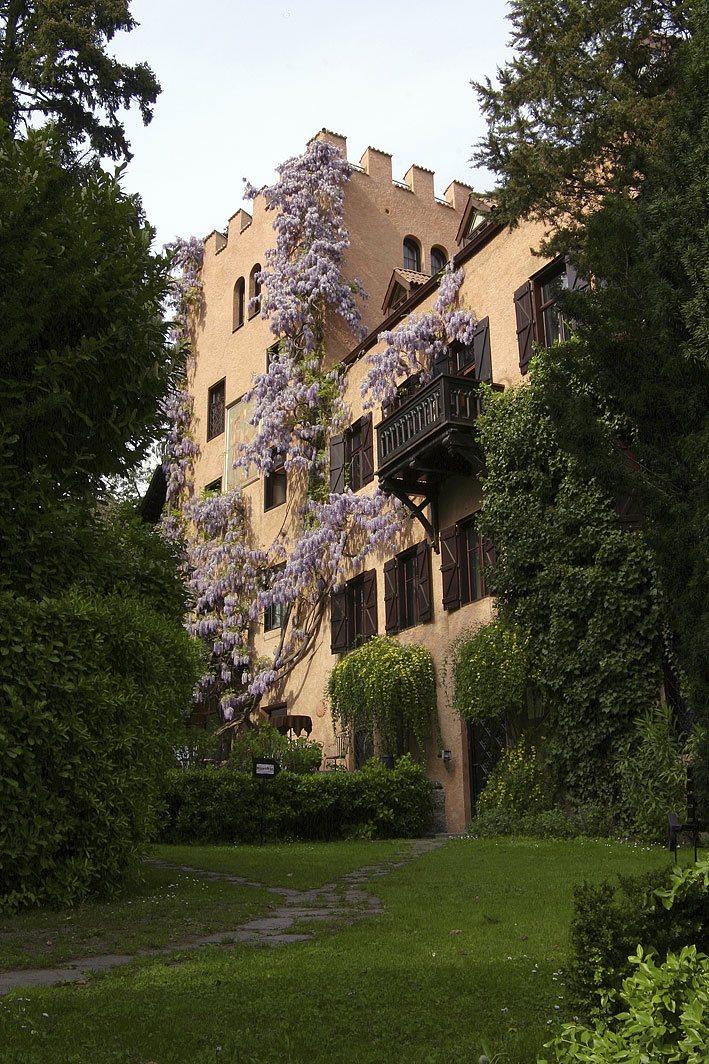
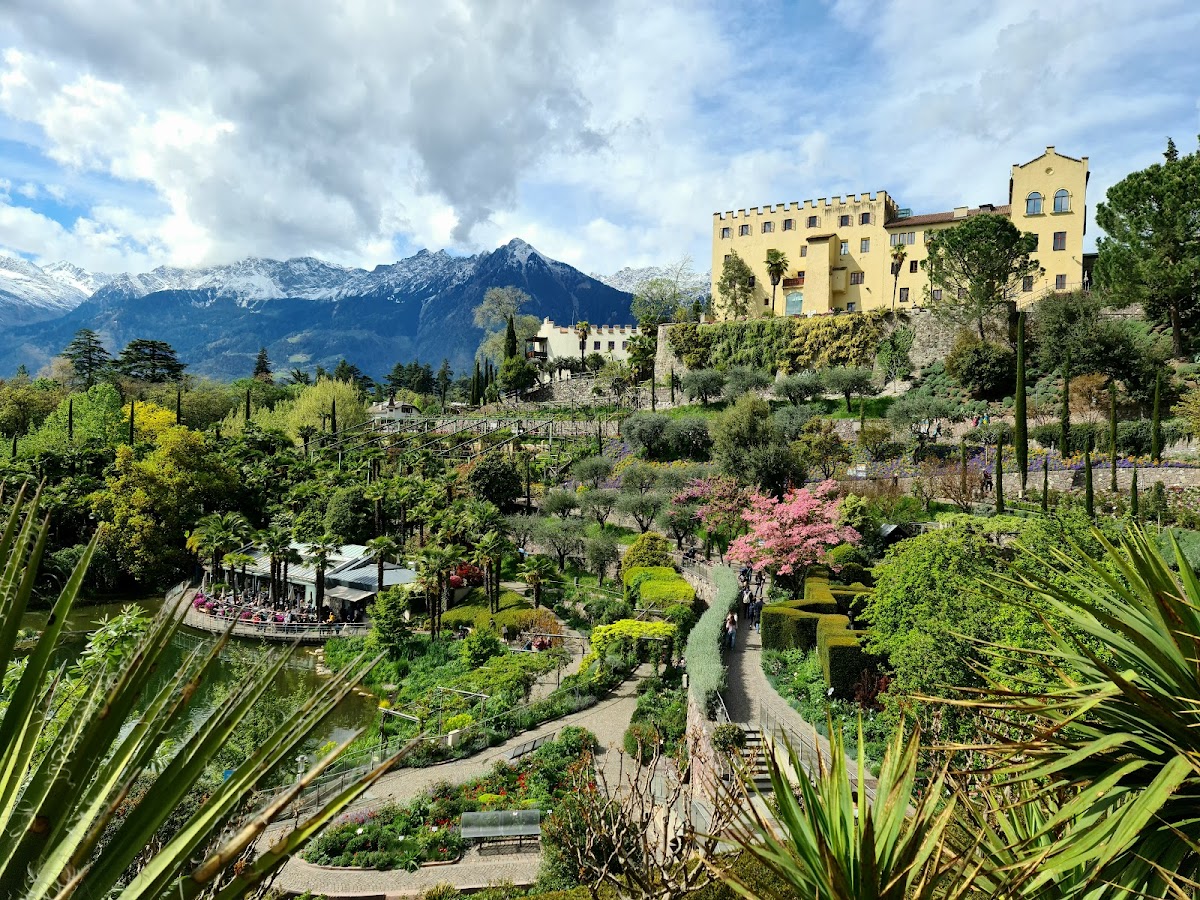
Trauttmansdorff Castle is a historic castle in Italy, on the eastern edge of Merano in South Tyrol. Established around 1300 as the small castle of Neuberg, it incorporates medieval, sixteenth-century, and nineteenth-century building phases, including Neo-Gothic additions. In the nineteenth century, it became a model for many Neo-Gothic castles in South Tyrol and was described as the first Neo-Gothic castle in Tyrol.
Medieval Neuberg
The site was held by the Angerheim family from 1307 until either 1351 or 1354. The Suppan family followed, including Jakob Suppan of Taransberg, and retained the castle until 1399. Between 1400 and 1488, Hans and Ulrich Feigenstein of the Feigenstein family held Neuberg and built its first chapel.
The Zwingenstein family then shared ownership with the Rästler family until 1537. In 1514, the Rästler share passed to the Santner family, whose members remained part-owners until 1537. These successive noble families shaped the castle’s medieval and early modern history before the property acquired the name associated with its later owners.
The Trauttmansdorff enlargement
The Trauttmansdorff family purchased the castle in 1543. Franz, the purchaser’s son, greatly enlarged the building. After this branch of the family died out in 1678, the property passed by no later than 1697 to the Edlen von Stachelburg, who reportedly held it until 1729. It later became the joint feudal property of the Mamming and Mohr families.
The castle deteriorated during the eighteenth century. Around 1777 or 1778, a tower collapsed and destroyed the later castle chapel. In 1805, while the territory was under Bavarian rule, the property was converted into freehold and sold to farmers.
Nineteenth-century transformation
Joseph von Trauttmansdorff, a Styrian count, moved to the Merano area in 1846 and bought the largely ruined castle in 1847, around 150 years after his relatives had abandoned it. He enlarged the property and introduced numerous Neo-Gothic elements. The nineteenth-century revival of Gothic architecture used medieval forms such as pointed arches and historicizing castle details. Under Joseph’s ownership, the renovated residence acquired the name Trauttmansdorff Castle.
Ownership passed in 1867 to the knight Moritz von Leon, probably Joseph von Trauttmansdorff’s illegitimate son. Moritz held the castle until 1893 and hosted Empress Elisabeth of Austria, also known as Sisi or Sissi. Elisabeth stayed there in 1870 with her daughters Gisela and Marie Valerie, occupying the upper floor. Reports of Marie Valerie’s recovery helped make Merano famous as a spa town. Elisabeth returned to the castle in 1889.
Moritz von Leon was forced to sell his properties, including the castle. The Gyulay family held it from 1892 or 1893 until 1896, after which bankruptcy led to its transfer to Friedrich von Deuster of Kitzingen. Deuster restored the property’s appearance, added another storey to the castle, and created orchards and gardens around it. This period of prosperity ended with the First World War, when South Tyrol lay directly on the front line.
War, state ownership, and museum use
After the First World War, South Tyrol was annexed to Italy in 1919 and 1920. The Fascist regime expropriated Deuster’s property and transferred the castle to the Opera Nazionale per i Combattenti, an assistance fund for Italian soldiers. It was renamed Castel di Nova after a nearby stream. During this period, almost all of its furnishings were lost and the building deteriorated.
Following the armistice of 8 September 1943 and the subsequent German occupation, the Wehrmacht used the castle. After the war, it stood empty while the Opera Nazionale per i Combattenti sought a buyer. When that organization was dissolved in 1977, ownership passed to the South Tyrolean provincial administration.
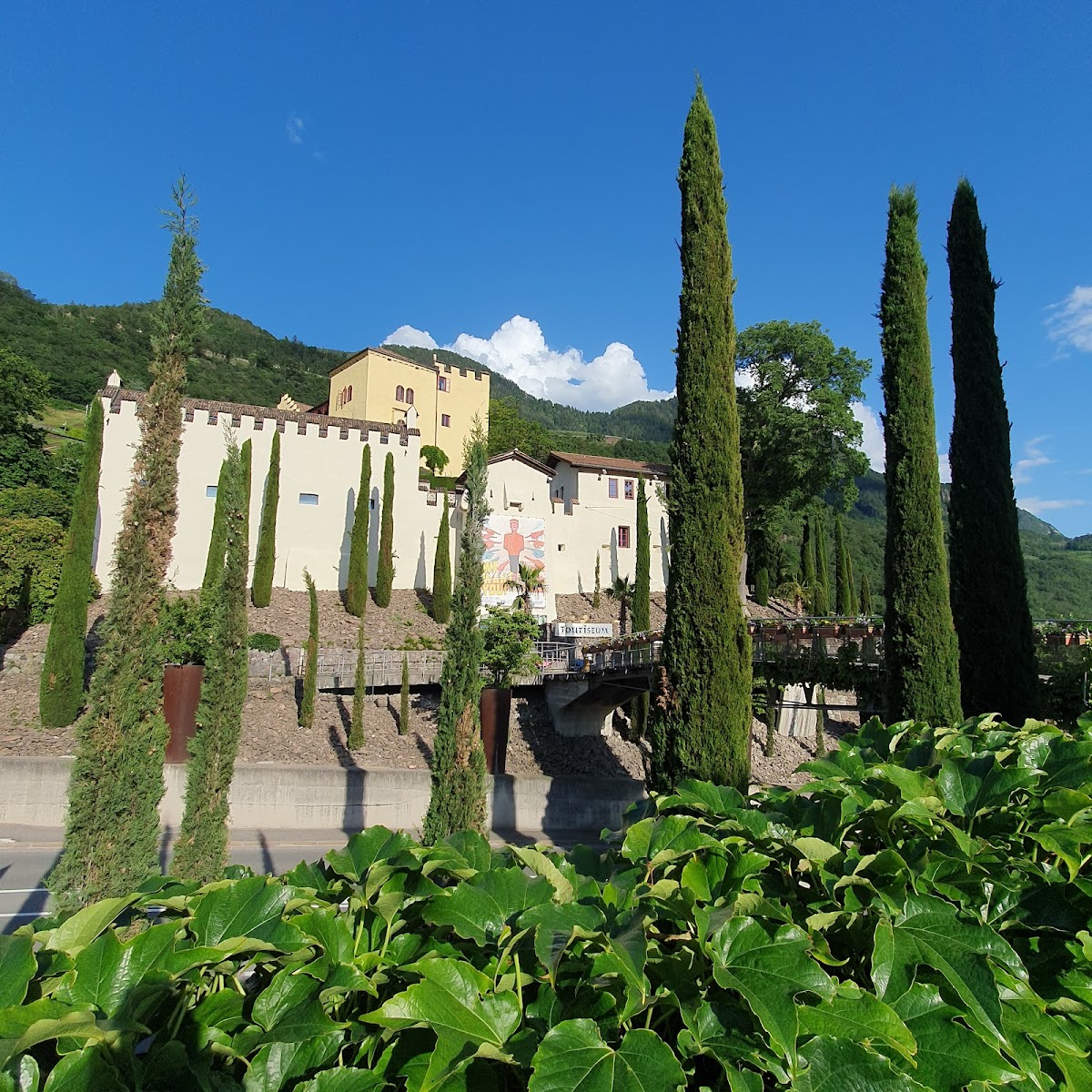
In 1990, the administration established the South Tyrolean Provincial Museum of Tourism, the Touriseum, in the castle. The museum, devoted to the history and development of tourism in South Tyrol, opened in 2003 after several years of restoration. The property is owned by the Province of South Tyrol and operated by the South Tyrolean Museums.
Remains
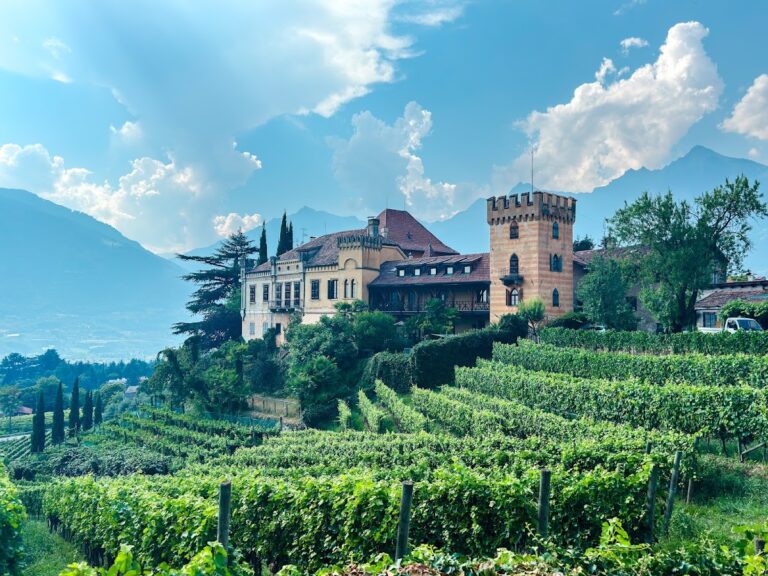
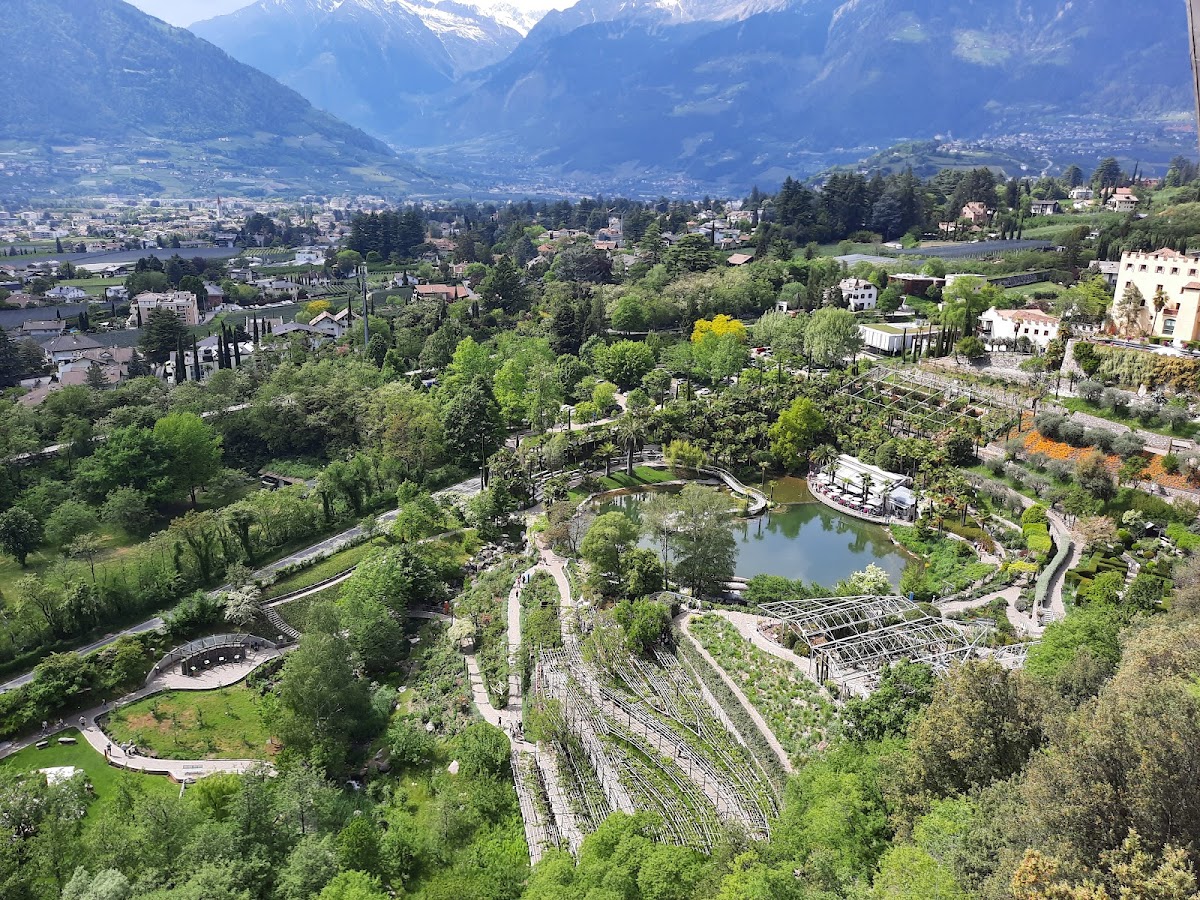
Trauttmansdorff Castle stands in the Obermais district on Merano’s eastern edge, surrounded by the Trauttmansdorff Castle Gardens. Dense forest and steep terrain lie to the east, while terrain and original fortification walls protect the site to the north, south, and west. The surviving complex combines fabric and design from the medieval Neuberg castle, the sixteenth-century enlargement, and the nineteenth-century expansion with its Neo-Gothic alterations.
Castle buildings and interiors
Exterior and vestibule
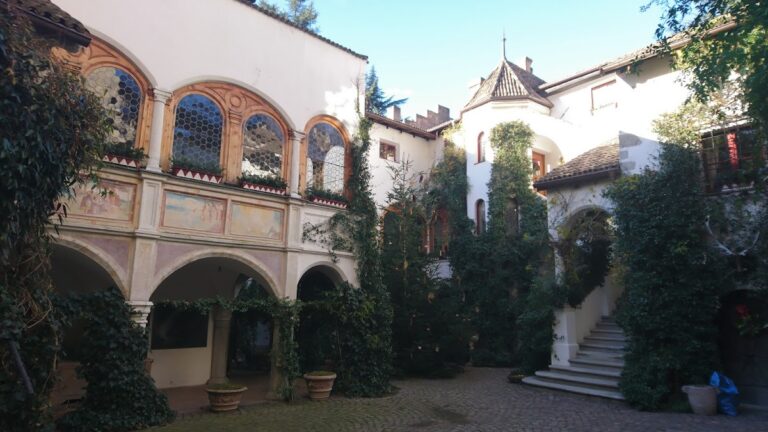
The exterior brings together Gothic, Romanesque, and Baroque elements with later Neo-Gothic additions. Repeated window arrangements contribute to the building’s Romanesque character, although the windows vary in form. Contrasting roofs and fortification structures give the castle a varied appearance. Painted around 1900, the vestibule displays the coats of arms of former noble owners and those of the Austrian lands across its ceiling and walls.
Interior rooms
The interior hall has a Baroque ceiling mural framed by layers of molding and marble pilasters. Other rooms, including the imperial rooms, contain Romanesque and Gothic interior windows with both rounded and pointed arches. These interiors preserve elements from different periods within the castle’s long architectural development.
Chapel and burial crypt
Hans and Ulrich Feigenstein built the first chapel during their ownership of Neuberg. The later castle chapel was destroyed when a tower collapsed around 1777 or 1778. Joseph von Trauttmansdorff’s burial crypt lies beneath the chapel.
Castle gardens
Layout and botanical zones
The castle and gardens occupy approximately 12 hectares. The grounds contain about 7 kilometers of paths and extend across a height difference of approximately 100 meters. Their botanical layout is divided into four zones that merge gradually: Forest Gardens, Sun Gardens, Water and Terraced Gardens, and the Landscapes of South Tyrol.
Wollemia nobilis
The botanical grounds contain an example of Wollemia nobilis, an extremely rare Australian conifer discovered only in 1994. In 2006, the gardens became the first botanical garden in Italy to exhibit the species. The Trauttmansdorff Castle Gardens opened in 2001 and were named Italy’s Most Beautiful Garden in 2005.