Ramparts of Aigues-Mortes: A Medieval Fortified Enclosure in France
Site at a Glance
- Rating
- 4.6
- Popularity
- High
- Country
- France
- Primary era
- Medieval
- External website
- Open
- Eras represented
- Medieval
- Civilizations
- French
- Site type
- Military
- Remains
- Wall
On this page9 sections
History
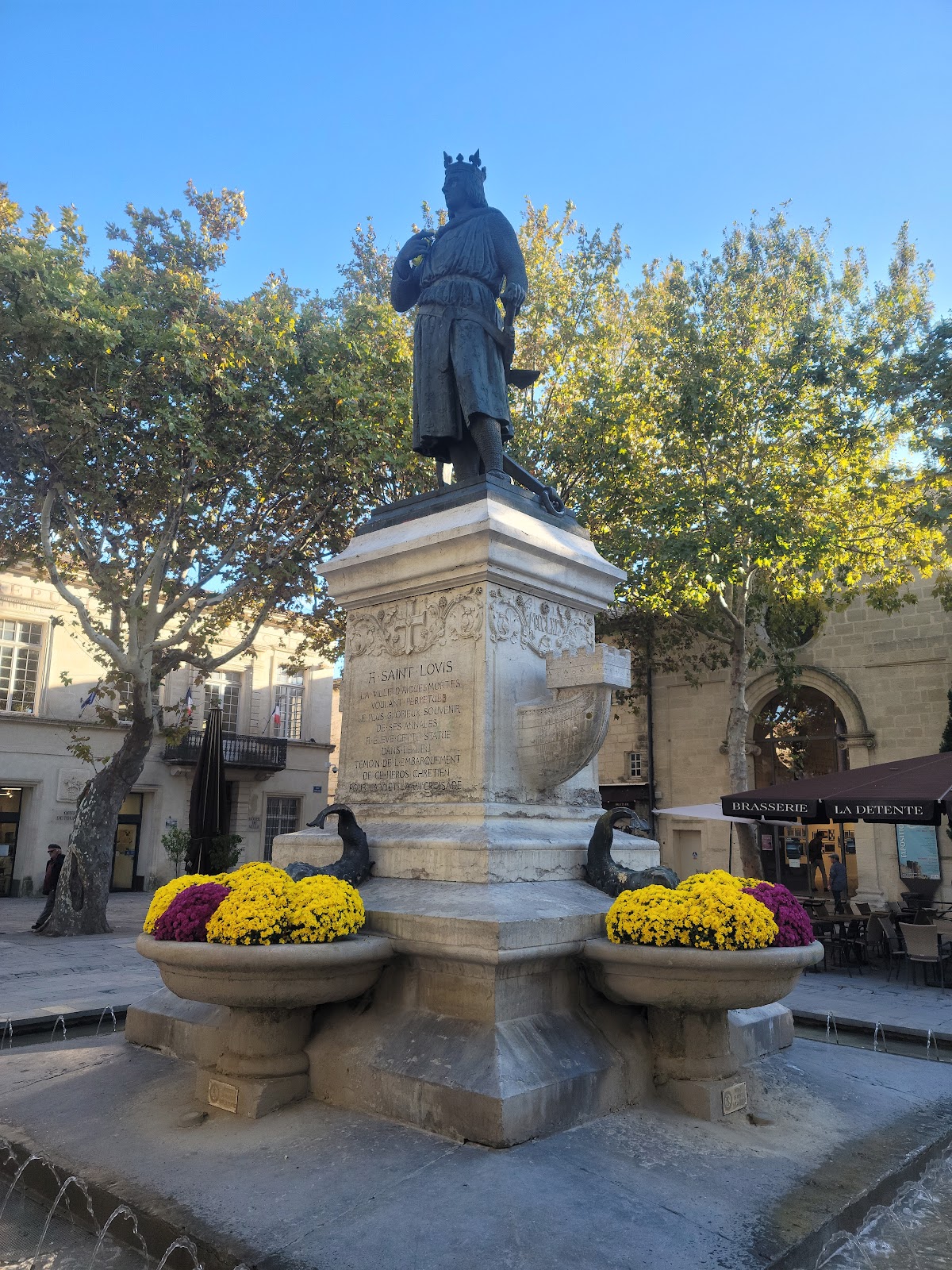
The Ramparts of Aigues-Mortes in France are a medieval French royal fortification enclosing the historic centre, developed mainly during the thirteenth and fourteenth centuries. Their construction protected a new town and port established by Louis IX, also known as Saint Louis, and created a departure point for the Seventh Crusade, the king’s military expedition to the Holy Land.
Foundation of the town and port
The territory on which Aigues-Mortes was built was purchased by Louis IX from the Abbey of Psalmodi between 1240 and 1248. The town received its foundation charter in May 1246, while franchises, privileges intended to attract settlers, encouraged a population to establish itself there.
In 1248, inhabitants requested a causeway so that the town could be reached by dry land. The port was subsequently developed, and Louis IX embarked from Aigues-Mortes that year for the Seventh Crusade. The settlement therefore served both the consolidation of royal authority in the area and the organization of the king’s departure overseas.
Royal construction of the fortifications
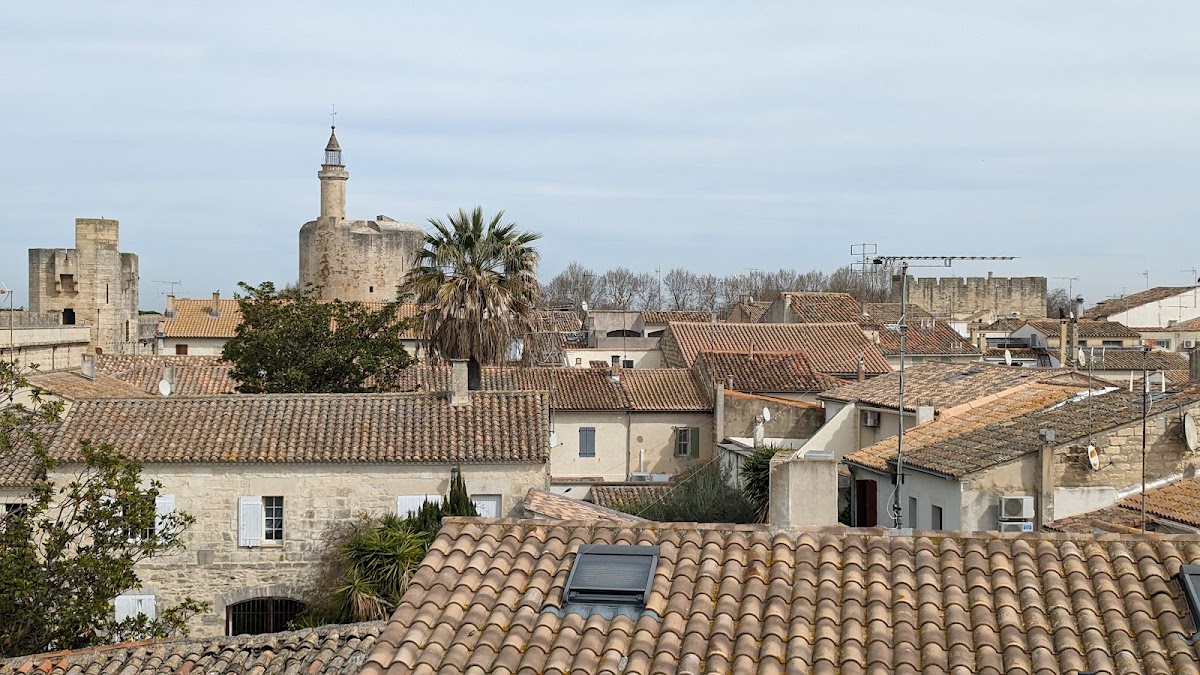
The King’s Tower, now called the Tour de Constance, was built between 1240 and 1249 to protect the road serving the new town and to safeguard pilgrims and merchants leaving for the Holy Land. The tower was not fully completed until the end of the thirteenth century, when a beacon, called a farot, was added above it.
The construction of the ramparts took place in several phases. In 1272, at the beginning of Philip III’s reign, a contract was concluded with Guglielmo Boccanegra, a Genoese political and commercial figure. In return for 5,000 livres tournois, a monetary unit used in medieval France, Boccanegra would share ownership of the town and port with the king while constructing the ramparts and improving the harbour. He died in 1274, and his heirs ended the agreement. This arrangement formed the first known construction phase.
In 1289, under Philip IV, Moncéliard, the king’s seneschal at Beaucaire, commissioned an estimated cost proposal for completing the works as quickly and economically as possible. A seneschal was a senior royal administrative official. The ramparts were already being built, and the proposal aimed to accelerate construction and correct defects associated with the earlier contract.
The 1289 contract stated that 1,580 cannes and 5 pans of curtain wall remained to be built, a distance equivalent to approximately 650 metres. A curtain wall is the continuous defensive wall linking towers in a fortification. The Tour Carbonnière represents a third phase at the end of the thirteenth century, and by 1300 the ramparts extended for about 1,600 metres near the Tour de Constance.
Memory and protection
The ramparts, the castle, and the Tour de Constance have been classified as historic monuments since 1 December 1903. Several adjoining parcels received the same protection in 1921, 1928, 1929, and 1964. The fortifications are also linked with the legend of Lou drapé, a fabulous horse said to circle the walls each night and carry away children who have become lost.
Remains
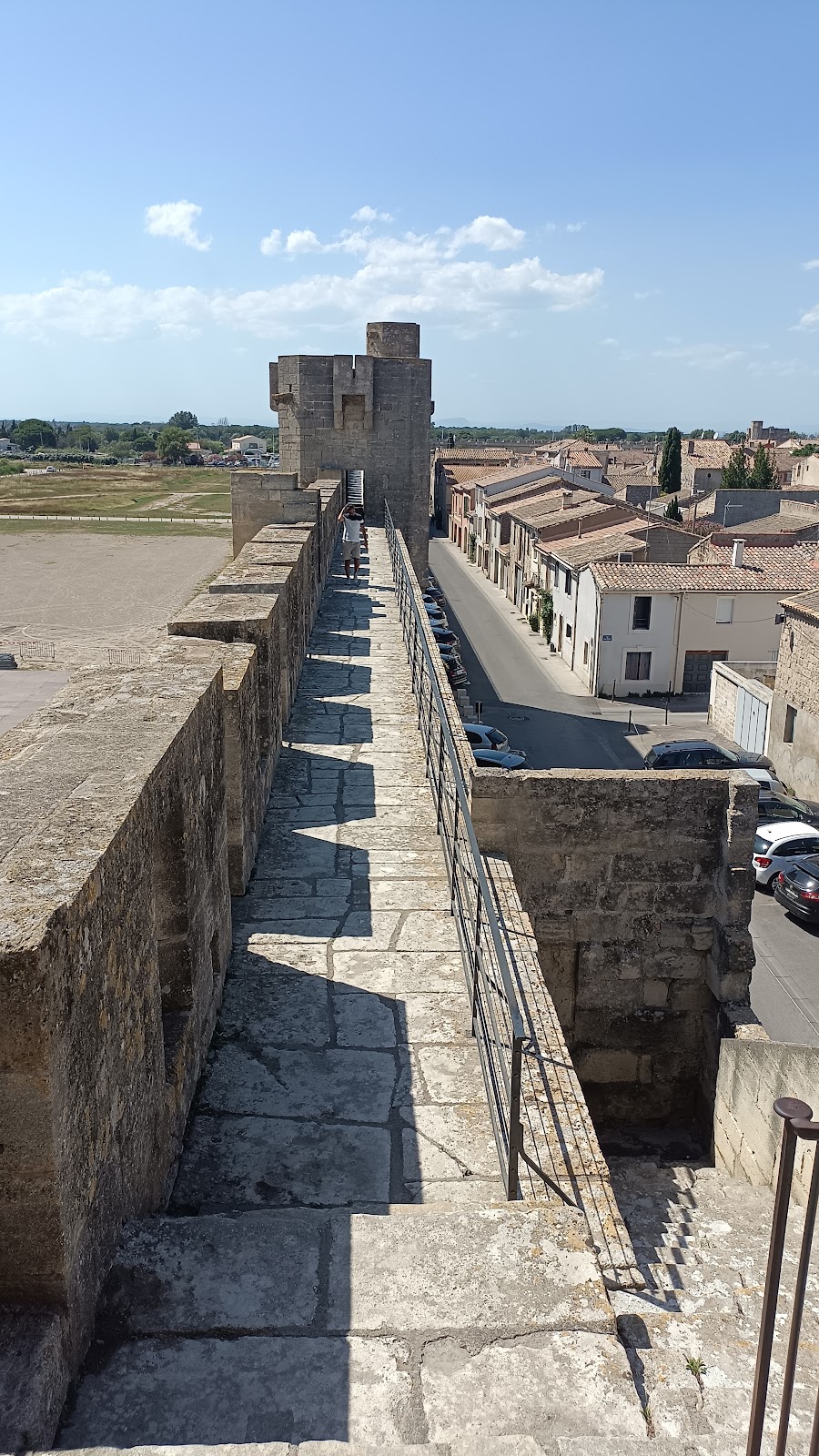
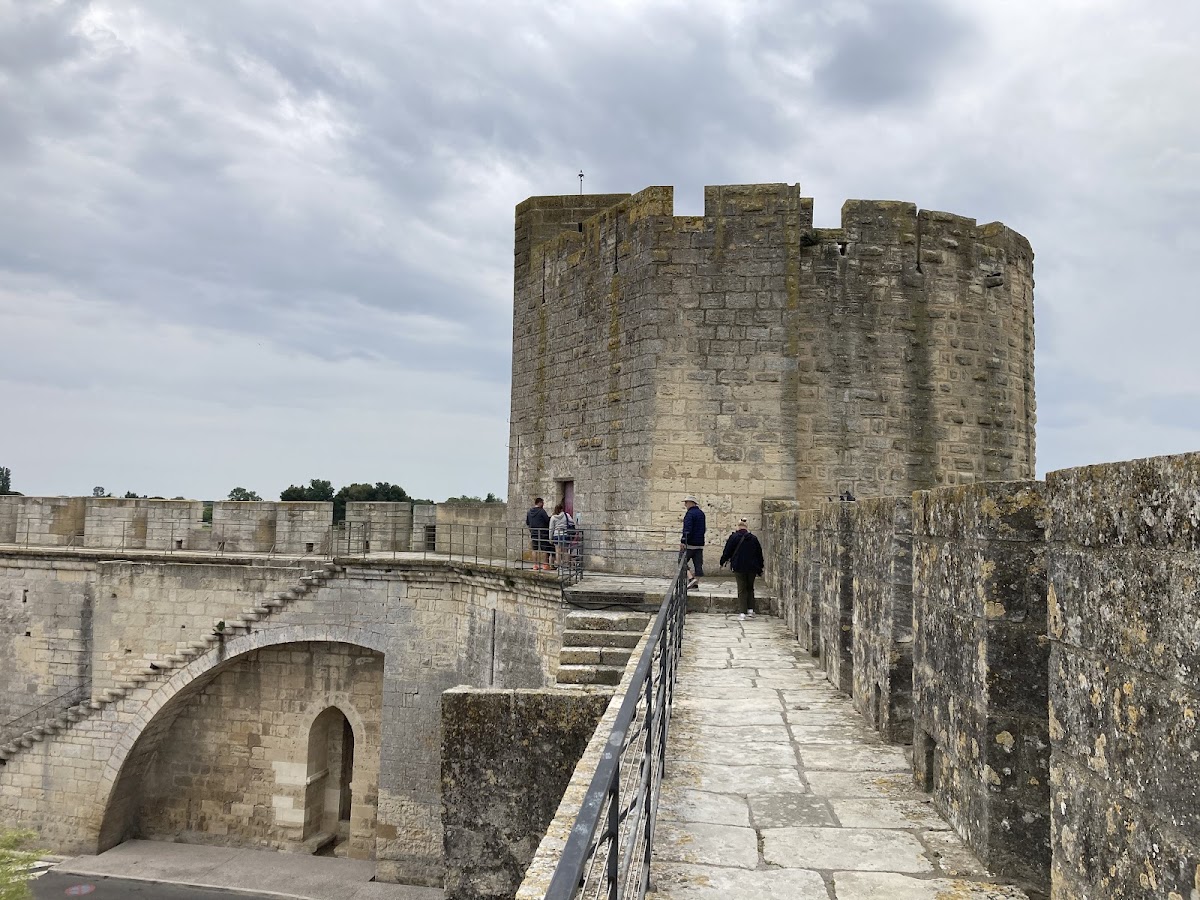
The surviving ramparts form a quadrangular masonry enclosure around the historic centre of Aigues-Mortes. Approximately 11 metres high and 1,640 metres long, the walls are flanked by fifteen towers and pierced by ten gates. Their exceptionally well-preserved condition makes them a spectacular example in western Europe of thirteenth- and fourteenth-century military architecture adapted to a marshland environment.
Walls and towers
Tour de Constance
The Tour de Constance forms part of the fortified complex and occupies a central place in its early defensive history. Begun between 1240 and 1249 as the King’s Tower, it protected the road to the new town and the people departing from its port. Its crowning beacon, the farot, was constructed at the end of the thirteenth century.
Tour Carbonnière and Tour de Villeneuve
The Tour Carbonnière belongs to the late-thirteenth-century phase of the fortification works. The Tour de Villeneuve is another named element of the fortified system. Together with the other towers, these structures reinforce the quadrangular masonry enclosure and define its defensive outline.
Gates and surrounding landscape
Ten gates pierce the enclosing walls, including the Porte de la Reine, the Porte des Cordeliers, and the Porte de la Gardette. The ramparts are associated with a saline and with the Rhône–Sète Canal, placing the fortified town within a wider landscape of water and salt production.