Zenoburg: A Roman Outpost and Medieval Tyrolean Residence in Italy


Site at a Glance
- Rating
- 4
- Popularity
- Very Low
- Country
- Italy
- Primary era
- Medieval
- Eras represented
- Classical, Medieval
- Civilizations
- Holy Roman Empire, Roman
- Site type
- Military
- Remains
- Castle
On this page8 sections
History
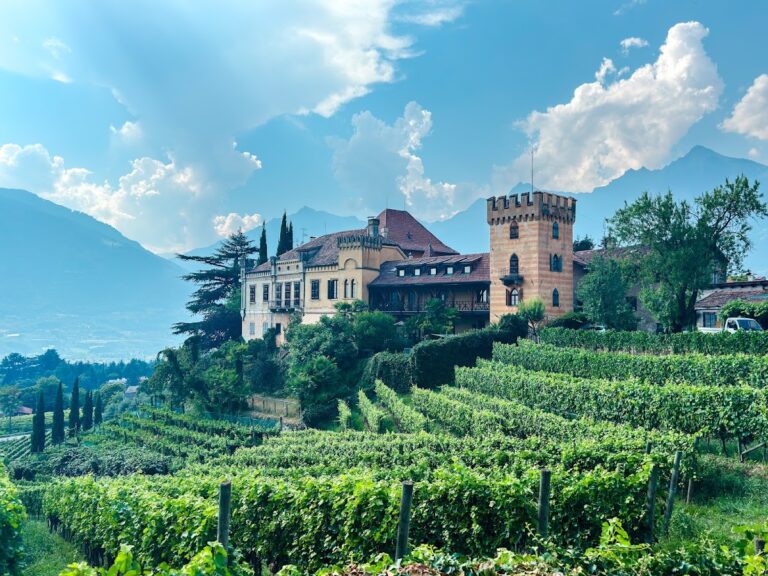
Zenoburg is a hilltop castle in Italy, above Merano in South Tyrol, whose site was first used as a Roman strategic outpost and later developed into a medieval fortified residence. The Romans called the outpost Castrum Majense or Castrum Maiensis and placed it on the lowest spur of the Kuchelberg, where the Passeier Valley meets the Adige Valley above the Merano basin. Its principal medieval building phase took place between 1285 and 1290.
Roman and Late Antique origins
The Roman position controlled trade routes through the valleys. In Late Antiquity, a chapel dedicated to Saint Zeno, a Christian saint and bishop of Verona, was built at the site. The chapel became a pilgrimage destination after Bishop Valentin of Passau was buried there between 470 and 474, followed by Bishop Corbinian of Freising in 725. Their remains were later transferred to Passau and Freising, and the chapel gradually lost its religious importance before falling into disuse.
The medieval fortified residence
Zenoburg was first recorded in 1237, when the noble Suppan family administered it. The Suppans, a ministerial family serving the territorial ruler in administrative and military roles, had established the first fortified buildings around the chapel during the thirteenth century.
Between 1285 and 1290, Meinhard II, Count of Tyrol, expanded the fortifications and the sanctuary. The work created a fortified residence and a seat of the Counts of Tyrol. After a fire partly damaged Tyrol Castle in 1301, the Tyrolean counts transferred their residence to Zenoburg. Troops of Charles IV of Luxembourg, the fourteenth-century king of Germany and Holy Roman Emperor, destroyed the castle in 1347.
During the early fourteenth century, Zenoburg and the princely castle at Gries near Bolzano served as subsidiary residences under the sons of Meinhard II. Although parts of Zenoburg later decayed, a princely administrator continued to be appointed there, or the property was granted as a fief, meaning land or property assigned in return for service. Berthold Feierabend received it in 1486.
Decline, restoration, and modern history
The Habsburg succession to the Tyrolean counts did not stop the castle’s decline. During the nineteenth century, Leopold von Braitenberg acquired Zenoburg and began restoration work, which his descendants continued. The site remained privately owned by the Braitenberg family.
In autumn 1944, the National Socialist administration of South Tyrol, led by Gauleiter Franz Hofer, held a politically instrumentalized harvest thanksgiving festival at Zenoburg. Carl von Braitenberg later secured the ruins, particularly during the 1970s and 1980s. Restoration and maintenance continued under later descendants, including Valentino and Zeno von Braitenberg. Zenoburg is identified as a cultural heritage monument in South Tyrol.
Remains
Fortified complex and chapel
The surviving site is a castle ruin on a rocky spur at the entrance to the Passeier Valley. Its remains combine the medieval fortifications and residence with the castle chapel, which formed the religious core of the complex. The chapel was later enclosed within, or incorporated into, the fortified site. The principal surviving architectural phase belongs to the construction and expansion undertaken between 1285 and 1290, while later conservation has stabilized parts of the ruined complex.
Castle chapel
The chapel is dedicated to Saint Zeno and preserves a portal with a built-in heraldic emblem bearing the Tyrolean eagle above the present gate. Set into the portal is a late Romanesque stone sculpture of the eagle, dated to around 1300. This sculpture served as the model for a Tyrolean eagle installed in 1960 on the New Landhaus in Innsbruck.
Fortifications and residence
The castle’s fortifications and residential buildings represent the medieval transformation of the earlier Roman and religious site. They were built or expanded under Meinhard II between 1285 and 1290, creating a fortified seat for the Counts of Tyrol. The complex later underwent partial decay, and the surviving ruins have been secured and maintained through restoration work carried out by the Braitenberg family and its descendants.