Torres de Oeste: A Roman and Medieval Fortress in Spain


Site at a Glance
- Rating
- 4.5
- Popularity
- Medium
- Country
- Spain
- Primary era
- Medieval
- Eras represented
- Classical, Medieval
- Civilizations
- Kingdom of León, Roman
- Site type
- Military
- Remains
- Castle
On this page8 sections
History
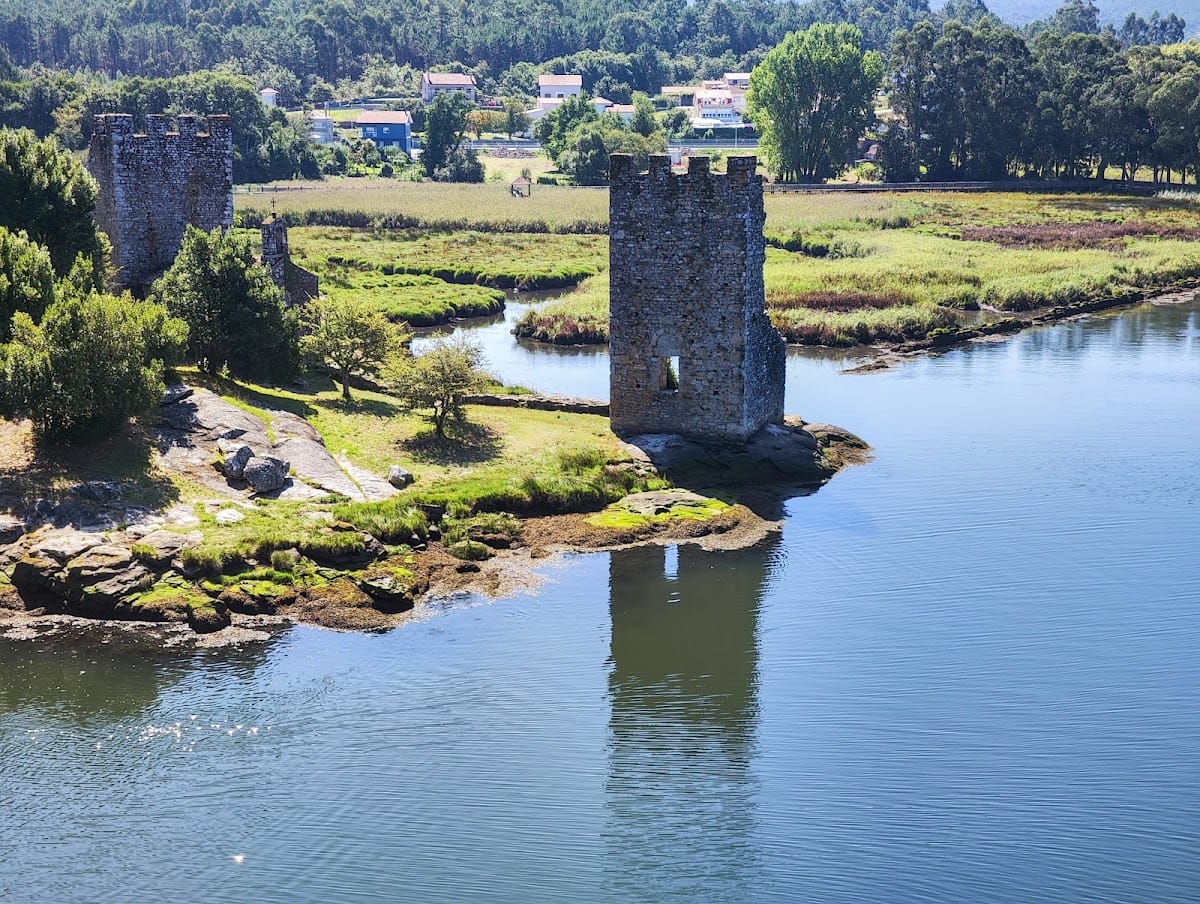
Torres de Oeste is an archaeological site in Spain, at Catoira in Galicia, whose consolidated ruins began as a Roman defensive installation and later became a medieval fortress defending the lands of the Archdiocese of Santiago de Compostela against Norman attacks. Known also by the Latin name Castellum Honesti, the site stands where the Ulla River meets the Arousa estuary.
Before and during the Roman period
Human activity at Torres de Oeste reaches back to the pre-Roman hillfort period. Pottery and bronze implements point to this early use of the site. The date of the towers’ construction was debated for many years, although the Roman geographer Pomponius Mela referred to the Turris Augusti at the mouth of the Ulla. Excavations in the mid-twentieth century confirmed Roman remains within the foundations of the towers.
Medieval defenses of the estuary
During the tenth century, repeated Norman attacks entered the Arousa estuary. Bishop Sisnando died while defending his diocese, and his successors responded by repairing and strengthening the estuary’s fortifications. On 29 October 1024, Afonso V, the medieval king of León and Castile, donated the towers and their domains to Vistruario, Bishop of Iria.
Around 1040, Bishop Cresconius ordered major reforms. The complex was enlarged and rebuilt further under his successors Diego Páez and Diego Gelmírez. Gelmírez, a bishop of Santiago who later became the city’s first archbishop, established the chapel from its foundations in 1122 and dedicated it to the Apostle Saint James.
The castle reached its definitive form during the twelfth century. An enclosure with seven towers surrounded a parade ground, while the marshes around the fortress added to its defensive setting. Its strategic purpose declined from the fifteenth century, and much of the complex was destroyed in 1525.
Archaeology and later history
The chapel was rebuilt in modern times. Older images show that its vaults had collapsed completely before this rebuilding. Archaeologist and University of Santiago de Compostela professor Alberto Balil Illana excavated the site in 1971. Torres de Oeste was declared a National Monument and received cultural-heritage protection in 1931.
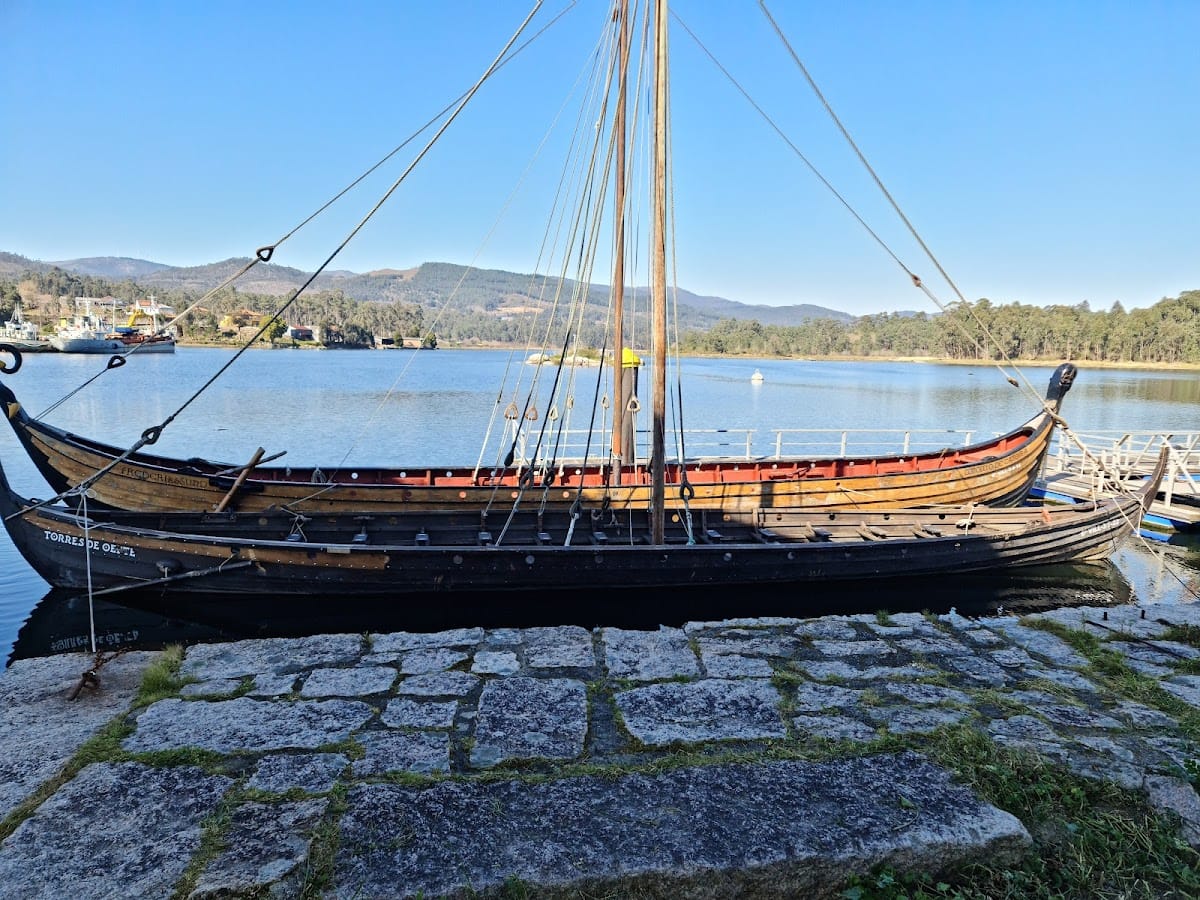
Each summer, on the first Sunday of August, the ruins host a Viking pilgrimage festival that recreates the castle’s defense against a Norman attack. The event preserves the memory of the medieval conflicts that shaped the fortress’s role at the estuary.
Remains
Towers and fortified enclosure
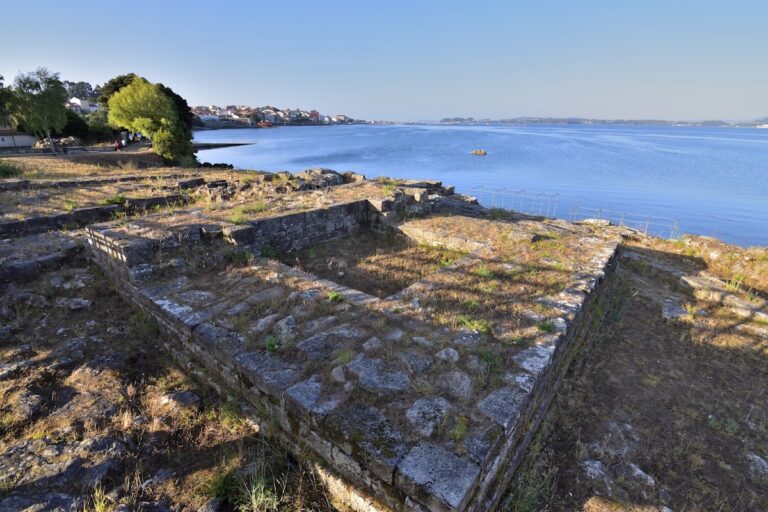
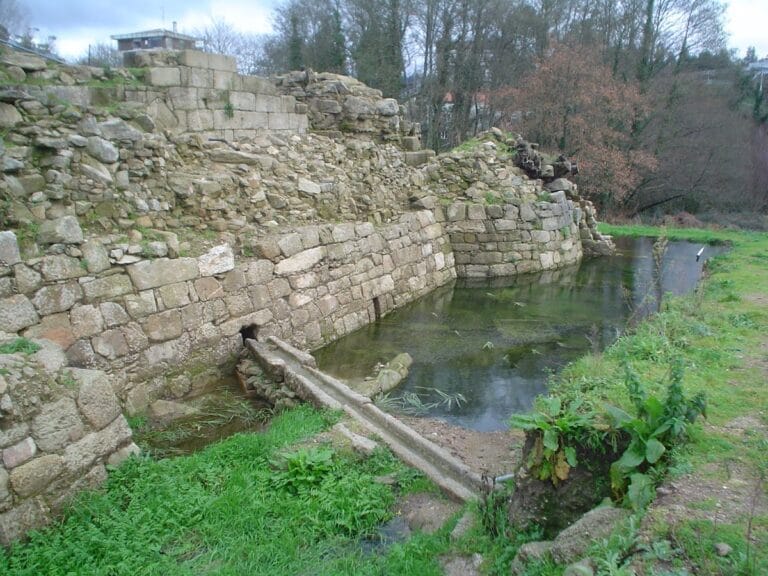
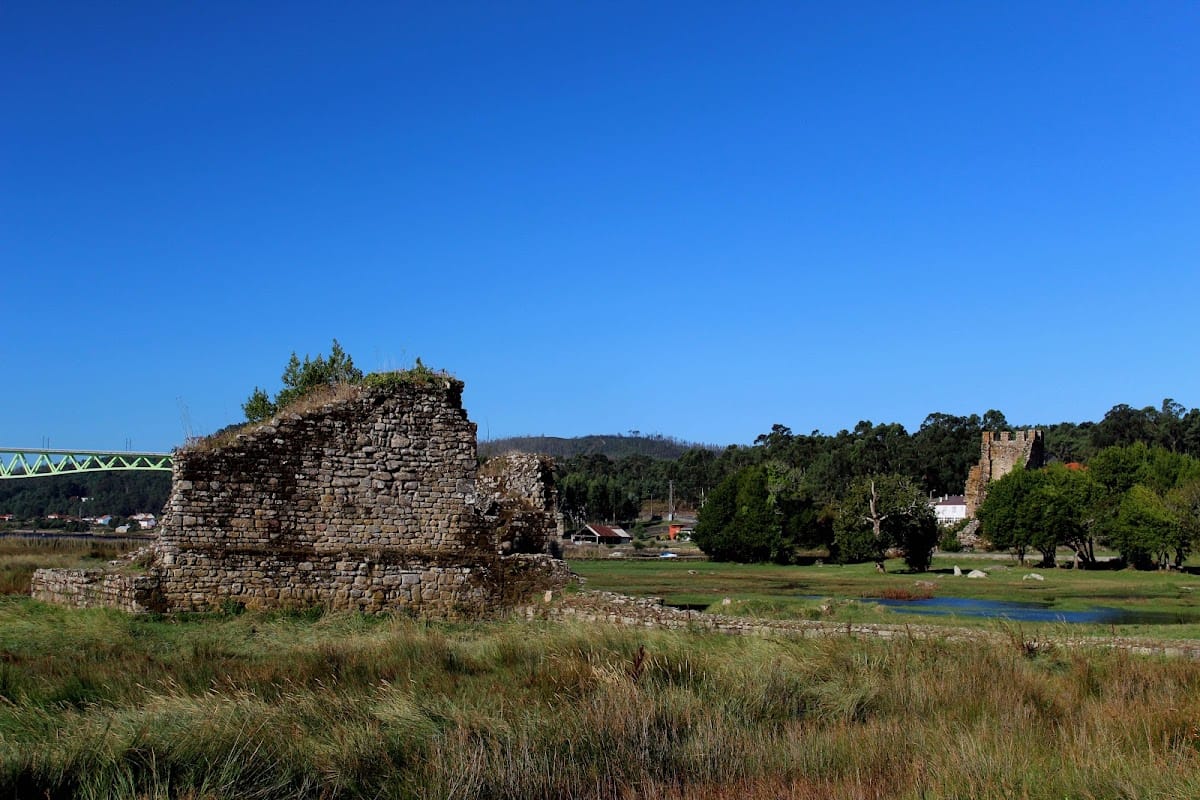
The surviving fortress is represented by the consolidated remains of two towers whose elevations still stand, together with a third tower reduced to a severely ruined state. All three have square plans. Their walls use medium-sized ashlar masonry, known as Asturian masonry, with larger ashlar blocks reinforcing the corners and door jambs. The wider castle was enclosed by a wall and contained seven towers arranged around a parade ground, with the surrounding marshes forming part of its defenses.
Chapel of Saint James
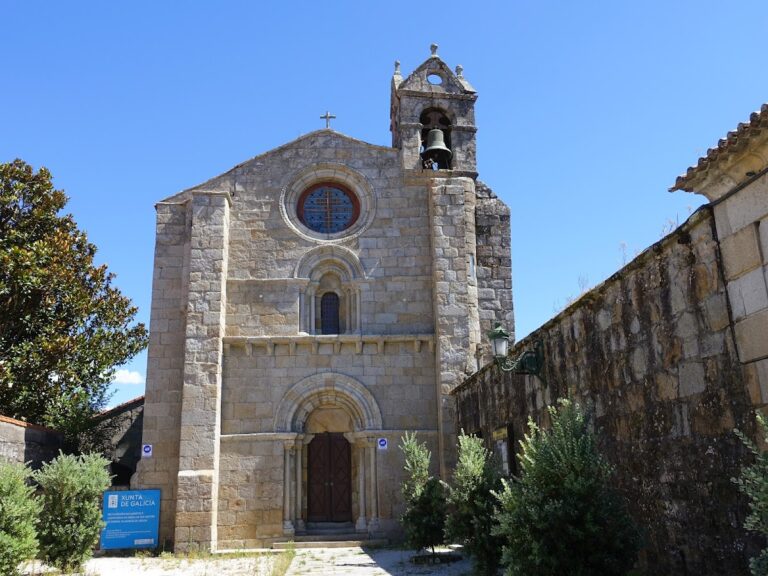
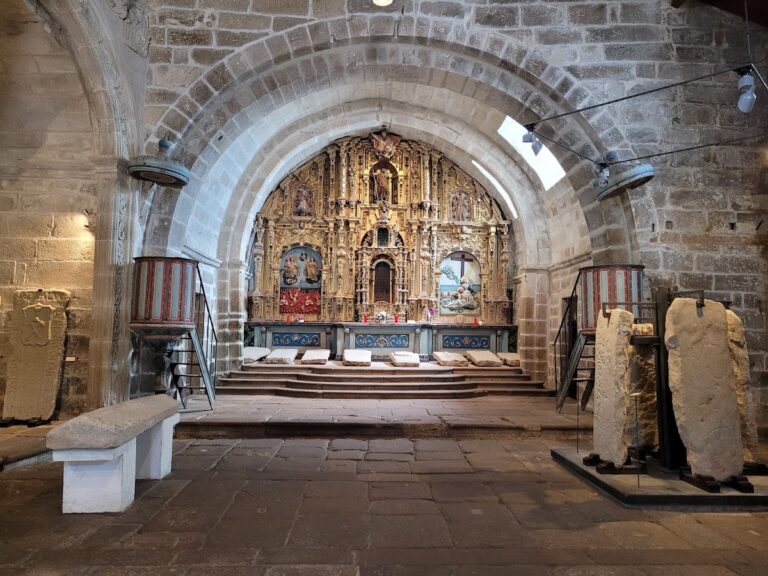
Attached to one of the towers, the chapel has a single nave and a semicircular apse. Its walls are built with sparse ashlar arranged in irregular courses. The nave is covered by a barrel vault whose profile follows a horseshoe arch, a curve extending beyond a semicircle, while the semicircular triumphal arch rests on jambs with stepped offsets.
The principal facade ends in a single-opening bell gable, a wall structure with an opening for a bell. Its doorway has a pentagonal lintel beneath a semicircular arch, and the tympanum retains part of an inscription that is difficult to read. The southern facade has a lintelled doorway with a relieving arch similar to the entrance on the western facade. Five arrow slits with horseshoe arches pierce the northern facade.
Inscriptions and recovered objects
The Pontevedra Museum preserves a voussoir from Torres de Oeste, catalogued as number 1488, with the inscription “ERA MCC.” It also holds a rectangular relief, catalogued as number 2088, showing a Greek cross with suspended alpha and omega symbols and the inscription “IN HOC SIGNO TUETUR PIUS HOC SIGNO VINCITUR INIMICUS.” A copper-and-silver denier minted at Angers between the eleventh and twelfth centuries was found accidentally near the Chapel of Saint James in 2022. Its arrival at the site remains uncertain, with possible explanations including transport along river trade routes or a connection with Diego Gelmírez’s journeys.
Nearby sites