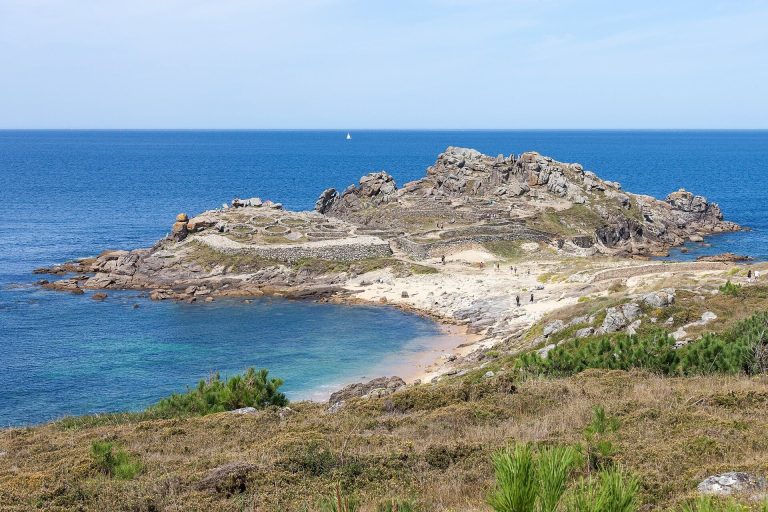
Monastery of San Cibrán de Cálago: A High Medieval Monastic Site in Spain
Site at a Glance
- Rating
- 4.2
- Popularity
- Low
- Country
- Spain
- Primary era
- Medieval
- External website
- Open
- Eras represented
- Iron Age, Classical, Medieval
- Civilizations
- Kingdom of León
- Site type
- Religious
- Remains
- Monastery
On this page11 sections
History
The Monastery of San Cibrán de Cálago was a High Medieval Catholic monastery in Spain, located in Vilanova de Arousa and dedicated to Saint Cyprian of Carthage, a third-century Christian bishop and theologian. It was founded in the seventh century by Saint Fructuosus, an Iberian monastic founder and bishop associated with the spread of monasticism in northwestern Iberia, during the expansion of Christianity in the Middle Ages. The monastery belonged to the Archdiocese of Santiago de Compostela and followed the Rule of Saint Benedict, a Western Christian code governing communal religious life, prayer, discipline, and work.
Foundation and Benedictine life
A record from 846 confirms that the monastery was already in existence. It states that the foundation was given to Abbot Viliato and sixteen monks who followed the Benedictine rule. The monastery formed part of the developing Christian landscape of Galicia, where religious communities held land and organized spiritual and economic life.
In 884, Norman Viking attacks along the Galician coast destroyed the monastery. It was rebuilt afterwards, and in 929 Alfonso IV of León and Galicia granted the revenues of nearby saltworks to Abbot André and the monks. Alfonso IV, later known as “the Monk” after withdrawing from active rule, thus reinforced the community’s economic resources.
Destruction, rebuilding, and ecclesiastical control
The monastery suffered another destruction in 997, when troops led by Almanzor attacked the region. Almanzor was the powerful military ruler of the Umayyad polity based at Córdoba who directed major raids against Christian territories in Iberia. The expedition also sacked Santiago de Compostela and the basilica built there by Alfonso II in 899.
In 1114, Ramiro Muñiz donated the town and church of Caleiro, the monastery of Cálago, and other properties in the Salnés region to Santiago Cathedral. The wording indicates that a new building had been constructed while the foundation retained its dedication. Cálago later came under the authority of Santiago Cathedral and then became a priory of San Martiño Pinario, a Benedictine monastery in Santiago de Compostela.
Parish church and later decline
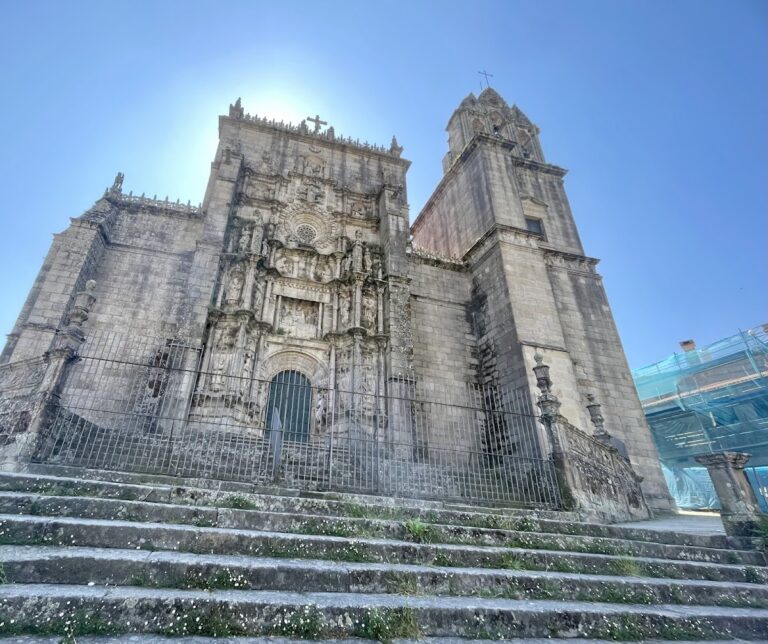
The church continued as the parish church of Vilanova, whose patron remained Saint Cyprian. Around 1810, the parish was transferred to the Church of A Pastoriza. That church was built partly with stone taken from the monastery, while sculptural remains and granite pieces from the former complex were reused elsewhere in Vilanova. Local tradition also connects many houses in the town with stone from the monastery.
The former church declined into ruin during the nineteenth and twentieth centuries. Antonio López Ferreiro described parts of it as still standing in his time. A drawing made by Ramón Fontenla in 1905 showed elements at the cemetery entrance and the church apse, while a photograph by Francisco Zagala from 1906 showed the apse in ruins. The church is believed to have occupied the area now used by the municipal cemetery, slightly more than 100 metres north of the Cálago Tower. Parish records refer to burials inside the church and in its churchyard.
Archaeological investigation and historical associations
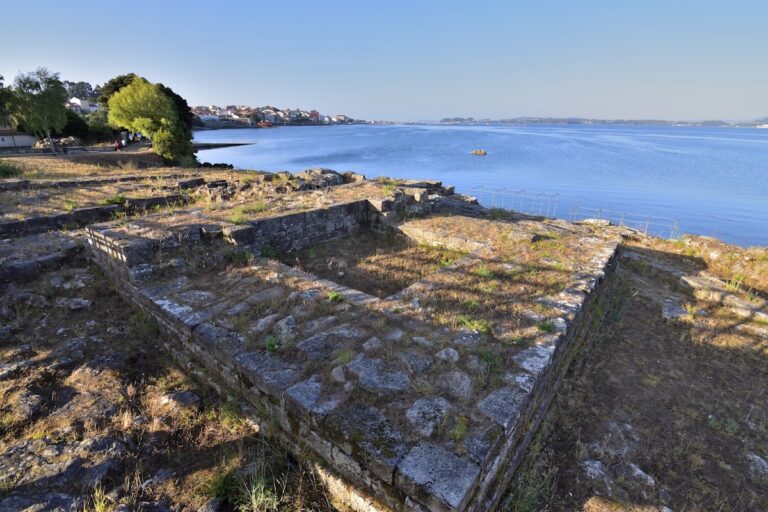
Since 2017, the Xunta de Galicia and the Municipality of Vilanova have carried out successive excavations and geophysical surveys around the tower, across the open area between the tower and cemetery, and farther south. The work has examined the hill known as the Castro de Cálago, where the medieval monastery formed part of a much longer sequence of occupation. The tower’s proximity to the Arousa estuary may have allowed it to serve as a coastal watchpoint or as a place for warning signals to nearby watchtowers, although this interpretation remains conjectural.
The 2012 Spiritual Variant of the Portuguese Way was established as an alternative pilgrimage route between Pontevedra and Vilanova de Arousa. It passes through the monasteries of Poio, A Armenteira, and Cálago before continuing towards the traditional Portuguese Way at Pontecesures, by land or along the Arousa Sea Route. The Padre Sarmiento Route also passes beside the ruins of the Cálago Tower, following the coastal itinerary associated with Martín Sarmiento’s journey from Pontevedra to Santiago in 1745.
Remains
Monastic tower and former church
Cálago Tower
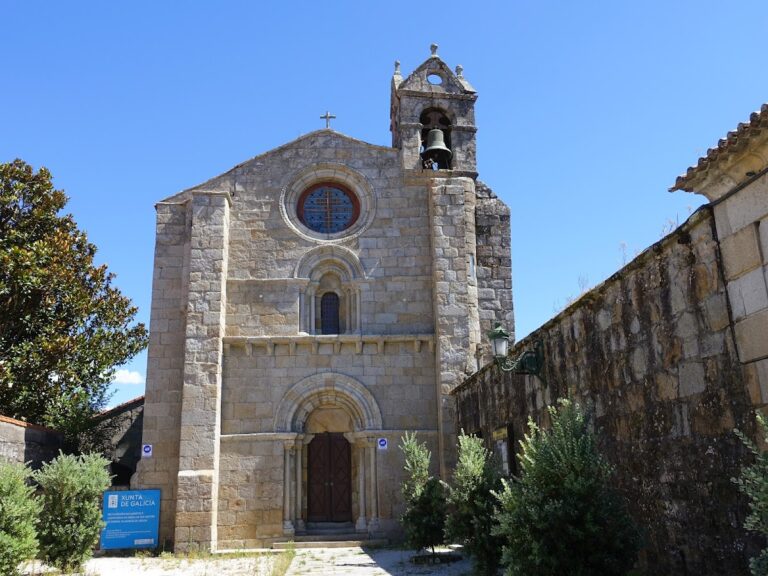
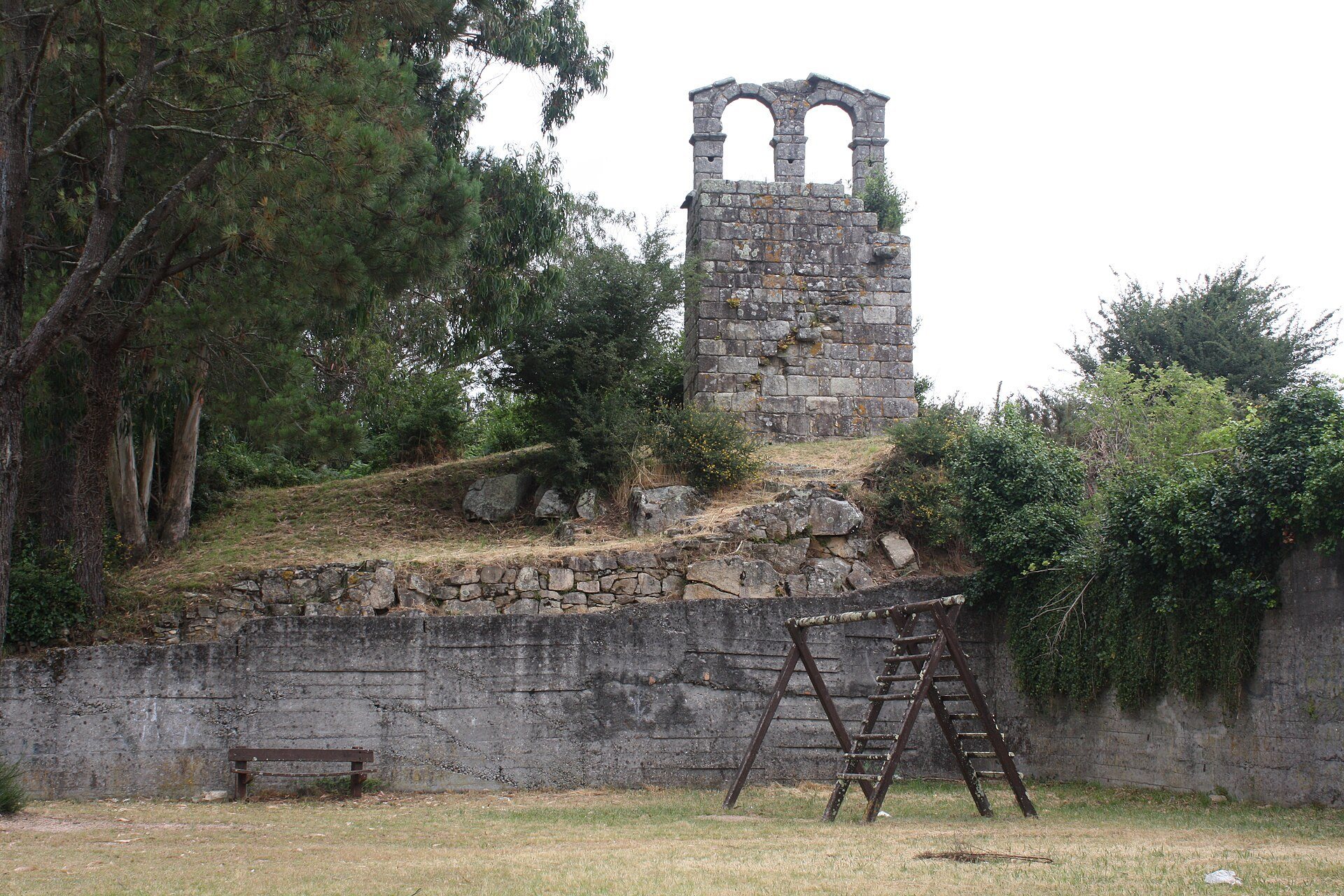
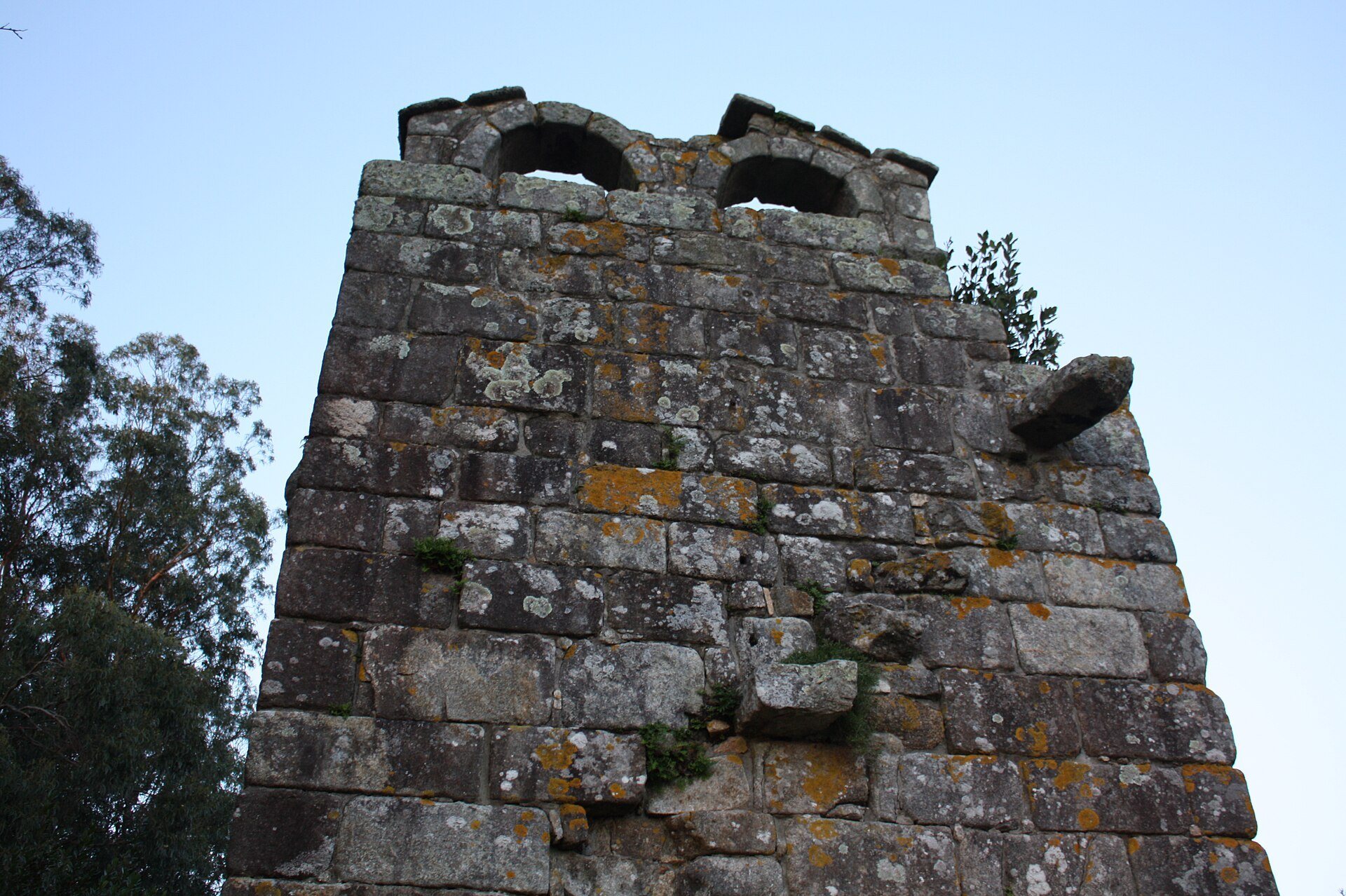
The monastery has disappeared almost entirely as a standing complex. Its surviving in-situ remnant is part of the bell tower known as the Cálago Tower or Campanario, situated in Cálago within the urban centre of Vilanova de Arousa. The tower stands on the summit of the hill occupied by the Castro de Cálago and is represented on the municipal coat of arms as an element of the town’s identity. Its possible use as a coastal watch and defensive point remains an interpretation rather than a confirmed function.
Former monastery church
The former church is associated with the site of the present municipal cemetery, slightly more than 100 metres north of the tower. Its apse survived into the early twentieth century in a ruined state and was captured in Fontenla’s 1905 drawing and Zagala’s 1906 photograph. Stone from the church was later incorporated into the Church of A Pastoriza, while other sculptural fragments were reused at locations elsewhere in Vilanova.
Castro de Cálago
The archaeological site occupies the summit of the hill on which the tower stands and is listed in the Galician Cultural Heritage Catalogue. It includes the Castro de Cálago, a fortified Iron Age hilltop settlement characteristic of northwestern Iberia. The settlement is thought to have had an approximately elliptical plan measuring about 105 by 80 metres, with occupation extending onto the terrace descending northward towards the cemetery. Its use has been estimated from the fourth century BC to the fourth century AD.
Archaeological finds
Geophysical surveys and test excavations have identified shallow Iron Age remains, including a dwelling approximately 6 metres in diameter. Bronze objects, including what appears to be a bracelet, have also been found, together with Late Roman pottery. Some of the pottery originated outside Galicia, providing evidence for maritime connections involving the settlement.
In 2020, excavators uncovered an early medieval inhumation grave in the southern area of the site. The burial dates from between the fifth and sixth centuries AD. Archaeological structures and a shell midden, an accumulation of shells and other refuse from past human activity, lay beneath the grave. The human remains were given the name Ventura, and further human remains were found without associated archaeological context. Excavations also produced sculptural pieces that were reused in other locations, adding to the surviving material evidence connected with Cálago.