Church of St Mary: A Fifteenth-Century Parish Church in Totnes


Site at a Glance
- Rating
- 4.4
- Popularity
- Very Low
- Country
- United Kingdom
- Primary era
- Medieval
- External website
- Open
- Eras represented
- Medieval, Modern
- Civilizations
- British, English
- Site type
- Religious
- Remains
- Church
On this page11 sections
History
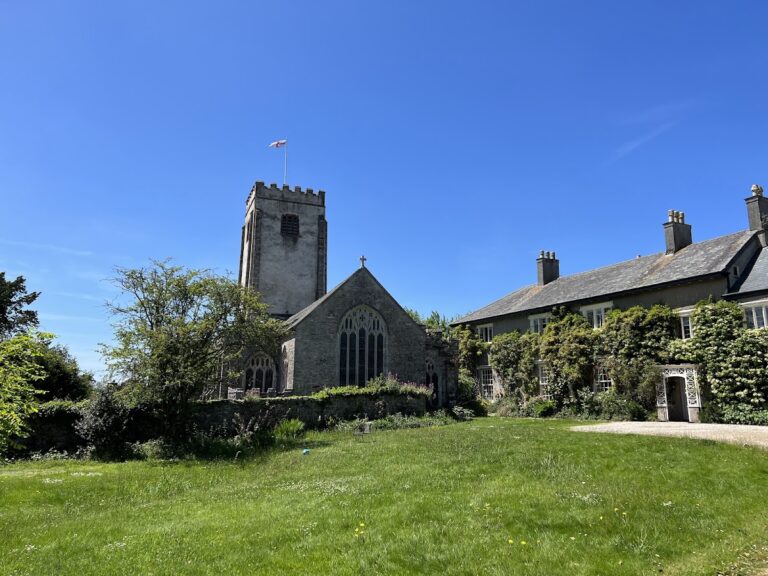
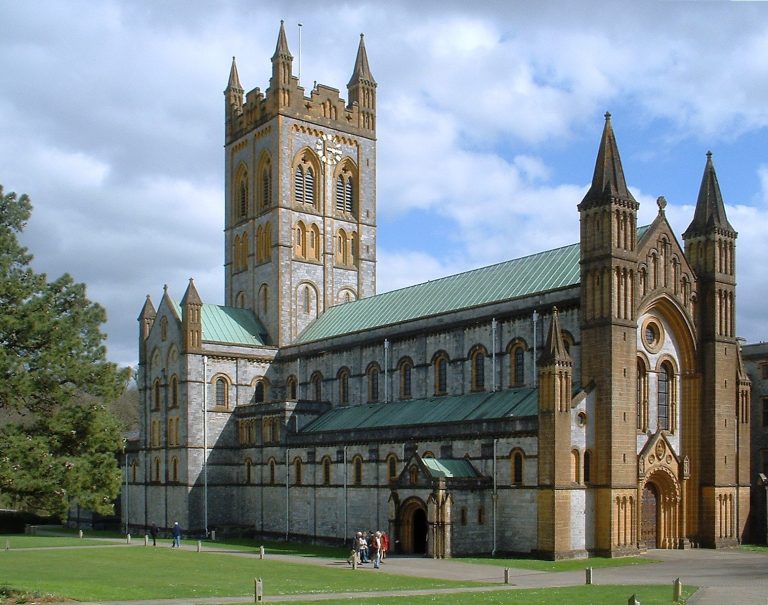
Church of St Mary is a Church of England parish church in Totnes, United Kingdom, dedicated to Saint Mary the Virgin. The Church of England is the English branch of the Anglican tradition that emerged from the sixteenth-century English Reformation. The church was rebuilt during the fifteenth century as part of the Benedictine Priory of St Mary, a religious community whose members followed the Rule of Saint Benedict.
Fifteenth-century rebuilding
The townspeople reached an arrangement with the priory for the church’s complete rebuilding. Work proceeded in distinct stages. The nave was constructed between 1432 and 1444, followed by the chancel from 1445 to 1448, the tower from 1449 to 1459, and the screen from 1459 to 1460.
Roger Crowden is recorded as the designer of the tower. The similarity between the tower and other parts of the church has led to the possibility that he was responsible for the wider rebuilding. The resemblance between the church’s pillars and those at St Mary’s Church in Brixham also suggests that the two buildings may have shared an architect.
Later alterations and religious use
An outer north aisle was added in 1824. In 1869, Sir Gilbert Scott, a prominent nineteenth-century English architect, modified the aisle and added seating. This work allowed the western galleries and the galleries in the rood loft to be removed. A rood loft was a gallery associated with a representation of the Crucifixion above the division between the nave and chancel.
The church probably had an organ before the English Reformation. Its first post-Reformation organ was installed in 1720 and remained in use until 1817, when Flight and Robson supplied a replacement. The basis of the present organ was built by Father Henry Willis for the Great Exhibition of 1851. Willis installed and opened it at Totnes on 11 August 1861, after which the instrument underwent further restoration and modification.
Church of St Mary is a Grade I listed building, a category reserved in England for buildings of exceptional architectural or historic interest. The designation was granted on 7 January 1952.
Remains
The surviving church is organized around a fifteenth-century nave, chancel, tower, and screen, with later additions including the outer north aisle and the south chancel aisle. The building also includes western galleries and galleries associated with the rood loft, although these were removed after the north aisle was altered in 1869.
Medieval fabric and memorial
Fifteenth-century tower
The fifteenth-century tower is attributed to Roger Crowden. Its pillars have a design similar to those at St Mary’s Church in Brixham, a resemblance that forms part of the evidence for a possible architectural connection between the two churches.
Walter Smith’s monument
In the south chancel aisle, the monument to Walter Smith, who died in 1555, consists of a tomb chest set within an ogee recess. The recess has a pointed profile formed by opposing concave and convex curves, and its decoration includes quatrefoils, four-lobed ornamental motifs.
Fittings and instruments
Pipe organ
The present pipe organ has three manuals, or hand-operated keyboards, and pedals operated by the feet. Its 33 speaking stops are sets of pipes producing the instrument’s different sounds. The organ incorporates the basis of the instrument built by Father Henry Willis for the 1851 Great Exhibition and installed at the church in 1861, with later restorations and modifications shaping its present form.
Brass candelabra
A brass candelabra installed in 1701 forms part of the church’s later furnishings.
Bell peal
The tower contains eight bells. Four were made by Abraham Rudhall in 1732, two by John Warner and Sons in 1863, one by the same firm in 1897, and one by Gillett and Johnston in 1935.