Totnes Guildhall: A Tudor Civic and Judicial Building
Site at a Glance
- Popularity
- Medium
- Country
- United Kingdom
- Primary era
- Early Modern
- Eras represented
- Early Modern, Modern
- Civilizations
- British, English
- Site type
- Civic
- Remains
- Town Hall
On this page11 sections
History
Totnes Guildhall is a sixteenth-century Tudor civic building in Totnes, United Kingdom, adapted from a former priory refectory. It has served as a town meeting place, magistrates’ court and jail, as well as a seat of local government.
The town charter and earlier guildhall
In 1206, King John granted Totnes a charter allowing the town to make its own bylaws. Local merchants later established a guild, an association of merchants or craftspeople, and built an earlier guildhall on the High Street. In the late sixteenth century, that building was used to measure and stamp cloth. It was subsequently rebuilt as a private residence in 1719.
From priory refectory to guildhall
The present guildhall occupies part of Totnes Priory, a religious house governed by a prior and founded by Juhel de Totnes. After monastic institutions in England and Wales were suppressed in the 1540s, Edward VI granted Totnes a charter in 1553 permitting the former monks’ refectory, their communal dining hall, to become a guildhall.
Part of the first floor was adapted for use as a magistrates’ court in 1624. During the English Civil War, the conflict between Royalists and Parliamentarians from 1642 to 1651, soldiers were billeted in the building. In 1646, Parliamentarian commanders Oliver Cromwell and Thomas Fairfax met in the council chamber.
Civic, judicial and municipal use
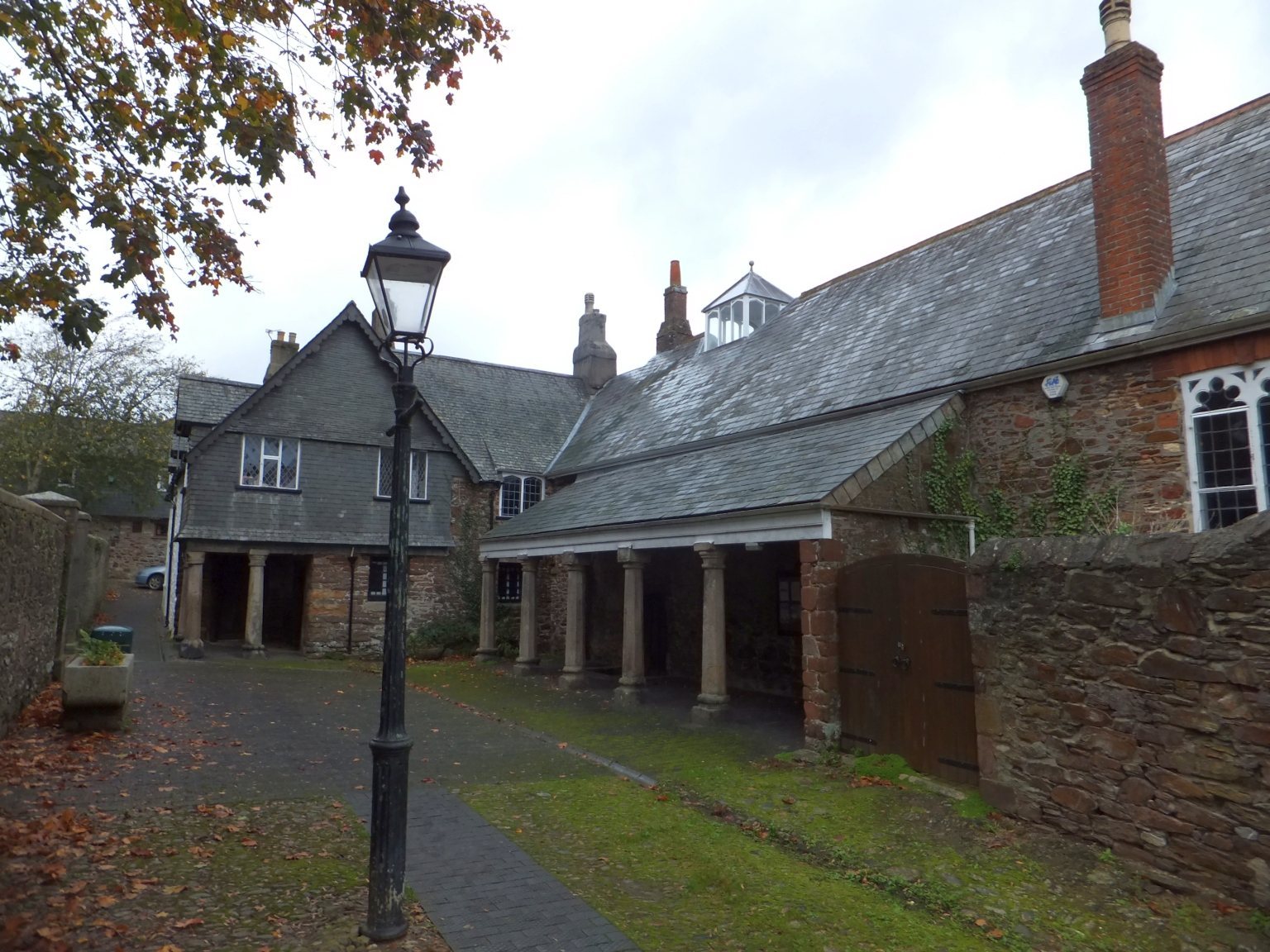
The lower hall served as a public meeting room. After prison cells were built in the basement, the guildhall also functioned as the town jail until 1887. An eastward extension with a loggia, a covered gallery open along one or more sides, was added in 1897.
The council chamber remained the borough’s meeting place, but the guildhall ceased to be Totnes’s local government seat after South Hams District Council was formed under the Local Government Act 1972, which reorganized local government in England and Wales. Court hearings continued in the building until 1974. Totnes Town Council still uses it for meetings and ceremonial events. The building was designated Grade I on 7 January 1952, the highest listed-building grade in England, reserved for buildings of exceptional interest.
Remains
The sixteenth-century Tudor building occupies the former priory structure. Its principal spaces are a lower hall and a first-floor council chamber, with a later loggia extending the building eastward in front of the original structure.
Surviving spaces and features
Lower hall
The lower hall forms one of the building’s two principal internal spaces. It served as a public meeting room.
Council chamber
The council chamber is at the west end of the first floor. Oak tables in the chamber were present when Cromwell and Fairfax met there in 1646.
Basement cells
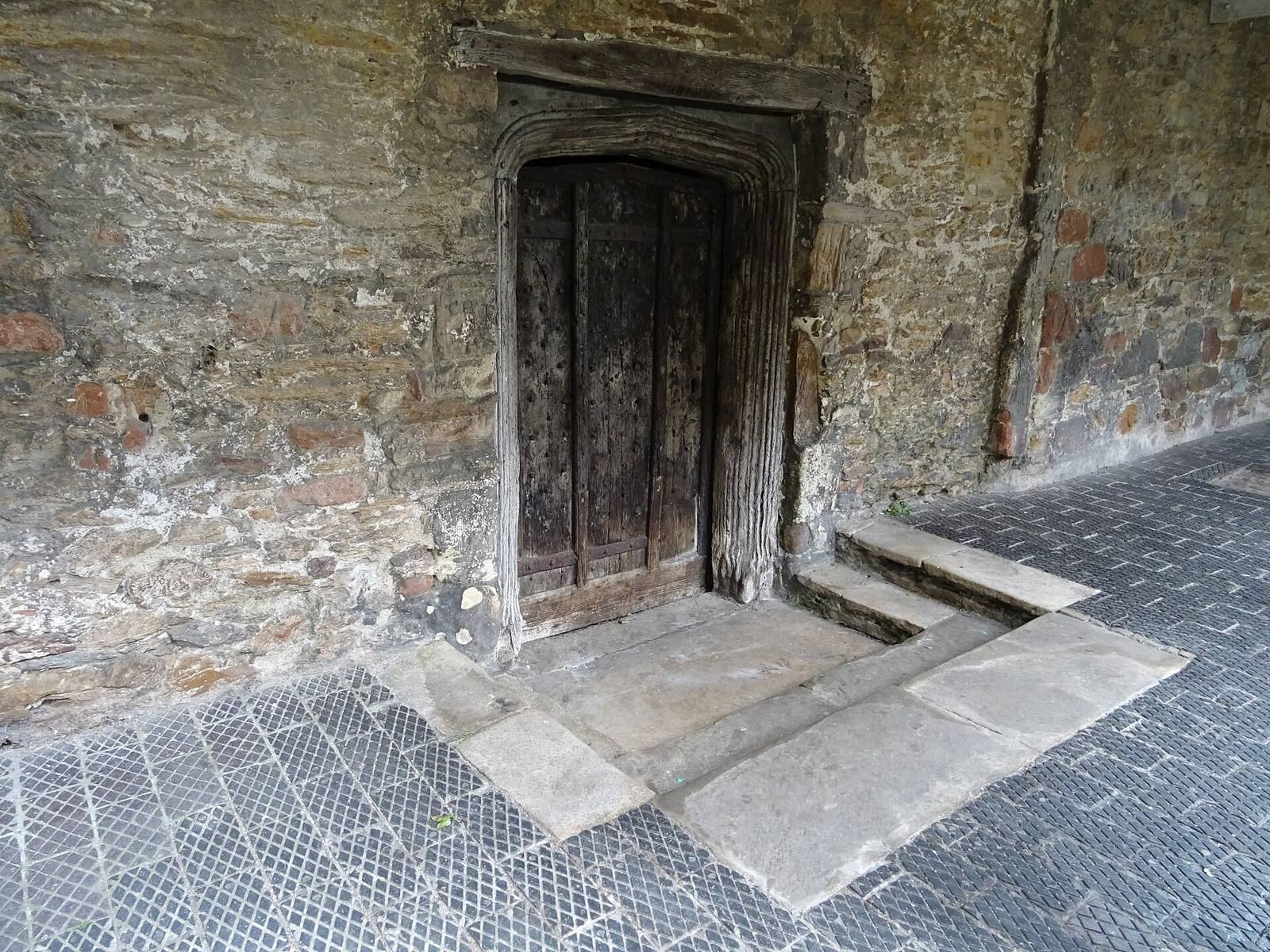
Prison cells were constructed in the basement, which formed part of the building’s use as the town jail.
East loggia
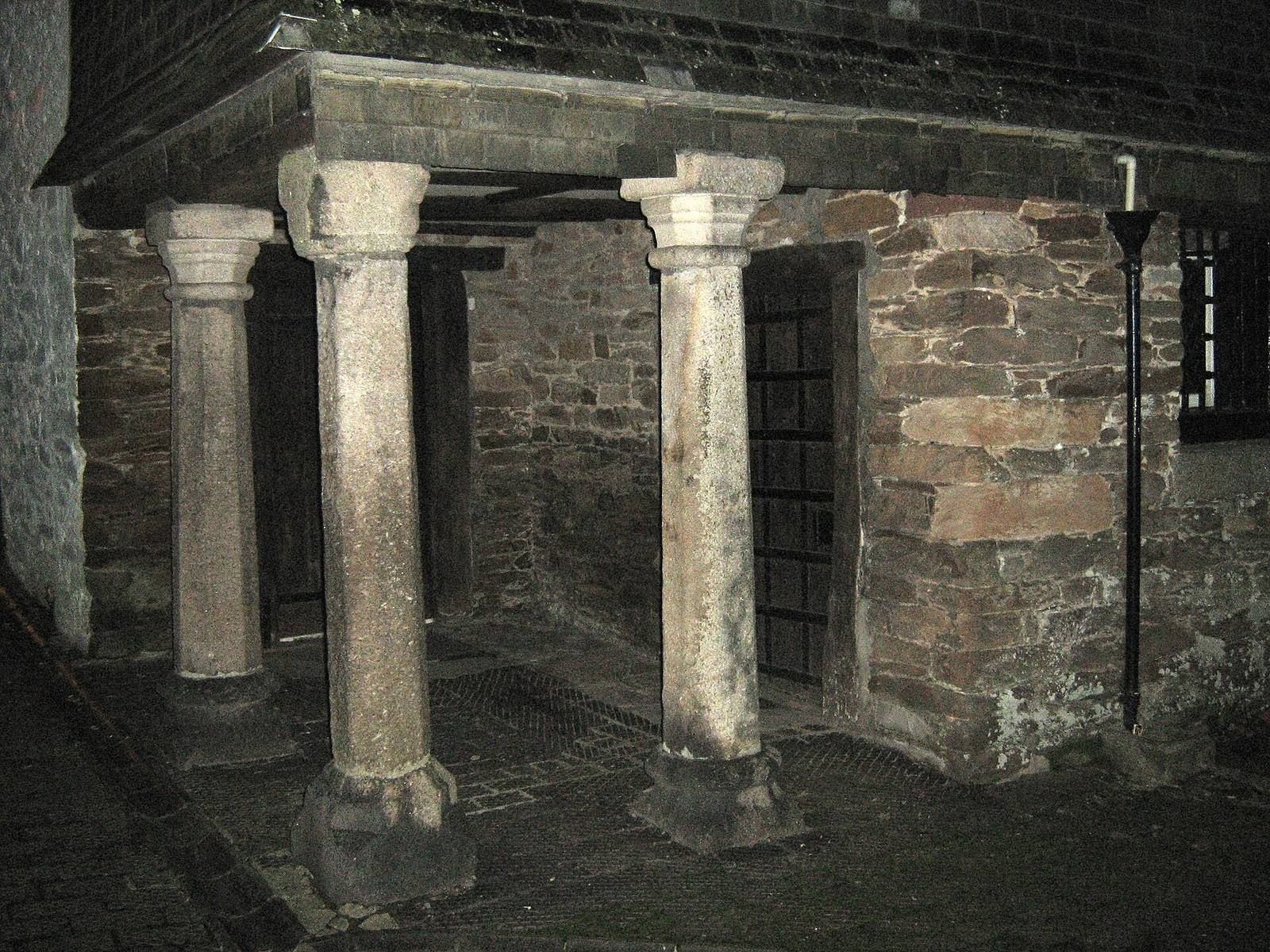
Added in 1897, the loggia stands in front of the original building on its east side. Its Doric-order columns, a classical style characterized by relatively plain columns, were recovered from the Exchange after that building was demolished in 1878.
Mayoral names
The guildhall’s walls bear the names of more than 600 town mayors who have served since 1359.