Tophet of Carthage: A Punic Sacred and Funerary Complex in Tunisia
Site at a Glance
- Rating
- 4.2
- Popularity
- Low
- Country
- Tunisia
- Primary era
- Classical
- Eras represented
- Iron Age, Classical
- Civilizations
- Carthaginian, Phoenician, Roman
- Site type
- Religious
- Remains
- Sanctuary
On this page17 sections
History
The Tophet of Carthage, also called the Tophet of Salammbô, was a Punic sacred and funerary complex at Carthage in Tunisia. Used for approximately six centuries from about 750 BC until the destruction of Carthage in 146 BC, it was dedicated to Tanit, a major Carthaginian goddess, and Baal Hammon, a principal male deity of Punic religion. The sanctuary stood near the commercial ports, separated from inhabited areas and the ordinary necropolis, and combined votive activity with the burial of cremated remains.
Formation and Punic Use
The earliest phase, known as Tanit I, dates from approximately 750 to 600 BC. The deposits developed in an open-air sacred area at the southern extremity of the city, in a marshy setting where excavations reached brackish water. As the ground became filled with urns, votive objects, and stelae, earth was added and further deposits were placed at higher levels. This process created a sequence of superimposed layers that eventually covered an estimated 6,000 square metres and contained approximately 20,000 urns.
The Tanit II phase extended from the fifth through the third centuries BC. Its earlier subdivision continued the use of throne-shaped stone monuments, while its later subdivision introduced limestone stelae. The final phase, Tanit III, continued from the third century BC to 146 BC. During this period, thin limestone stelae became especially common, and some received elaborate carved decoration. The changing forms of the monuments reflect developments within Punic religious and artistic practice, including stronger Hellenistic influence after Carthage established contacts with the Greek world and Sicily.
Destruction, Reuse, and Dispersal
After Rome destroyed Carthage in 146 BC and established a Roman city on the site, the Tophet’s monuments were dispersed, reused in Roman walls, or disturbed by later construction. Quarrying and the removal of building materials caused further damage. Roman activity also introduced new structures into the area, including a temple dedicated to Saturn, foundation piers, workshops, storage buildings, and houses decorated with mosaics.
Material from the Tophet began to enter European collections during the nineteenth century. Between 1825 and 1827, Jean-Émile Humbert sent cippi, small upright Punic monuments used in votive or funerary settings, and votive bases from Carthage to the National Museum of Antiquities in Leiden. Other stelae entered the Archaeological Museum of Krakow. Jean Herszek Spiro collected 19 stelae and published a study of Carthaginian inscriptions and votive monuments in 1895, but the Tophet was not yet recognized as a distinct archaeological complex.
In 1875, more than 2,000 Punic stelae and other objects excavated at Carthage were being transported aboard the French naval vessel Magenta when the ship sank at Toulon after a fire and explosion. The excavation had been authorized by Sadok Bey and directed by Pricot de Sainte-Marie. Some stelae and the head of a statue of the Roman empress Sabina were later recovered. Other pieces entered collections including the Bibliothèque nationale de France, the Guimet Museum, and the Louvre. Archaeological campaigns at the wreck between 1995 and 1998 recovered the statue’s head, about 60 fragments of stelae and statues, and finally 77 fragments or stelae.
Identification and Archaeological Investigation
The Tophet was identified as a distinct archaeological area after clandestine excavations uncovered the so-called Priest Stele in 1921. Paul Gielly and François Icard acquired the land where it was found and excavated there until autumn 1922, helping to bring the clandestine digging to an end. The first American excavation followed in 1925 under Francis Willey Kelsey and Donald Benjamin Harden. Kelsey’s death in 1927 ended that campaign, although the work clarified the organization of the site.
Father Gabriel-Guillaume Lapeyre excavated a neighbouring area from 1934 to 1936 and recovered archaeological and epigraphic material. The excavation did not preserve the stratigraphic information needed to establish the precise context of the finds. Pierre Cintas resumed work after the Second World War and discovered the feature later called the Cintas Chapel in 1947.
An international campaign sponsored by UNESCO took place from 1976 to 1979 under the auspices of the American Schools of Oriental Research and the direction of Lawrence Stager. The excavation and subsequent analyses established the long sequence of use at the Tophet, while leaving the precise interpretation of its rites disputed. The complex now forms part of the Archaeological Site of Carthage, which is inscribed as a UNESCO World Heritage Site. Roman construction, later urban development, and modern residential expansion have disturbed or covered parts of the ancient area, making the full archaeological perimeter difficult to determine.
The Debate over Ritual Practice
The Tophet’s function remains a matter of disagreement. Cremated remains of foetuses, newborns, and young children occur with votive inscriptions, animal remains, and urn deposits. Some scholars interpret this combination as evidence for ritual child sacrifice. Others regard the area primarily as a sacred cemetery for stillborn infants and children who died naturally. An intermediate interpretation allows both funerary deposits and occasional human sacrifice.
Written evidence for child sacrifice comes from outside Carthage. Diodorus Siculus, Dionysius of Halicarnassus, Porphyry of Tyre, Plutarch, and Tertullian described or accused Carthaginians or Phoenicians of sacrificing children to Cronus or Saturn. Herodotus, Thucydides, Polybius, and Livy did not discuss the practice. The external origin of the accounts has made their interpretation dependent on comparisons with the archaeological evidence and on consideration of the authors’ cultural and political perspectives.
Gustave Flaubert’s historical novel Salammbô, published in 1862, also influenced modern perceptions of the site. The novel helped establish the modern name of the district and reinforced its association with child sacrifice. Lawrence Stager argued that the practice occurred at Carthage from at least 750 BC until the city’s destruction. Sabatino Moscati instead regarded the Tophet mainly as a place where infants who died too young for ordinary adult cemeteries were ritually cremated and buried. François Decret and Michel Gras proposed that animal substitutions developed over time, particularly during the neo-Punic period.
Studies carried out especially between 1947 and 1952 identified very young children, generally no older than three years, along with one exceptional case of approximately twelve years, and remains of small animals. Later forensic and anthropological analyses have disagreed about whether the age distribution supports natural infant mortality or deliberate sacrifice. They have also differed over the reliability of age estimates after cremation. The surviving evidence therefore does not provide one definitive explanation for every deposit.
Remains
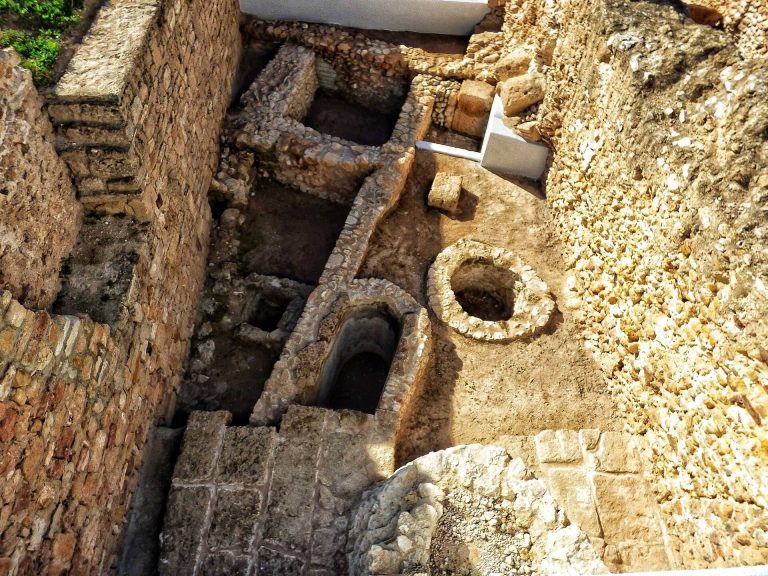
The surviving Tophet consists of layered deposits formed in an open-air sacred area near the Punic commercial port. Its archaeological organization developed through repeated burial and the addition of earth, with urns, stones, votive objects, and monuments arranged in successive levels. The identified enclosure indicates that the sanctuary was bounded, although the ancient area extended beyond the portions recoverable through excavation.
Deposits and Monumental Phases
Early Deposits and Tanit I
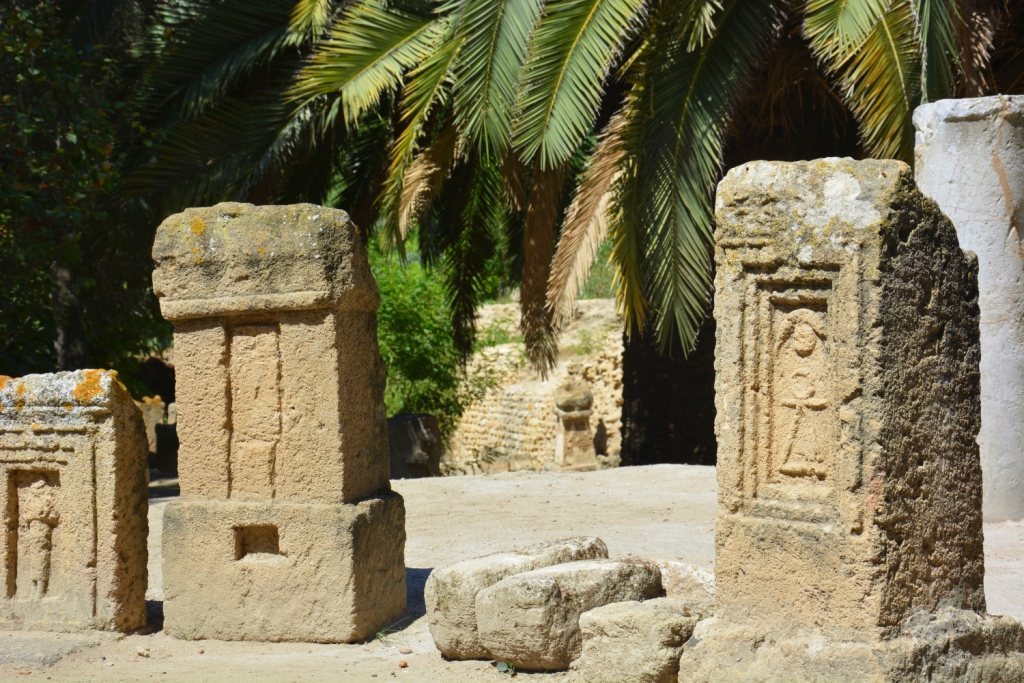
In the earliest stratigraphic phase, vessels were placed beneath small stones or pebbles. The Tanit I phase, dated to approximately 750 to 600 BC, contains sandstone cippi and baetyls. A baetyl was a sacred standing stone understood as embodying divine presence. Urns were set into natural cavities in the soil, and one of the notable monuments is a sandstone cippus shaped like a throne.
Tanit II and Tanit III
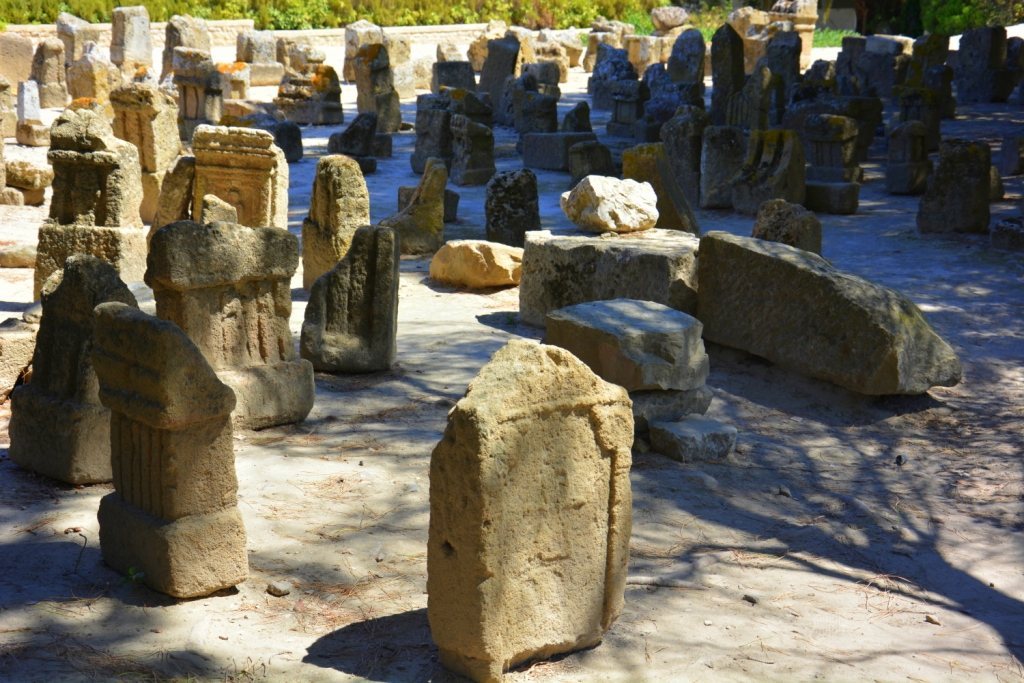
During Tanit II, which belongs to the fifth through third centuries BC, the throne-shaped cippus continued in the earlier subdivision called Tanit II-a. In Tanit II-b, limestone stelae replaced it. The final phase, Tanit III, lasted from the third century BC to 146 BC and was marked by thin limestone stelae, especially in the second century BC. These sometimes had triangular tops with acroteria, decorative elements placed at the apex or corners of a triangular form, and could carry elaborate carved designs.
Urns, Stelae, and Inscriptions
Burial Deposits
A typical deposit consisted of a buried urn surrounded by stones. Inside were cremated bones and, in some cases, funerary offerings such as terracotta masks and small masks made from glass paste. The urns contained cremated human remains, including foetuses, newborns, and young children, as well as animal remains. Identified animals included sheep and goats, together known as caprids, along with some birds.
Animal remains occur in changing proportions through the sequence. In analyses of seventh-century BC urns, approximately one-third contained animal substitutions. By the fourth century BC, animal remains occurred in about one urn in ten. These deposits form part of the evidence used in the debate over whether the Tophet served primarily as a cemetery, a place of sacrifice, or both.
Votive Monuments
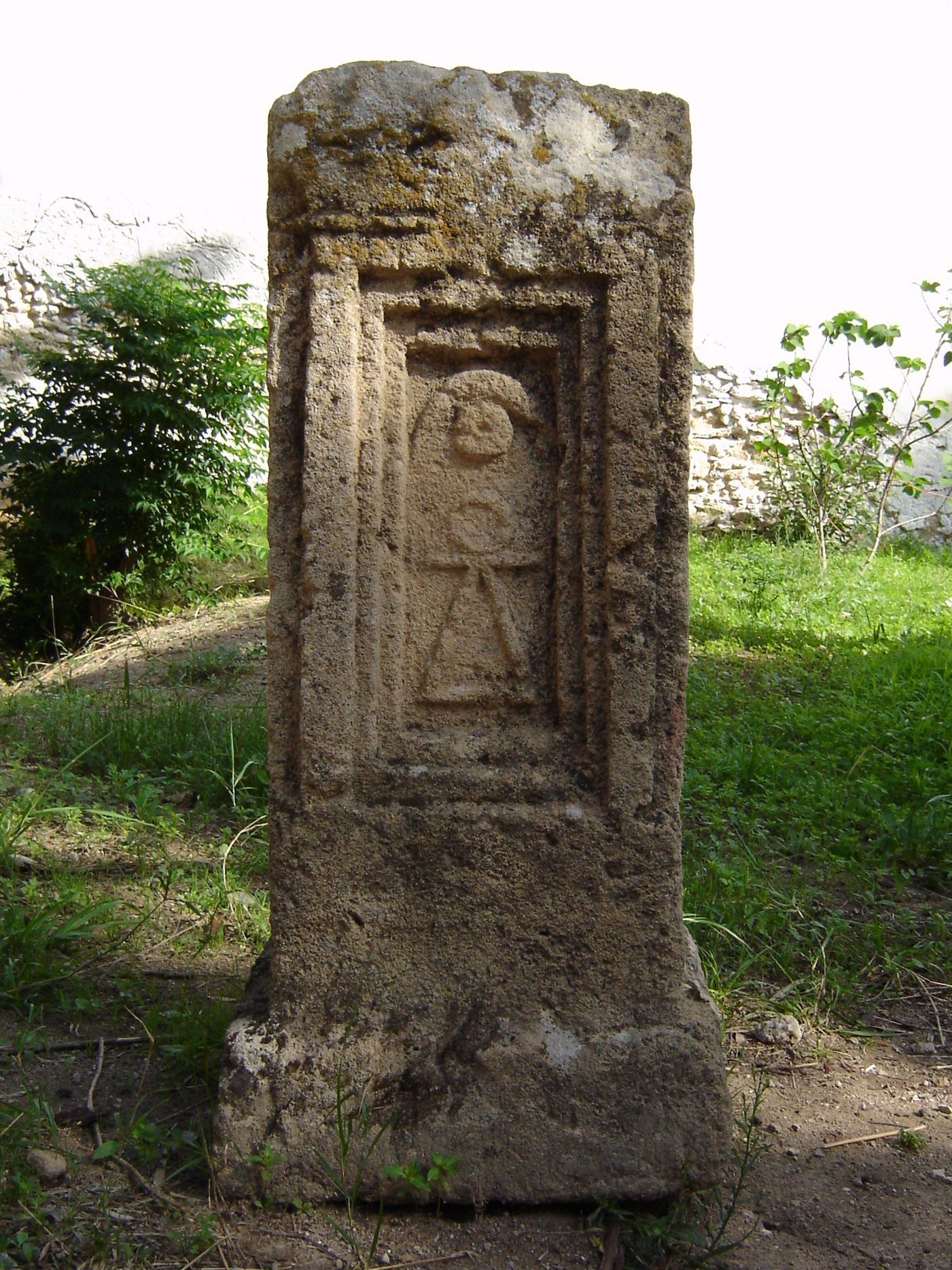
A cippus or stele could stand above an urn deposit. Early monuments were mainly sandstone, while later examples were generally limestone. Their forms and imagery combine Egyptian, Semitic, and Hellenistic influences. Carved motifs include the sign of Tanit, a bottle-shaped sign, lunar and solar symbols, interlaced rosettes, pomegranates, elephants, palm trees, open hands, human portraits, full human figures, boats, and wings inspired by Egyptian art.
Many stelae carry Punic inscriptions addressed to Tanit Pene Baal and Baal Hammon. The standardized formulas express a vow or thanks for a fulfilled vow and sometimes name the dedicator and the dedicator’s father. The term molk, meaning an offering, appears only rarely. Many inscribed stelae are associated with funerary urns without stating explicitly how the deposits should be interpreted.
The Priest Stele
The Priest Stele is a limestone monument more than one metre high. It depicts an adult wearing a distinctive Punic priestly headdress and tunic while holding a young child. Its discovery during clandestine excavations in 1921 helped establish the Tophet as a separate archaeological complex and led to the land’s acquisition and subsequent excavation by Paul Gielly and François Icard.
Early Structures and Later Reuse
The Cintas Chapel
The feature known as the Cintas Chapel is a masonry-enclosed chamber measuring approximately one square metre. Its deposit contained ceramic objects of different origins, including Aegean pieces, placed in cavities cut into the natural soil. The ceramics date to the eighth century BC and provide some of the earliest evidence for Phoenician presence at Carthage. Their dating was later revised downward from the earliest date proposed by Pierre Cintas.
Roman Construction
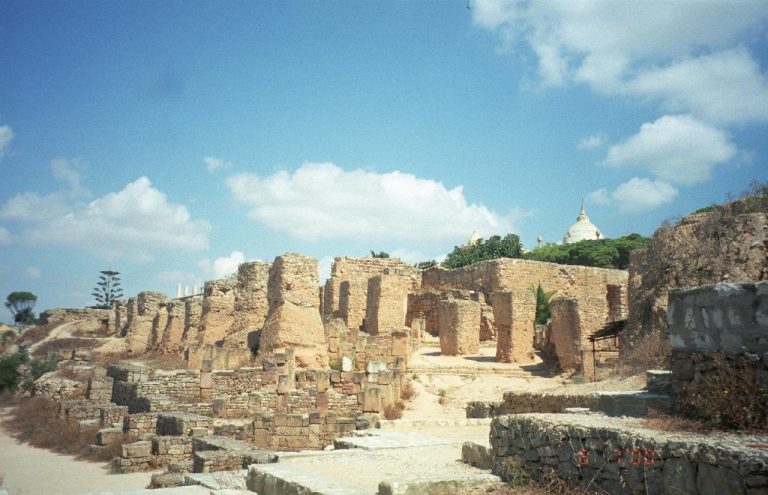
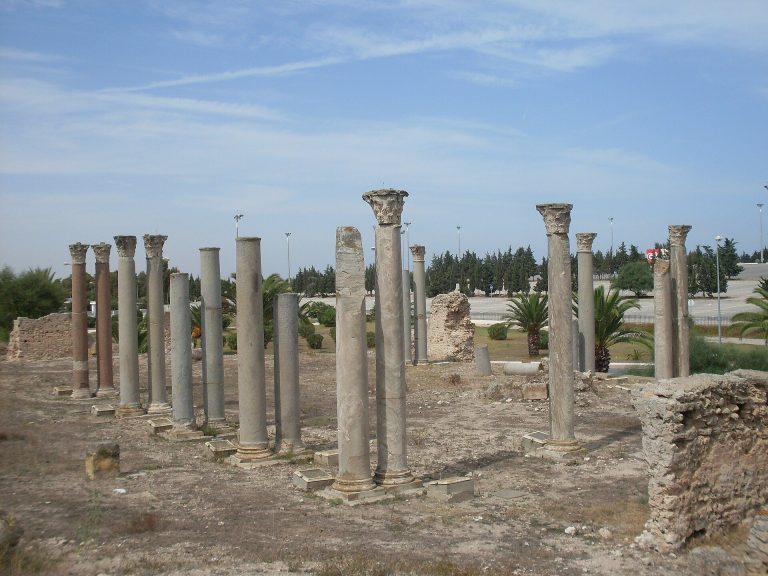
During the Roman period, the area was reused and built over. Excavations revealed foundations of a temple dedicated to Saturn, Roman foundation piers, and later building foundations cutting through the Punic layers. Potters’ workshops, storage buildings, and houses with mosaics also occupied parts of the area. One mosaic depicting the Seasons is now preserved in the Bardo Museum.
Present Archaeological Display
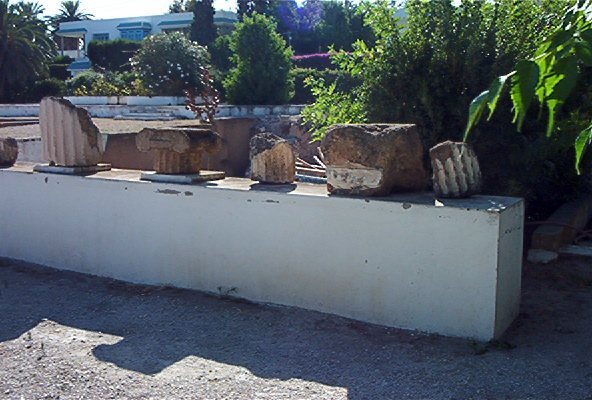
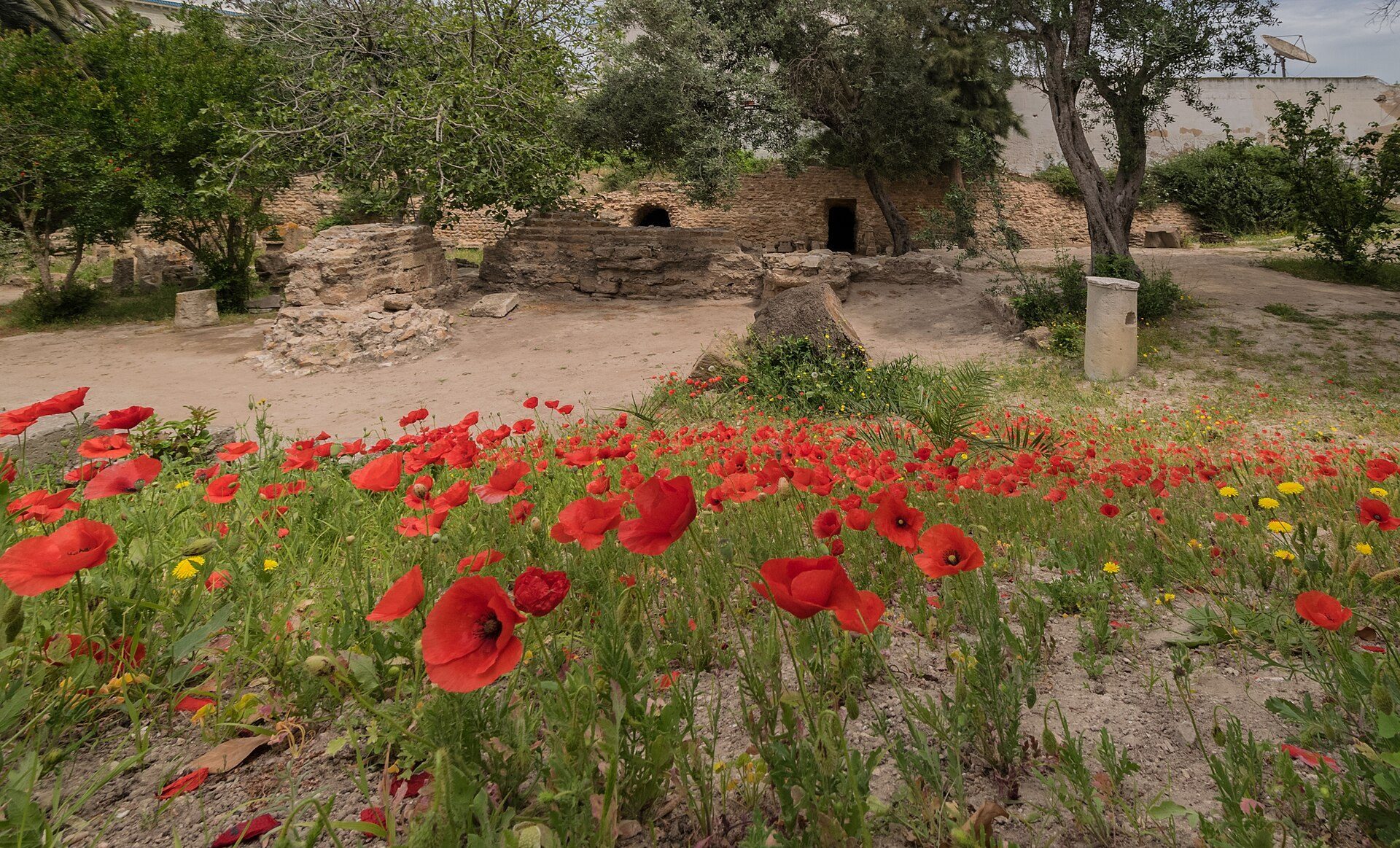
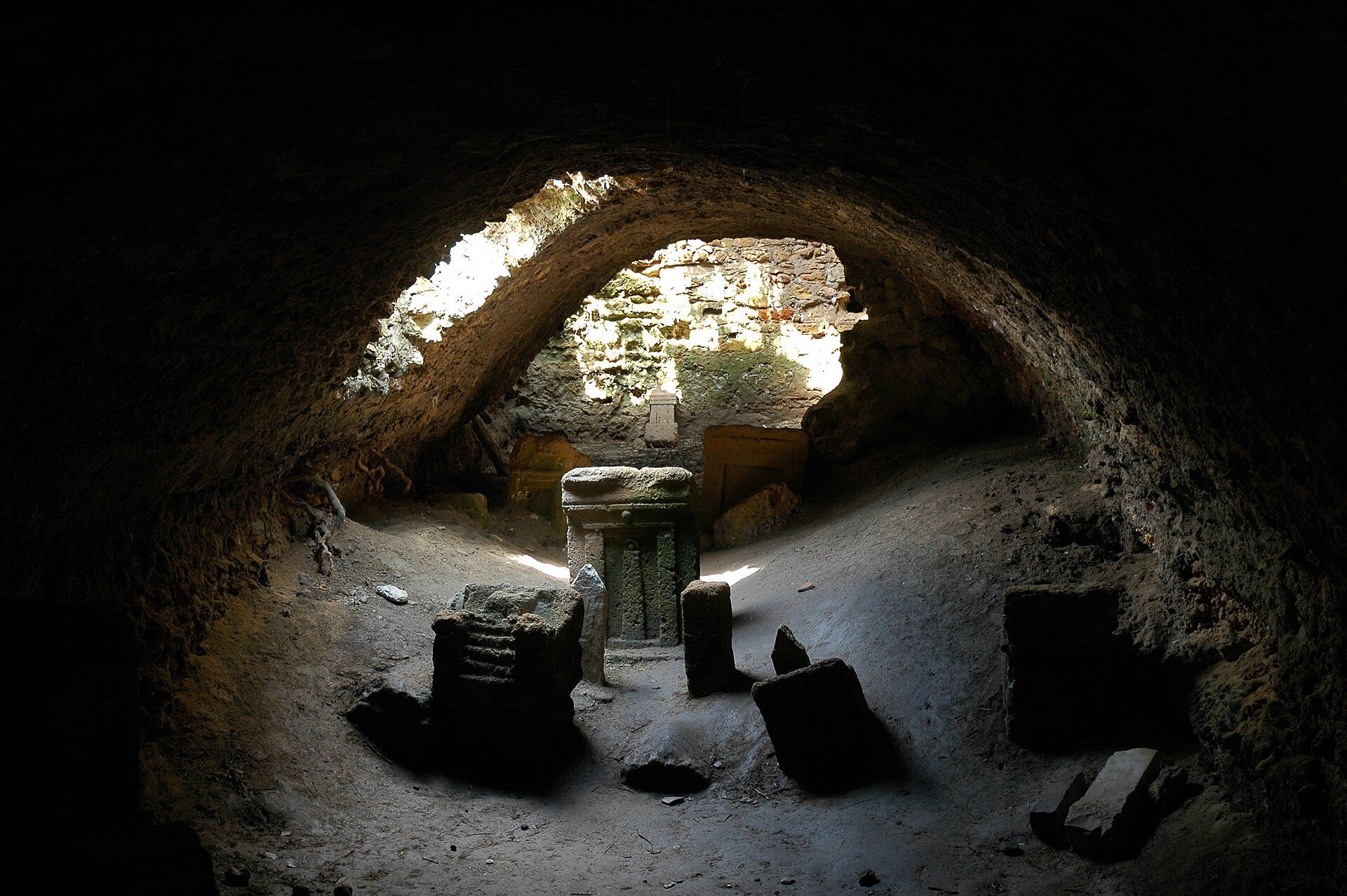
The present display brings together stelae from different periods. It includes many early sandstone monuments from El Haouaria and a smaller number of later limestone stelae in the vaulted section of the site. Together with the surviving urn deposits, inscriptions, carved imagery, and reused Roman structures, these remains preserve the physical sequence of a Punic sacred area whose religious purpose continues to be interpreted through competing readings of the evidence.