Tomb of the King’s Daughter: A Mausoleum in Skopje
Site at a Glance
- Popularity
- Low
- Country
- North Macedonia
- Primary era
- Medieval
- Eras represented
- Medieval, Early Modern
- Civilizations
- Ottoman
- Site type
- Religious
- Remains
- Tomb
On this page4 sections
History
The Tomb of the King’s Daughter is a mausoleum in Skopje, North Macedonia, associated with Catherine, a Bosnian royal figure whose exact identity is uncertain. Its construction date is unknown, but it is believed to belong to the late 15th or early 16th century. Catherine is described as both a princess and a queen, and as a widow.
Traditional account and identity
One tradition recounts that Prince Sigismund and Catherine travelled from Bosnia to Istanbul under the protection of Ishak Bey, an aristocrat in Ottoman frontier service. The two had converted to Islam in Bosnia and travelled as free people, not prisoners. Catherine fell ill and died in Skopje despite efforts to treat her, while Sigismund continued to Istanbul. Mehmed II, the Ottoman sultan also known as Mehmed the Conqueror, ordered a tomb built after learning of her death. In this account, their conversion influenced his decision, although they were not required to adopt Muslim names.
The tomb’s identity and purpose have been interpreted in different ways. It may have served as a sacred place or formed part of a personal cult, a form of veneration centered on one individual, associated with tombs in several locations.
Devotion and rebuilding
Muslims from Skopje visited the tomb and lit candles. Sheikhs, or religious leaders, from the Sersem Ali Baba Tekke, a lodge for a Sufi religious order, cared for it. They regarded it as one of seven tombs associated with the burial of Sarı Saltuk Dede’s remains, a legendary Muslim holy figure in Balkan traditions. In more recent practice, people have also lit candles in memory of deceased relatives, while local tradition continues to regard the site as sacred.
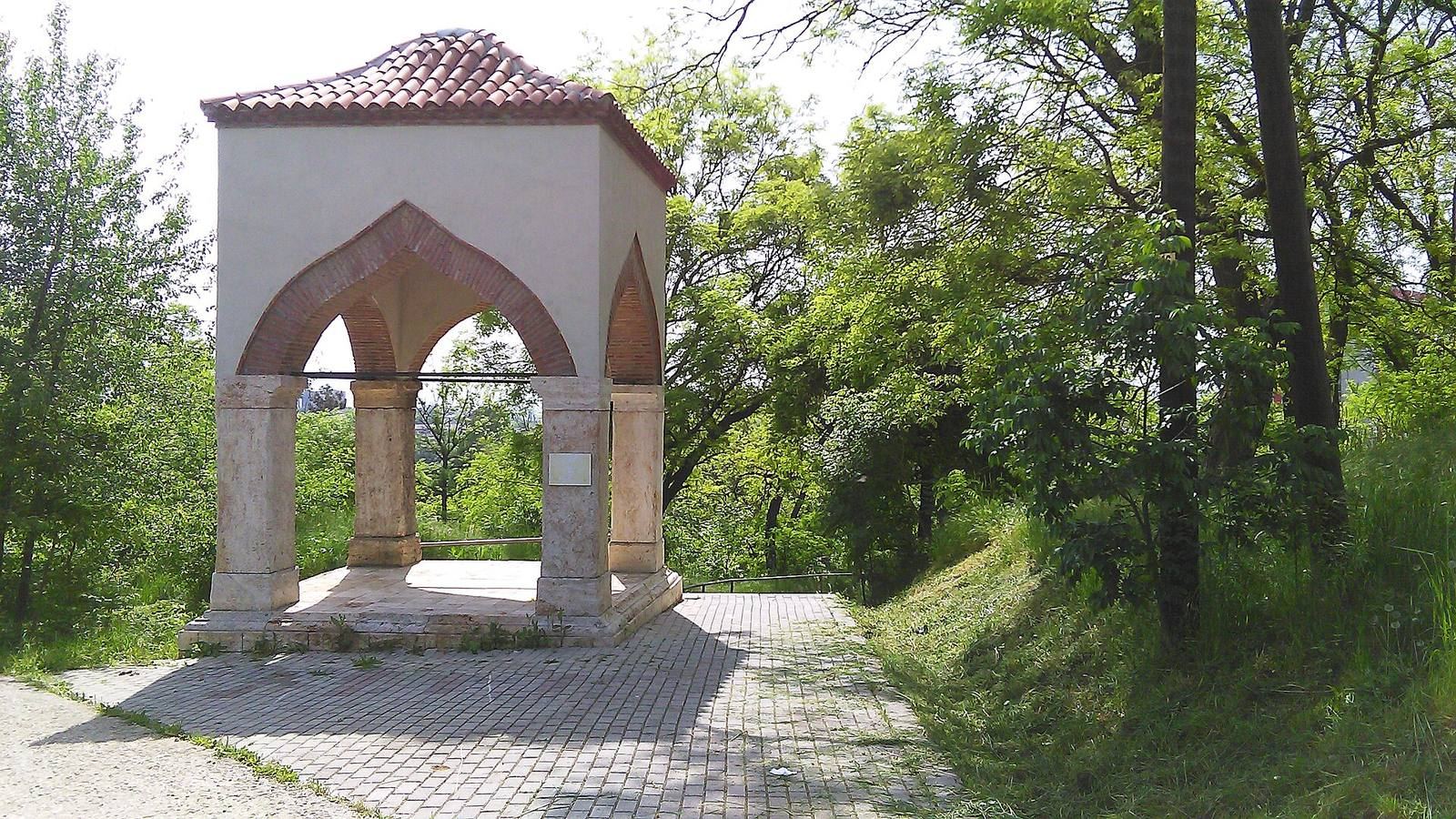
The 1963 earthquake destroyed the mausoleum. The Ministry of Culture of North Macedonia reconstructed it in 2014, with financial support from Bosnia and Herzegovina.
Remains
The mausoleum was an open-sided structure with a square base built from stone blocks. It stood near the Faculty of Natural Sciences and Mathematics at Ss. Cyril and Methodius University. Four heart-shaped columns were topped with brickwork, and a four-sided dome was covered with tiles. Stucco mouldings decorated the column bases and capitals, as well as the cornice edge. The site is now neglected; the princess’s grave and the mausoleum’s foundations remain distinguishable. Stone debris and other relatively well-preserved artifacts are present and could be used in restoration.